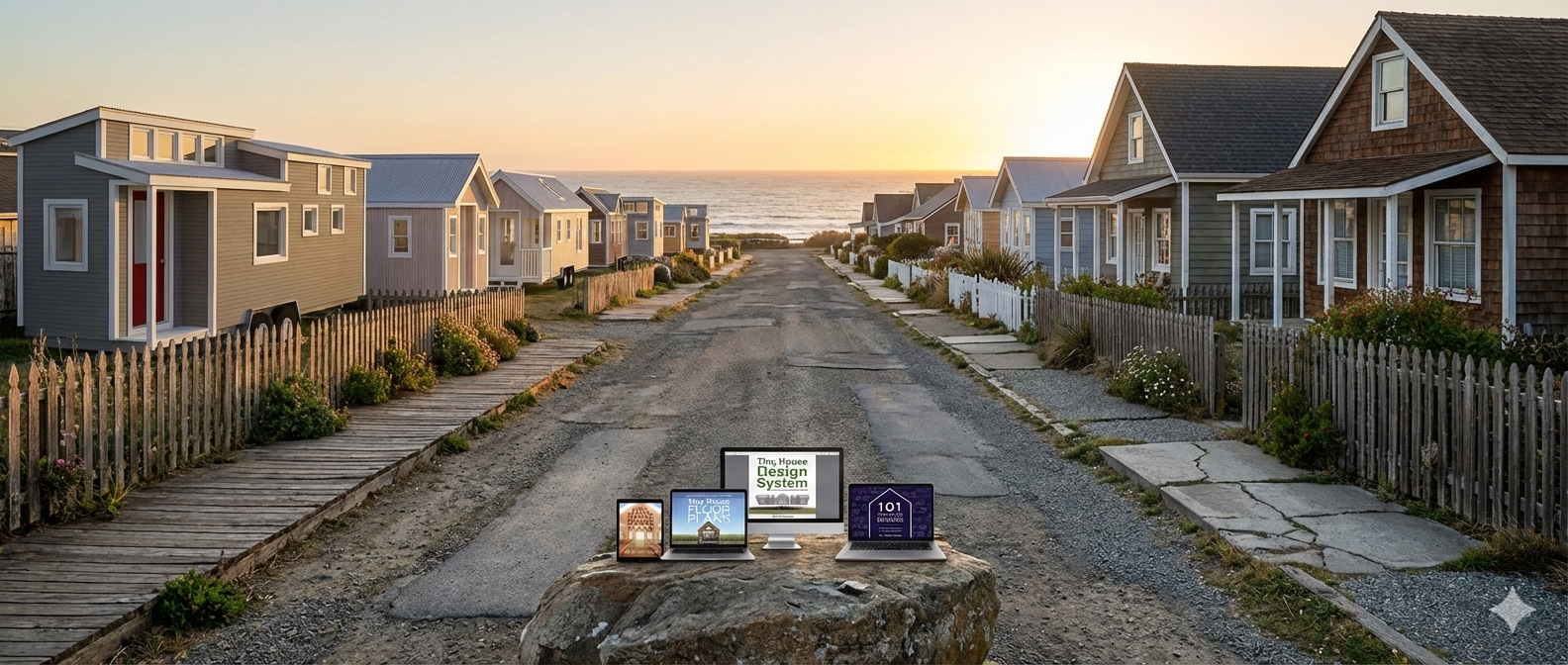
The Tiny House Archive Set: Celebrating the Early Years
24 Plans + 4 Books (2008–2019) - $47

24 Plans + 4 Books (2008–2019) - $47
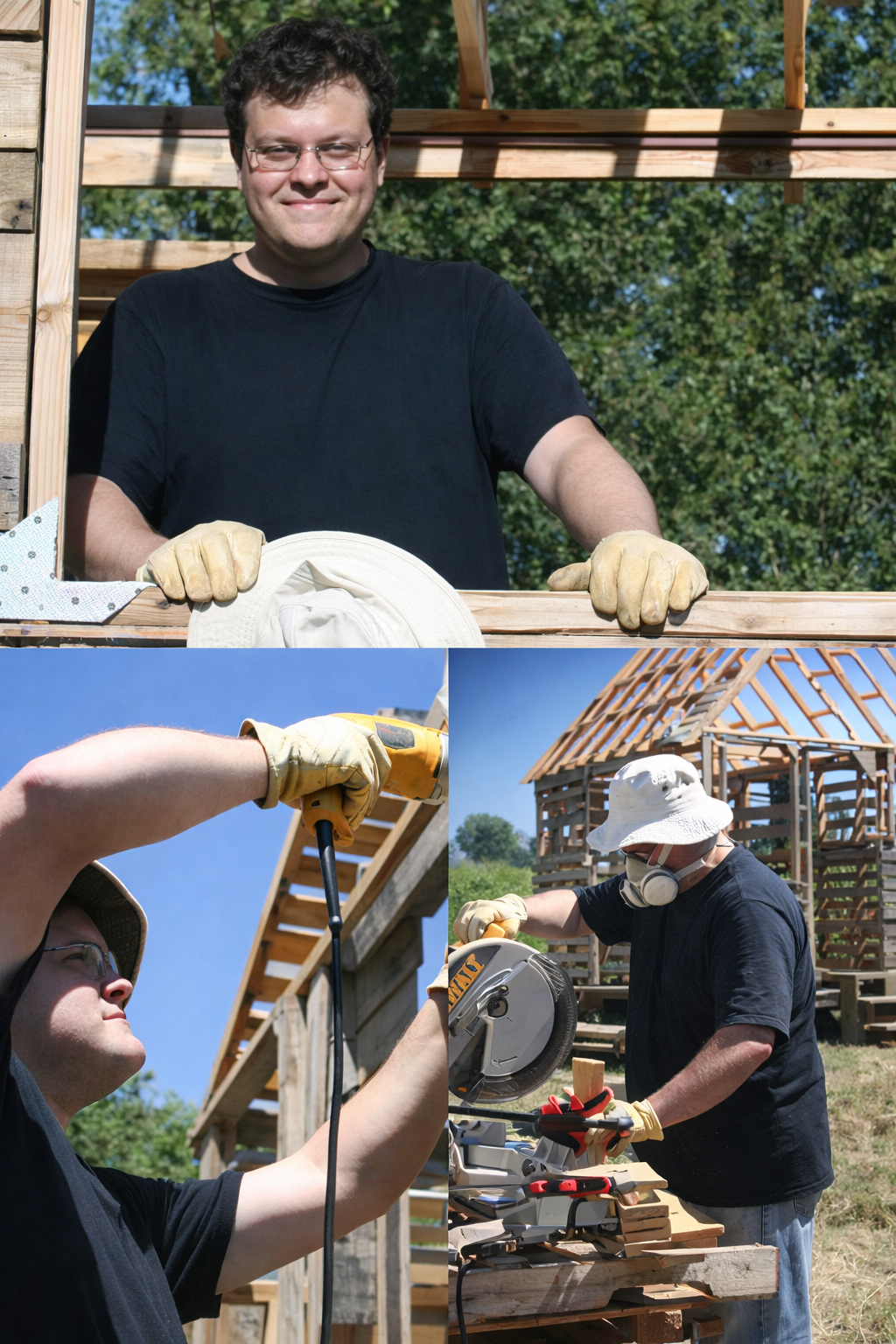
For those who might not know me, I’m Michael Janzen. I spent the years between 2008 and 2019 designing tiny houses. (Photos circa 2008.)
Since stepping back in 2019, I have worked in the technology sector by day, while continuing to design, create art, and write by night.
I am returning to the tiny house design studio in 2026 with renewed energy. But before I begin posting new concepts—which will focus on wider, 10-foot tiny homes and longer footprints—I wanted to do something special with the work that started it all.
Over the next few days, I will open the "archive" one last time.
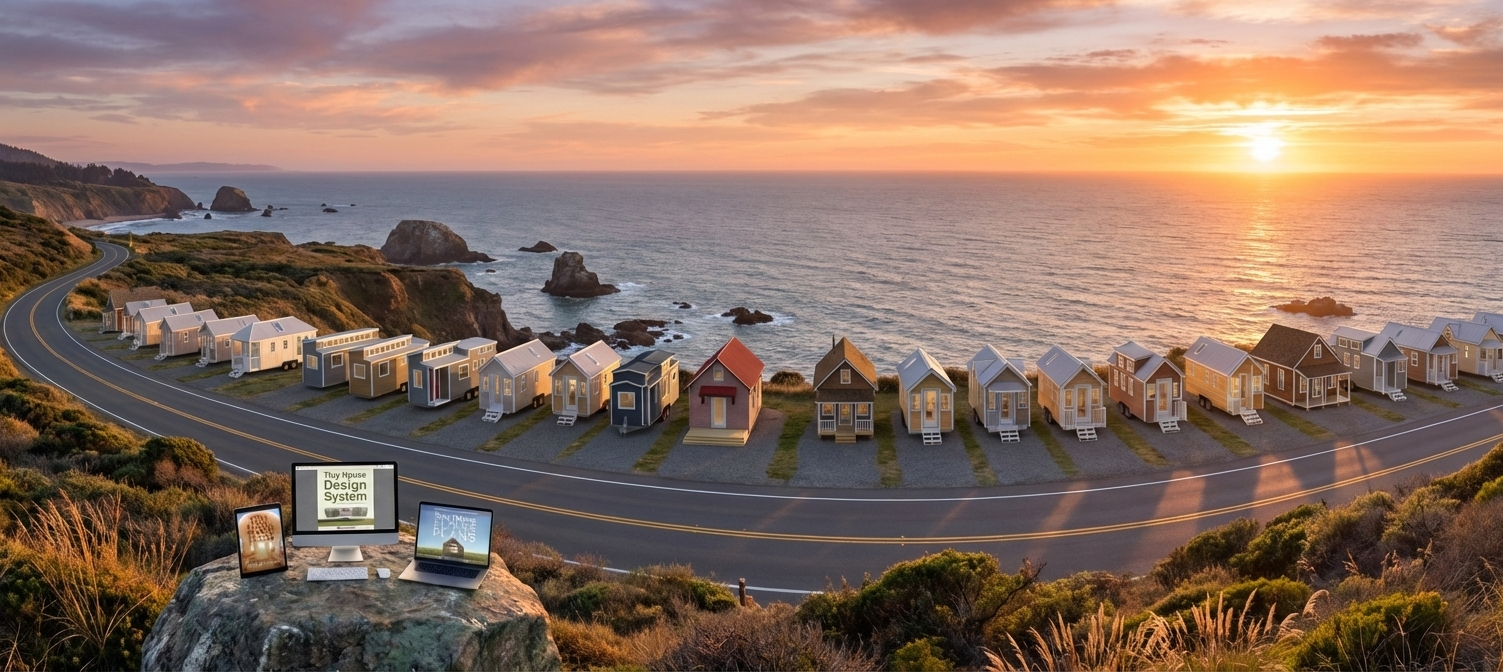
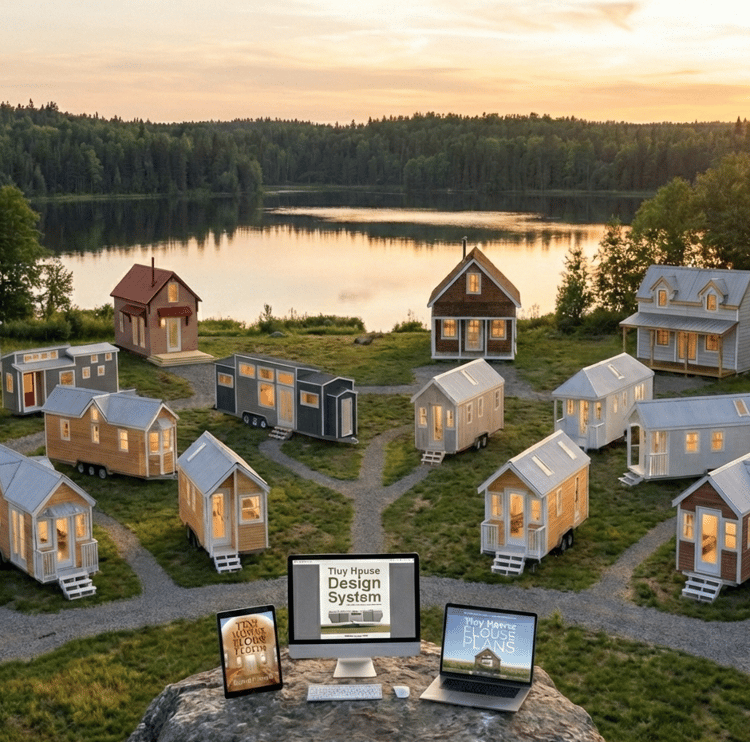
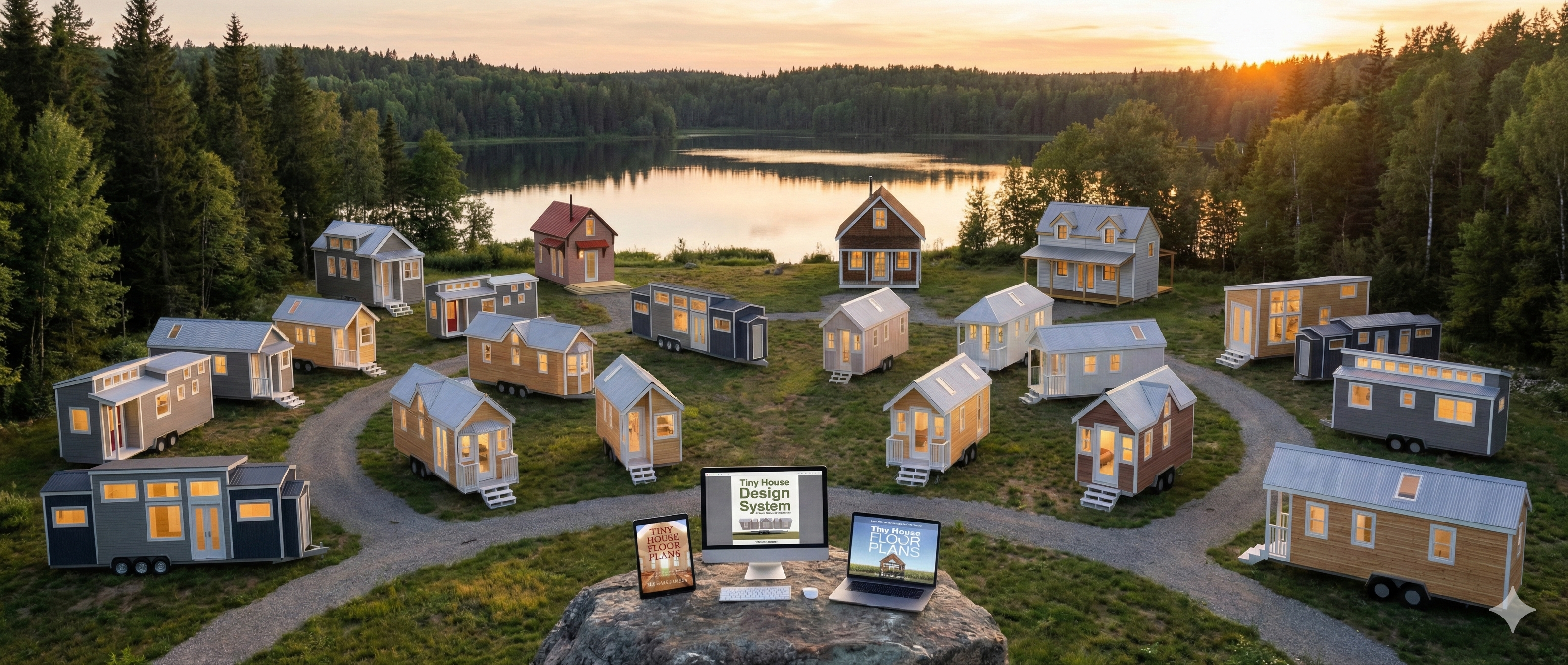
The archive includes 20 tiny house plans, 4 cabin plans, and 4 ebooks on tiny house design
If you missed these designs during my first decade of tiny house design, this is the last opportunity to add them to your collection.
Best,
Michael Janzen
You might notice that many of the designs below are named after towns in Northern California: Westport, Caspar, Albion, Philo.
I was born in Mendocino County and grew up just south of there. My grandmother lived in a tiny cabin in Redwood Valley, and we would visit her often. After she passed away, I lived there after college, renovated the cabin, built a tiny house-sized pottery studio, and worked as a potter. That was in the early 1990's.
Those years spent in that small space, surrounded by the architecture of those historic coastal towns, left a mark on me. When I began designing tiny houses in 2008, I named my designs after the towns I knew and loved—places with a history of masted sailing ships and timber towns.
The designs below represent that history.
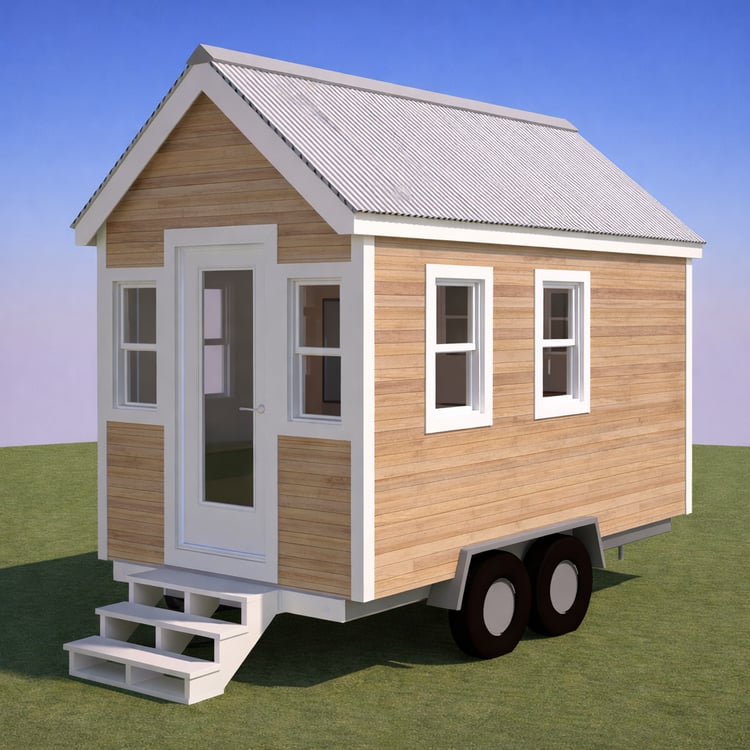
One of the things that originally drew me to this work was the puzzle of it—the challenge of packing maximum utility into the smallest possible footprint. I once challenged myself to design a house just 9 square feet to test the absolute limits of human habitation.
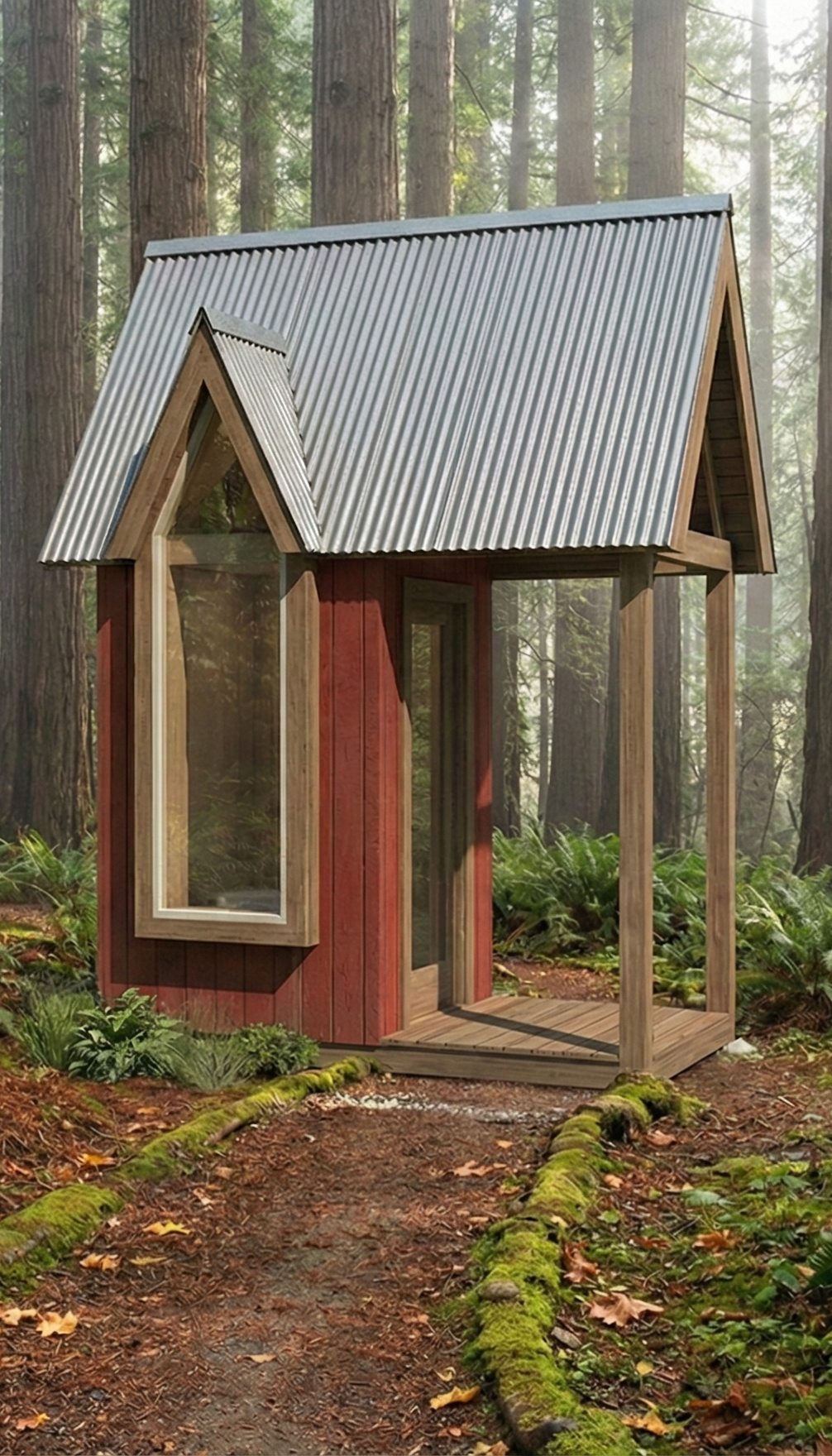
I called it "Nine Tiny Feet." I never built it, wish I had. The floor space was 3'x3' and it included a kitchen, desk, seating, toilet, and shower. The sleeping loft, (not included in the square footage due to ceiling height), extended over the porch. My design is pictured on the left and faithfully rendered by Gemini. The plans for this no longer exist, I can't find them anywhere. If there is interest, I will redraw them from memory.
Even if you never intend to live in a micro home, there is immense value in studying how they work. Designs like these demonstrate extreme space optimization and multimodal living—concepts that apply to homes of any size.
Perhaps most importantly, I designed the hoise plans below for regular people to build. Unlike standard architectural blueprints, which can be cryptic to the untrained eye, these are presented more like assembly instructions. My goal was to demystify the construction process—showing you exactly how a complex roof is framed, how a dormer is attached, and how a bay window comes together step by step.
Whether you build one of these specific units or just use them to learn, they are designed to make the dream of building your own home more attainable.
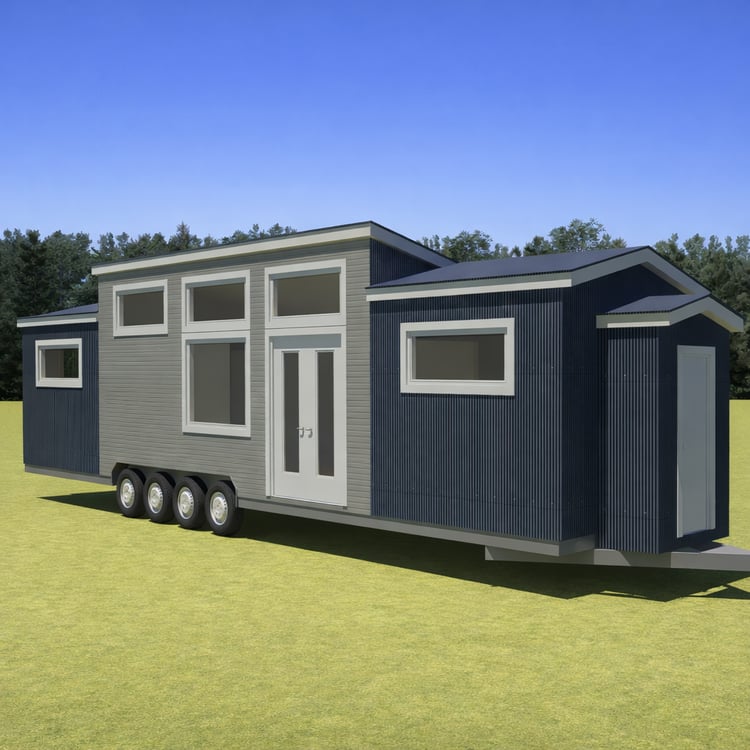
The Carrack 1042 is the largest tiny house on wheels design from this era. At 10 feet wide and 42 feet long, it exceeds standard road-width limits, offering a truly spacious interior. It features a large main room, a full kitchen, and a lower-level master bedroom.
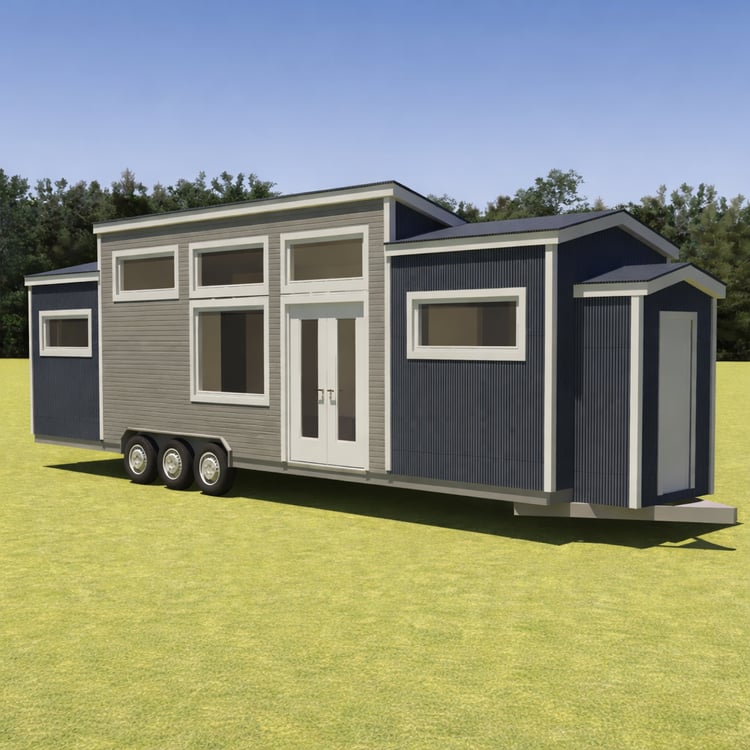
If you like the layout of the 1042 but need something more transportable, the Carrack 836 adapts the design to the standard 8'6" road width. At 36 feet long, it retains the open feel and the lower-level bedroom.
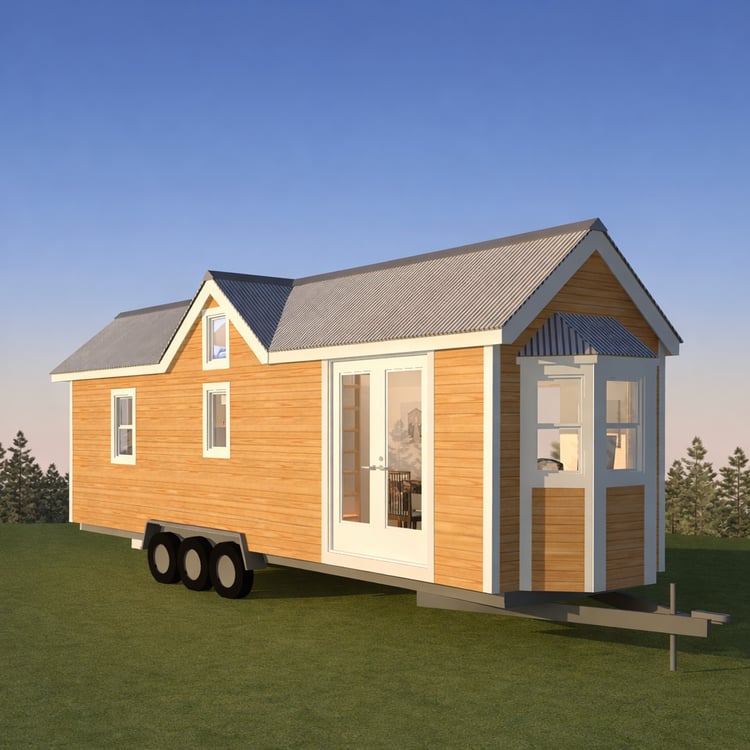
The Westport is a 28-foot home distinguished by its architectural accents. It features a bay window that cantilevers over the trailer tongue and French doors that lead to a distinct back room. The kitchen and bath are centrally located to improve front-to-rear balance.
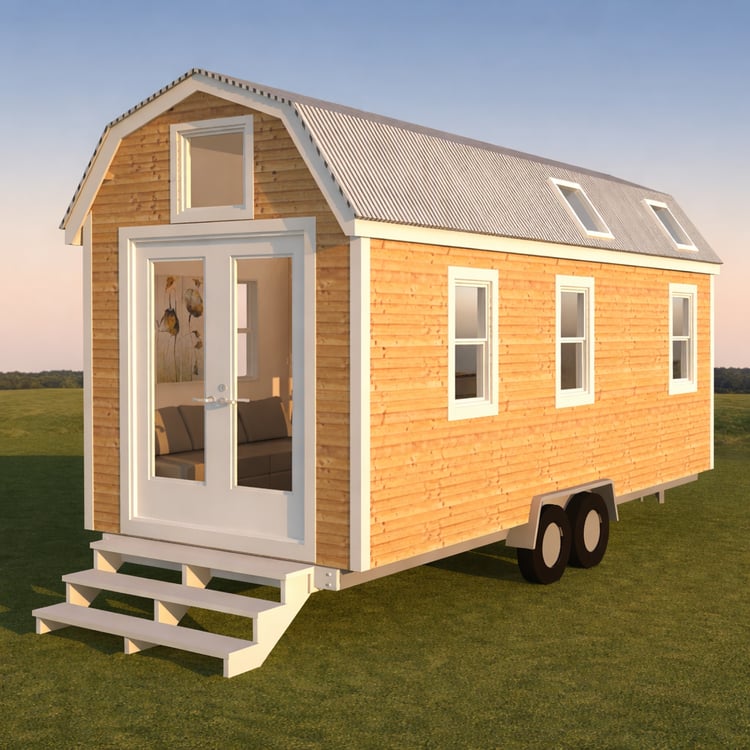
This design features a gambrel (barn-style) roof, which maximizes the interior volume to allow for two separate sleeping lofts. The rear loft is compact, over the bathroom, and the front loft is open to the main living space. It has a large bathroom with a 5-foot tub.
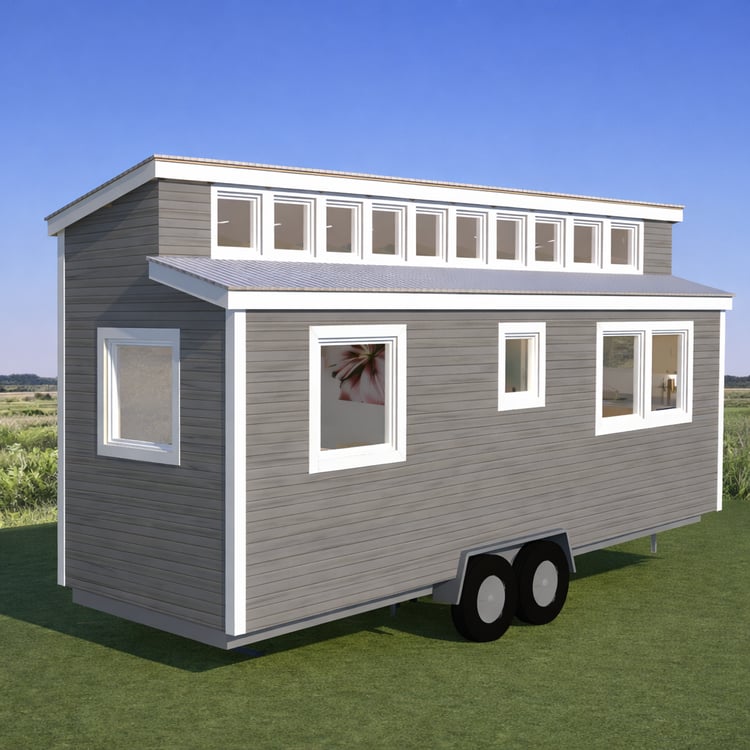
Built with two 3/12 pitch shed roofs, the Laytonville is designed to be easier for owner-builders to construct. Simple rooflines simplify framing and roofing while keeping the structure within common road height limits.
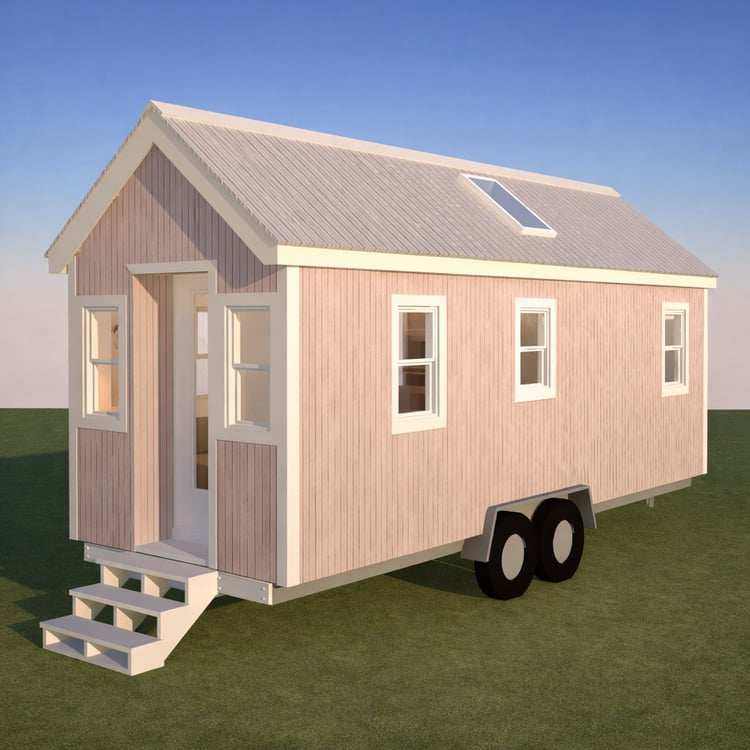
For those who want to avoid ladders, the Little River features a downstairs bedroom at the end of the house. It can accommodate a double bed (or a tight queen) and offers a lower-level sleeping option. A secondary sleeping loft is located above the kitchen and bathroom.
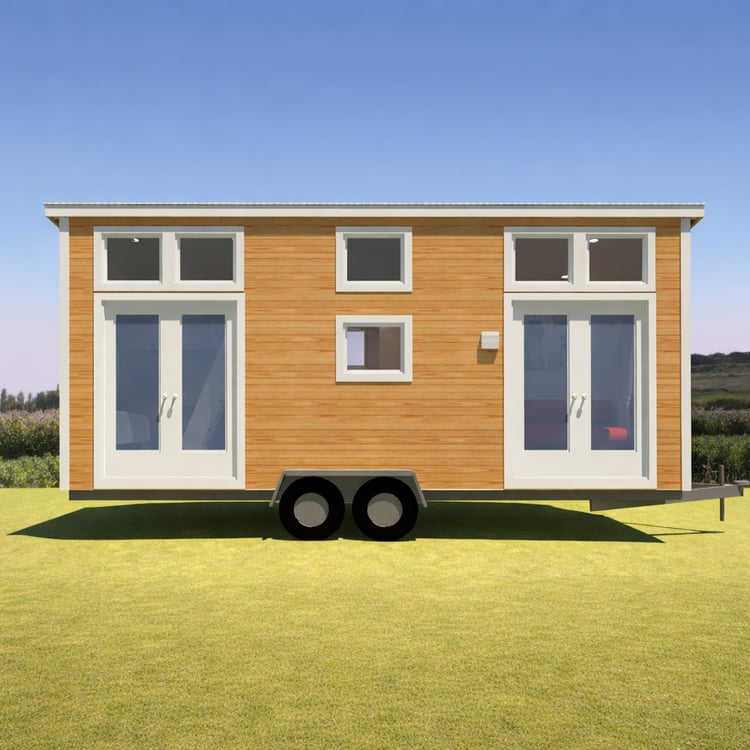
The Comptche is notable for having two distinct "sides" separated by a pocket door, allowing for true privacy between the bedroom and the main living area. It uses a simple shed roof and features French doors on both sides of the home, allowing plenty of light.
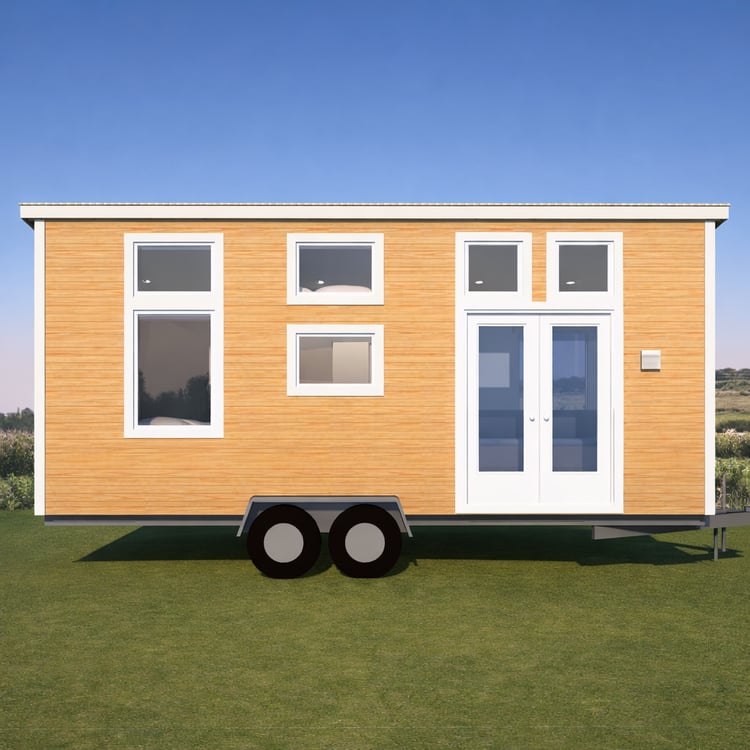
The Leggett uses a single shed roof to create a high ceiling and an open living room with many windows. The kitchen and bathroom are centrally located, with a sleeping loft situated above them.
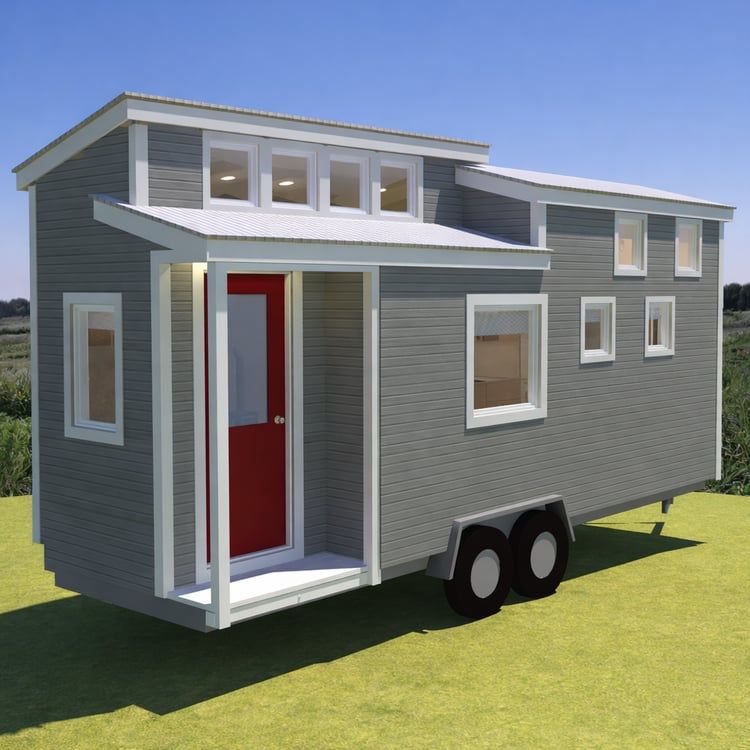
This design uses an asymmetric roof approach. One side features a clerestory for light, while the other uses a gable roof to provide added headroom in the sleeping loft.
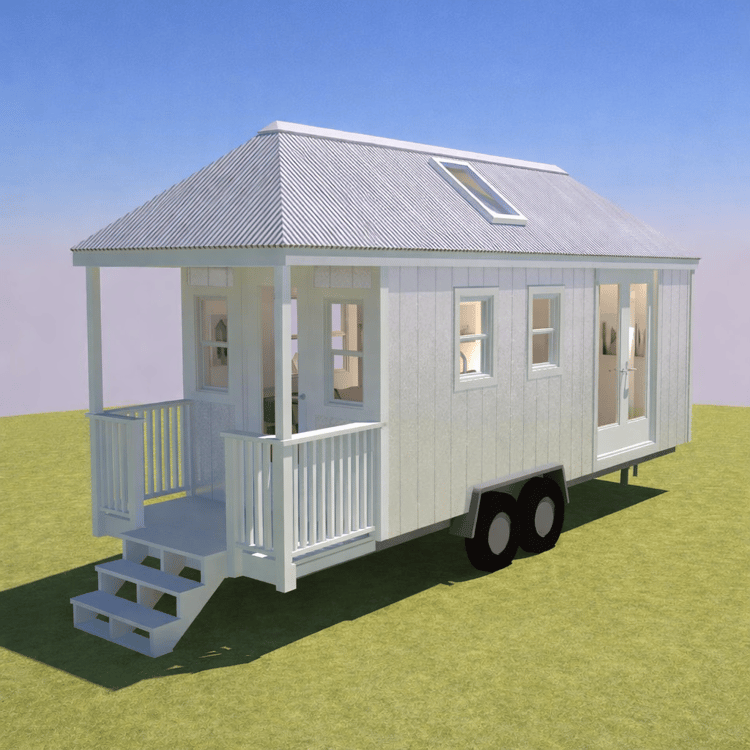
A hip roof design with a central sleeping loft. The Boonville features an open floor plan with a side French door and a front door at the end. Flip-up steps are included in the front door design.
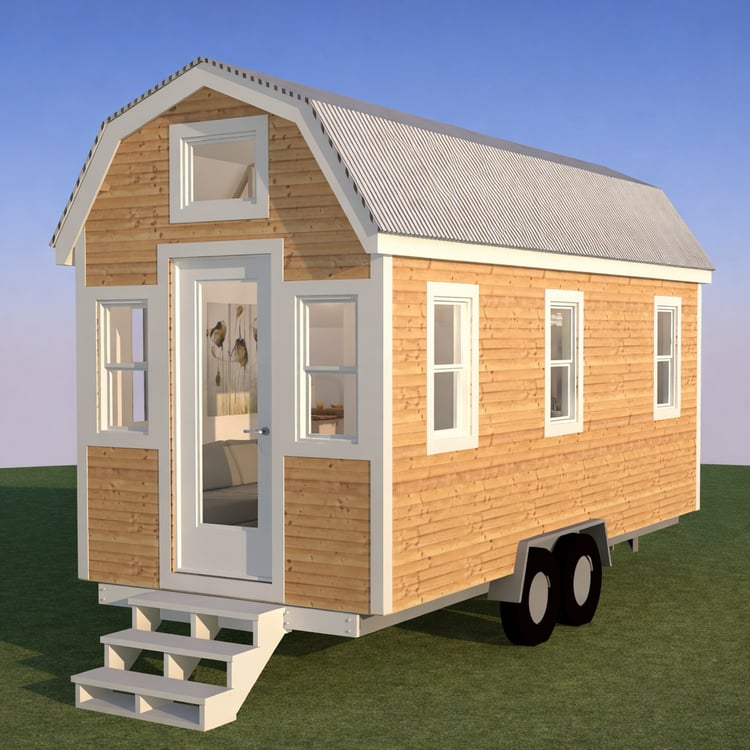
The Covelo places the kitchen and bathroom in the center of the structure, separating the front living space from the back room. It utilizes a gambrel roof to maximize headroom in the central sleeping loft. Pocket doors allow the rooms to be closed off for different modes of privacy.
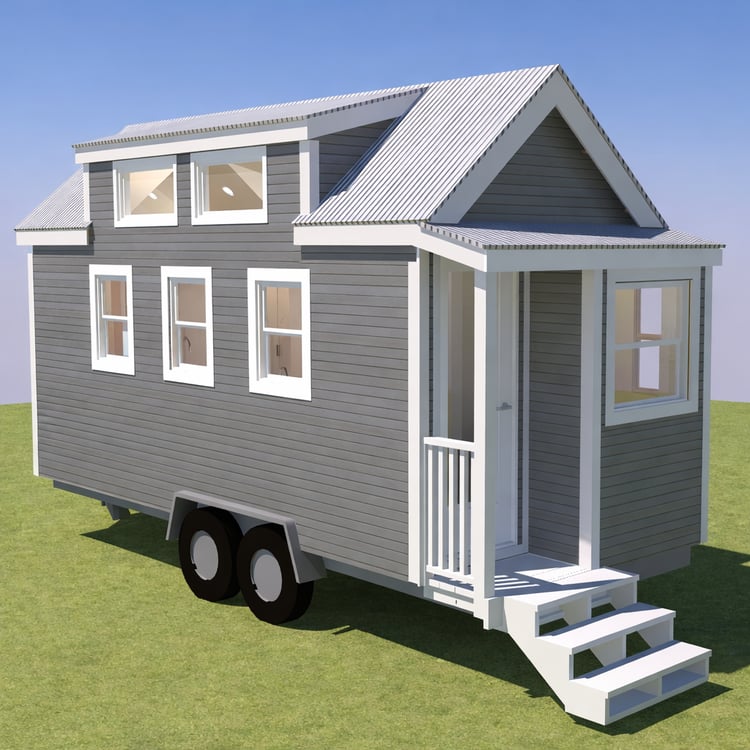
Similar to the Covelo in layout, the Talmage uses a gable roof with long shed dormers to achieve loft headroom. It lacks the dividing walls of the Covelo, making the space feel more open. The front door is inset with a small alcove for a seat or desk.
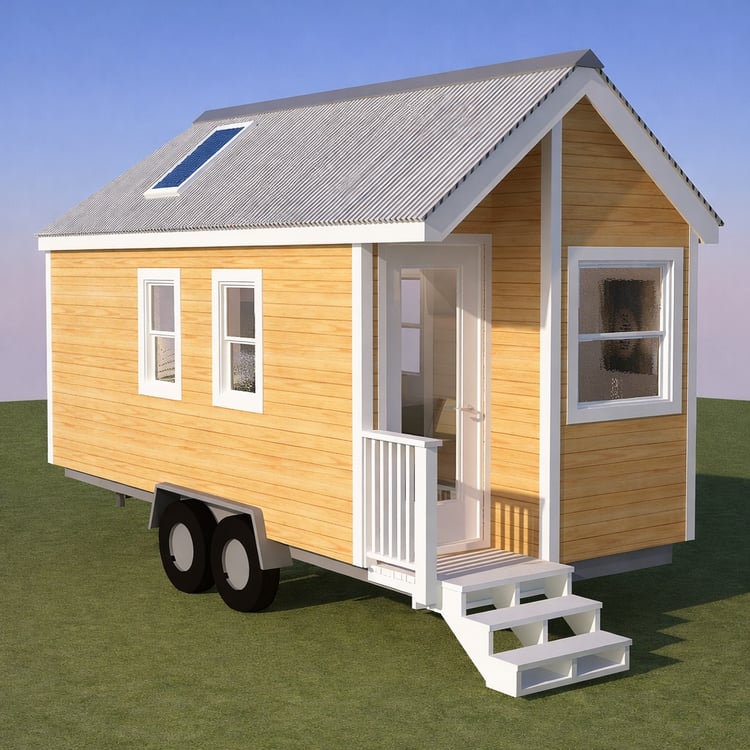
The Caspar mixes a gable roof with a hip roof on one end. It features an inset front door with a small landing and flip-up steps. Inside, a high shelf under the hip roof in the bathroom offers unique storage or plant space.
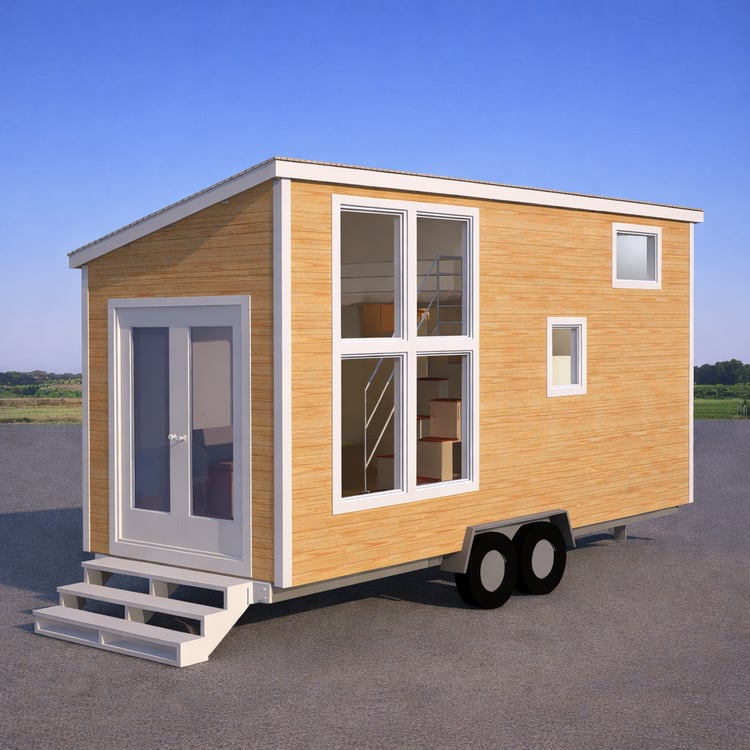
A simple, compact design using a 3/12 shed roof. It features double front doors with flip-up steps and a standard loft over the bathroom and kitchen area.
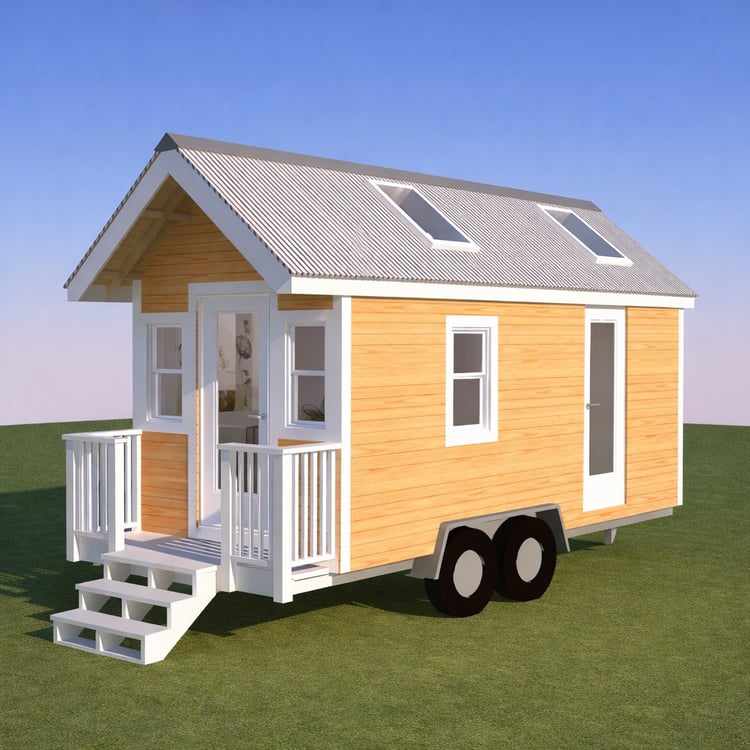
This design incorporates a 2-foot porch under an extended eave, making the interior living space effectively 16 feet long. It features a layout where built-in sofas can flip open to create sleeping space on the main level.
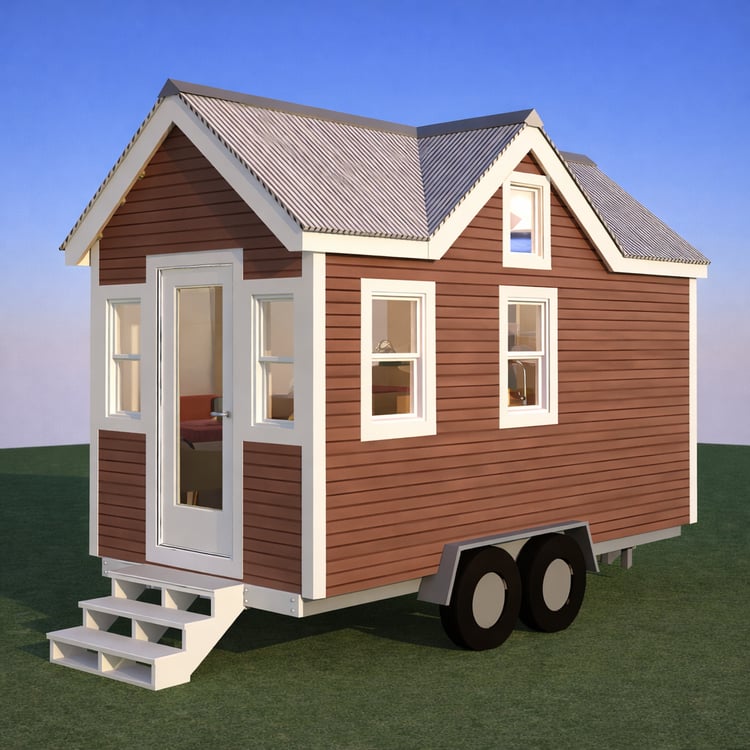
A highly mobile 16-foot design with a cross-gable roof. The cross-gable provides additional headroom when entering the loft. Windows in three of the gable walls provide excellent cross-ventilation.
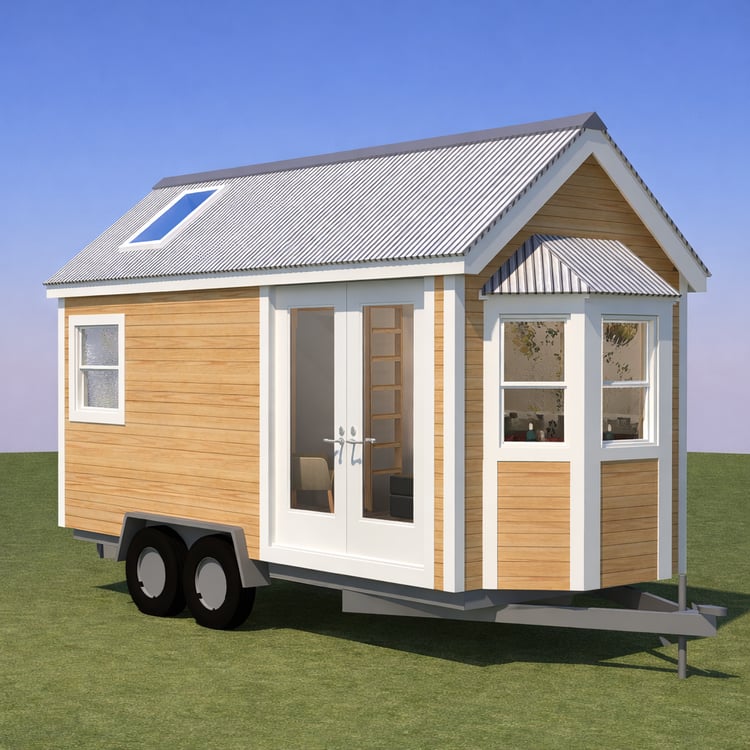
The Cleone features a side entry with French doors and a bay window extension that cantilevers over the trailer tongue. Despite its small size, it fits a bathroom, a corner kitchen, and a sleeping loft.
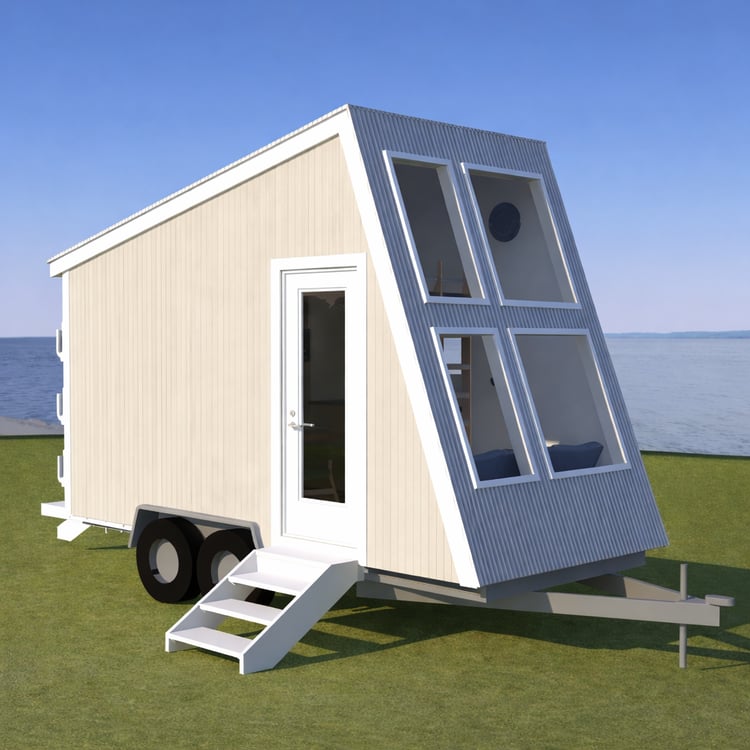
Designed for the road, the Anchor Bay features an aerodynamic shed roof shape to improve towing. Uniquely, this design includes an outdoor shower for outdoor enthusiasts.
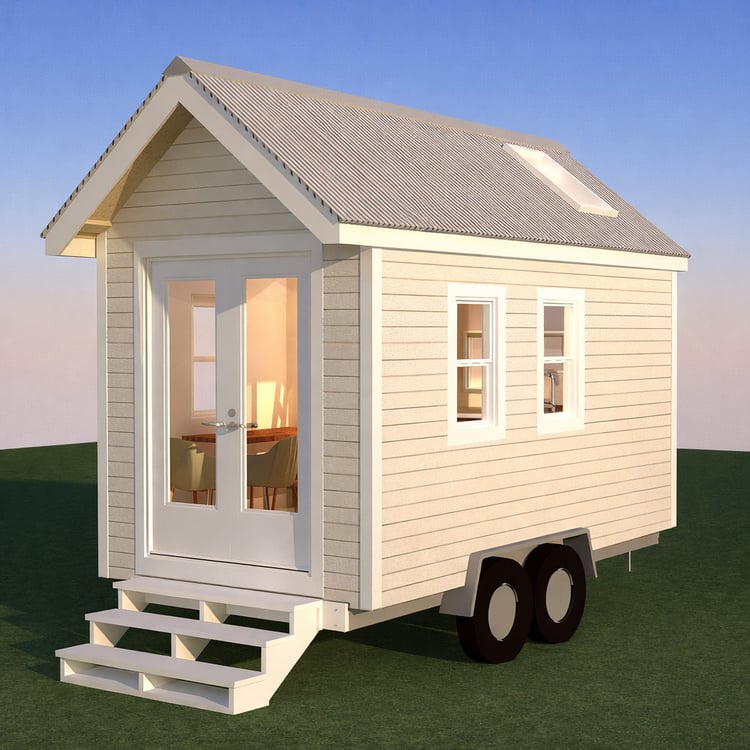
A 14-foot plan with a deep eave over the front French doors to provide shelter from the elements. It packs a bathroom, kitchen, and queen-sized sleeping loft into a tiny footprint.
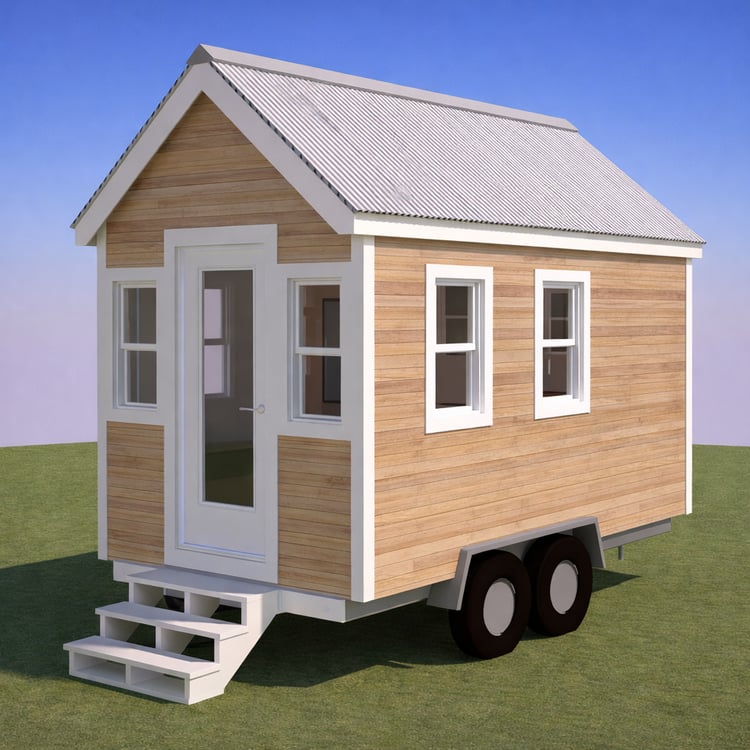
The smallest design on wheels in this collection. At just 12 feet long, it is a very compact option that still accommodates a bathroom, kitchen area, and sleeping loft.
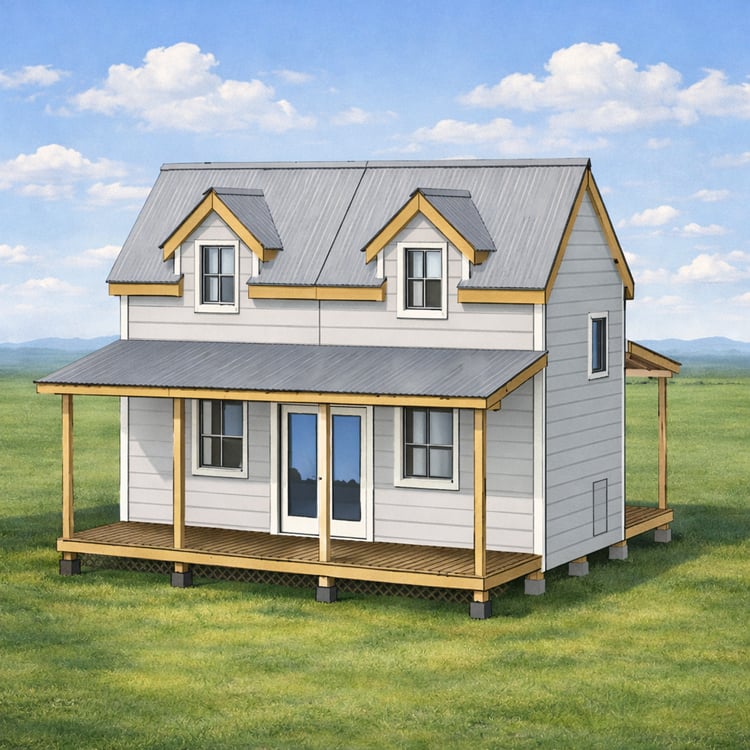
A two-story structure with a steep 12/12 pitch roof. It provides a full second floor with a bedroom and bathroom, totaling about 500 square feet of interior space.
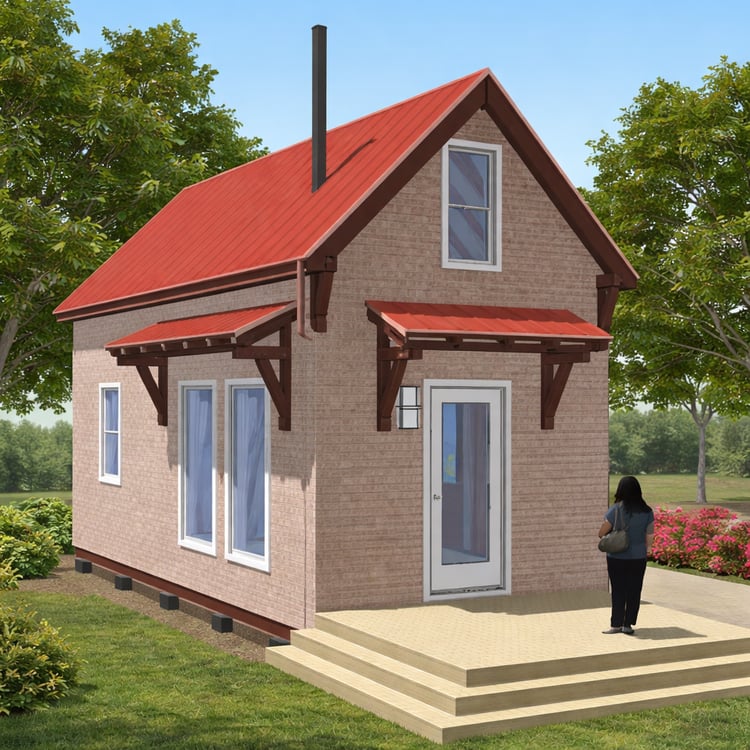
This popular design offers a lower-level living area and a versatile loft that can span half the house or be built as a full second floor.
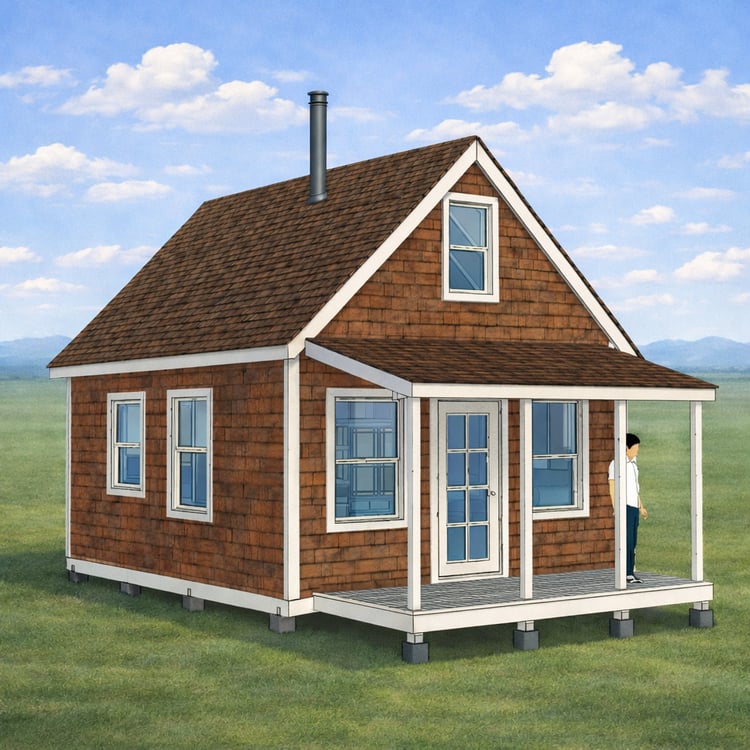
A larger footprint with standard 2x6 framing. It features a loft with a lower ceiling (ridge at 7.5 feet), making it suitable for sleeping or storage.
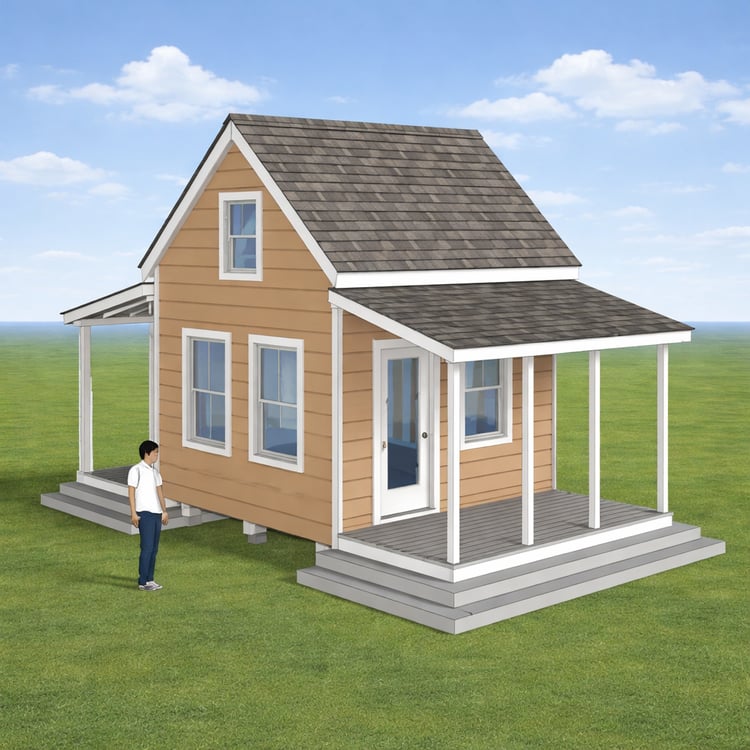
A tiny structure utilizing balloon framing (walls built in one piece) to simplify the construction process.
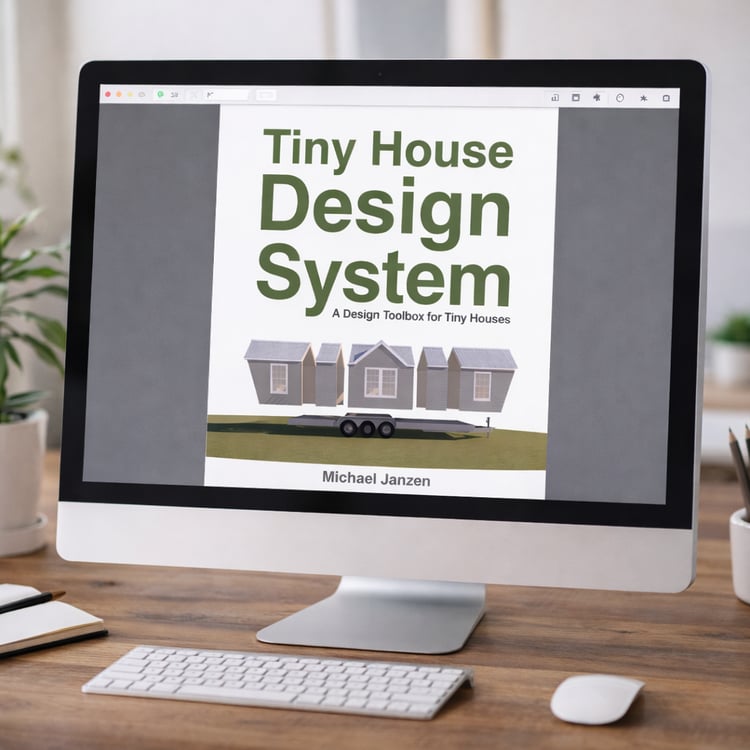
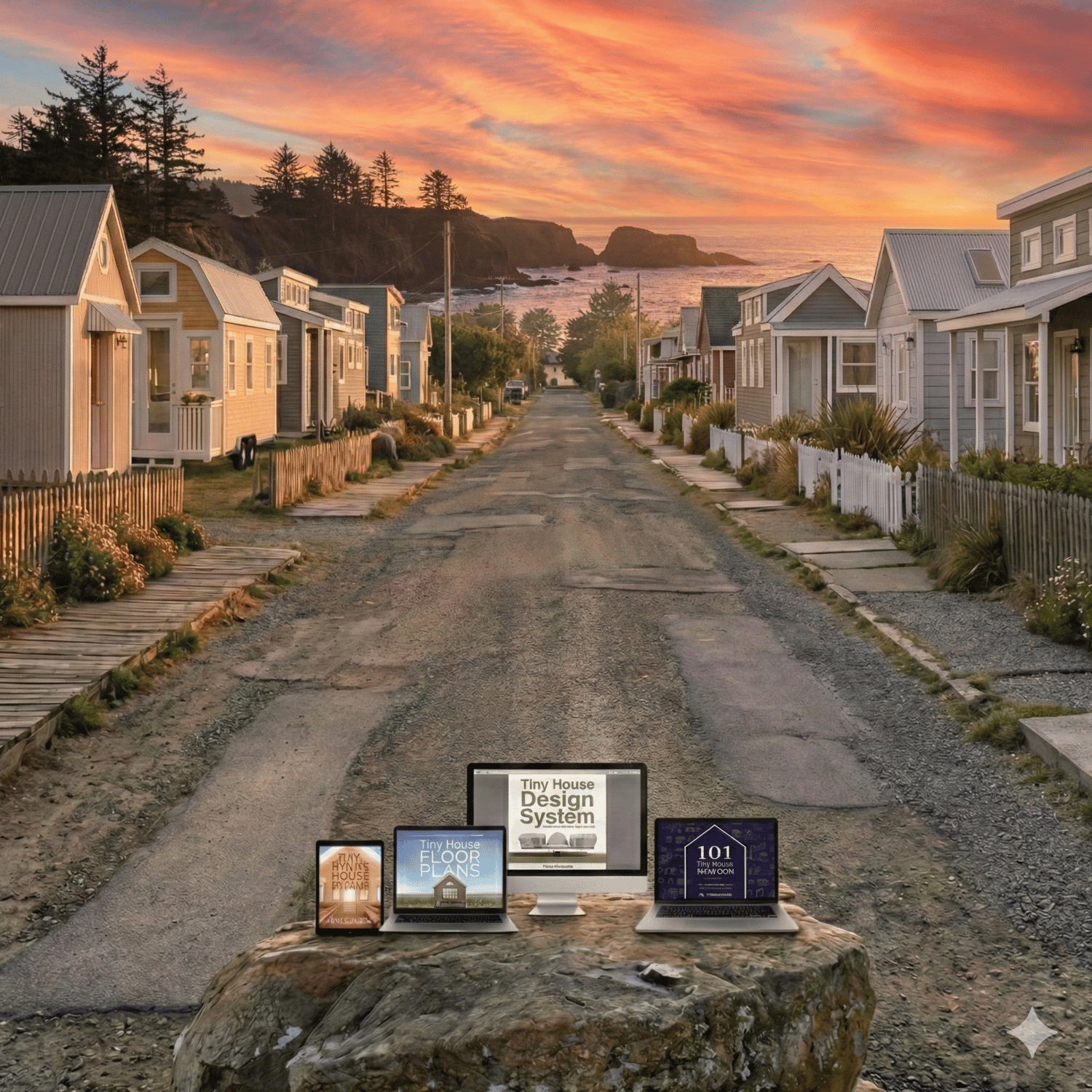
My method for using standardized "building blocks" to create cohesive designs. It includes dimensioned drawings that comply with legal road limits, helping create unique homes that remain road-legal.
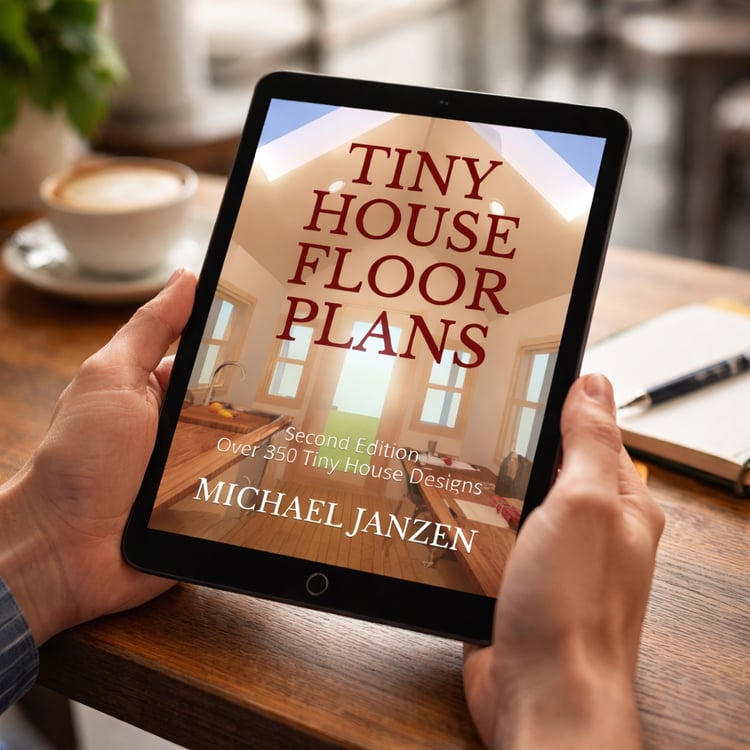
Over 350 floor plan layouts ranging from 12 to 36 feet. Intended to spark imagination and help you visualize what is possible within specific footprints.
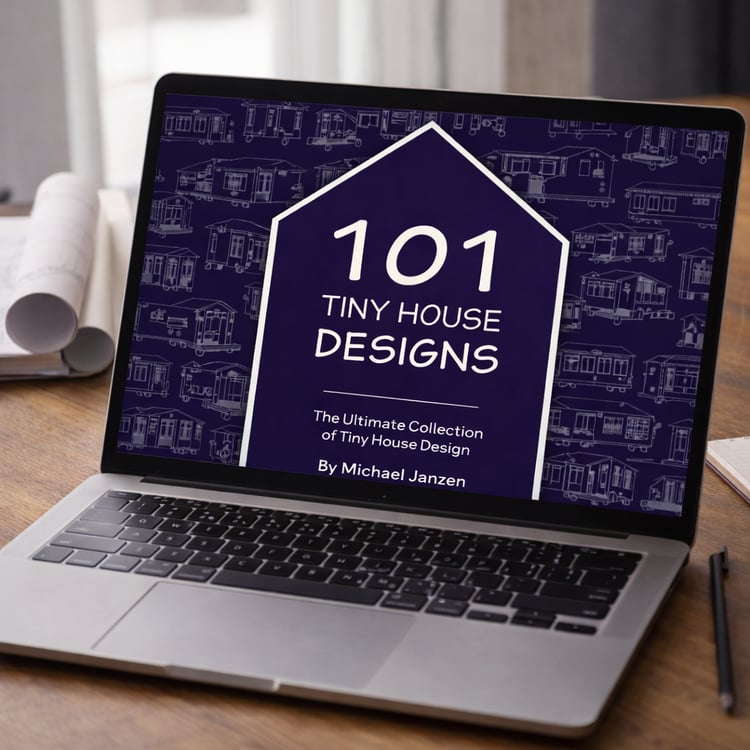
A concept book focusing on the balance and compromises required in small homes. Inside you’ll find 101 design concepts from 12 to 32 feet long, and you’ll see a variety of styles, layouts, themes, and common patterns.
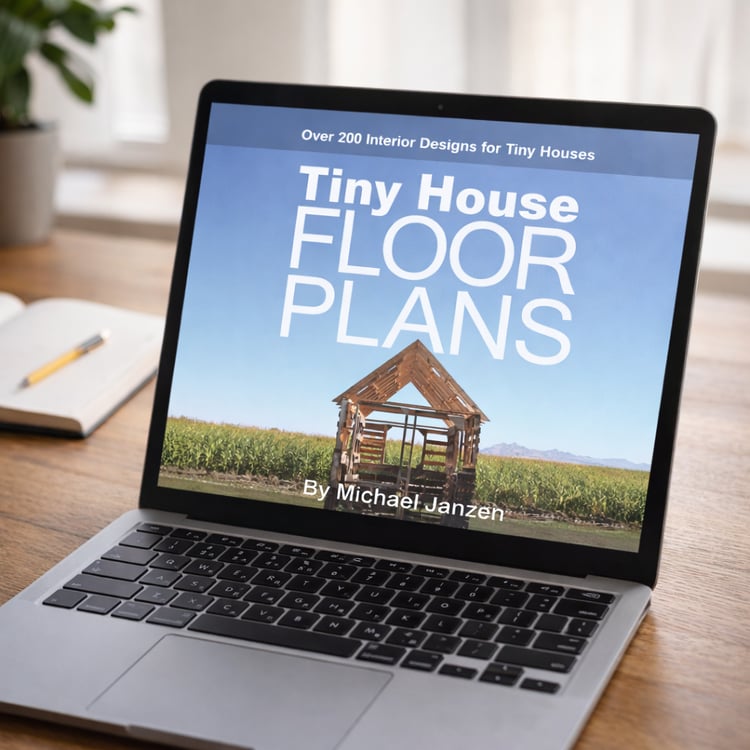
The original release. While the 2nd edition is more current, this volume contains the original 230 interior illustrations that defined the early years of my work.

As I close the chapter on this archive, I am looking forward to the new work beginning in 2026.
My focus is shifting away from the coastal "Mendocino" aesthetic you see in these older plans toward a style that is more Modern and Mid-Century Modern.
I am also setting new constraints for myself. I plan to limit all future fixed-foundation designs to 500 square feet or less, simply because I enjoy the challenge of making small footprints livable. For tiny houses on wheels, I intend to release designs in pairs—offering both a standard 8.5-foot road version and a wider 10-foot version of the same floor plan. I am also launching a YouTube channel to document the design process.
This won't be limited to tiny house plans. I plan to share the "how" and the "why" of the design work, including my experiments with 3D printing physical models of these homes. You will likely see me tackling some "extreme" design challenges just for the fun of it—exploring how to build on a cliff face, a mountain top, or in a desert with no water.
It is a way for me to sharpen my skills and share ideas with you in a more dynamic way.
I hope these legacy plans serve you well, and I look forward to seeing you on the new channel.
Warmly,
Michael Janzen
Tiny House advocates who publish online may want to join the affiliate program. I greatly value your time and expertise. I'm a maker, not a marketer. Help me get the word out: 30% monthly payouts via PayPal.