

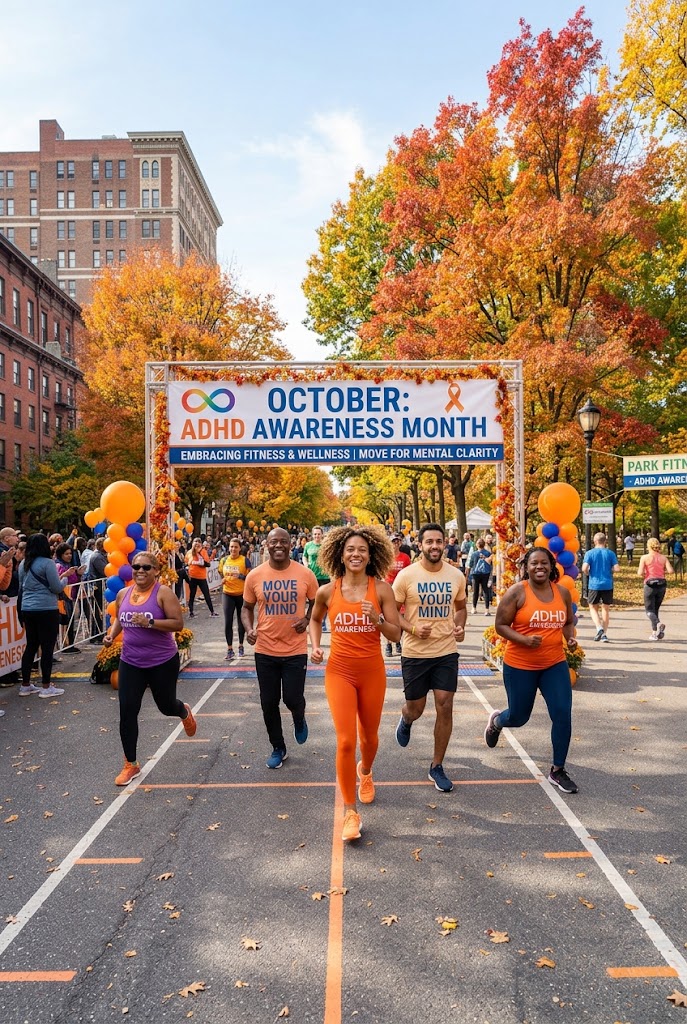
October is ADHD Awareness Month
October is a time to celebrate neurodiversity and share evidence-based tools that help neurodivergent individuals thrive. Having served nearly three decades in education I’ve spent my career helping young people navigate focus, self-regulation, and emotional well-being. This topic is also deeply personal to me, as a clinician and trainer who received my own adult ADHD diagnosis, I understand the daily dynamic of navigating a neurodivergent brain from the inside out. Managing focus, energy, and executive function with ADHD can feel like a constant battle. What many don't realize is that intentional movement is one of the most immediate ways to support the ADHD brain.
The Neurochemistry of ADHD & Movement
ADHD is characterized by lower baseline levels of key neurotransmitters, particularly dopamine (which drives motivation and reward) and norepinephrine (which boosts alertness and processing speed). When dopamine levels are low, the brain naturally seeks stimulation, often leading to task procrastination, mind-wandering, or motor restlessness.
Physical activity acts as a direct, natural catalyst for your central nervous system through three key mechanisms:
- An Immediate Neurotransmitter Surge: Moderate-to-vigorous movement triggers a rapid release of dopamine and norepinephrine, creating an immediate window of heightened focus and impulse control.
- Brain-Derived Neurotrophic Factor (BDNF) & Receptor Growth: Regular exercise increases dopamine receptor density and elevates BDNF (a protein vital for brain plasticity), strengthening the neural circuits that govern executive function over time.
- Suppressing Mind-Wandering: Exercise suppresses the brain's Default Mode Network (responsible for off-task daydreaming) while activating networks needed for sustained attention.
Matching Movement to Your Mindset
Fitness is never one-size-fits-all. Different movement styles offer unique brain benefits:
- Cardio & HIIT: Delivers the fastest immediate spike in dopamine and BDNF which is ideal before starting deep mental work.
- Complex Coordination (Kickboxing, Functional Movement): Engages both the prefrontal cortex and cerebellum, sharpening cognitive flexibility and reaction speed.
- Resistance & Stability Training: Delivers strong sensory feedback to ground physical restlessness and regulate energy.
Movement isn't about "fixing" your brain, it's about honoring your unique neurology. Drawing from three decades in helping youths regulate, and my own personal journey with ADHD, this October, I encourage you to use movement to unlock drive, clarity, and confidence from the inside out!