

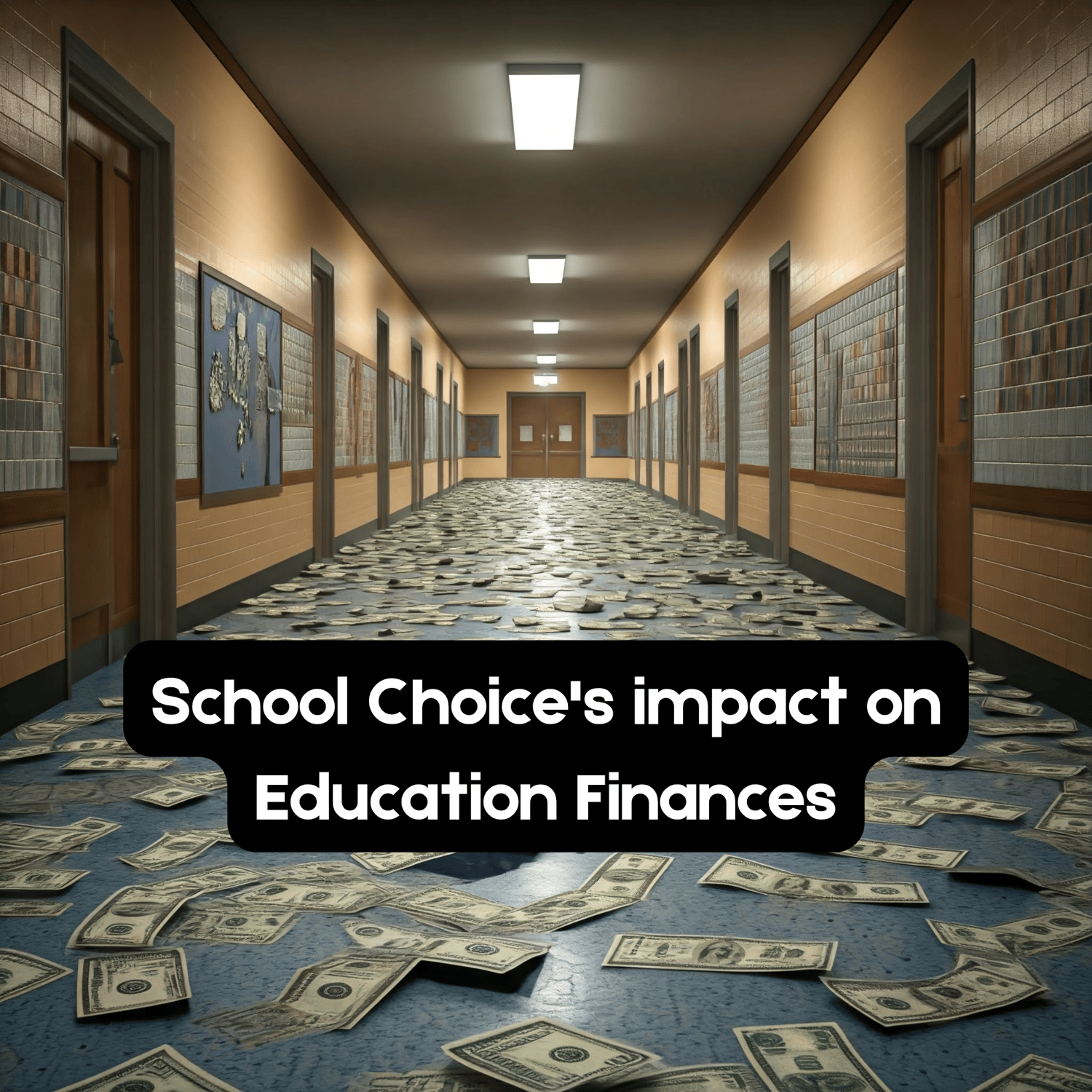
Every year, the conversation about education funding resurfaces, often accompanied by calls to “fully fund public schools.” On the surface, this seems like an obvious solution—more money should fix the systemic problems plaguing our schools, right? But for many parents, especially parents of color and those of disabled children, this argument feels hollow.
Why? Because they’ve witnessed firsthand how schools receive significant funds and yet fail to deliver equitable, high-quality education. Meanwhile, families struggling to navigate the system are left to fend for themselves, often turning to homeschooling or alternative schooling with zero federal or state support.
Let’s talk about why we need to hold public schools accountable for how they use their funds before we simply pour more money into the system.
The System Is Broken, Not Broke
It’s no secret that public schools operate in an unequal system. Schools in wealthier areas thrive, while those in low-income, predominantly Black and Brown communities scrape by with limited resources. This disparity is built into the very structure of how schools are funded—property taxes.
But the problem doesn’t stop at inequitable funding. Even schools that receive significant budgets often misuse those funds. Instead of focusing on improving literacy, numeracy, and special education services, funds are diverted to expensive administrative salaries, new sports stadiums, or shiny infrastructure projects. These expenditures may look good in annual reports, but they don’t move the needle on student outcomes.
Parents see this mismanagement and ask: Why are schools getting raises and building facilities when our kids still can’t read at grade level?
A System That Fails Parents of Color
For families of color, the inequities in public education are glaring. Public schools have historically underserved Black and Brown students, from overcrowded classrooms to underqualified teachers to racially biased disciplinary practices.
It’s no wonder that many parents of color have turned to homeschooling or charter schools to ensure their children receive a quality education. These families often operate on tight budgets, receiving no federal or state funding, yet they provide their children with personalized, high-quality instruction.
Contrast this with public schools that regularly fail to meet academic benchmarks despite having millions of dollars in their budgets. It’s a bitter pill for these parents to swallow when they’re told public schools need more money.
Disabled Students Are Being Left Behind
Disabled students are another group disproportionately failed by public schools. Special education services are often underfunded and poorly managed, leaving families to fight tooth and nail for their children’s rights.
While schools receive federal funding for special education through the Individuals with Disabilities Education Act (IDEA), many parents report that these funds don’t translate into meaningful support for their children. Instead, they’re met with excuses, inadequate services, and broken promises.
Parents shouldn’t have to sue their local school districts to get what their children are legally entitled to, yet this is the reality for far too many families. And while public schools fail to meet the needs of disabled students, some of the budget is spent on projects that have little to do with student achievement.
The Myth That More Money Fixes Everything
The idea that “more money fixes everything” is rooted in good intentions, but it doesn’t account for the reality of how funds are used. Consider this: despite increases in education funding over the years, student outcomes in reading and math have stagnated or even declined in many districts.
This raises a crucial question: where is the money going?
Instead of automatically assuming that schools need more money, we should demand transparency and accountability. How are schools allocating their budgets? Are they prioritizing the students who need the most support, or are they spending on superficial projects that don’t address core academic needs?
Here’s a financial breakdown of public, private, and homeschool student needs for one full year, highlighting the average costs associated with each type of education in the U.S. These numbers will include tuition, supplies, activities, and other common expenses.
1. Public School Students
Average Cost Per Student: $15,120/year (2022)
(National Center for Education Statistics data; varies by state)
While public education is funded by federal, state, and local governments, families still face out-of-pocket expenses:
Taxpayer Funding:
Public schools are funded primarily through property taxes, with some contributions from state and federal sources. The $15,120 figure includes teacher salaries, facilities, transportation, and materials.
Out-of-Pocket Costs for Families:
School supplies (notebooks, pens, backpacks): $150-$300
Field trips, extracurricular activities, and sports fees: $200-$1,000
Uniforms or dress codes (if applicable): $100-$300
Fundraising and PTO contributions: $50-$200
Total Family Costs: ~$500-$1,800/year
2. Private School Students
Average Cost Per Student: $12,350/year (elementary); $16,040/year (high school)
(National Association of Independent Schools data)
Private schools charge tuition and may rely on donations and endowments for additional funding. Costs vary widely depending on the school’s prestige and location.
Tuition:
Range: $5,000-$30,000/year
Some elite schools exceed $50,000/year.
Additional Costs:
Enrollment fees: $500-$1,500
Uniforms or dress codes: $300-$600
School supplies and textbooks: $200-$1,000
Extracurriculars (sports, arts programs): $500-$3,000
Technology fees (laptops or tablets): $200-$1,000
Total Family Costs: ~$7,000-$35,000/year (depending on school type and location)
3. Homeschool Students
Average Cost Per Student: $700-$1,800/year
(Based on Homeschool Legal Defense Association and National Home Education Research Institute data)
Homeschooling costs depend on how parents choose to structure their child’s education and what resources they purchase. Many families save money by using free or low-cost materials online.
Curriculum:
Prepackaged curriculum: $350-$700
Free or low-cost options (e.g., OpenStax, Project Gutenberg): $0-$200
School Supplies:
Notebooks, art materials, printer ink: $100-$300
Books and Online Resources:
Supplemental reading, workbooks, subscriptions: $50-$500
Field Trips and Co-ops:
Museum trips, co-op fees, group activities: $100-$400
Technology:
Laptop, software, or apps: $200-$1,000
Extracurriculars:
Sports, music lessons, clubs: $300-$1,000
Total Family Costs: ~$700-$1,800/year
Here’s a financial breakdown of the costs and compensation for public, private, and homeschool teachers, considering salaries, expenses, and other financial aspects for one full year.
1. Public School Teachers
Average Salary: $68,469/year (2022-2023)
(National Center for Education Statistics)
While public school teachers earn salaries funded by taxpayer dollars, they often incur out-of-pocket expenses for their classrooms.
Income and Benefits:
Salary: Varies by state and district, typically $50,000-$85,000/year.
Benefits: Health insurance, retirement plans (e.g., pensions), and paid time off.
Union Dues: $300-$1,000/year (for teachers who join unions).
Out-of-Pocket Costs:
Classroom Supplies:
Materials (decorations, books, educational tools): $400-$1,000/year.
Professional Development:
Courses, conferences, or certifications: $100-$500/year (may be reimbursed).
Technology:
Personal devices/software for work (if not provided): $100-$300/year.
Total Out-of-Pocket Costs: ~$600-$1,800/year
Time Commitment:
Contracted Hours: Typically 40 hours/week during the school year.
Additional Hours: Teachers often work 10-20 unpaid hours/week for grading, planning, or extracurriculars.
2. Private School Teachers
Average Salary: $40,000/year (varies widely based on location and school prestige)
Private school teachers typically earn less than public school teachers, though they may work in environments with smaller class sizes and fewer administrative burdens.
Income and Benefits:
Salary:
Range: $25,000-$60,000/year.
Benefits:
Some schools provide health insurance, but not all offer pensions or robust retirement plans.
Out-of-Pocket Costs:
Classroom Supplies:
Many private schools provide materials, but teachers may still spend $200-$600/year for extras.
Professional Development:
Often encouraged but not always reimbursed: $100-$500/year.
Technology:
Personal devices/software for work: $100-$300/year.
Total Out-of-Pocket Costs: ~$400-$1,400/year
Time Commitment:
Similar to public school teachers, though private schools may have more extended extracurricular obligations and fewer vacation days.
3. Homeschool Teachers (Parents or Tutors)
Average Cost: $700-$2,500/year (out-of-pocket expenses, not salary)
Homeschool “teachers” are often parents or private tutors who must cover educational costs themselves.
Income:
Parents do not receive income for homeschooling.
Tutors charge an average of $20-$50/hour, potentially earning $10,000-$30,000/year for part-time work.
Out-of-Pocket Costs:
Curriculum:
Prepackaged or custom: $350-$700/year.
Supplies and Materials:
Books, art supplies, lab kits: $100-$300/year.
Professional Development:
Workshops, training (for parents/tutors): $100-$200/year.
Technology:
Laptops, software, or educational apps: $200-$1,000/year.
Extracurriculars:
Sports, music, co-op fees: $300-$1,000/year.
Total Out-of-Pocket Costs: ~$700-$2,500/year
Time Commitment:
Parents often spend 20-40 hours/week teaching, planning, and coordinating activities.
Tutors typically work 10-25 hours/week depending on their arrangement.
What Accountability Looks Like
Accountability isn’t about blaming teachers or cutting funds—it’s about ensuring that existing resources are used effectively and equitably. Here’s what that could look like:
1. Transparent Budget Reporting
Schools should provide clear, accessible reports on how they’re spending their funds. Parents and communities deserve to know where their tax dollars are going.
2. Prioritizing High-Impact Areas
Funds should be directed toward areas that directly impact student success, such as literacy programs, math interventions, special education services, and teacher development.
3. Equitable Resource Allocation
Schools in underserved communities should receive additional resources to address systemic inequities. This includes providing targeted support for disabled students and ensuring all students have access to high-quality instruction.
4. Community Involvement
Parents and community members should have a seat at the table when it comes to budget decisions. Their voices are crucial in holding schools accountable.
Here’s a comparison of the financial impact on taxpayers for public, private, and homeschool education, breaking down costs and highlighting which system places the greatest financial burden on taxpayers:
1. Public School Education
Taxpayer Impact: High
Public schools are funded primarily by property taxes, with additional contributions from state and federal taxes. On average, $15,120 per student per year is spent in the U.S. public education system.
Funding Sources:
Local Taxes (Property Taxes): ~45% of funding
State Taxes: ~45% of funding
Federal Taxes: ~10% of funding
Breakdown Per Student:
Teacher salaries, benefits, and pensions: ~60-80% of school budgets
Facilities, maintenance, and utilities: ~10-15%
Transportation: ~5-10%
Classroom materials and programs: ~5-10%
Taxpayer Cost for 1,000 Students:
$15.1 million/year
Note: Costs vary by state, with states like New York spending over $25,000 per student and others like Idaho spending closer to $8,000.
2. Private School Education
Taxpayer Impact: Low
Private schools are primarily funded by tuition paid by families and donations/endowments. On average, tuition is $12,350/year for elementary school and $16,040/year for high school, with no direct cost to taxpayers.
Funding Sources:
Family Tuition Payments: ~85-90%
Endowments and Donations: ~10-15%
Taxpayer Contributions:
Private schools may receive minimal public funding in the form of vouchers or tax credits, depending on the state. Voucher programs typically cost taxpayers between $4,000-$8,000 per student per year, far less than public school spending.
Taxpayer Cost for 1,000 Students:
With vouchers: ~$4-8 million/year
Without vouchers: $0/year
Note: Not all states offer voucher programs, so most private school costs are fully borne by families.
3. Homeschool Education
Taxpayer Impact: Minimal to None
Homeschooling is almost entirely funded by families themselves, with no direct cost to taxpayers. Families spend an average of $700-$1,800 per student per year on curriculum, supplies, and extracurriculars.
Funding Sources:
Families: 100%
Taxpayer Contributions:
Indirect costs include access to public resources like libraries, some school district services (e.g., special education, extracurriculars), or tax credits for homeschool expenses in select states. These costs are minimal compared to public school spending.
Taxpayer Cost for 1,000 Students:
$0-$100,000/year (if tax credits or district services are accessed)
In any other job sector, a monopolistic kleptocracy like the public school system—where resources are mismanaged, accountability is minimal, and the system exploits taxpayers without delivering optimal outcomes—would likely face significant challenges or collapse due to competition, public backlash, and regulatory intervention.
Market Forces Would Create Competition
In most sectors, a monopolistic organization failing to meet customer needs would be displaced by competitors offering better services at lower costs. For example:
Education alternatives: If public schools operated like a failing monopoly in the private sector, private schools, charter schools, and homeschooling would expand rapidly as alternatives.
Innovation: Companies (or schools) offering specialized programs, individualized learning, or higher efficiency would gain market share.
Government Oversight and Antitrust Action
In industries with monopolistic practices, governments often intervene:
Antitrust Laws: In sectors like telecommunications or banking, monopolies are broken up to encourage competition. Public schools could face similar decentralization if their inefficiencies were treated as violations of market fairness.
Performance-Based Regulation: Governments could enforce policies tying funding to outcomes (e.g., test scores, graduation rates) to improve accountability.
Customer Backlash and Mass Exodus
In the private sector, consumers (or parents, in this case) would stop "buying the product." Dissatisfied families would leave public schools en masse for alternatives like homeschooling, private schools, or online programs.
Examples of similar behavior: Companies like Blockbuster or Kodak failed because they resisted innovation and ignored customer needs.
Bankruptcy or Collapse
If a monopolistic system like public schools were treated like a business:
Financial Insolvency: A poorly managed organization with unsustainable spending and low outcomes would eventually run out of resources. Public schools, however, are taxpayer-funded, which artificially sustains inefficiency.
Privatization: Some schools or districts could be privatized, much like governments outsource failing public services to private companies.
Workers Would Be Held Accountable
In other sectors, employees in underperforming organizations face scrutiny:
Performance Metrics: Teachers and administrators would have performance reviews tied to outcomes like student improvement, efficiency, and innovation.
Job Loss: Persistent underperformance would lead to termination or restructuring.
A Call to Action
It’s time to shift the conversation. Instead of reflexively calling for more money for public schools, let’s demand accountability for the money they already have. Let’s push for policies that prioritize equity and transparency. Let’s listen to the parents who have had to take matters into their own hands because the system failed them.
Public education is a cornerstone of our democracy, but it’s also a system that has long been broken. Fixing it requires more than just throwing money at the problem—it requires a commitment to accountability, equity, and putting students first.
If we want every child to have a fair shot at success, we need to hold public schools accountable for their promises. Only then can we build a system that truly serves all students, not just a privileged few.
Comments ()