
Your Cart
Loading

Subscribe to Astronomical Learners

Want to support my work for free? The best way to help Astronomical Learners grow is to Like, Subscribe, and Share my videos! Your engagement helps me continue creating research-based, fun educational content for everyone.
News

The Factory Model Metaphor is Literal: Dismantling the Capitalism Behind Outdated Pedagogy
If you have ever felt that our educational systems treat human beings like widgets on an assembly line, you aren’t projecting. You are observing the system exactly as it was designed to function. When we look at the dominant frameworks in education ...
Read More
The Economic Food Web: Why Ecosystem Design is the Future of Households, Education, and the Workforce
For over a century, our society has been running on a metaphor that is breaking us: the machine. We treat our corporations, our schools, and even our households like assembly lines. We demand maximum efficiency, predictable outputs, and a flat, unyi...
Read More
Upgrading from the Factory Model: Why Local Resilience is the Future of Households, Education, and the Workforce
For over a century, our society has been running on an outdated infrastructure designed for a different era: the factory line. We treat our corporations, our schools, and even our households like centralized assembly lines. We demand maximum standar...
Read More
The "Learning Recession" is No Accident: Why It’s Time to Return to Structured Literacy
The latest headlines from the Education Scorecard are sobering, but for many parents and educators, they aren't surprising. The "Learning Recession" currently gripping American schools—where reading and math scores have plummeted to 20-year lows—did...
Read More
Public Education as a Community Hub, Not a Corporate Entity
The current alarm regarding declining birth rates—down nearly 23% since 2007—highlights a fundamental flaw in how we view public education. By treating schools as businesses that require "constant growth" to remain viable, districts have become vuln...
Read More
Let's Debunk the Myth of the "Lean" School Budget
At its core, a public school system is a service, not a business. In a corporate model, success is measured by profit margins, "lean" operations, and constant growth. But when these business metrics are applied to education, the primary mission—serv...
Read More
Education is the way to Recession-Proof Your Household
I was in the 9th grade during the 2008 crash. I didn't just read about the "Great Recession"— I felt the air in the room change. If you're like me, you watched the adults around you realize that the "safe" patterns they had been promised were actual...
Read More
We must not forget that "Enrichment" Isn't Just for the Privileged Families
The debate over education in the United States often focuses on test scores, funding formulas, and pedagogical methods. While these are important, we sometimes overlook the essential role of experiences—of "accretion"—in fostering deep understanding...
Read More
The Hidden Map of the Classroom: How Schools Really Handle Who We Are
When we talk about "diversity" in our schools, it’s easy to get caught up in the buzzwords. We usually think of race or gender, but true diversity is much broader—it includes a student’s neurobiology, their family’s financial reality, and the neighb...
Read More
The 2026 Reality Check: Why "Neutral" Education Doesn't Actually Exist
If you’ve been following the news lately, you’ve probably heard a lot of talk about removing "DEI" (Diversity, Equity, and Inclusion) from our schools. It’s often framed as a move toward "neutrality" or a return to "the basics." But as parents and a...
Read More
Beyond the Factory Gates: Why It’s Time to Retire Industrialism Model of Schools
For decades, the American school system has operated under the shadow of a "factory-to-industrialism" pipeline. It is a model rooted in 1970s materialism and behaviorism—a philosophy that treats children as products, parents as stakeholders, and edu...
Read More
Cultivating the Future: A K-12 Family Guide to Earth Day
Promoting Literacy, Numeracy, and Ecology for Every Learner Earth Day is more than just a date on the calendar; for families and tutors, it’s a powerful "living classroom." Taking inspiration from the local community resources found in the Atlanta P...
Read More
The Truancy Trap: The Irony of Parental Rights and the 14th Amendment
In the United States, the legal foundation for parental rights is rooted deeply in the Due Process Clause of the 14th Amendment. The Supreme Court has repeatedly affirmed that parents have a fundamental liberty interest in "directing the upbringing ...
Read More
How Do We Prepare Our Kids for the Unknown Workforce of The Future?
How Do We Prepare Our Kids for the Unknown Workforce of The Future? I recently saw a headline that felt like a glitch in the economic matrix: an Iowa firm, Ark Data Centers, is spending $136 million on a campus expansion in Ohio. In a traditional ec...
Read More
Are you ready for 2026 Smashwords Ebook Week?
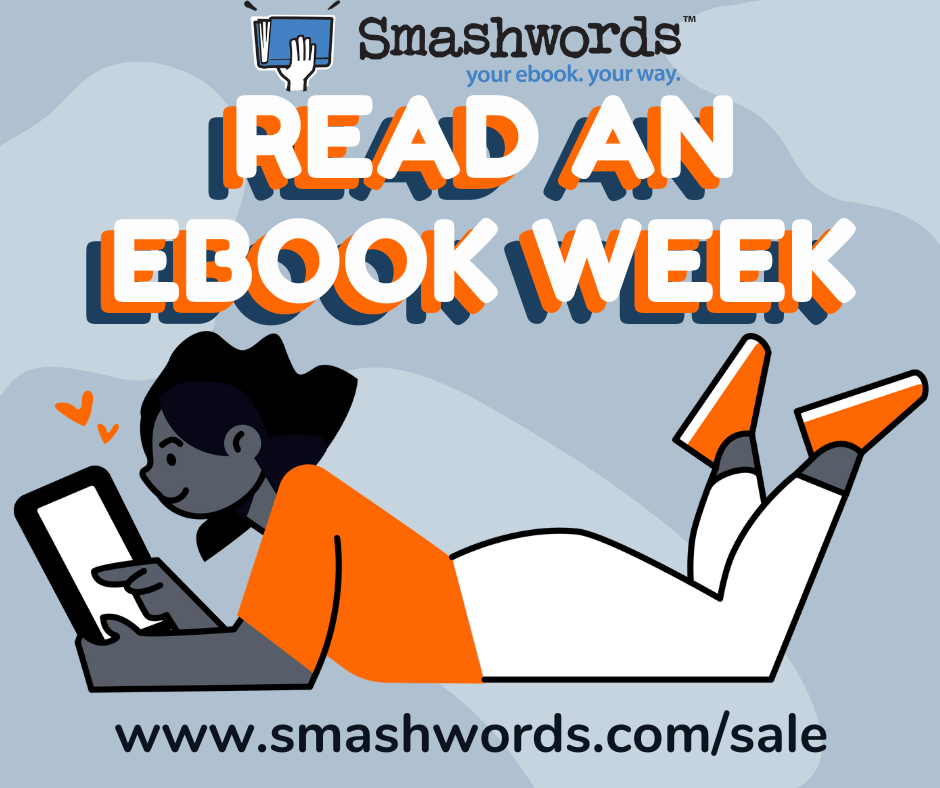
We are fast approaching Read an Ebook Week, a week that encourages readers to pick up the digital device of their choice and download a new book to read. I'm excited to announce that March 1 - March 7 my entire collection of books will be available ...
Read More
Walking the Line: Upholding Rights and Responsibilities in Our Schools
Schools are more than just buildings; they are the vibrant heart of our community, where young minds are shaped and futures are forged. In these dynamic environments, it is crucial that we all operate with a shared understanding of the frameworks th...
Read More
Beyond the C-Suite: Reclaiming the School as a Local Ecosystem
The modern high school "Organization Chart" is starting to look indistinguishable from a Fortune 500 company. We see Chief Operating Officers, marketing departments, and multi-million dollar contracts with global vendors for everything from tater to...
Read More
Tiers for Teachers, Not Tiers for Tots: Rethinking MTSS for Student Success
As advocates of education and parents, we all share a common goal: to see every child thrive. In our pursuit of this, many schools utilize a framework called Multi-Tiered System of Supports (MTSS). It’s designed to provide targeted help to students ...
Read More
When Social Media Trends Become Teachable Moments
Parents and Tutors Can Use AI Trends to Build Media Literacy—and Protect Kids If you’ve spent any time on social media lately, you’ve probably noticed waves of identical AI-generated images, captions, or “creative” trends appearing all at once. For ...
Read More
From History Books to Heartbeats: Why the Civil Rights Struggle is More Relatable Than Ever
A recent article by Axios (January 19, 2026) explores the shifting perspective of young Americans toward the Civil Rights Era. It suggests that for Gen Z and Gen Alpha, the 1960s can sometimes feel like "ancient history." But as educators, parents, ...
Read More
The Scarcity Trap: Why the "Business of Education" is Failing Our Kids (and How to Fix It)
We have a fundamental misunderstanding of how our schools operate. We tell ourselves they are a public service, yet we force them to run like a failing business. This isn't just an "educational" problem; it's a structural accounting error that is hu...
Read More
Beyond the Bake Sale: Reimagining How We Fund American Education for Every Child
For generations, the dream of a quality education in America has been tethered to a system that, while well-intentioned, often falls short: the property tax. We've all seen the consequences – gleaming schools in affluent neighborhoods and strug...
Read More
We Need to Bring Spelling Back to the Classroom: A Parent’s Advocacy Guide
If you’ve looked at your child’s schoolwork lately, you might have noticed something missing. While we see plenty of reading logs and math sheets, the "spelling list" or dedicated spelling lesson has vanished from many American classrooms. Currently...
Read More
Beyond the Algorithm: Rediscovering the "Library Web" for Curious Kids
In the early days of the internet, sites like Yahooligans! and Hoagies’ Gifted felt like magic. They weren’t endless scrolls of algorithmic noise; they were curated libraries—digital hallways where every door led to something safe, educational, and ...
Read More
The “College-to-Office” Path Isn’t Working the Way It Used To—What That Means for K–12 Students
Many parents and tutors are noticing a shift in how students talk about their futures. More middle- and high-school students are openly questioning whether college is “worth it.” Some are disillusioned by student debt. Others see older siblings or p...
Read More

Tutoring

The Print Connection: Partner Reading WITH Children > Read Aloud to Children
To move a child from a struggling decoder to a fluent, independent reader, we must bridge the gap between their ears and their eyes. That bridge is Partner Reading—sometimes referred to in educational research as Shared Book Reading, Dyad Reading, o...
Read More
Systematic Phonics Made Simple
To move away from "guessing," we use a process called Scaffolded Decoding. This ensures the student never feels overwhelmed because we break the "code" into tiny, bite-sized pieces. Step 1: The "Warm-Up" (Phonemic Awareness) Before looking at letter...
Read More
The Tuna Test: Why Decoding is the Ultimate Tool for Autonomy
In the world of literacy advocacy, we often hear a recurring "hypothetical fear": What if we focus so much on the Science of Reading that we just create kids who can decode but can’t think? There is a persistent myth that decoding is a mechanical, r...
Read More
Scaffolding the Six Syllable Types: From "Hooks" to Linguistic Mastery
In the world of Structured Literacy, we often debate terminology. Should we call it "Magic E" or "Vowel-Consonant-e"? "Bossy R" or "R-Controlled"? The reality is that effective instruction isn't about choosing one term—it’s about scaffolding the tra...
Read More
I am a Structured Literacy Tutor (and not a "Multisensory" Brand)
In the world of reading intervention, certain names carry a massive amount of weight. Parents and schools often search for tutors specifically certified in "Orton-Gillingham," "Wilson," or "Lindamood-Bell." These programs are often marketed as the "...
Read More
From Phonics to Philology: Let's talk about ELA Pacing
The "Why" Behind the Pace Why Your Child’s Reading Speed Matters More Than You Think If you’ve been following the "Reading Wars" on social media or in the news, you probably keep hearing the word pacing. To a parent, it can sound like we’re trying t...
Read More
From Guessing to Growing: The Power of Evidence-Based Literacy
There is a specific kind of magic that happens when a child stops looking at a picture for clues and starts looking at the letters for meaning. Since February, I have been working with a student who has undergone that exact transformation. Watching ...
Read More
The Library Table Trap: Why "Look at the Picture" is Failing 40% of Our Kids
I was sitting in the library today when I overheard a tutoring session that perfectly illustrated the "Literacy Crisis" in America. To the casual observer, it looked like a dedicated teacher helping a struggling student. But to anyone grounded in th...
Read More
From Compliance to Connection: Presuming Competence in the K-12 Classroom
In the traditional "behavior-first" classroom, the goal is often compliance. We look for quiet bodies, eyes on the teacher, and immediate following of directions. If a student doesn’t meet these standards, the system often assumes they are &...
Read More
From "Word-Blindness" to Brain Science: The 130-Year Error That Taught Kids to Guess
In the world of education, we often talk about "evidence-based practices" as if they’ve always been the North Star. But if we look back at the origins of how reading was taught in the early 20th century, we find a story not of science, but of medica...
Read More
The Predictive Brain: A New Frontier for Structured Literacy
If you’ve spent any time in the world of Structured Literacy, you know we are big fans of the "bottom-up" approach. We teach the smallest units of sound (phonemes), map them to letters (graphemes), and eventually build up to sentences and stories. I...
Read More
Beyond the Flashcard: Why We Need to Categorize Our Word Lists
For decades, the "Sight Word List" has been a staple of the K-12 classroom. We give students stacks of high-frequency words—often a confusing mix of "Dolch" or "Fry" words—and ask them to memorize them by rote. But what if we are working against th...
Read More
Are you a Reading Tutor? Or are you a Well Meaning Fraud?
In 2026, the term "Reading Specialist" is no longer a generic title. The "Reading Wars" are over, and the Science of Reading has won. However, many parents and new tutors are still navigating a sea of "Balanced Literacy" holdovers that don't meet th...
Read More
Can We Use Deductive Reasoning to Master Literacy?
In many traditional learning environments, students are often taught to "guess" the meaning of an unfamiliar word by looking at pictures or skimming the surrounding sentence for a "vibe." However, for many learners—especially those with dyslexia or ...
Read More
Tackling the "Vowel Trap": How I Use These Visual Aids to Boost Student Reading
We've all seen that moment. Your student is reading along beautifully, and suddenly they hit a word like MATE, and it comes out as MAT. Or maybe they read KITE as KIT. That frustrating pause, the confused look—they've fallen into the "Vowel Trap." D...
Read More
The "Tourist" Trap: Why Excerpts are Killing the Joy (and Science) of Reading
In the world of literacy education, we are currently obsessed with "knowledge-building." On paper, it’s a noble goal: move away from dry, repetitive "skill-drilling" and give students rich, meaningful content. But as a tutor and homeschooler, I’ve n...
Read More
From Guesswork to Empowerment: Why Training is the Ultimate Game Changer for Literacy
If you are a parent or a tutor, you know the specific, heavy kind of frustration that comes when a bright child looks at a word like "stamp," sees a picture of a letter, and guesses "envelope." For years, the education world has relied on Whole Lang...
Read More
The "Readiness" Myth: Why Your Child Doesn’t Need to Qualify for an Education
If you are a parent or a tutor advocating for a child, you have likely heard some version of this excuse:"They just aren't school-ready yet.""We can't teach them until their behavior improves.""Parents aren't sending us 'teachable' students anymore....
Read More
Why Tutors Must Say "No" to Third-Party Payments (and What to Do Instead)
Imagine this scenario: A student, let's call him Leo, is excelling in your math sessions. You're making progress. Then, a generous aunt contacts you, offering to pay for the next three months of lessons. Your initial reaction might be, "Fantastic! M...
Read More
Tutors Should Embrace the Neuroscience of Learning
As tutors, we pride ourselves on being the "educational scouts" for our students. We meet them where they are, identify their unique hurdles, and guide them toward mastery. But for decades, a well-meaning but flawed compass has led many of us astray...
Read More
From the Thinking Chair to the Whiteboard: Mastering Deductive Tutoring
If you grew up in the 90s, you didn't just watch television; you were mentored by the masters of direct instruction. Whether it was Bill Nye shouting a scientific law or Steve sitting in his Thinking Chair to synthesize clues, these icons used Deduc...
Read More
Beyond the Bell: Finding the Sweet Spot for Your Child’s Schedule (K-12)
As parents, we all want the best for our children. We juggle school, homework, playdates, and what feels like an endless menu of extracurricular activities. From soccer to piano, coding to debate club, the options are exciting – and sometimes overwh...
Read More
The Great Outdoors Classroom: Unlocking Learning in Your Own Backyard
As a tutor and a parent, I’m constantly searching for ways to spark genuine curiosity and deep learning in children. We all know the magic of a good story or the thrill of a hands-on experiment. But what if I told you that one of the most powerful l...
Read More
Parents Are Seeing Through the Hype of Edtech
We’ve all seen it: the shiny new educational app, the tablet-based curriculum promising accelerated learning, the enthusiastic marketing campaigns from EdTech companies. In the wake of the pandemic, digital tools in education exploded, often pitched...
Read More
Why Only ~60% of U.S. 4th Graders Read Proficiently — and What We Can Do About It
Every few years, national reading results spark the same question: Why are so many children struggling to read fluently by fourth grade? According to the National Assessment of Educational Progress, roughly 60% of U.S. fourth graders score at or abo...
Read More

Reading

Whole Language in K-12 is a pathway to Functional Illiteracy
Imagine a school system that promises to teach your child to read, but the curriculum requires fifty years to complete. It sounds like a dystopian exaggeration, but if you sit down and look at the actual math behind how children learn to read, it re...
Read More
Structured Literacy and Leveled Reading Are Not Aligned
Walk into any vibrant school library or elementary classroom, and you will likely see two well-intentioned practices living side by side. On the wall, there might be a systematic phonics scope and sequence—such as the University of Florida Literacy ...
Read More
The Ultimate Skill-Based Summer Reading Master List (K–8)
This master list decouples reading practice from algorithmic numbers and letters (Lexile/AR bands). Instead, it organizes text selection by instructional skill and cognitive demand, ensuring that summer reading reinforces classroom instruction rathe...
Read More
What Co-Occurring ADHD & Reading Differences Actually Mean for Our Kids
If you are parenting a child with a SLD - Specific Learning Disability (like dyslexia) and ADHD, you might find yourself constantly worrying: Is their ADHD making it twice as hard for them to learn to read? Is their brain fundamentally locked out of...
Read More
Your Child Doesn’t Need to Memorize Every Word in the Dictionary
As a parent, it is incredibly exciting to watch your child bring home their first reading lists. But have you ever looked at a modern reading curriculum—like UFLI or Cox Campus—and wondered, “Wait, are they going to cover all the words my child need...
Read More
Dismantling the Myths: Why Reading and Spelling Are a Package Deal
If you are a parent or a virtual literacy tutor, you have likely run into some deeply entrenched ideas about how children learn to read. For decades, a philosophy often called "Whole Language" or "Balanced Literacy" has shaped classrooms. One of its...
Read More
How to Help K-12 Students Self-Teach Thousands of New Words
Every educator and parent knows the panic of the impending SAT or ACT. Suddenly, high schoolers are crammed into rooms, staring at daunting lists of "SAT words"—sophisticated vocabulary like capricious, ephemeral, or pernicious. But trying to memori...
Read More
Literacy as Power: Why Your Reading Method Matters for Democracy
In the world of education, there is a quiet but fierce battle between two philosophies: Structured Literacy (decoding words based on phonics) and Whole Language (guessing words based on context, pictures, or "word shapes"). While this might seem lik...
Read More
Cracking the Code: What a Phoenician Prince Can Teach Us About Literacy Today
The history of how we write is not just a collection of dusty dates and ancient myths; it is a technical manual for how the human brain learns to read. If we look closely at the legend of Cadmus, the Phoenician prince credited with bringing the alph...
Read More
Beyond the "Mind's Eye": Why the Visualization Neuromyth Limits Literacy
You might see a flashy and trending social media literacy post that suggests that the "key" to reading comprehension is helping children "visualize" stories—asking them to picture the color of a character's hair or the temperatu...
Read More
The Myth of the "Moving Word": Reframing Dyslexia for What It Truly Is
There is a persistent image of dyslexia that has lived in the public consciousness for decades: a child looking at a page where letters are dancing, floating, or vibrating. While well-meaning advocacy groups and media portrayals often lean on this v...
Read More
The Constructivist Trap: Why "Discovery" is Failing Our Students in 2026
For decades, teacher preparation programs have been steeped in the philosophy of Constructivism. On paper, it sounds beautiful: children are active participants who "construct" their own understanding of the world through experience. It was original...
Read More
True Accommodations are Tools, Not Crutches
IIn the world of education, we often hear the term accommodation. We envision it as a bridge—a way to get a student from point A to point B when the traditional path is blocked. But sometimes, the bridge we build is so over-engineered and confusing ...
Read More
Beyond the Script: Why Student Autonomy is the Key to Real Literacy
We often talk about the "Core Curriculum" as a foundation, but for many students, it feels more like a cage. I grew up in a school system where the curriculum was neurotypical-centric, heavily Eurocentric, and—frankly—filled with a specific kind of ...
Read More
Education Policy is Not a Light Switch: The Long Game of Literacy
When people look at the dismal reading scores of 2026, the immediate instinct is to find someone to blame today. But education policy is not a light switch; you don’t flip it and see instant illumination. It is more like steering a massive oil tanke...
Read More
The Literacy Paradox: Why We Are Fighting Over Books Kids Can't Read
As a millennial born in the early '90s, I am part of a "Goldilocks" generation of readers. We were the last cohort to benefit from a systematic focus on phonics and structured literacy before the "Balanced Literacy" monopoly took hold of public educ...
Read More
Is Your Child's School Operating on Science or Sentiment?
When you walk into a meeting with a school learning specialist or a "reading expert," you expect to hear the latest in cognitive science. Instead, many parents are met with a philosophy that dates back to the 1840s—a view that treats reading as a "n...
Read More
The Evolution of Systematic Decoding: A Brief History of Phonics Primers in the United States
The history of literacy in the United States reveals a persistent tension between "rational methods" that empower the individual and "word methods" that often serve institutional or corporate interests. While 19th-century educators developed sophist...
Read More
From "Infinite Signs" to the Reading Brain: Why Phonics is the Great Equalizer
In the 19th century, educator John Zachos made a bold claim: teaching English by asking children to memorize whole words was like treating our language as if it were a logographic system. He called his solution the "Copernican view" of phonology. Ju...
Read More
The "Age-Appropriate" Bait and Switch: How Middle School Research Stripped Phonics from First Grade
In the world of educational theory, context is everything. But in the world of educational publishing, a good headline can be worth more than a decade of neuroscientific data. One of the most significant shifts in modern literacy instruction—one tha...
Read More
Horace Mann’s "Gestalt" Observation Ignored the English Code
In the mid-1840s, Horace Mann, the "Father of American Education," returned from a tour of Prussian schools with an observation that would fundamentally alter the trajectory of American literacy. He had witnessed German children learning to read by ...
Read More
Do You Know The Difference? Synthetic vs. Analytic Phonics
When your child brings home a reading list, you might see "X is for Xylophone" or "I is for Ice Cream." At first glance, this looks like standard phonics. However, these are often symptoms of Analytic Phonics—a method that can leave many children lo...
Read More
Literacy Misconception: "Three-Cueing" is Not "Context Clues"
The transition from "learning to read" to "reading to learn" is characterized by a student’s ability to navigate unfamiliar vocabulary. However, a significant pedagogical divide exists regarding how a student should handle a word they can decode but...
Read More
The Hard Truth About the "Reading Crisis": Why Laws Aren’t Enough
If you look at the latest data from the National Assessment of Educational Progress (NAEP), the picture is grim. Reading scores have seen historic declines, with nearly 40% of fourth graders performing below the "Basic" level. In response, we’ve see...
Read More
Who was The Architect of the "Guessing Game"?
For decades, a specific shadow has loomed over American classrooms. It’s the shadow of the "Industrial Factory School" model—a system that values standardized outputs and compliant behavior over the messy, intricate process of true cognitive develop...
Read More

Math

The "Sight Word" Myth of Math: Why Discovery Math Fails the Brain
If you spend any time advocating for structured literacy, you are intimately familiar with the "Whole Language" or "Balanced Literacy" trap. You know the script: Surround children with beautiful books, teach them to use context clues, and they will ...
Read More
Beyond the "Engagement" Myth: Why Math Education is Failing Neurodivergent and Vocational Students
A recent article in Education Week claimed that the biggest hurdles in math education today are an "engagement crisis" and a looming "why bother if AI can do this for me?" crisis. Frankly, this perspective feels profoundly tone-deaf. By reducing th...
Read More
The Illusion of Inquiry: Why Constructivist Math Fails, and How Structured Numeracy Delivers Routine Delight
For decades, K–12 mathematics education has been trapped in a false dichotomy. On one side stands traditionalism, heavily reliant on passive, rote memorization. On the other stands constructivism—an inquiry-based philosophy that prioritizes implicit...
Read More
The Literacy Bridge: Why Math Teachers Must Help Students "Crack the Code"
For decades, the "math gap" has been treated as a deficit in numerical reasoning. However, when we look at the data—and the history of the functional illiteracy crisis that has persisted since the mid-1950s—a different picture emerges. Many students...
Read More
The Audit: Is Your Math Problem Actually a Literacy Test?
To truly address the functional illiteracy crisis in our schools, math teachers must act as scouts, identifying linguistic traps before they derail a student's mathematical progress. Since 1955, the move away from structured literacy has left many s...
Read More
Unlocking STEM Pathways at Home: Free Science & Math Resources Every Parent Should Know About
Preparing a child for a future in science, technology, engineering, or mathematics doesn’t have to depend on expensive curriculum packages or high-pressure programs. In fact, some of the most effective tools for building strong scientific thinking a...
Read More
Navigating the K-12 Math Maze: A Parent's Guide to Math Curriculum Changes
Curriculum standards and course names in K-12 education are constantly shifting—from "New Math" to "Integrated Math" to "Math Pathways." This constant change can feel like a moving target, creating stress for parents trying to secure their child's u...
Read More
The Real History of Money: Beyond Scarcity, Barter Myths, and the Limits of Traditional Financial Literacy
When we teach kids about money, we often start with a neat story: First there was barter. People traded goats for wheat, or shoes for firewood. Eventually, barter got messy—so money was invented to make trade easier. It’s simple, but it’s not histor...
Read More
Why America Keeps Getting Math Reform Wrong — and How Structured Arithmetic Can Set It Right
Every few decades, America decides it’s time to reinvent math. And every time, it ends the same way—confused parents, frustrated teachers, and kids left struggling. The cycle began in the 1960s, in the shadow of the Space Race. Eager to compete with...
Read More
Can Financial Literacy help you in a Predatory Capitalist Society?
When I was younger, I believed the lie. I believed that if I just budgeted better, saved more diligently, clipped coupons, and used the right money apps, I could climb out of poverty. I believed what the financial gurus on TV told me: “It’s not abou...
Read More
What is Concrete-Pictorial-Abstract (CPA) in Math?
Mathematics, while a crucial subject for academic success, is often perceived as an intimidating, abstract field. However, the rise of methods like Singapore Math, which incorporates the Concrete-Pictorial-Abstract (CPA) approach, has revolutionized ...
Read More
Are you ready for Science of Math?
Mathematics is a unique subject in the educational landscape. Unlike subjects like literature or social studies, where much of the content can be explored through implicit or inquiry-based learning, math relies on a different approach: clear, explici...
Read More
Origins of multisensory learning
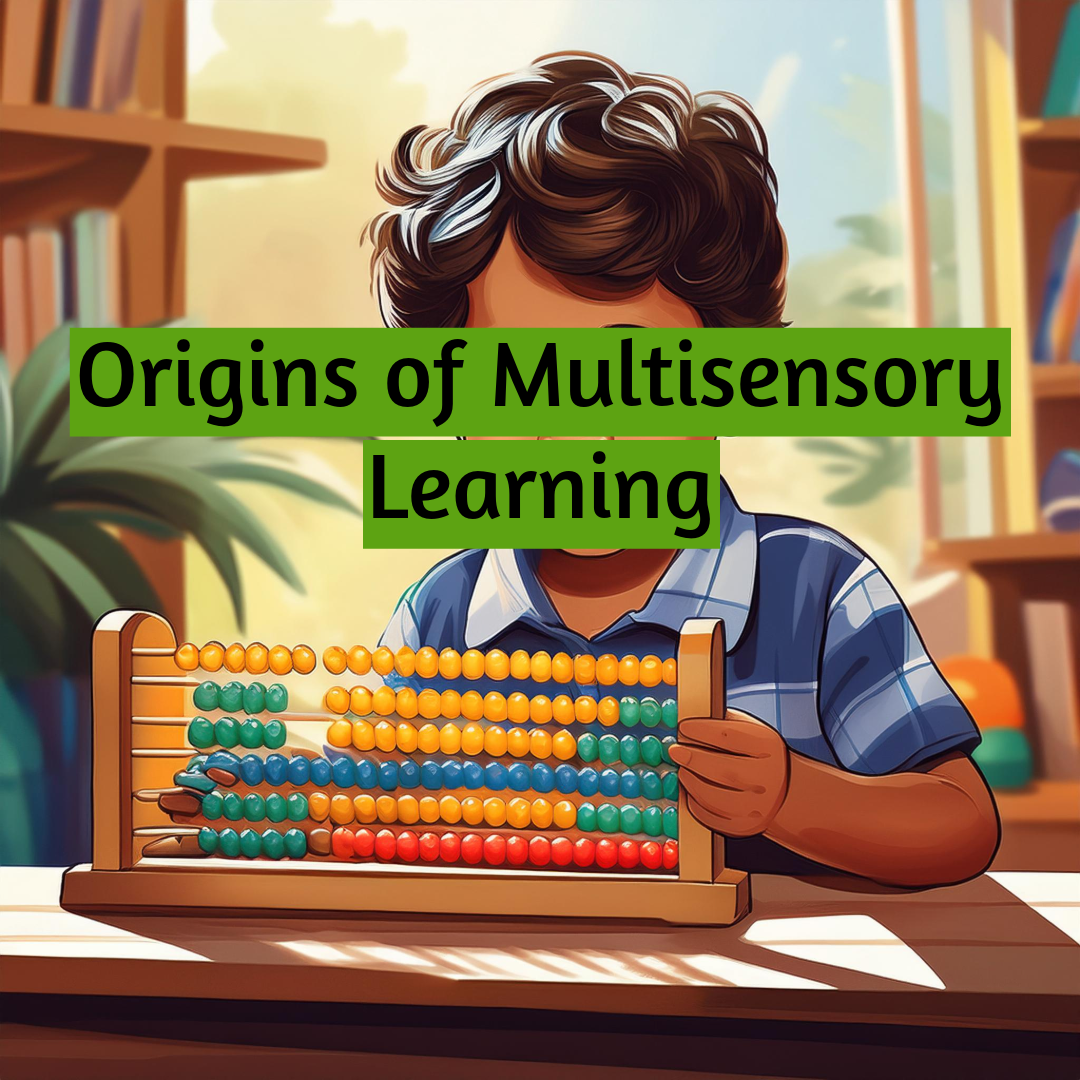
The Origins of Multisensory Learning: From Ancient Practices to Modern Structured Literacy and Math
Multisensory learning—the integration of visual, auditory, tactile, and kinesthetic methods—has been central to human education for millennia. While it is often associated with modern approaches like Montessori and structured literacy, its roots can ...
Read More
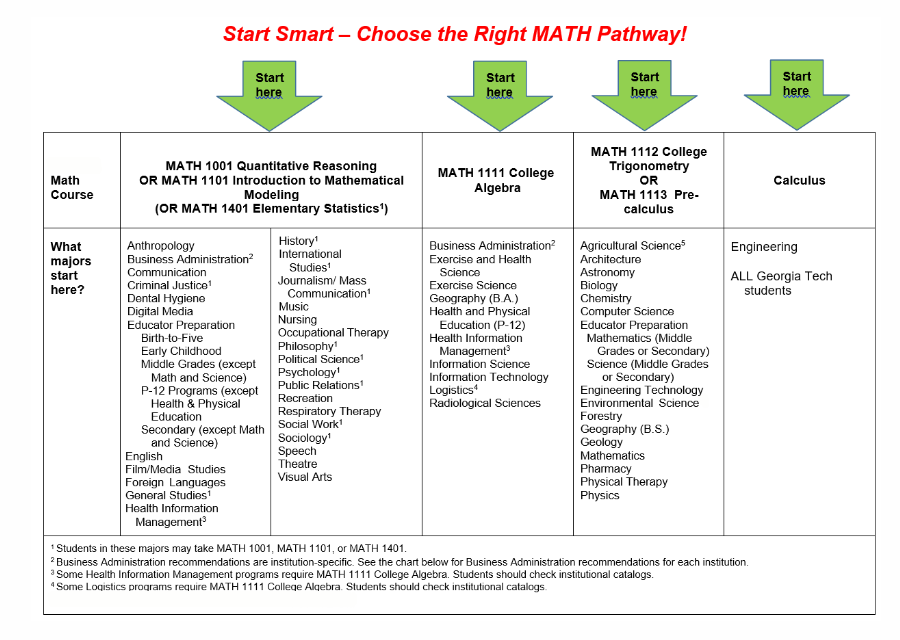
Are you worried about math requirements in College for your Georgia student?
GEORGIA Parents! Are you worried about what kind of math your student needs for college? I want to empower you to think of it in terms of what their major requires. Don't compare your student to anyone but their own future self! Use this resourc...
Read More
Math Resources
Are you looking for Math resources that actually work?Math can be a daunting subject for many children. But what if there was a way to make it engaging, accessible, and even enjoyable? That's where structured math with a strong foundation of num...
Read More

Neurodiversity

From Disorder to Neurotype: An Advocate's Clinical Neuroscience Guide to Diagnostic Models, ICD‑11, and Key Concepts
Disclaimer: This post is written by an autodidact neuroscience and neurodiversity advocate, not a clinician. The author has no formal medical, psychiatric, or clinical credentials. The content is based on self‑directed study of peer‑reviewed neurosc...
Read More
What is the best school for our kids?
If you’ve ever felt like you’re speaking a different language when trying to find the right school fit for your child, you’re not alone. My husband and I have collectively attended five different types of schools. Our daughter has attended four. And...
Read More
A Generational Story of Gifted Testing, Asynchrony, and What Schools Don’t Tell You
Disclaimer: This blog is for informational and community purposes. Every state’s gifted laws differ—consult an educational advocate if your district is not accommodating 2e or asynchronous needs. My parents weren’t tested in the 70s. I was weeded ou...
Read More
Neuroscience Informed Guide to Neurodiversity, Co-occurrence, and Language
If you have ADHD, the chance that you also have dyslexia, autism, or DCD (developmental coordination disorder) is far higher than chance. If you’re autistic, the same is true for ADHD, epilepsy, and hypermobility. These aren’t random coincidences—th...
Read More
Environmental Mismatch & Disability: A Clear Statement (With Historical Roots)
If you’ve spent any time in neurodiversity spaces, you’ve likely heard the phrase: “Neurotype is not a disorder.” But for many people—especially parents, educators, and clinicians—this statement raises an urgent question: Are you saying disability d...
Read More
The Diversity of the Reading Brain: Why Every Child Needs the Secret Code of Literacy
We’ve all heard the well-intentioned advice: “Just surround them with books.” “If you read to them enough, they’ll catch on.” “Let them guess the word from the picture.” This philosophy—often called "Whole Language" or "Balanced Literacy"—sounds bea...
Read More
Redrawing the Map: Why Neurodiversity Demands a Revolution, Not an Invitation
For decades, the neurodiversity movement has fought for a seat at the table. We’ve asked for accommodations, begged for understanding, and tried to fit our beautifully complex brains into boxes built for a fictional "standard" human. But let’s be ho...
Read More
Neurodiversity Reform Belongs to All of Us
A recent paper published in World Psychiatry, "Is autism a disease or a characteristic of human diversity?", does an incredible job of framing the urgent, overdue shift away from the traditional medical model. It masterfully breaks down the tension ...
Read More
The Invisible Puberty: Why Your Neurodivergent Child’s Brain is Changing Before Their Body
We often think of puberty as a middle school milestone—marked by growth spurts, skin changes, and the dreaded "talk." But groundbreaking research is showing us that for our kids, the internal architectural shift begins much earlier. Recent studies h...
Read More
Protecting Your Family: Strategies to Safeguard Due Process
When forensic ableism is present, the burden of ensuring a "fair fight" often falls on the parents. Protecting your rights and those of your child requires proactive steps to bridge the gap between neurotypical legal expectations and your family's r...
Read More
Understanding "Forensic Ableism": How the Justice System Often Fails Neurodivergent Families
For parents of neurodivergent children, navigating the world often feels like a constant exercise in advocacy. We fight for IEPs at school, for accommodations in extracurriculars, and for understanding from family members. But there is a more shadow...
Read More
"Social Skills" Training Fails Neurodivergent Families
In the world of K-12 education and parenting, we are often handed colorful PDFs and "social skills" worksheets designed to teach children how to interact. They offer scripts for "asking to play" or "making eye contact." But if we look closer, these ...
Read More
Science of Connection: Beyond the "Deficit" Model
For a long time, the conversation around neurodiversity—specifically regarding autism and ADHD—was framed almost entirely through the lens of what was "missing." We talked about social deficits, impaired communication, and a lack of empathy. But new...
Read More
Neurodiversity is Not a Scapegoat for Instructional Failure
For decades, the American educational landscape has been a battlefield between evidence-based practice and romanticized ideology. At the center of this skirmish lies the "Reading Wars," a conflict that should have been settled by the National Readin...
Read More
The "Movie in the Head" Myth: Why Visualization Isn’t The Same for Everyone
We have all seen the classic illustration: a child sits with a book, and a vibrant, 3D "shadow" of dragons and castles erupts behind them. The message is clear: To be a "good" reader, you must see a movie in your head. But what if the screen in your...
Read More
Beyond the IQ Score: Giftedness as a Neurotype
For decades, the prevailing narrative suggested that "gifted" individuals were simply neurotypical people with a higher-than-average processing speed. However, as our understanding of neurodiversity expands, it is becoming clear that giftedness is n...
Read More
The Behaviorism Industrial Complex: Why the "Gold Standard" is Losing Its Shine
For decades, parents of neurodivergent children have been handed a single roadmap: Applied Behavior Analysis (ABA). Marketed as the "gold standard" and often the only intervention covered by insurance, it has grown into a massive industry. But behin...
Read More
The "Natural Reader" Myth: Why Your Brain Architecture Matters
For decades, the education world has been locked in a debate between Whole Language (Balanced Literacy) and Structured Literacy. If you’ve ever wondered why some kids "just get it" while others struggle for years, the answer isn't "motivation"—it’s ...
Read More
Beyond "Trying Harder": The Hardware of Learning
We’ve all heard it: "They just need to focus," "Back in my day, we just practiced our penmanship," or the classic, "They’re just lazy." When a student struggles to read, write, or do basic math, it’s tempting to view it through the lens of character...
Read More
The Stories We Tell Our Brains: DEBUNKING Neuromyths
Have you ever been told that you only use 10% of your brain? Or perhaps you’ve sat through a workshop where you were asked to identify if you are a "logical left-brained" thinker or a "creative right-brained" soul? For decades, these stories have ci...
Read More
How do we create Developmentally Safe Classrooms?
My daughter came home from preschool one day and threw her backpack on the floor. She wasn't crying, but she had that look—the one that says, "I'm already tired of this place." She was four years old. "They said I have to read the book in my he...
Read More
Navigating the Labels: A Guide to DSM-5 and ICD-11 for Neurodiversity Families and Advocates
Disclaimer: I am an advocate biased toward inclusive, neurodiversity-affirming language. I am not a medical professional, and this post is intended for educational and advocacy purposes rather than clinical advice. As parents and advocates, the firs...
Read More
Decoding the Code: A Parent’s Guide to Structured Literacy, AAC, and Neurodiversity
As parents and tutors, we often feel like we are navigating a labyrinth when it comes to reading instruction. For neurodiverse learners—including those with dyslexia, autism, or complex communication needs—the standard "look and say" method isn't ju...
Read More
The Individualization Trap: Why "Learning Styles" are Failing Our Children
In the world of education advocacy, we are often told that the solution to the literacy crisis is to "meet every child where they are" by catering to their unique "learning style." We spend millions of dollars and thousands of hours trying to surgic...
Read More
How can we help students build Self Esteem?
When a child is gifted, neurodivergent, or struggling with anxiety, they often feel like they are driving a high-performance sports car with a foggy windshield and no GPS. They have the "engine" (the intellect), but they lack the "visibility" (the s...
Read More

Parenting

Compulsory Contradiction: Why Public Education is Losing the Modern Parent
There is a growing friction point in the modern American public school system that has very little to do with curriculum standards or standardized testing, and everything to do with basic logistics, culture, and economic reality. For the working par...
Read More
Ultimate K-12 Staycation Guide: How to Rule the Summer from Home, Town, or In-State
Summer is officially here, and with it comes the familiar pressure to book an extravagant, picture-perfect family vacation. But let’s be real for a second: between skyrocketing travel costs, airport delays, and the inevitable "Are we there yet?" cho...
Read More
Parent’s Guide to Vetting Math and ELA Curriculums
When you walk into a classroom or read a curriculum brochure, you are often met with appealing but vague terms like "critical thinking," "conceptual understanding," and "curiosity." While these sound like wonderful goals, research from experts at Th...
Read More
The "DIY Summer Camp" Guide: Zero-Budget Fun for Busy Parents
Summer is coming, and if you’re like me—balancing the "hats" of homemaker, student, or WFH employee—the thought of expensive summer camps can be stressful. But here’s a secret: your local community is a goldmine for education and entertainment. With...
Read More
Navigating the "Hidden Message": A Skeptical Parent’s Guide to Media Literacy
As parents in the Information Age, we often find ourselves acting as the "firewall" for our children’s developing minds. Whether it’s an invitation to a movie night with well-meaning grandparents or a friend’s "innocent" recommendation of an Angel S...
Read More
Decoding the Data: How to Help Your Kids Spot "Cooked" Statistics
Have you ever scrolled past a headline that made you double-take? Maybe it’s a claim that a certain generation is suddenly "flocking back to religion," or a study insisting that a specific lifestyle is the only way to be happy. When you’re raising a...
Read More
The Numbers Don’t Lie, But People Do... Navigating Homeschool in the Age of Misinformation
The headlines can feel like a tug-of-war. On one hand, we see the data—like the recent YouGov withdrawal regarding youth church attendance—confirming that younger generations are moving away from institutional religion at record speeds. On the other...
Read More
A Brief History of School Choice in USA
The debate over school choice is often framed as a modern political tug-of-war, but the history of educational autonomy in the United States is rooted in a much deeper struggle for safety and intellectual survival. For marginalized communities, "cho...
Read More
History of Literacy is the Ultimate Civil Rights Battle
As we conclude our Black History Month studies in our homeschool, we’re reflecting on a truth that transcends a single month: Black history is human history. It is the story of the universal human struggle for agency, and at the heart of that strugg...
Read More
The Foundational Ego: Why Schools Are Blind to the Homeschool Exodus
When a parent decides to homeschool, the institutional response is almost always a bewildered: "But why? We offered all the services." To a parent who has spent years "scouting" the pitfalls of the public system, the answer is visible from space. We...
Read More
You Have The Antidote to "Work-Until-You-Die" Culture
As homeschoolers, we often talk about the "why" of education. Is it just to get a job? Or is it to set the mind free? In 2026, we are surrounded by a new kind of "Tech Libertarianism." You’ve seen the headlines: billionaires telling kids to drop out...
Read More
The Millennial Family Reflection: From Individual Grit to Systems Thinking
For decades, we were told that the answer to every challenge—economic, professional, or personal—was "grit." We were taught that if we just worked harder, optimized our schedules, and pushed through the burnout, we would eventually reach the...
Read More
Choosing to create a better System instead of expecting Grit: A Guided Journal for Families
This journal activity is designed to help you move from the "Architect" mindset—trying to force a design onto a resistant landscape—to the "Scout" mindset—observing the terrain and clearing the path. Part 1: The Grit Inventory Focus:...
Read More
Your College Degree or a Costly Mistake? Why Every Parent Needs to Teach Consumer Literacy Before Move-In Day
Choosing a college is often the first "big-ticket" purchase a young person makes. But unlike a car or a house, you can’t exactly trade in a degree if it turns out to be a lemon. The recent news regarding Grand Canyon University (GCU) and the scrutin...
Read More
From Rattles to Recalls: The K-12 Roadmap to Raising Conscious Consumers
Most parents think of "the talk" as a singular event. But when it comes to consumer literacy, "the talk" is actually a thousand small conversations starting from the day they are born. In a world where algorithms target toddlers and high schoolers a...
Read More
Public School Might Be My Most Expensive Subscription
We’ve all been told that public school is the "free" option, but if you’re a parent who values your time, your health, and your household budget, you’ve probably started to notice the hidden receipts. Between the rigid schedules, the constant stream...
Read More
Building a World-Class Education from Your Living Room: The 2026 DIY Source List
If you’ve decided to "hire yourself" as your children's educational scout, your first mission is to find the high-quality, secular resources that the public system often gatekeeps behind a zip code. The good news? We are living in the golden age of...
Read More
Black History Month: Learning Our Shared Human Story Through Education
Black History Month Is Human History... Black History Month is sometimes misunderstood as separating people by race. In reality, it exists to do the opposite. Black History Month is human history, told through the experiences of a minority group—not...
Read More
I might be choosing to homeschool again...
As U.S. citizens, we are raised on the idea that our rights are our birthright. We teach our kids about “liberty and justice for all,” trusting that the systems around us—our schools, our shops, our parks—are the stable pillars of a free society. Bu...
Read More
What I Wish I Knew Before Becoming a Parent...
The Real Math Behind Stay-at-Home Parenting, School Choices, and the Hidden Costs No One Talks About I grew up in a single-income, single-working-mom household. In that world, the rules were simple: you worked because you had to, you stretched every...
Read More
Understanding “Unpreparedness” as a Neurodivergent Expression: Implications for Educational Practice
Recent research in educational psychology, neuroscience, and special education highlights that behaviors often labeled as “unpreparedness” in classroom settings are frequently manifestations of underlying neurodivergent profiles rather than delibera...
Read More
Some Students Don’t “Just Remember” — and Why That’s Not a Problem
If you’ve ever introduced a new concept on Wednesday and found that students seem to have forgotten most of it by Monday, you’ve witnessed the Ebbinghaus forgetting curve at work. This classic model, first described in the late 1800s by psychologist...
Read More
From Units to Understanding: Building Connected Learning Through Themes and Background Knowledge
In every classroom—public, private, or homeschool—one of the greatest challenges teachers face is making learning feel connected. Too often, lessons are planned as separate “units,” each with its own vocabulary list, story, and activities. But when ...
Read More
Making the Holidays Meaningful — Even When We Can’t Afford Them
Across the United States, many families are quietly admitting something honest: the holidays are harder to afford. Between rising costs, shrinking budgets, and social pressure, it’s easy to feel like joy depends on money. But here’s the truth — it n...
Read More
A Parent’s Guide to College Sports Scholarships
Every parent who supports a young athlete wonders the same thing: Could this lead to a college scholarship one day? It’s a hopeful question — but the truth behind sports scholarships is often misunderstood. While athletics can indeed open college do...
Read More