


As a millennial born in the early '90s, I am part of a "Goldilocks" generation of readers. We were the last cohort to benefit from a systematic focus on phonics and structured literacy before the "Balanced Literacy" monopoly took hold of public education.
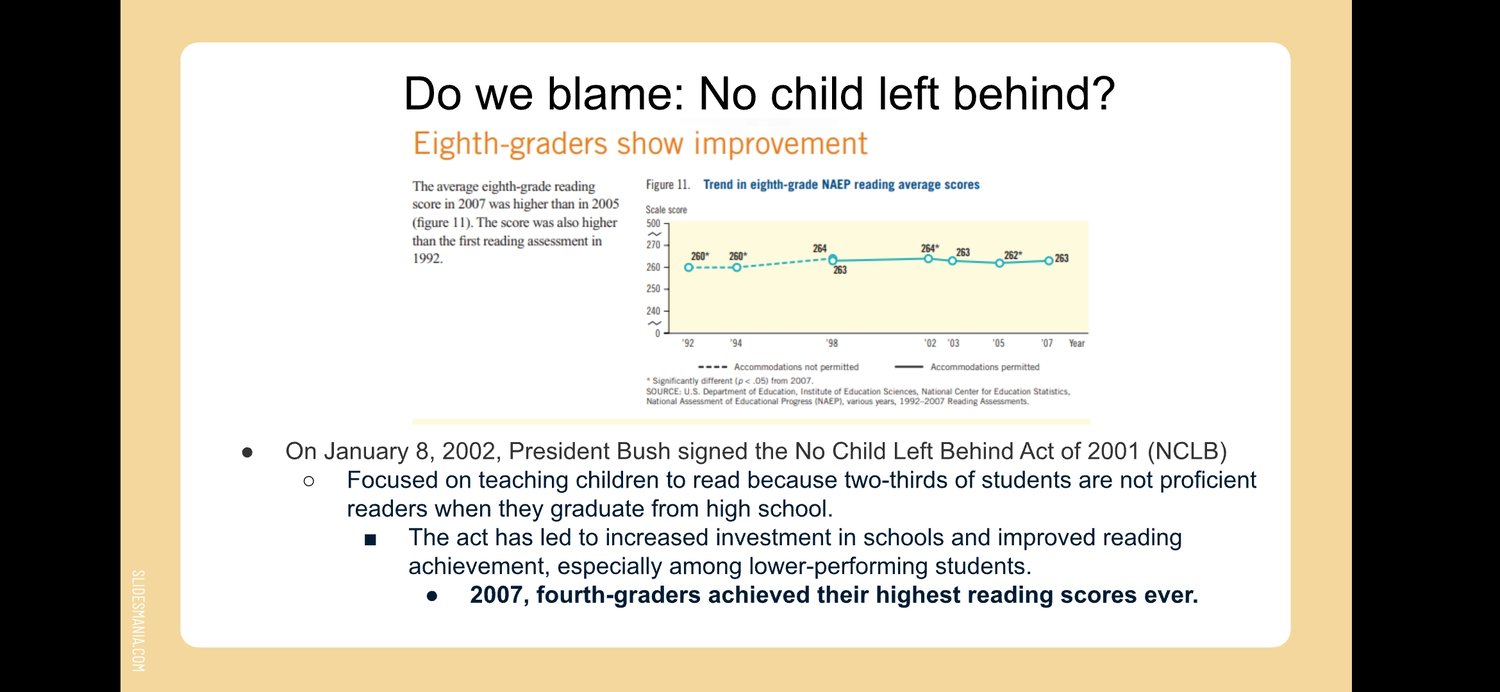
The data tells a story that many current educational theorists want to ignore. In 2007, fourth-graders achieved some of their highest reading scores ever. Why? Because there was a national, albeit imperfect, push to ensure kids could actually decode the words on the page. We didn't just pass; we exceeded.
The Great Regression
Fast forward to 2026, and the landscape is grim. While modern proponents of Whole Language and Balanced Literacy are busy sounding the alarm about "book bans," they are ignoring a much more systemic form of censorship: the inability to read the books that remain on the shelves.
Recent NAEP data (The Nation’s Report Card) shows a staggering decline. In 2024, eighth-grade reading scores dropped yet again, with lower-performing students hitting their lowest levels in over 30 years.
Then (2007): A focus on "Reading First" and phonics led to measurable gains, especially among students who struggled most.
Now (2026): After two decades of "guessing from pictures" and "three-cueing" systems, we have a literacy crisis where 33% of eighth-graders perform below basic proficiency.
The Irony of the "Book Ban" Debate
There is a profound irony in the current cultural firestorm. We have activists fighting tooth and nail over which books should be in the library, while simultaneously defending the very teaching methods (Balanced Literacy) that ensure a third of our children will never be able to read those books anyway.
If you are truly a champion for books, you must be a champion for the mechanics of reading.
Structured Literacy isn't about limiting kids; it’s about liberating them.
Phonics isn't "boring drill-and-kill"; it’s the key that unlocks the code.
Freedom is Found in the Code
I see the proof of this in my own home every day. My children are reading above grade level not because they are "natural" readers, but because they weren't taught to guess. They aren't limited by a curated classroom "leveled reader" or forced into the soul-crushing routine of popcorn reading. They can pick up any book in the library—from a chemistry manual to a classic novel—and actually read it.
We need to stop the "Reading Wars" and look at the evidence. Science of Reading is still being advocated for in 2026 because, frankly, most schools still haven't fully embraced it. They are still clinging to the "Balanced" approach that has left an entire generation imbalanced.
The bottom line: If you want to save the books, you have to save the readers first. If you’re fighting for the shelf, you should be fighting even harder for the librarian, the library, and the evidence-based instruction that makes the library accessible to every child.
Do you think the "book ban" conversation is being used as a distraction from the actual decline in national literacy rates?
Comments ()