

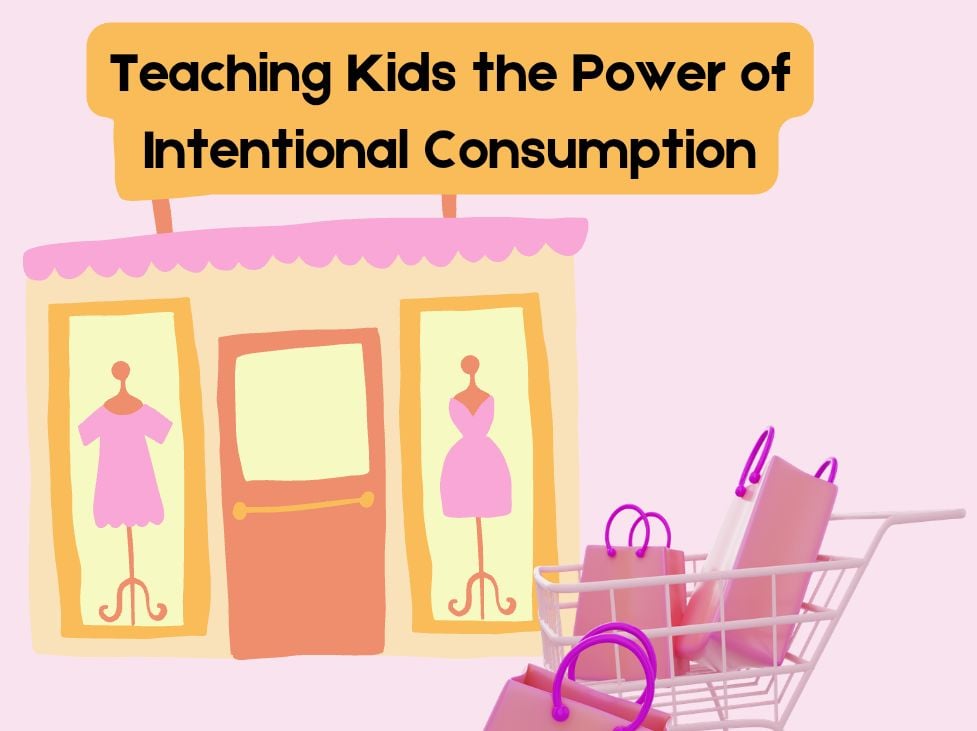
In today’s fast-paced consumer culture, it’s easy for both adults and children to fall into the trap of believing every trip to the store must end in a purchase. But what if we, as parents, intentionally broke that pattern?
What if we reframed shopping trips not as buying missions, but as opportunities to practice observation, patience, and decision-making?
I've been thinking about this because I see people are nervous about tariffs, the economy, and financial literacy. I know we didn't grow up with all of these issues or terminology but not all of us grew up in a high income household.
When I was a kid, my mom didn't teach me financial literacy, but I saw her use a checkbook, balance her budget, pay the bills, and if we had money left over we'd go window shopping. No buying. Just looking.
Welcome to the concepts of under-consumption and non-consumption.
What Are Under-Consumption and Non-Consumption?
Under-consumption: is the practice of intentionally buying less than what we can buy.
Non-consumption: means not buying anything at all, even when surrounded by tempting options.
These practices aren’t about deprivation. They’re about conscious, value-based decision-making—skills we can teach our children early on.
The Teachable Power of "Just Looking"
We can take our children to the store without buying anything—and that’s not just okay, it’s empowering.
I do this with my kids today. It's easy to think as a child that a trip to a store is exciting, especially if you always expect to buy something. Yet that's not sustainable. That's not always ethical or feasible. Now when I take my kids shopping I'll tell them their budget (usually $5 or below) if they find something - great - if not, it's ok.
When we go to a store to simply explore:
- We model curiosity without impulse.
- We help children develop delayed gratification.
- We nurture budgeting, planning, and discernment skills.
Let them hold an item, read the label, ask questions, or take pictures. Have them guess the price before looking. Compare brands and models. Ask, “Do we need this today—or should we wait and see if we can find it somewhere else for less?”
Real-Life Economics and Social Studies: Needs vs. Wants
This practice also teaches fundamental concepts from economics and social studies, especially the distinction between needs and wants—a core idea in elementary and middle-grade curricula.
Needs are essentials—things we must have to live and function (like food, water, shelter, and basic clothing).
Wants are extras—items we desire but can live without (like toys, branded clothes, or tech gadgets).
By taking trips to the store without buying anything, you create an interactive learning environment where your child can:
- Label items as needs or wants.
- Discuss what the family budget can afford.
- Weigh opportunity costs (What do we give up if we buy this now?).
- Observe pricing, brands, and marketing strategies.
- See how economic decisions reflect values.
This is social studies in action—learning about consumer habits, financial literacy, environmental impact, and ethical decision-making in a hands-on, meaningful way.
The Slow-Shop Movement: Planning Before Purchasing
Part of breaking the “I always have to buy something” mindset is teaching kids how to slow down the consumption process. Try this approach:
1. Visit the store just to explore. No cart. No list. Just observation.
2. Take photos or notes of things they like or need.
3. Compare prices across stores and online.
4. Look for used options at thrift stores, local marketplaces, or swap groups.
5. Talk about value: Is it worth the price? Will it last? Is it made ethically?
6. Revisit the idea after a day or two—has the desire passed?
This method helps children become conscious consumers, not automatic spenders. It shifts the focus from “What can I get?” to “What do I value?”
Why This Matters
Raising kids in a consumer-driven world means being intentional about the habits we’re forming. Teaching under- and non-consumption isn’t about saying no—it’s about saying yes to thoughtful choices, budgeting skills, environmental awareness, and emotional regulation.
When we give kids permission to look without buying, to want without needing, and to plan before purchasing, we equip them with tools that extend far beyond the checkout line—and directly into the real-world knowledge of economics, social awareness, and responsible citizenship.
Comments ()