

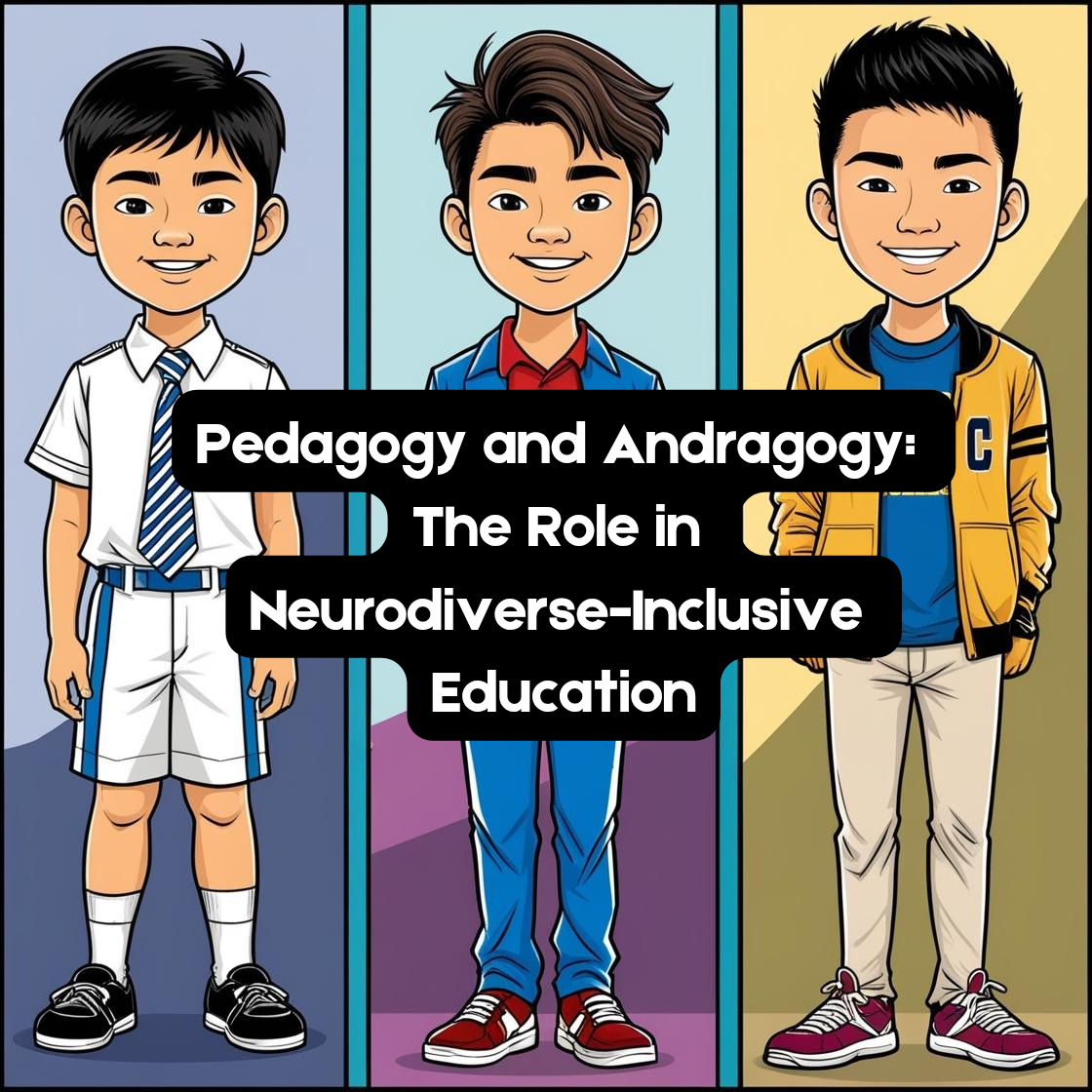
Education is a dynamic field, enriched by understanding how learners engage differently based on age, experience, and neurodiversity. The terms pedagogy and andragogy describe distinct learning approaches for children and adults. In 2025, as we advocate for inclusive education, these concepts—rooted in ancient language and evolving practice—help us design better systems for neurodiverse individuals.
The Origins and Etymology of Pedagogy
Pronunciation: /ˈpe-də-ˌgō-jē/ or /ˈpe-də-ˌgä-jē/
Etymology: Pedagogy originates from the Greek παιδαγωγός (paidagōgos), meaning "child-leader." It is composed of:
παῖς (pais): "child"
ἄγω (ago): "to lead" or "to guide"
Historically, a paidagōgos was a servant responsible for guiding children to school and supervising their learning. Today, pedagogy encompasses the structured, teacher-led methods used to educate young, dependent learners.
The Origins and Etymology of Andragogy
Pronunciation: /ˈan-drə-ˌgō-jē/ or /ˈan-drə-ˌgä-jē/
Etymology: Andragogy stems from the Greek ἄνδρας (andras), meaning "man" or "adult," and ἄγω (ago), meaning "to lead."
The term was popularized by Malcolm Shepherd Knowles (1913–1997) ,an American educator, in the 20th century to describe principles of adult education, emphasizing self-direction, experience, and practical application.
Executive Function Development: Pedagogy vs. Andragogy
Executive functioning skills—like planning, problem-solving, and emotional regulation—develop over time and require different approaches in children and adults. Pedagogy supports the development of these skills, while andragogy emphasizes their crafting and mastery.
Children and Pedagogy: Building the Foundation
Developmental Focus: In childhood, executive functions are in the early stages of growth. Teachers act as guides, providing structured activities that promote:
Planning: Structured schedules and tasks teach time management.
Problem-Solving: Guided lessons introduce step-by-step reasoning.
Emotional Regulation: Teachers model and scaffold responses to challenges.
For example, a child with ADHD learning multiplication may benefit from explicit instruction and clear routines that reduce cognitive overload. These pedagogical methods help build neural pathways essential for future independence.
Adults and Andragogy: Refining Mastery
Mastery Focus: Adults refine and master executive functioning, often tailoring strategies to personal and professional goals. Andragogy supports:
Self-Direction: Adults set goals, manage time, and seek resources independently.
Problem-Solving: Real-world challenges encourage practical applications of reasoning skills.
Emotional Regulation: Adults apply self-awareness and mindfulness techniques.
For instance, an adult with autism navigating workplace accommodations might use andragogical methods to advocate for themselves, drawing on prior experiences and specific needs.
Overlap and Distinctions
Pedagogy and andragogy often overlap, especially in neurodiverse education:
Overlap: A neurodiverse learner of any age may require scaffolding in executive function development.
Distinction: Children benefit from foundational, teacher-led strategies, while adults need flexible, self-directed approaches.
Why These Concepts Matter in Neurodiverse-Inclusive Education
1. Tailoring to Neurodiversity:
Neurodiverse learners, such as those with ADHD or autism, often have unique executive functioning profiles. A child might need explicit instruction to organize tasks (pedagogy), while an adult may seek coaching to optimize workplace productivity (andragogy).
2. Respecting Developmental Stages:
Confusing these approaches risks under-supporting children or over-scaffolding adults. Neurodiverse education must account for where the learner is in their executive function journey.
3. Universal Design for Learning (UDL):
UDL principles integrate both pedagogical and andragogical techniques, offering multiple pathways for developing and mastering executive functions.
Supporting the Transition from Pedagogy to Andragogy: A Guide for Parents and Teachers
The journey from childhood to adulthood involves a shift in how learners develop and master skills, particularly executive functioning. Supporting this natural transition from pedagogy (teacher-led instruction) to andragogy (self-directed learning) is essential for fostering independence and lifelong learning, especially for neurodiverse students. Below, we explore how parents and teachers can guide this process, offering practical, detailed examples from K-12 through college.
Stages of Development and Support Strategies
1. Elementary School (Grades K-5): Laying the Foundation
At this stage, children rely on adult guidance to develop basic executive functioning skills, such as task initiation, organization, and emotional regulation.
Strategies:
Teach Organizational Skills:
Parents: Create visual schedules at home using pictures or checklists to help children see what comes next. For example, a morning routine chart might include images of brushing teeth, getting dressed, and packing a backpack.
Teachers: Use color-coded folders for different subjects to teach basic categorization and organization.
Model Problem-Solving:
Parents: Narrate your thought process when solving everyday problems. For instance, if a toy is missing, explain how you’ll search each room step by step.
Teachers: Incorporate "think alouds" during lessons. For example, demonstrate how to approach a word problem in math by breaking it into smaller steps.
Build Emotional Regulation:
Parents: Use tools like "emotion thermometers" or "calm-down corners" to teach children to identify and manage their feelings.
Teachers: Implement structured breaks with sensory tools like fidget items or noise-canceling headphones for students who struggle with focus.
2. Middle School (Grades 6-8): Encouraging Independence
As students develop more advanced executive functioning, they begin to take greater ownership of their learning.
Strategies:
Introduce Self-Monitoring Tools:
Parents: Provide planners or digital apps to help students track homework and extracurricular activities. Apps like MyHomework or Google Keep can be excellent options.
Teachers: Use classroom management systems, such as Google Classroom, where students can independently access assignments and due dates.
Foster Decision-Making:
Parents: Offer choices to build decision-making skills, such as choosing between two extracurricular activities or selecting a topic for a school project.
Teachers: Assign open-ended projects where students choose how to present their learning (e.g., a poster, video, or essay).
Encourage Reflection:
Parents: After a challenging situation, ask reflective questions like, “What worked? What could you do differently next time?”
Teachers: Use exit tickets where students summarize what they learned or explain one thing they struggled with and how they overcame it.
3. High School (Grades 9-12): Transitioning to Andragogy
In high school, students prepare for adulthood by developing self-directed learning and problem-solving skills.
Strategies:
Teach Goal-Setting:
Parents: Help students set long-term goals, such as saving for a car or improving grades, and break them into actionable steps. Use tools like SMART goals (Specific, Measurable, Achievable, Relevant, Time-bound).
Teachers: Incorporate goal-setting into academic projects. For instance, before starting a science experiment, students identify personal learning goals.
Promote Real-World Applications:
Parents: Encourage part-time jobs, internships, or volunteering to help students apply their learning to real-life scenarios.
Teachers: Design project-based learning assignments. For example, a civics class might require students to research a community issue and propose solutions.
Encourage Self-Advocacy:
Parents: Role-play scenarios where students practice advocating for themselves, such as requesting accommodations at school.
Teachers: Create opportunities for students to lead parent-teacher conferences or negotiate deadlines for assignments.
4. College and Beyond: Mastery of Andragogy
By college, students are expected to be self-directed, using the skills they’ve honed throughout their K-12 education. Parents and teachers can still provide support by transitioning into mentorship roles.
Strategies:
Foster Independence:
Parents: Shift from managing to advising. Instead of reminding them about assignments, ask questions like, “How do you plan to manage your time this week?”
Teachers (Professors): Offer office hours for guidance but encourage students to come prepared with specific questions.
Develop Advanced Problem-Solving:
Parents: Encourage your child to tackle challenges independently before seeking help, such as navigating financial aid or scheduling classes.
Professors: Assign case studies or research projects requiring students to analyze problems and propose solutions.
Support Emotional Regulation and Resilience:
Parents: Normalize setbacks as part of growth. Share your experiences of overcoming challenges and the lessons learned.
Professors: Incorporate reflective assignments where students evaluate their own learning and set future goals.
Why This Transition Matters for Neurodiverse Learners
Neurodiverse students may require extended support to transition from pedagogy to andragogy, as executive functioning often develops differently for these learners. By gradually introducing independence, flexibility, and problem-solving opportunities, parents and teachers can empower neurodiverse students to thrive academically and socially.
Key Considerations:
Some students may need scaffolding longer than others. For example, a high schooler with autism may still require visual schedules, while a neurotypical peer might rely solely on a planner.
Emphasize strengths, such as creativity or hyperfocus, while addressing challenges like time management or emotional regulation.
Conclusion
The transition from pedagogy to andragogy mirrors the development of executive functioning: children build foundational skills, while adults refine and master them. Parents and teachers play a vital role in this progression, especially for neurodiverse learners, by gradually introducing independence, fostering reflection, and emphasizing real-world applications. With thoughtful support, every learner can achieve the self-directed mastery necessary for lifelong success.
The roots of pedagogy and andragogy lie in the fundamental differences between guiding children and adults. In 2025, understanding these distinctions is essential for creating equitable, neurodiverse-inclusive education systems. Pedagogy nurtures the growing executive functions of children, while andragogy empowers adults to refine and apply these skills, ensuring every learner—regardless of age or neurotype—can thrive.
Comments ()