

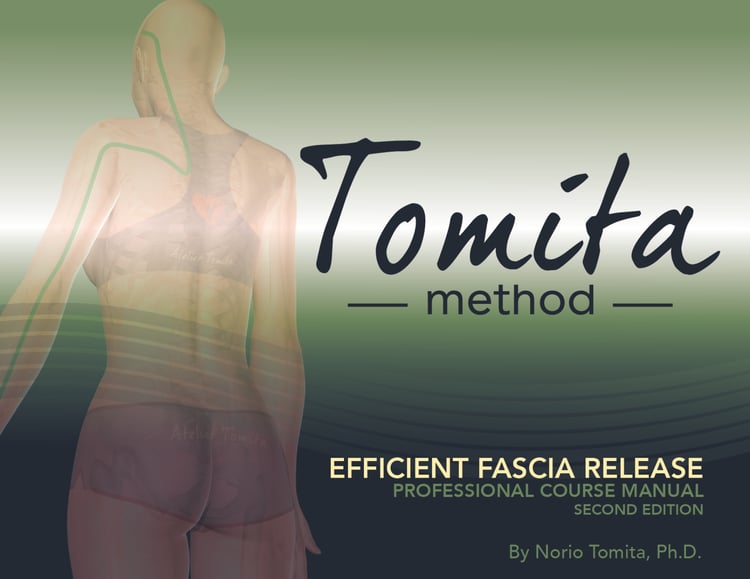
What is the Tomita Method?
The Tomita Method is a systematic approach to releasing fascial tension. Its origin lies in the refined palpatory sense cultivated within several traditional schools of manual therapy in Japan — an empirical skill that Norio Tomita, Ph.D., has rebuilt and organised within the contemporary understanding of the fascial chain, drawing on his doctoral research into fascia and low back pain.
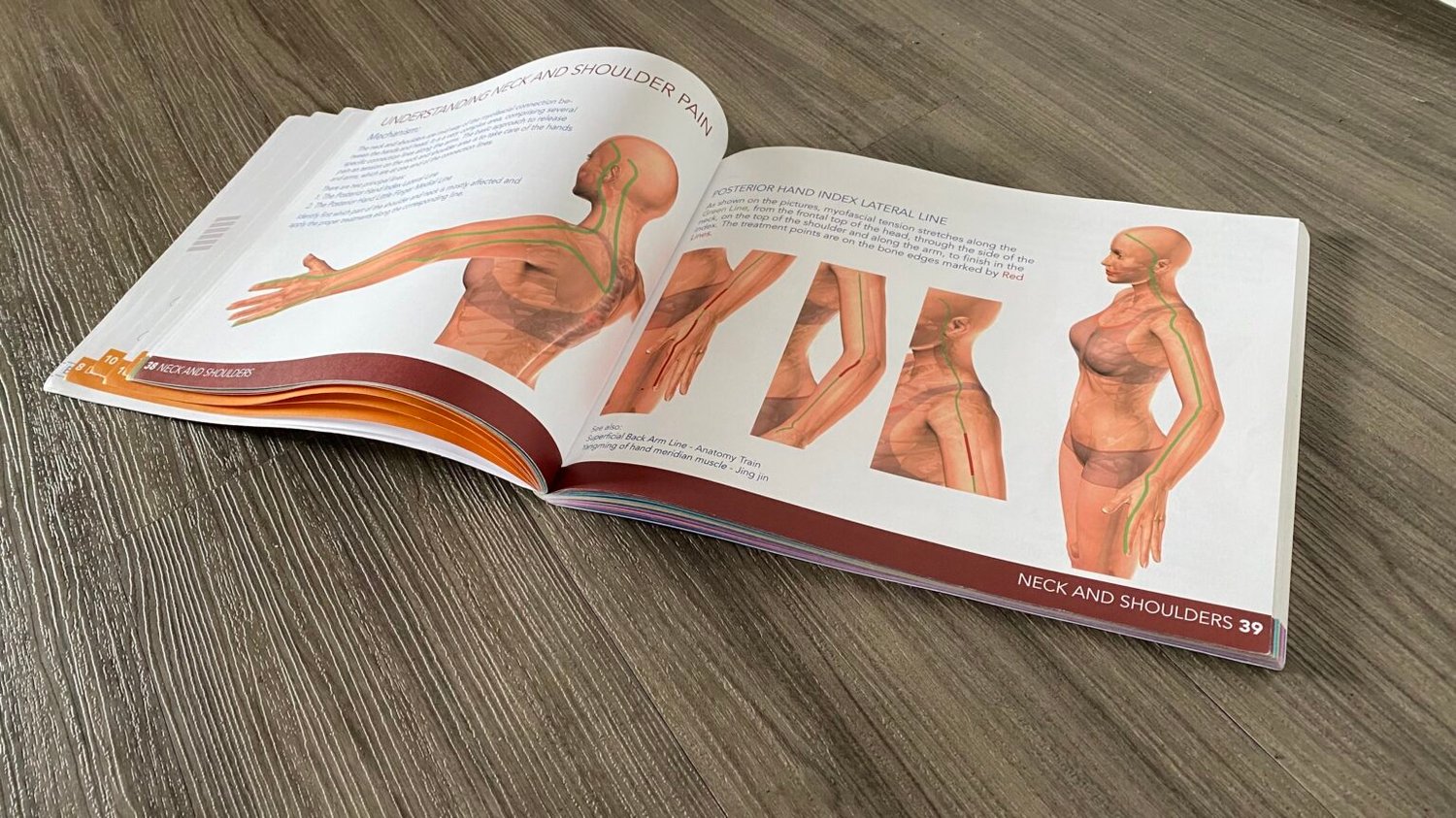
Fascia is continuous throughout the body, and along that continuity the area where a symptom is felt and the area generating the tension are not necessarily the same. The Method treats a fascial chain as a suspension bridge. The decisive element of such a bridge is neither the towers nor the piers but the anchorage at each end, which holds the load of the entire main cable. Fascial adhesions at musculoskeletal attachment sites act as those anchorages, and releasing one — usually at a point well away from where the client feels pain — reduces tension along the whole chain. The more distal the anchorage, the less force the treatment requires and the greater its effect.
What makes this work is perception rather than force. Releasing fascia depends on a palpation sense trained specifically for the task: feeling which layer is gliding and which is not, and locating where along the chain the load is actually anchored. Developing that sense is what the Tomita Method teaches, and you can learn it with a manual in which every fascial chain and every treatment point is clearly visualised.
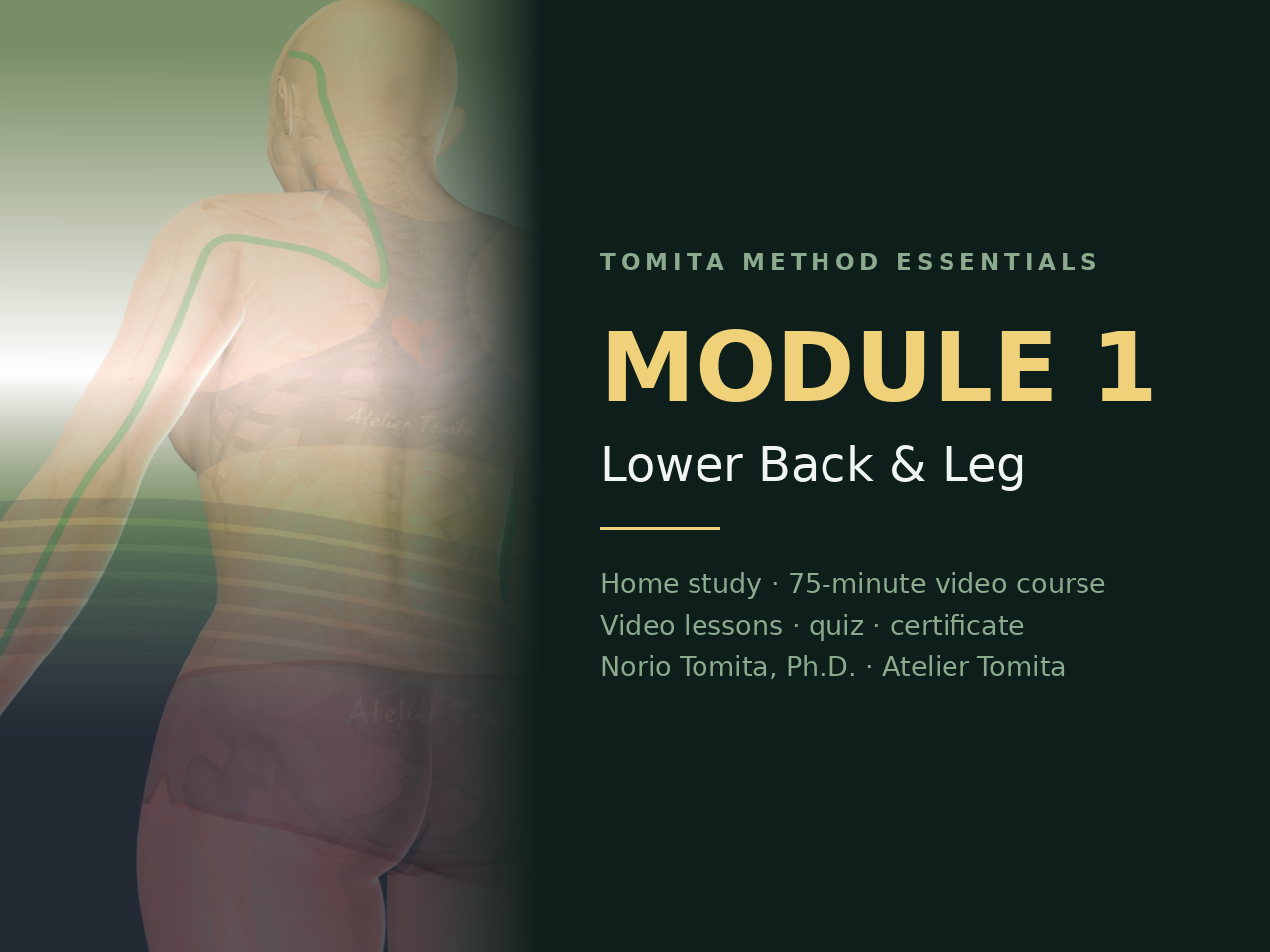
Coming soon: Tomita Method Essentials — Module 1
Lower Back & Leg — a 75-minute home-study video course for massage and manual therapists, with a final examination and a certificate of completion.
The course is in production and is not yet available for purchase. Enrolment will open once the course video is released.
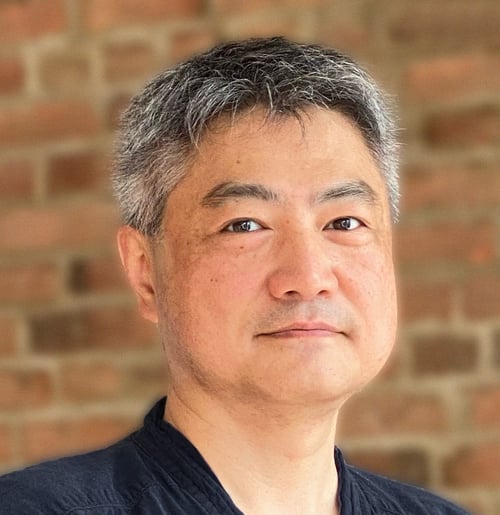
Norio TOMITA Ph.D.
After earning a Master's degree in Mechanical Engineering from Keio University,
Norio Tomita worked on the development of medical 3D ultrasound imaging
systems, collaborating for many years with clinicians, particularly in cardiology.
He subsequently received his Ph.D. from the Department of Biomedical
Engineering at the Université de Montréal, for research on low back pain and
fascia using ultrasound imaging. He continues to investigate the function of
fascia — the tissue that encloses and supports the organs and muscles and
binds them together — and its role in the transmission of force.
He is also a practitioner trained in traditional Japanese manual therapy (Seitai)
and in various massage techniques. Integrating that experience with his own
research, he established his own method, which he practices clinically and
teaches to fellow professionals.