
Signal Hill
Signal Hill
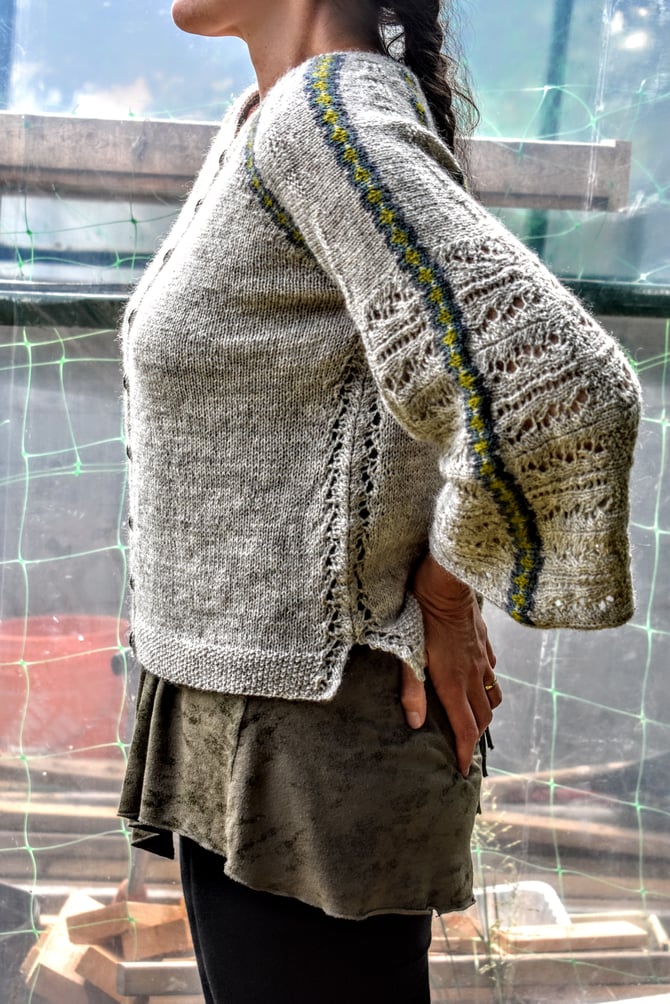
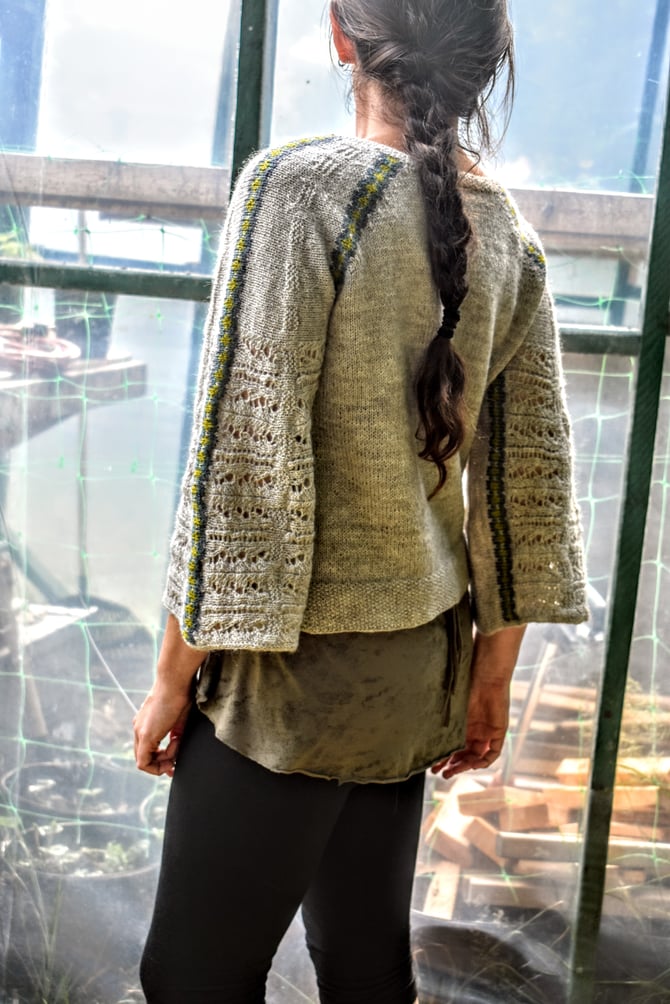
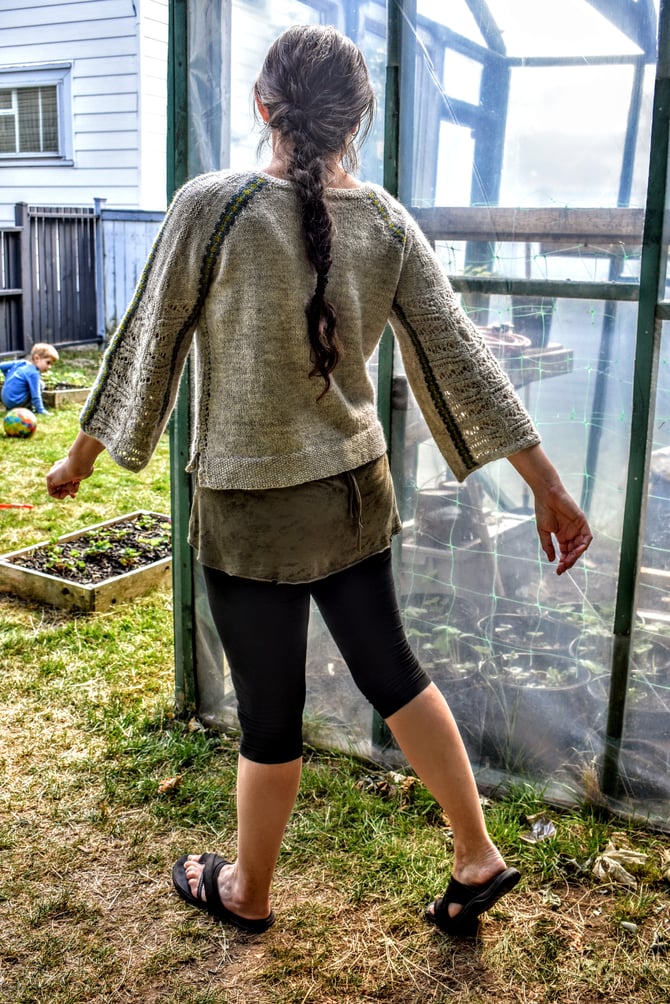
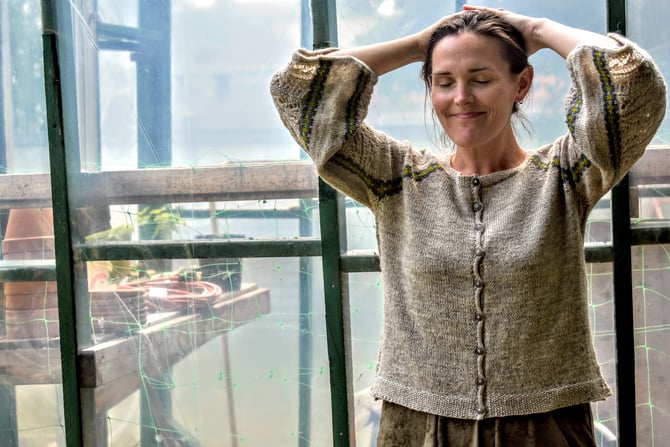
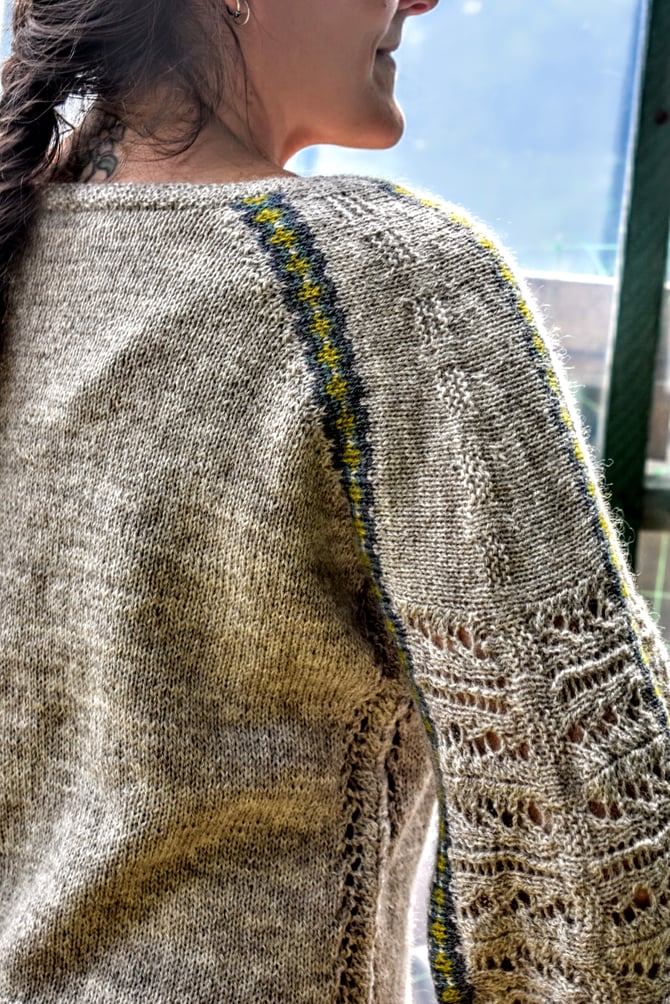
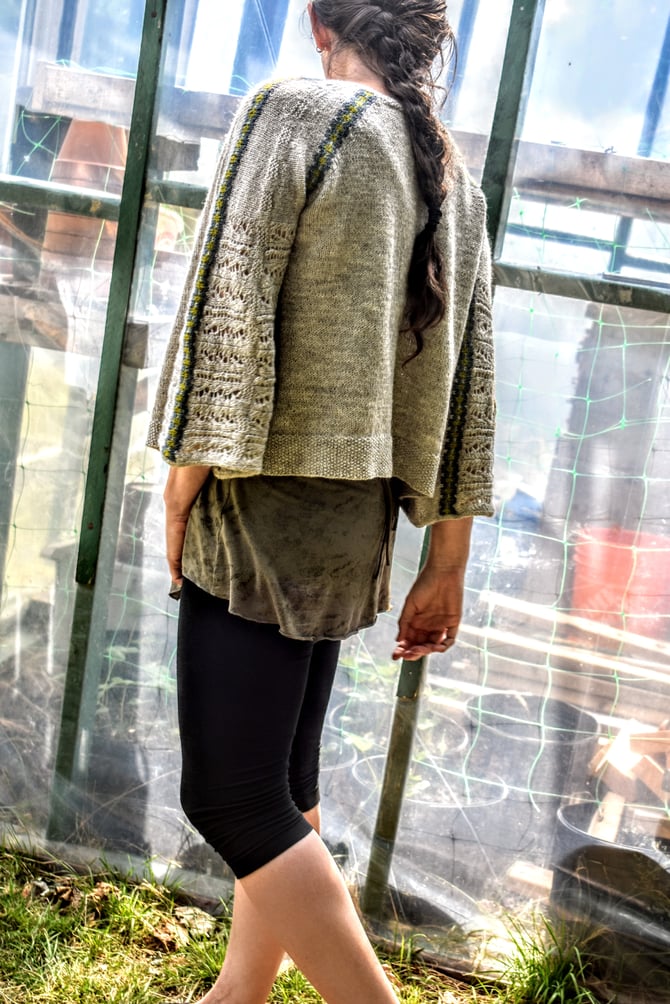
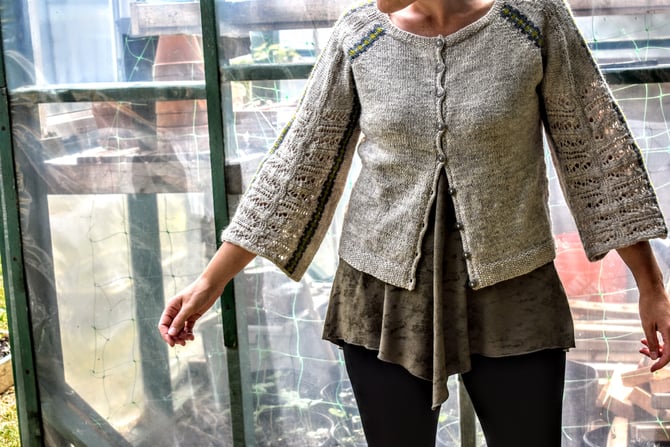
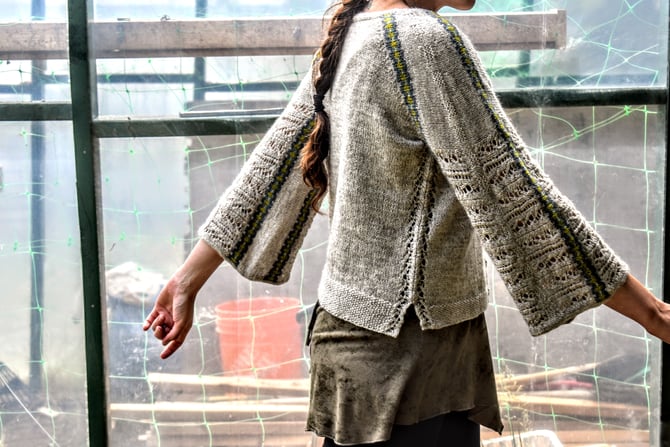
In 1901, the first transoceanic wireless message, “S” in Morse code, was received atop Signal Hill in St. John’s. This set off the inspiration behind this cardigan. It’s top-down and seamless, but the sleeves are worked first, flat and sideways, and with never a dull moment. Each colourwork band is worked in the round and steeked as you go. And since the sweater begins with working colourwork in the round and steeking it, it is a good introductory steek project for first time steekers! After the sleeves are finished, the upper back body is started by bridging the two sleeves, and worked top down while joining to the sleeves along the raglan lines as you go. The front halves are worked in a similar manner. Then after joining the fronts and back at the underarm like a normal sweater, the remaining body is worked to your desired sweater length.
(July, 2021)
Lace and colourwork are charted only.
There is 1 pattern file and 7 charts files. Be sure to download the chart file for your size along with the pattern file.
Signal Hill on Ravelry: Signal Hill
Sizes
1 (2, 3, 4) (5, 6, 7) with finished chest circumferences:
91 (98, 105, 113.5) (127.5, 148.5, 171)cm /
35.75 (38.5, 41.25, 44.75) (50, 58.5, 67.25)”.
Intended to be worn with 10 to 15cm / 4 to 6” positive ease at chest. Sample shown is size 3 on an 89cm / 35” bust corresponding to 16cm / 6.25” positive ease. A list of measurements is provided on page 3.
Yarn
Blacker Yarns Tamar Lustre Blend 4-ply (30% Cornish Mule, 18% Wensleydale, 18% Teeswater, 17% Cotswold, 17% Black Leicester Longwool; 350 metres / 380 yards per 100 grams / 3.5 ounces) in 1 main colour (A) and 3 contrast colours (B, C, D). Sample uses the colours: Gwindra (A, light grey), Loveny (B, medium grey), Shales Brook (C, sage green), Tiddy Brook (D, green-yellow). If using sample yarn, you will need 3 (4, 4, 4) (5, 6, 6) skeins of A, and 1 skein each of B, C, D. Approximate yarn amounts:
A:
1040 (1155, 1240, 1355) (1545, 1810, 2100) metres /
1135 (1265, 1355, 1480) (1690, 1980, 2295) yards;
B:
55 (60, 65, 70) (75, 85, 95) metres /
60 (65, 70, 75) (80, 95, 105) yards;
C:
40 (45, 50, 55) (60, 65, 75) metres /
45 (50, 55, 60) (65, 70, 80) yards;
D:
30 (30, 35, 35) (40, 45, 50) metres /
35 (35, 40, 40) (45, 50, 55) yards of D.
Gauges
Stockinette: 23 sts and 32 rows to 10cm / 4” with size B needles after blocking (or needle size required to match gauge).
Stranded Colourwork: 23 sts to 10cm / 4” and 7 rnds to 2.5cm / 1” with size C needles after blocking (or needle size required to match gauge).
Sleeve Lace: 21 sts and 36 rows to 10cm / 4” with size B needles after blocking (or needle size required to match gauge).
Needles and Notions
The gauges were achieved with the following needle sizes. To work the pattern as written, you must swatch and use a needle size that will result in the correct gauge after blocking.
Size A: 2.75mm (US 2) seed stitch
Size B: 3mm (US 2.5) stockinette and lace
Size C: 3.5mm (US 4) stranded colourwork
You will also need: nine 15mm / (5/8)” buttons, tapestry or darning needle for weaving in ends and Kitchener stitch; stitch markers, removable markers, spare interchangeable cables, needles or scrap yarn for holding stitches.
Techniques
- Stranded colourwork in the round
- steeking
- lace flat
- short rows
- provisional cast-on
- Kitchener grafting

 Save
Save
 Share
Share
 Tweet
Tweet