Planned Ignoring | ABA Caregiver Training Presentation
Planned Ignoring | ABA Caregiver Training Presentation | Parent Training & Behavior Support
Teach caregivers how to implement planned ignoring safely, respond to attention-maintained behavior, and reinforce appropriate replacement skills!
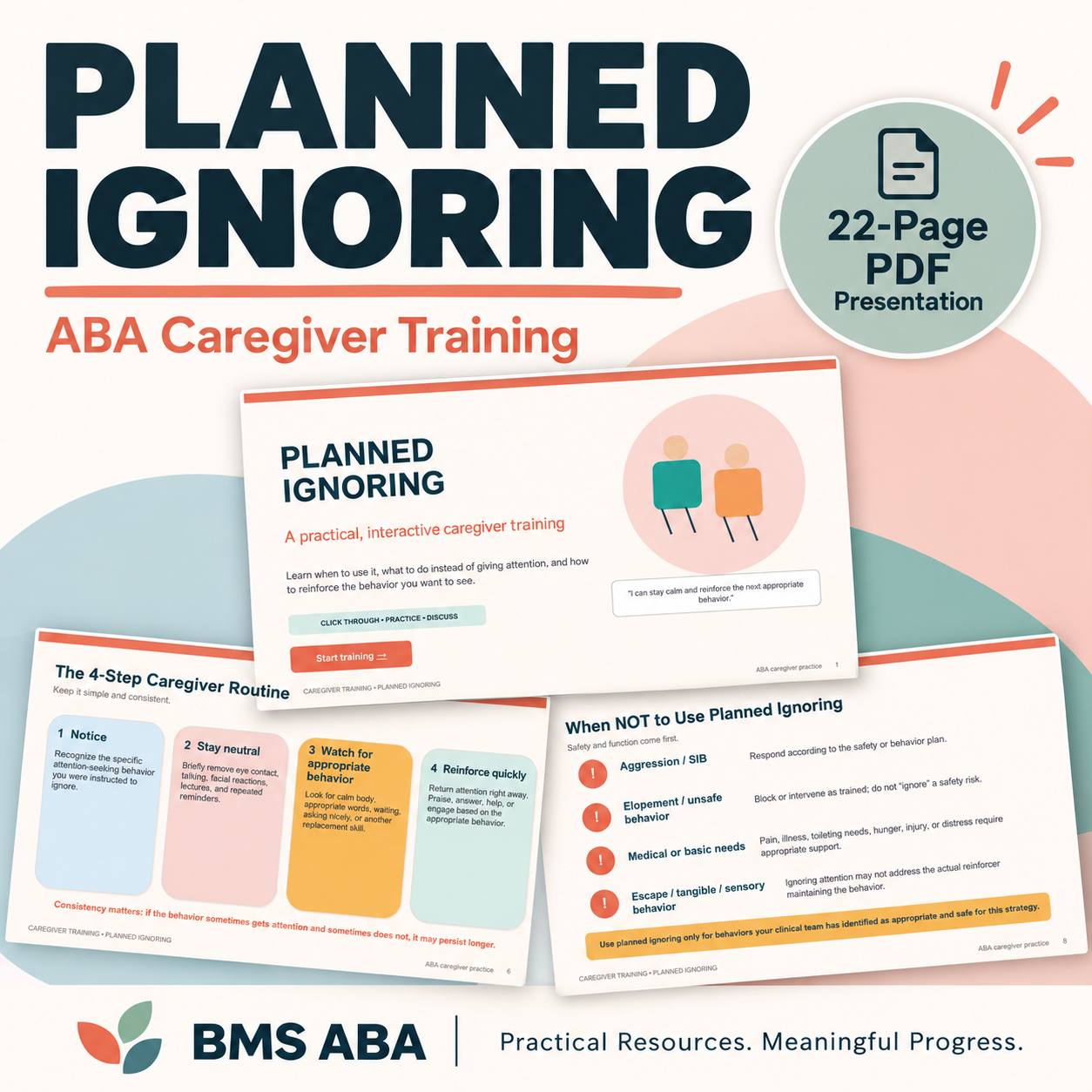
This 22-page ABA caregiver training presentation provides a structured, practical approach to teaching planned ignoring.
Designed for BCBAs, ABA supervisors, and professionals conducting caregiver training, this resource combines easy-to-understand explanations, real-life examples, video-based learning, interactive discussion questions, role-playing activities, and a caregiver home-planning worksheet.
The goal is to help caregivers understand when planned ignoring may be appropriate, how to implement it consistently, and when it should NOT be used.
What's Included?
This 22-page caregiver training presentation covers:
- Introduction to Planned Ignoring: Understand what planned ignoring means and how caregiver attention can unintentionally reinforce behavior.
- The Four-Step Caregiver Routine: Learn how to identify the target behavior, respond neutrally, recognize appropriate alternatives, and provide immediate reinforcement.
- Appropriate vs. Inappropriate Implementation: Understand what planned ignoring should and should not look like.
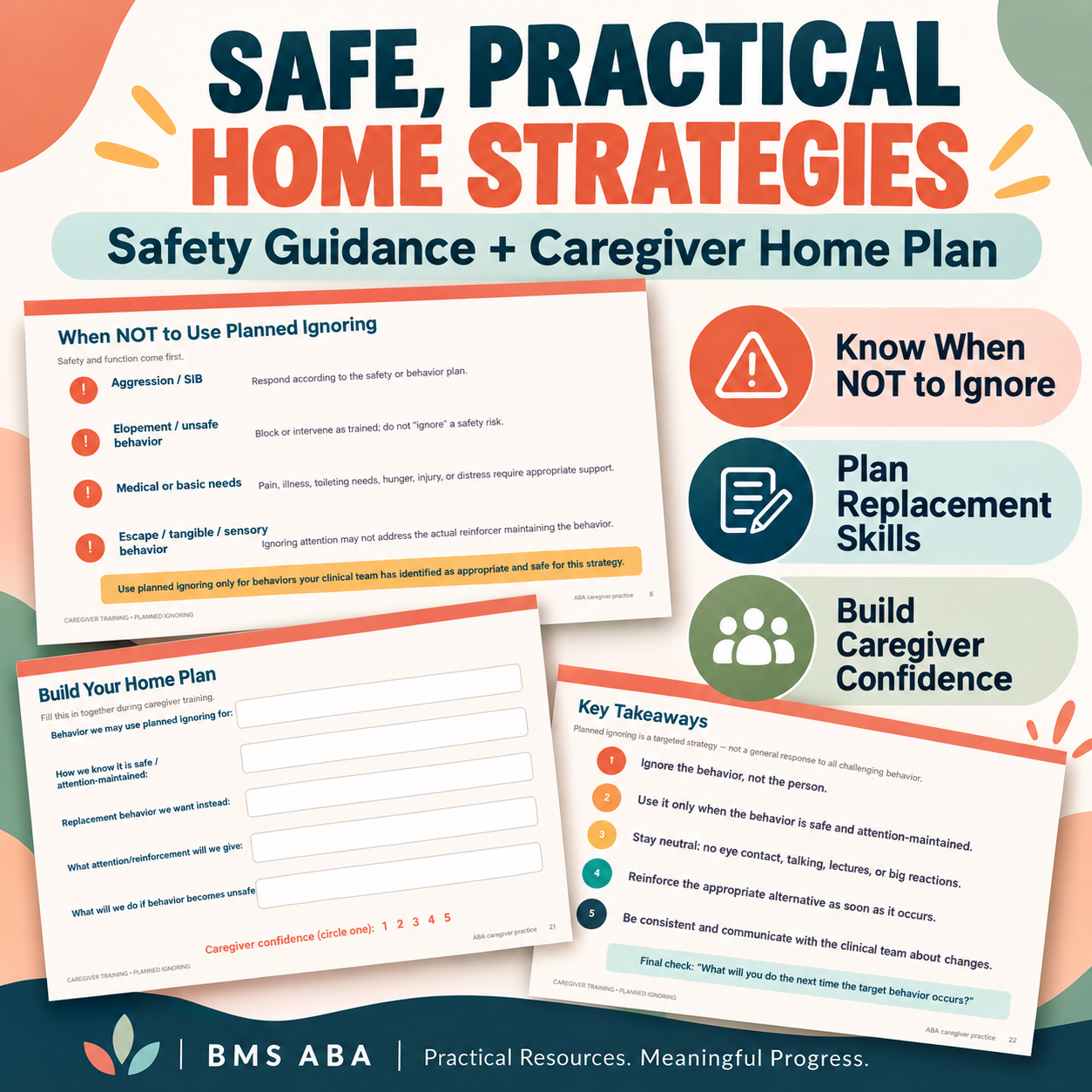
- Safety Considerations: Identify situations when planned ignoring should never be used, including dangerous behavior and unmet basic needs.
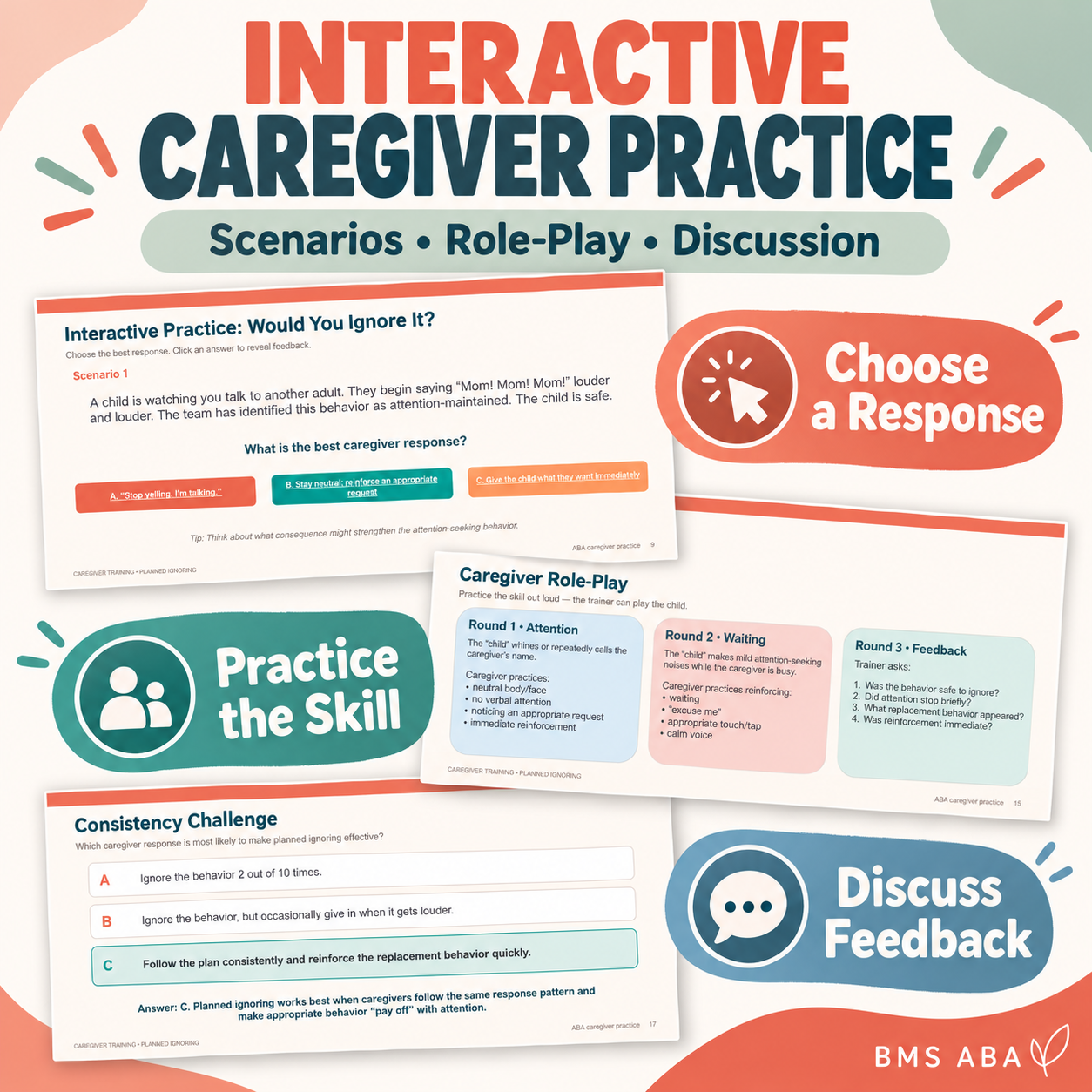
- Interactive Practice Scenarios: Apply knowledge by choosing appropriate caregiver responses and discussing the reasoning behind each decision.
- Caregiver Role-Playing Activities: Practice responding to behavior and reinforcing appropriate communication.
- Consistency and Behavior Changes: Discuss the importance of consistent implementation and what to do if behavior escalates.
- Video-Based Learning: Watch and analyze a real-world example before and after learning the strategy.
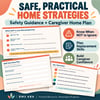
- Caregiver Home Plan: Identify a target behavior, replacement skill, reinforcement strategy, and safety considerations.
- Knowledge Review and Key Takeaways: Review the information learned and discuss how to apply it at home.
🎥 Video-Based Learning Activity
This presentation incorporates an external YouTube video to encourage caregiver participation, critical thinking, and discussion.
Watch the video here:
https://www.youtube.com/watch?v=iKmj4qgjK68
The video is used at two points during training:
1. Before Training — Watch & Respond
Caregivers watch the video and identify how they would respond to the behavior presented.
They are encouraged to select a response and explain their reasoning before learning about planned ignoring.
2. After Training — Watch, Reflect & Explain
Caregivers revisit the same video after learning about planned ignoring, reinforcement, and safety considerations.
They identify the most appropriate response and explain why their answer may have changed.
Purpose: This activity helps caregivers apply newly learned information, evaluate their decision-making, and participate actively in training.
Please Note: The video is hosted externally on YouTube and is not included in the downloadable PDF. An internet connection is required. Video availability is controlled by the original creator.
How to Use This Resource
Step 1: Introduce Planned Ignoring
Begin by asking caregivers about challenging behaviors they experience at home and how they typically respond.
Use the opening video activity to encourage discussion.
Step 2: Teach the Strategy
Review the presentation slides covering:
- What planned ignoring means
- Why attention can maintain certain behaviors
- The four-step implementation routine
- Appropriate caregiver responses
- When planned ignoring should not be used
Encourage caregivers to ask questions and discuss examples throughout the presentation.
Step 3: Complete Practice Scenarios
Present the scenarios and have caregivers identify the most appropriate response.
Discuss why each response may or may not be effective.
Step 4: Practice Through Role-Playing
Have the caregiver practice implementing the strategy while the trainer models relevant situations.
Provide feedback on neutral responding, recognizing replacement behaviors, and delivering reinforcement.
Step 5: Develop an Individualized Home Plan
Work with the caregiver to identify:
- The specific behavior being addressed
- How the behavior's function has been determined
- The appropriate replacement behavior
- How the caregiver will provide reinforcement
- What to do if behavior becomes unsafe
Step 6: Review and Reflect
Revisit the video activity and discuss what the caregiver learned.
Use the final review questions to identify areas requiring additional practice or support.
Skills and Concepts Covered
- Planned ignoring
- Attention-maintained behavior
- Functions of behavior
- Reinforcement
- Replacement behaviors
- Functional communication
- Caregiver consistency
- Behavior intervention strategies
- Safety awareness
- Caregiver implementation skills
Perfect For
- BCBA caregiver training sessions
- ABA parent consultations
- In-person caregiver training
- Virtual caregiver training
- Behavior intervention education
- ABA clinical supervision and staff development
- Home-based behavior support education
Product Details
Format: PDF Presentation
Length: 22 pages
Orientation: Landscape
Delivery: Instant Digital Download
Preparation: Open the PDF and present during caregiver training.
Important Clinical Considerations
Planned ignoring is not appropriate for every behavior.
This resource is intended for educational purposes and should be used alongside individualized clinical guidance.
Planned ignoring should only be implemented when the target behavior has been appropriately assessed, the strategy is clinically indicated, and the behavior is safe to ignore.
Never ignore aggression, self-injury, elopement, medical concerns, unmet basic needs, or behavior requiring immediate safety intervention.
Caregivers should follow their individualized behavior intervention and safety plans and consult their supervising clinical professional when concerns arise.
About BMS ABA
At BMS ABA, we create practical, easy-to-use ABA resources designed to support behavior analysts, behavior technicians, educators, and caregivers.
Our resources focus on simplifying clinical instruction, promoting meaningful skill development, and helping individuals apply learned skills in everyday situations.