
Bribery vs. Positive Reinforcement | ABA Parent Training PowerPoint | BCBA Resource
Bribery vs. Positive Reinforcement | ABA Caregiver Training
Help caregivers understand the difference between reactive rewards and planned positive reinforcement!
Caregivers sometimes offer preferred items, activities, or privileges during challenging behavior in an attempt to stop the behavior immediately. However, the timing and consequences of these responses can unintentionally strengthen the very behaviors caregivers are trying to reduce.
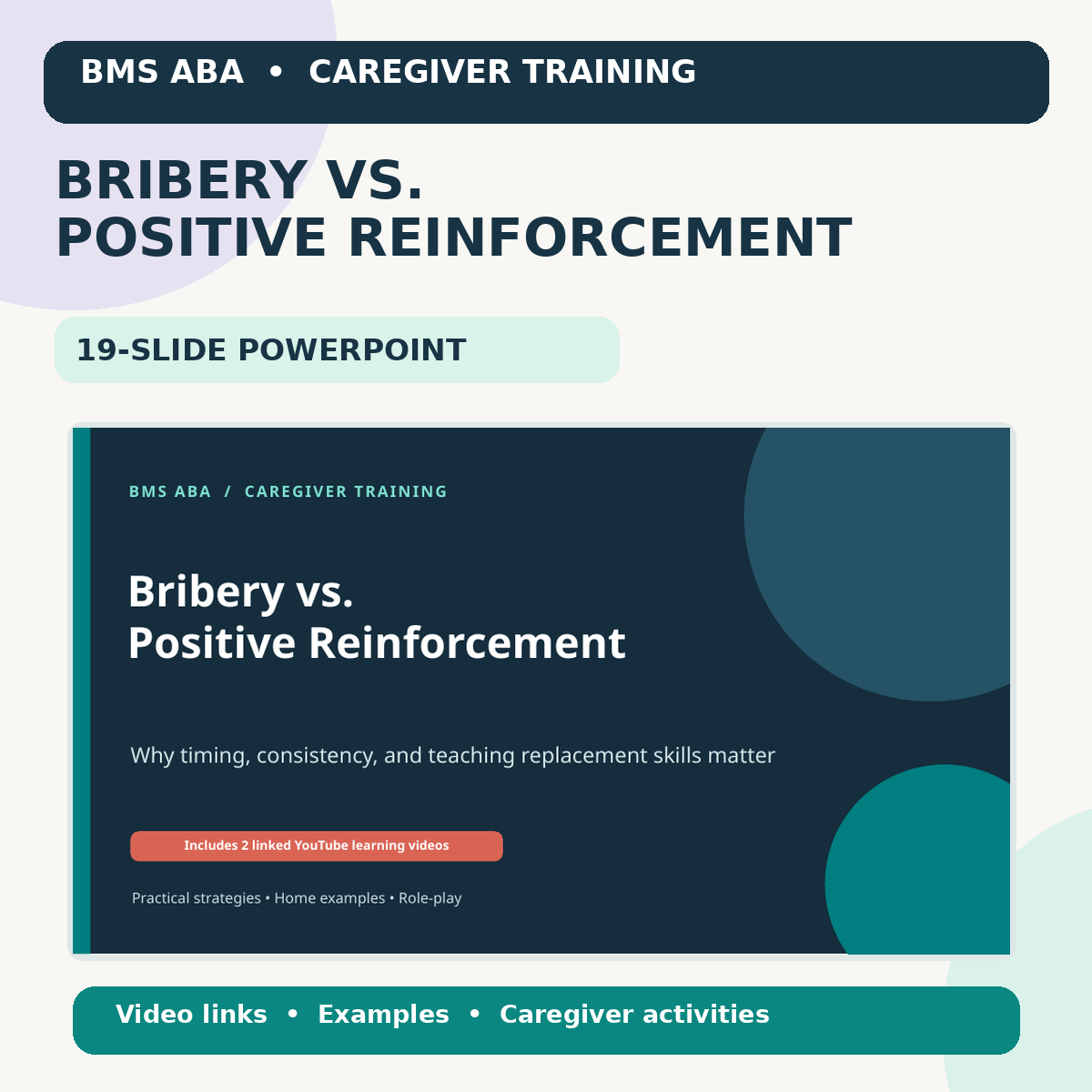
This 19-slide caregiver training PowerPoint helps BCBAs and ABA professionals explain the difference between what is commonly called bribery and planned positive reinforcement using clear explanations, practical examples, videos, discussion questions, and interactive activities.
The presentation emphasizes proactive teaching, functional communication, positive reinforcement, caregiver support, and individualized behavior strategies.
What's Included?
19 professionally designed PowerPoint slides covering:
Understanding Reinforcement
- What reinforcement means in ABA
- How positive reinforcement works
- Why a reward does not automatically function as reinforcement
- How consequences influence future behavior
Understanding Bribery
- Bribery as an informal caregiver-training term
- Reactive rewards during challenging behavior
- How unplanned consequences can strengthen escalation
- The difference between bribery and appropriate emotional or safety support
Bribery vs. Positive Reinforcement
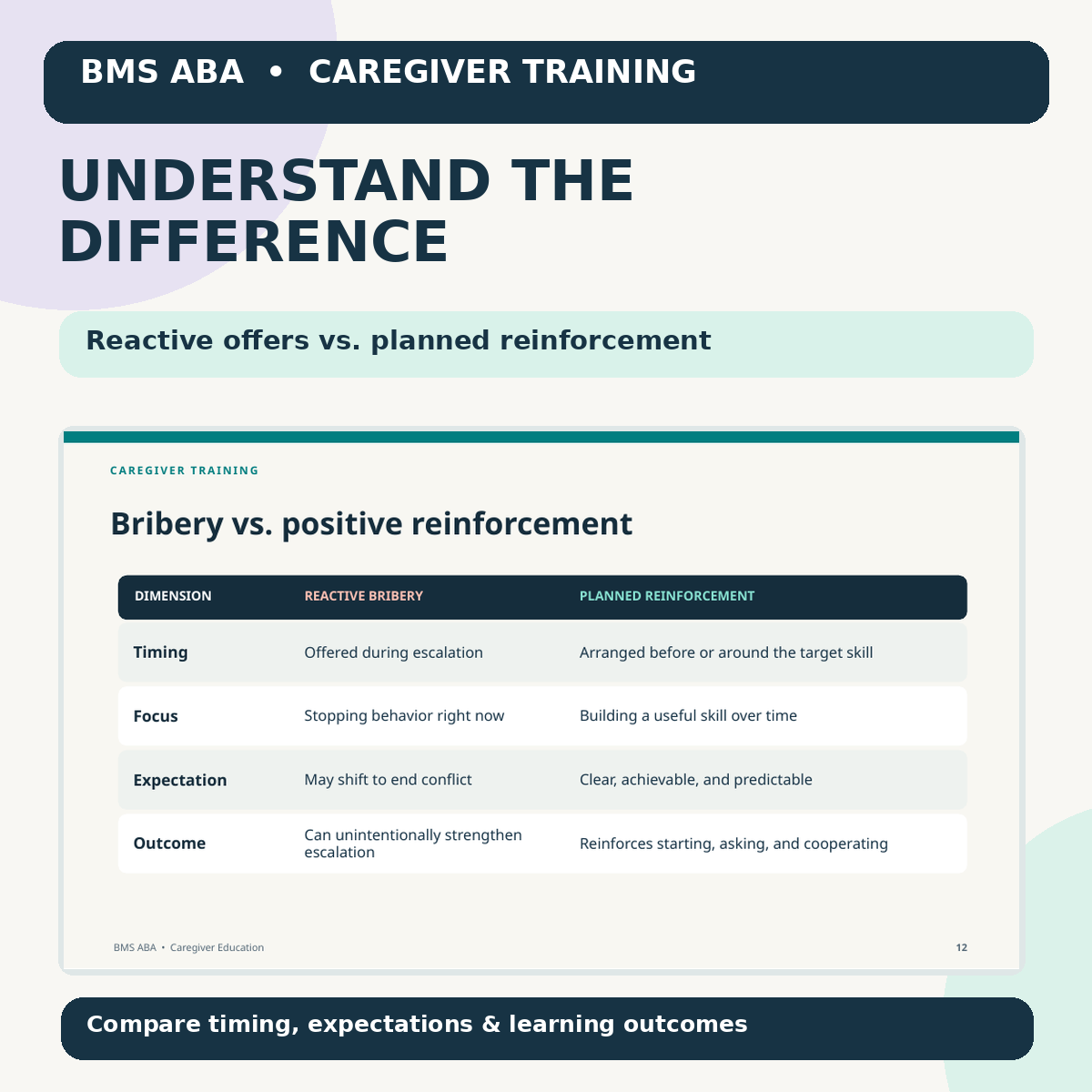
- Side-by-side comparison of both approaches
- Differences in timing, expectations, and long-term learning
- Examples of planned reinforcement during everyday routines
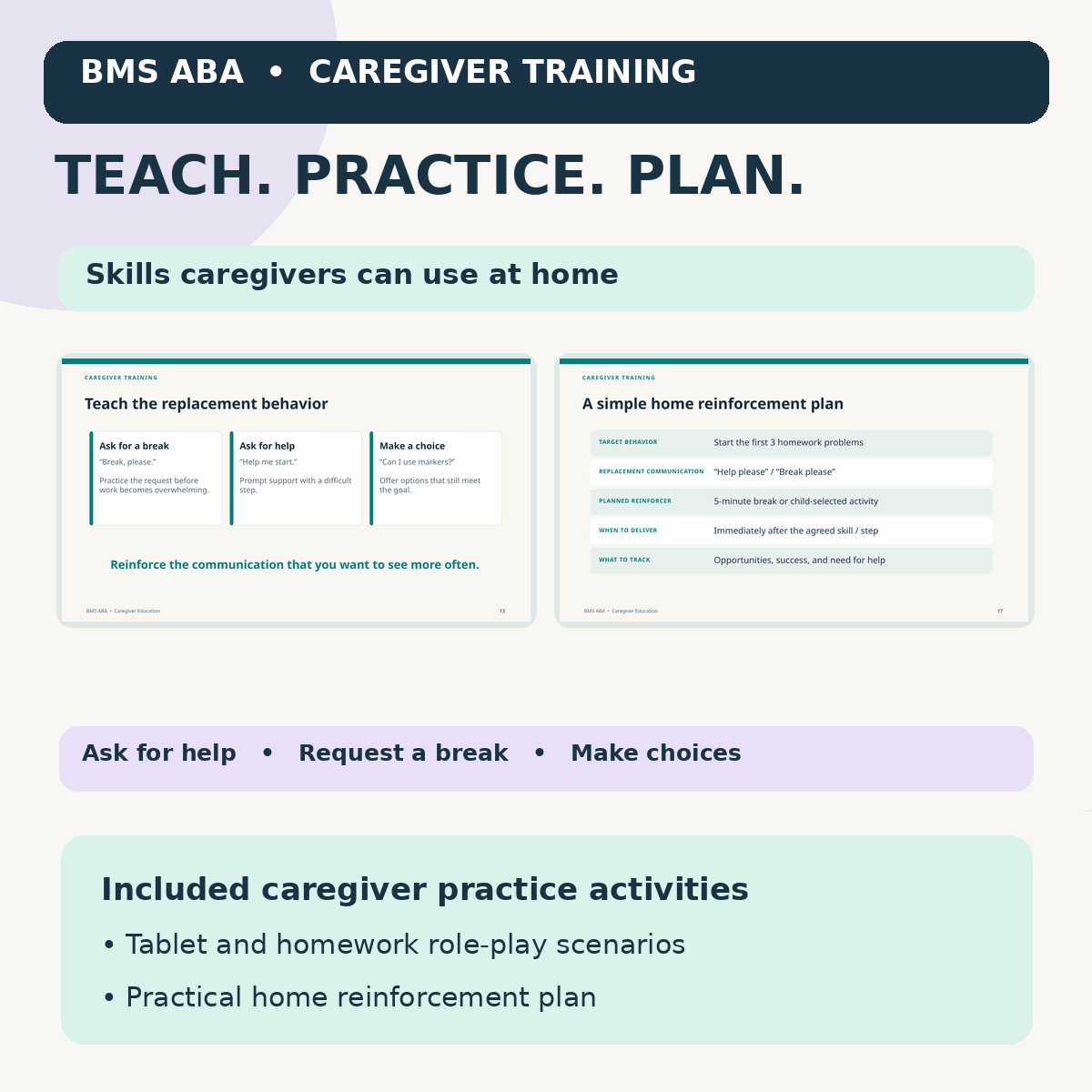
Teaching Replacement Skills
- Requesting help
- Asking for breaks
- Making appropriate choices
- Reinforcing functional communication
Practical Caregiver Strategies
- Responding calmly during difficult situations
- Supporting realistic expectations
- Using reinforcement consistently
- Individualizing reinforcement strategies
Interactive Training Activities
- 2 linked YouTube educational videos with discussion prompts
- Tablet-time and homework role-play scenarios
- Sample home reinforcement plan
- Caregiver knowledge-check questions
- Caregiver training goal and key takeaways
Included YouTube Video Resources
The PowerPoint incorporates two external YouTube videos to support caregiver understanding and encourage interactive discussion.
Video 1: Understanding Bribery vs. Reinforcement
https://www.youtube.com/watch?v=ZQIGHrl9WTI
Discussion topics include:
- How bribery differs from planned reinforcement
- How caregivers may unintentionally reinforce challenging behaviors
- Why the timing of reinforcement matters
Video 2: Using Positive Reinforcement
https://www.youtube.com/watch?v=9xDr2tPJCUY
Discussion topics include:
- Identifying appropriate behaviors to reinforce
- Implementing positive reinforcement strategies
- Applying reinforcement during everyday routines
Both videos are intended to encourage caregiver participation and provide opportunities to connect the training material to real-life experiences.
Who Is This Resource For?
- Board Certified Behavior Analysts (BCBAs)
- ABA Clinical Supervisors
- Mid-Level Supervisors
- ABA Parent and Caregiver Training Providers
- Behavior Analysts Creating Caregiver Education Materials
- ABA Clinical Teams
How to Use
Use this presentation during virtual or in-person caregiver training sessions.
Present the concepts, discuss relevant home examples, watch the linked educational videos, practice alternative caregiver responses, and collaborate with families to develop an individualized reinforcement plan.
The slides can also support professional discussions and caregiver education workshops.
Product Details
- Format: PowerPoint (.pptx)
- Slides: 19
- Video Resources: 2 external YouTube links
- Language: English
- Presentation Style: Professional caregiver education
- Use: Virtual or in-person training
- Delivery: Digital download
Important Notes:
YouTube videos are accessed through external links and are not embedded video files. Their availability is controlled by the original publishers.
The term bribery is used as an informal description rather than a formal ABA procedure. The presentation emphasizes understanding behavioral contingencies and providing appropriate support. Caregiver training should be individualized according to learner needs, clinical judgment, and relevant ethical and professional requirements.
BMS ABA — Practical Resources. Meaningful Progress.