
DEMENTIA, MEMORY CARE, A GERIATRIC DOCUMENTATION TOOLKIT
Support complex cognitive and geriatric care with structured documentation resources designed to connect memory concerns, functional abilities, caregiver experiences, behavioral symptoms, safety risks, care coordination, transitions, and long-term planning.
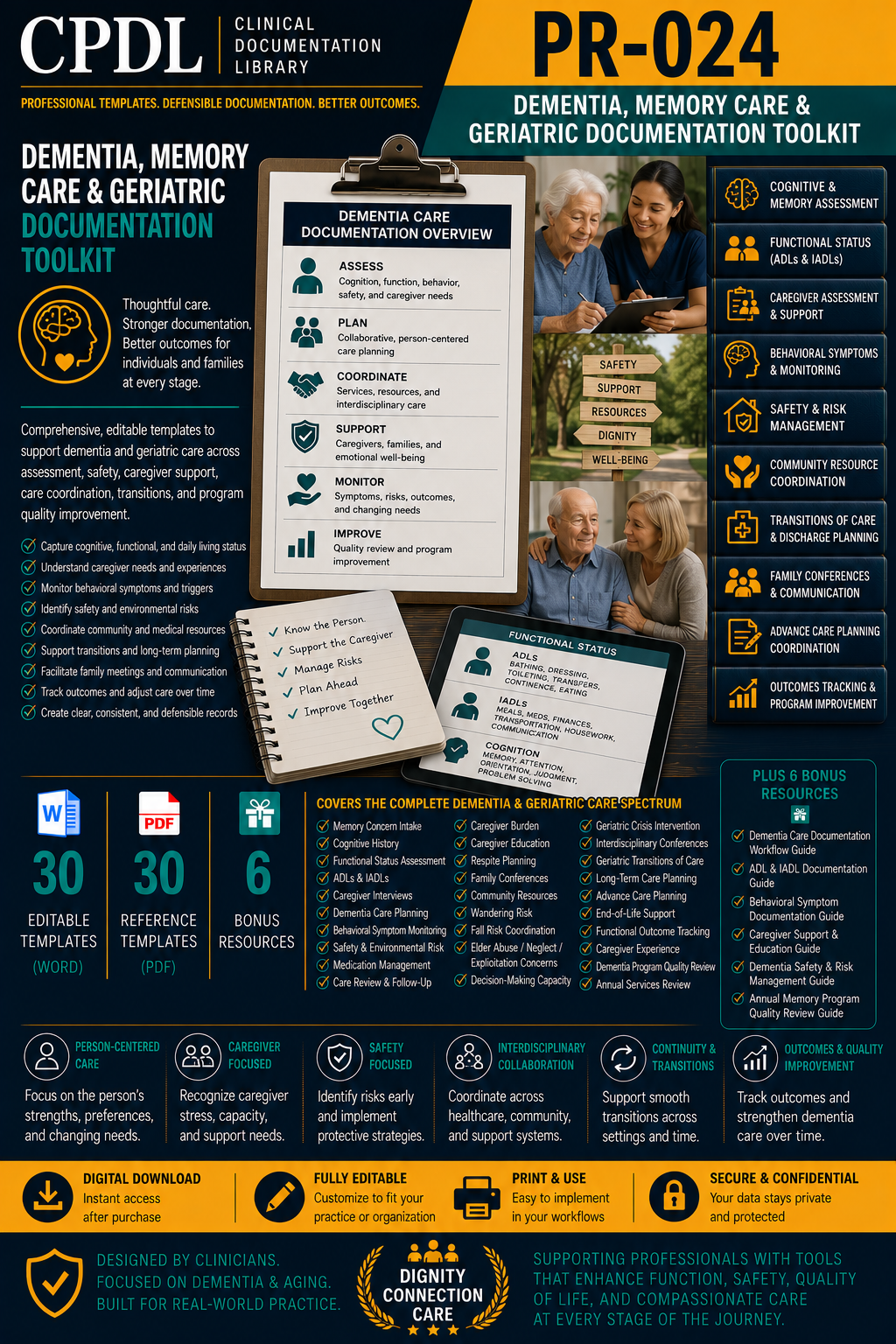
The CPDL Dementia, Memory Care & Geriatric Documentation Toolkit (PR-024) provides 30 professionally structured templates designed for professionals working with older adults, individuals experiencing cognitive change, caregivers, families, and interdisciplinary care teams.
Dementia and geriatric care often extend far beyond documenting symptoms. Professionals may need to understand how cognitive changes affect everyday functioning, monitor behavioral concerns, coordinate medical and community resources, address caregiver burden, evaluate safety concerns, facilitate family discussions, plan transitions, and document changing support needs over time.
PR-024 brings those interconnected responsibilities into one organized documentation system.
What's Included
The toolkit includes 30 editable professional templates addressing:
- Memory-concern intake
- Cognitive history
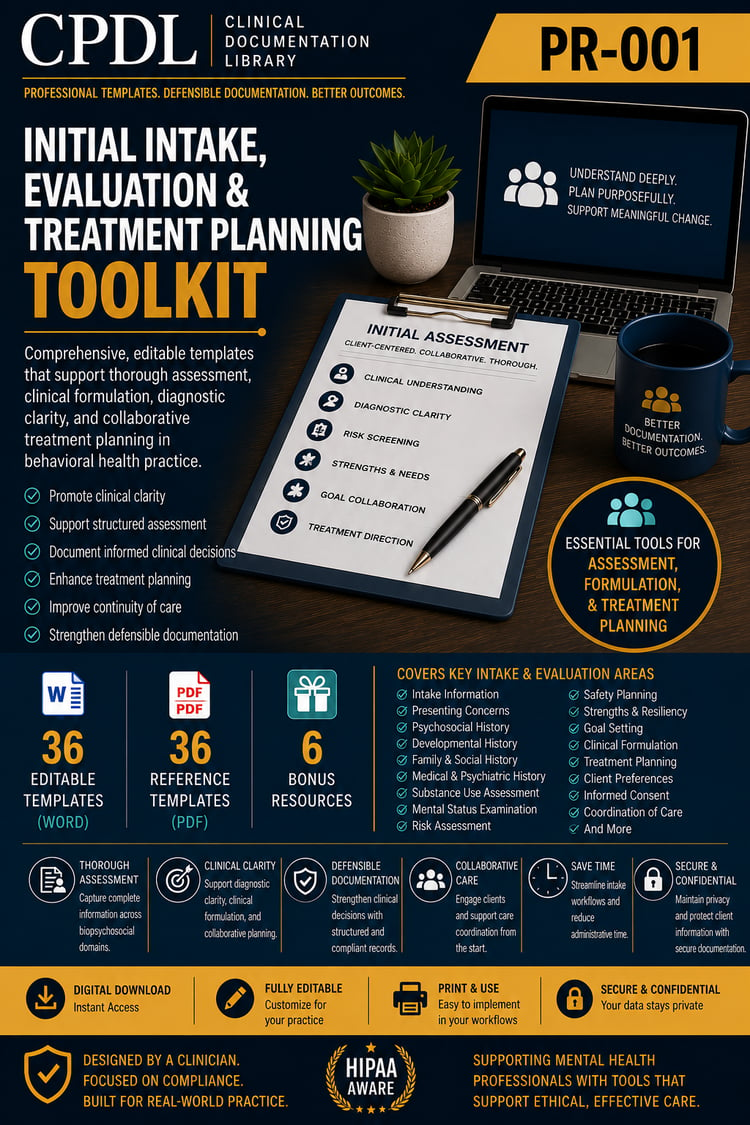
- Functional-status assessment
- Activities of daily living and instrumental activities of daily living
- Caregiver interviews
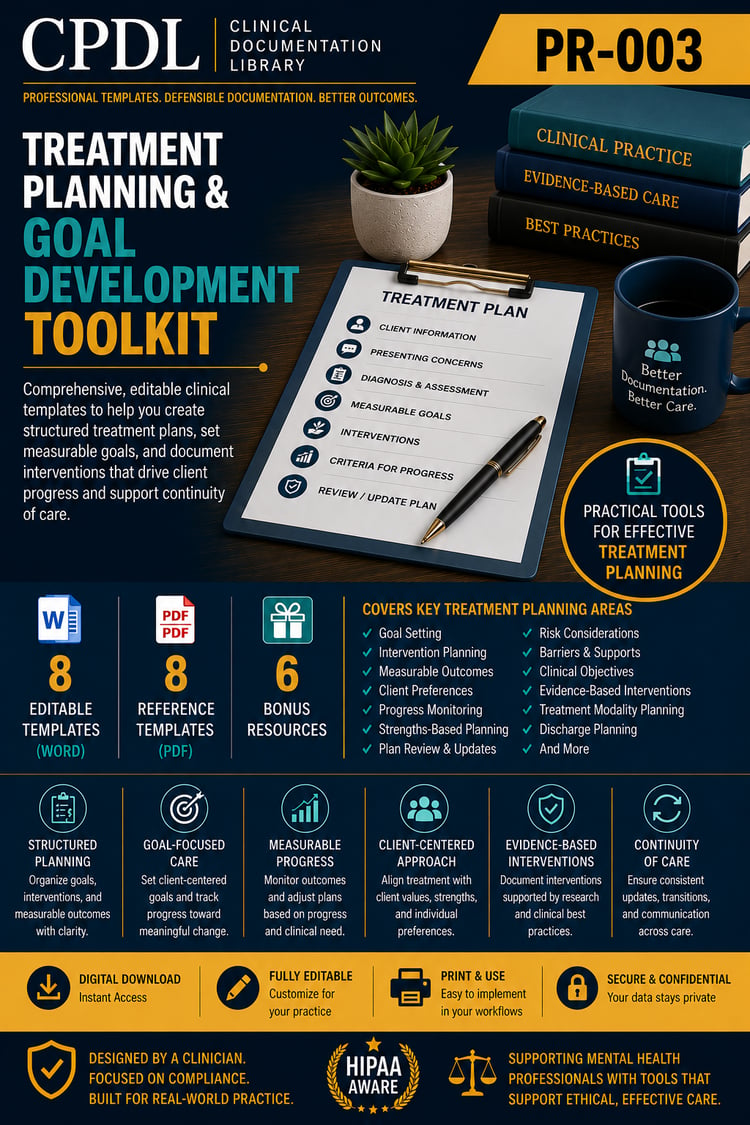
- Dementia care planning
- Behavioral-symptom monitoring
- Safety and environmental risk
- Medication-management coordination
- Follow-up cognitive-care review
- Caregiver burden
- Caregiver education
- Respite planning
- Family conferences
- Community-resource coordination
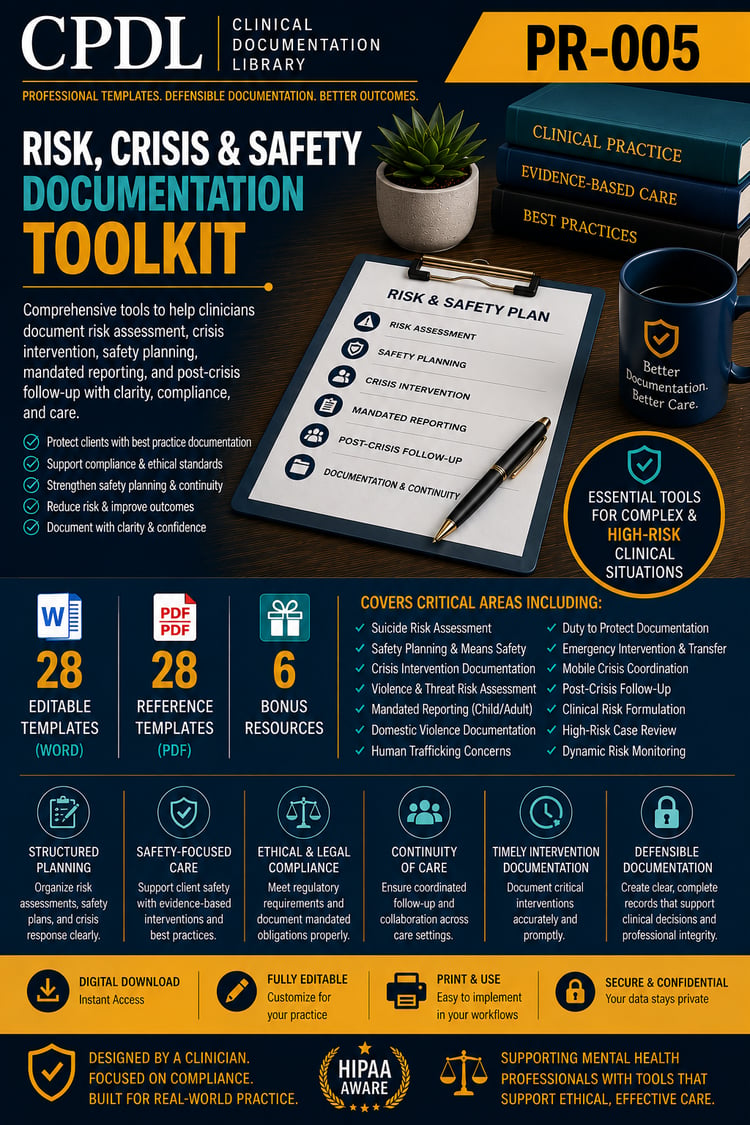
- Wandering and missing-person risk
- Fall-risk coordination
- Elder abuse, neglect, or exploitation concerns
- Decision-making-capacity discussions
- Geriatric crisis intervention
- Interdisciplinary dementia-care conferences
- Geriatric transitions of care
- Long-term-care placement planning
- Advance-care-planning coordination
- End-of-life support coordination
- Dementia-program quality review
- Functional-outcome tracking
- Caregiver experience and satisfaction
- Dementia-program improvement
- Annual dementia-services review
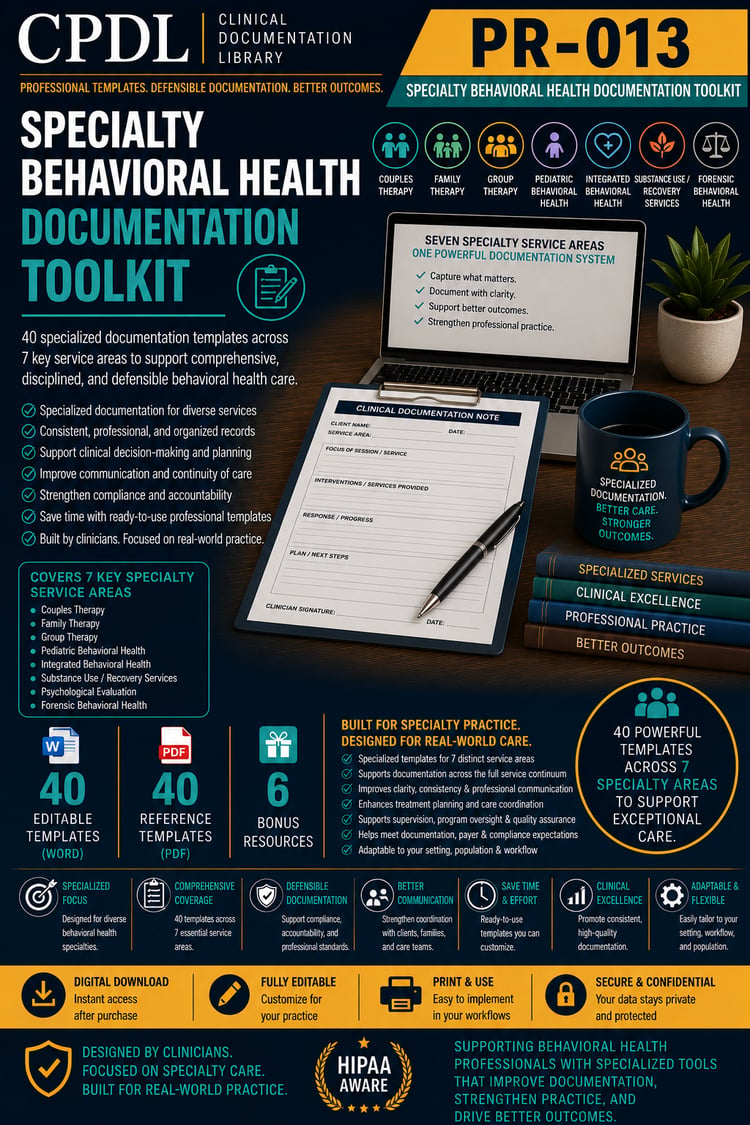
Each primary resource is provided in both editable Microsoft Word format and corresponding reference PDF format, allowing professionals and organizations to customize the documentation for their role, population, care environment, workflow, organizational requirements, and applicable documentation standards.
Plus 6 Bonus Resources
PR-024 also includes 6 supplemental professional resources designed to support dementia-care documentation, functional review, behavioral-symptom documentation, caregiver support, safety planning, and program quality:
- Dementia Care Documentation Workflow Guide
- ADL & IADL Documentation Quick Reference
- Behavioral Symptom Documentation Guide
- Caregiver Support & Education Checklist
- Dementia Safety & Risk Management Guide
- Annual Memory Program Quality Review
Together, these resources provide practical support for organizing dementia-care workflows, documenting functional abilities, reviewing behavioral symptoms, supporting caregivers, strengthening safety and risk documentation, and conducting structured review of memory-care services.
Support the Person, Caregiver & Care System
PR-024 can help professionals:
- Organize memory and cognitive histories
- Document changes in everyday functioning
- Track ADL and IADL needs
- Incorporate caregiver observations into care
- Monitor behavioral and psychological symptoms
- Identify environmental and safety concerns
- Document wandering and fall-related risks
- Coordinate medication-related information and healthcare services within the professional role
- Assess caregiver burden and support needs
- Structure caregiver education
- Coordinate respite and community resources
- Document family conferences
- Support interdisciplinary communication
- Organize geriatric transitions of care
- Document long-term-care planning
- Support appropriate advance-care-planning coordination
- Track functional outcomes over time
- Evaluate caregiver experience and support needs
- Strengthen dementia-program quality-improvement activities
- Create clearer, more consistent, and clinically meaningful records
Who It's For
Designed for clinical social workers, medical social workers, therapists, case managers, care coordinators, geriatric behavioral health professionals, memory-care programs, dementia-care programs, healthcare organizations, community aging programs, interdisciplinary teams, and other appropriately qualified professionals involved in dementia and geriatric care.
PR-024 may be particularly useful in settings where cognitive change intersects with functional decline, caregiver needs, behavioral symptoms, safety concerns, medical coordination, community resources, transitions of care, and long-term planning.
File Formats
Digital download includes:
- 30 editable Word templates
- 30 corresponding reference PDFs
- 6 bonus resources
- Supporting product and implementation materials
Important Use Notice
These resources are professional documentation aids and are not diagnostic instruments, cognitive tests, neuropsychological assessments, medical evaluations, legal capacity evaluations, or substitutes for comprehensive assessment by appropriately qualified professionals.
Memory complaints, cognitive changes, behavioral symptoms, and functional decline may have multiple medical, neurological, psychiatric, medication-related, environmental, and psychosocial causes. Documentation within these templates should not independently be interpreted as establishing a dementia diagnosis, subtype, severity, or etiology.
Resources addressing decision-making capacity are intended to support documentation of relevant discussions, observations, and care-coordination activities and do not independently constitute a legal, medical, or formal capacity determination.
Resources addressing elder abuse, neglect, exploitation, wandering, safety, crisis intervention, advance-care planning, long-term-care transitions, and end-of-life coordination should be used in accordance with applicable professional responsibilities, organizational procedures, reporting obligations, emergency protocols, informed-consent requirements, and governing laws and regulations.
Users should employ these resources only within their education, training, licensure, credentialing, competence, professional role, and authorized scope of practice and should adapt them to their setting, population, organizational policies, payer requirements, privacy and security obligations, professional standards, and jurisdiction.
Use of these materials does not independently establish diagnosis, legal capacity, benefits eligibility, long-term-care eligibility, legal, regulatory, payer, licensing, accreditation, reimbursement, or other compliance requirements.
Digital product. No physical item will be shipped.