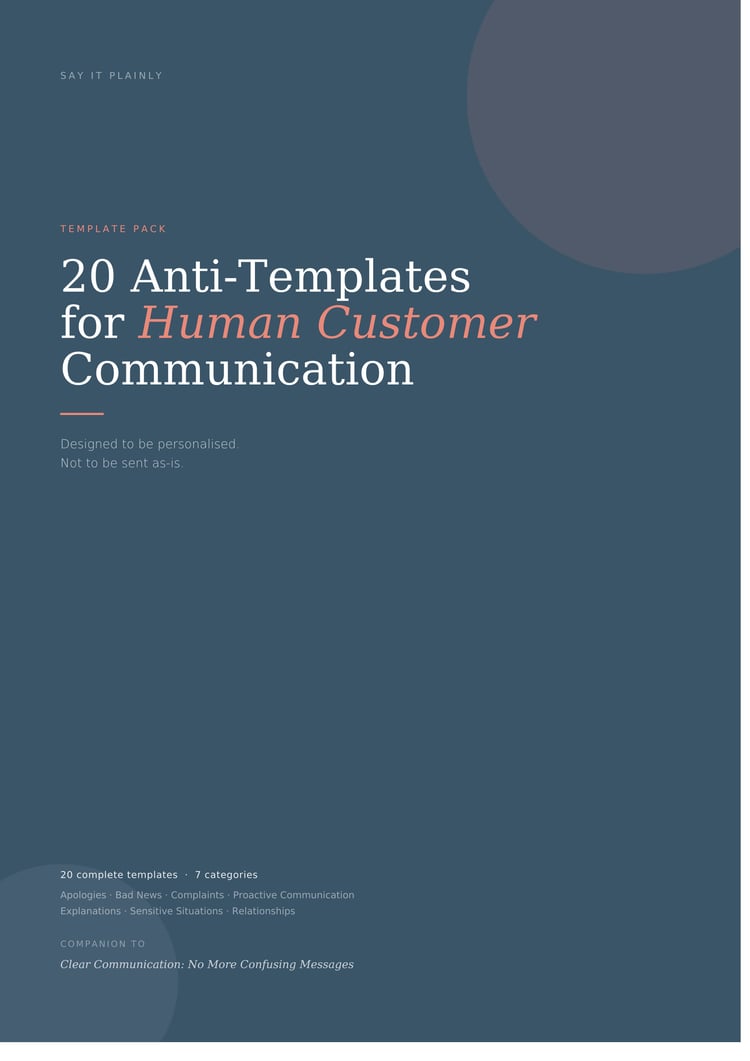


Say It Plainly: A Guide to Better Customer Emails, Replies and Conversations
The way you talk to your customers changes everything.
Most businesses communicate with their customers the way they were taught — cautiously, formally, with one eye firmly on legal liability rather than on the person reading the message. Templates get copied. Phrases get recycled. And a kind of corporate language takes hold that nobody actually speaks in real life, but everybody keeps writing.
The result? Customers who feel like a reference number. Customers who have to read an email three times to understand what it's actually saying. Customers who give up, walk away, or take to social media to share their frustration publicly.
This book changes that.
Not with a new set of templates or a fresh layer of jargon, but with a fundamental shift in how you think about the person on the other end of every email, reply, and conversation.
Across 12 chapters and a working reference appendix, you'll learn how to deliver bad news without burying it, apologise in a way that actually means something, handle angry customers with calm and clarity, explain complicated things without talking down, follow up without sounding annoying, and lead your team through a crisis with honesty rather than corporate distance.
Inside you'll find:
- The mindset shift that changes everything you write
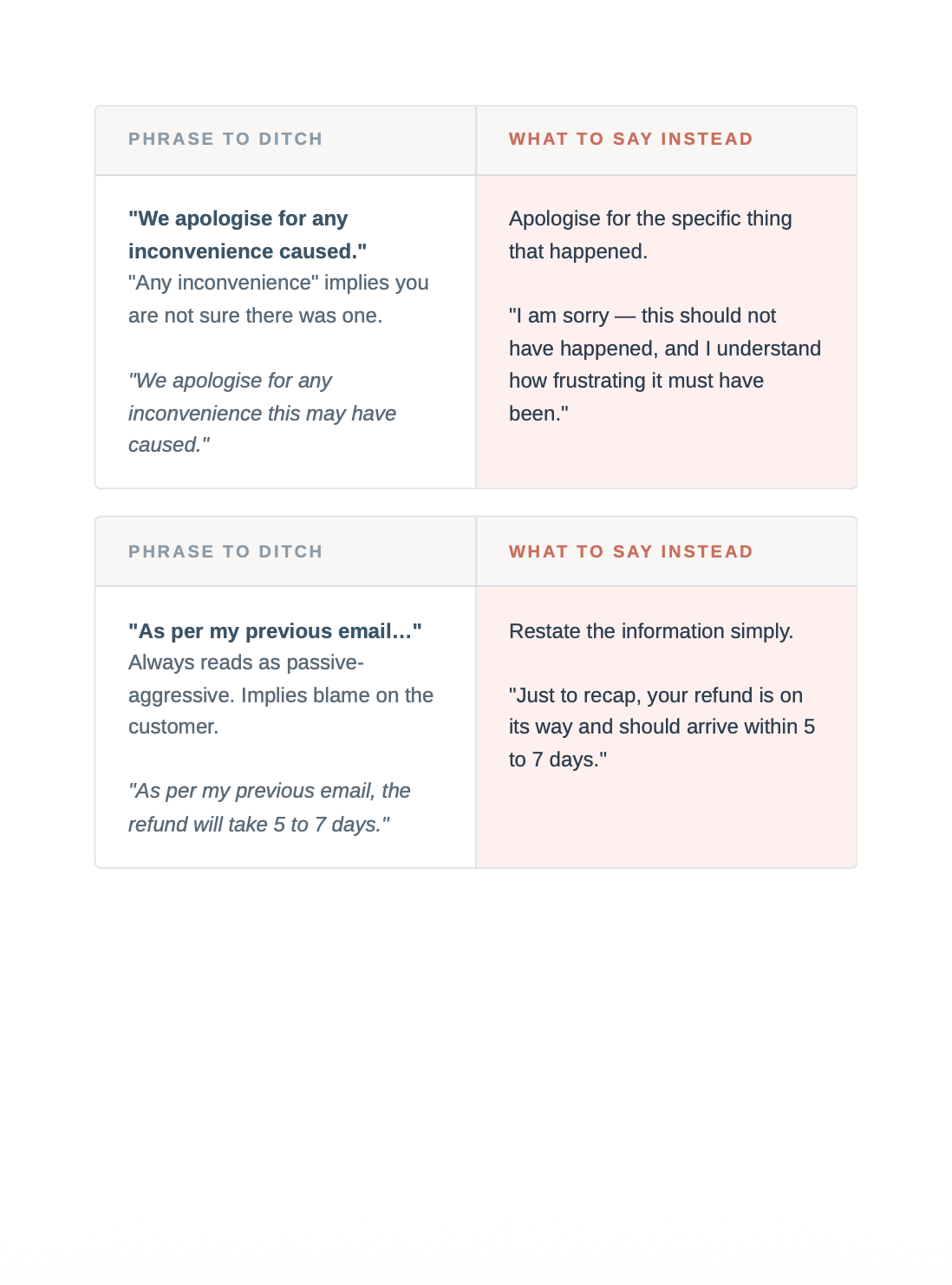
- The corporate phrases to ditch — and what to say instead
- Ten real customer situations rewritten, before and after
- The CALM framework for handling angry customers
- A 12-question checklist to run before you hit send
- How to build a template library that elevates communication rather than undermining it
- A practical roadmap for building a communication culture across your team
- A working phrases reference and recommended reading list
Who this book is for:
If you communicate with customers in any capacity, this book is for you. Whether you're a frontline support agent handling dozens of interactions a day, a team leader responsible for the quality of your department's communications, or a founder writing to your entire customer base about something important — the principles are the same.