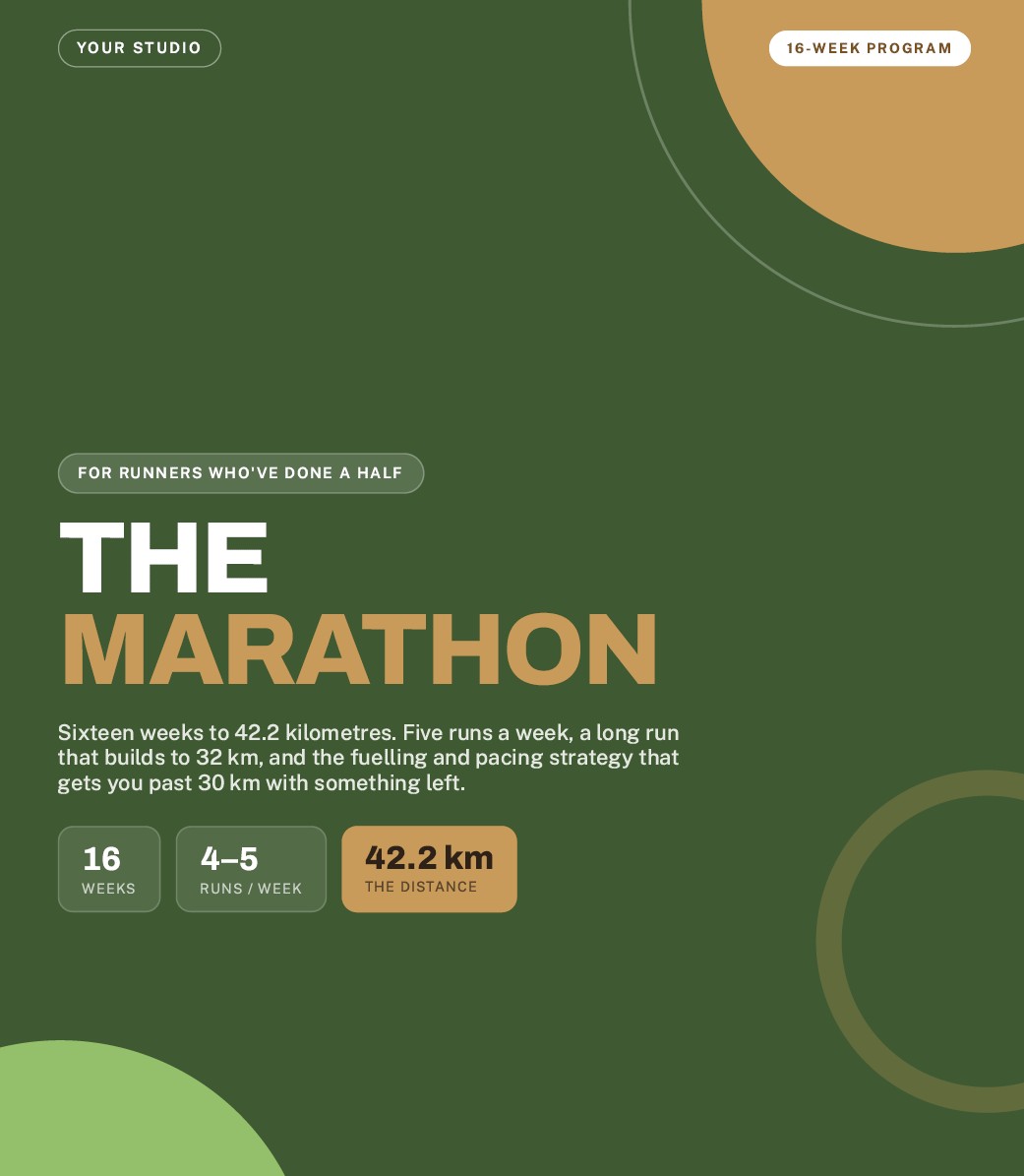

THE MARATHON — 16 Weeks to 42.2 Kilometres
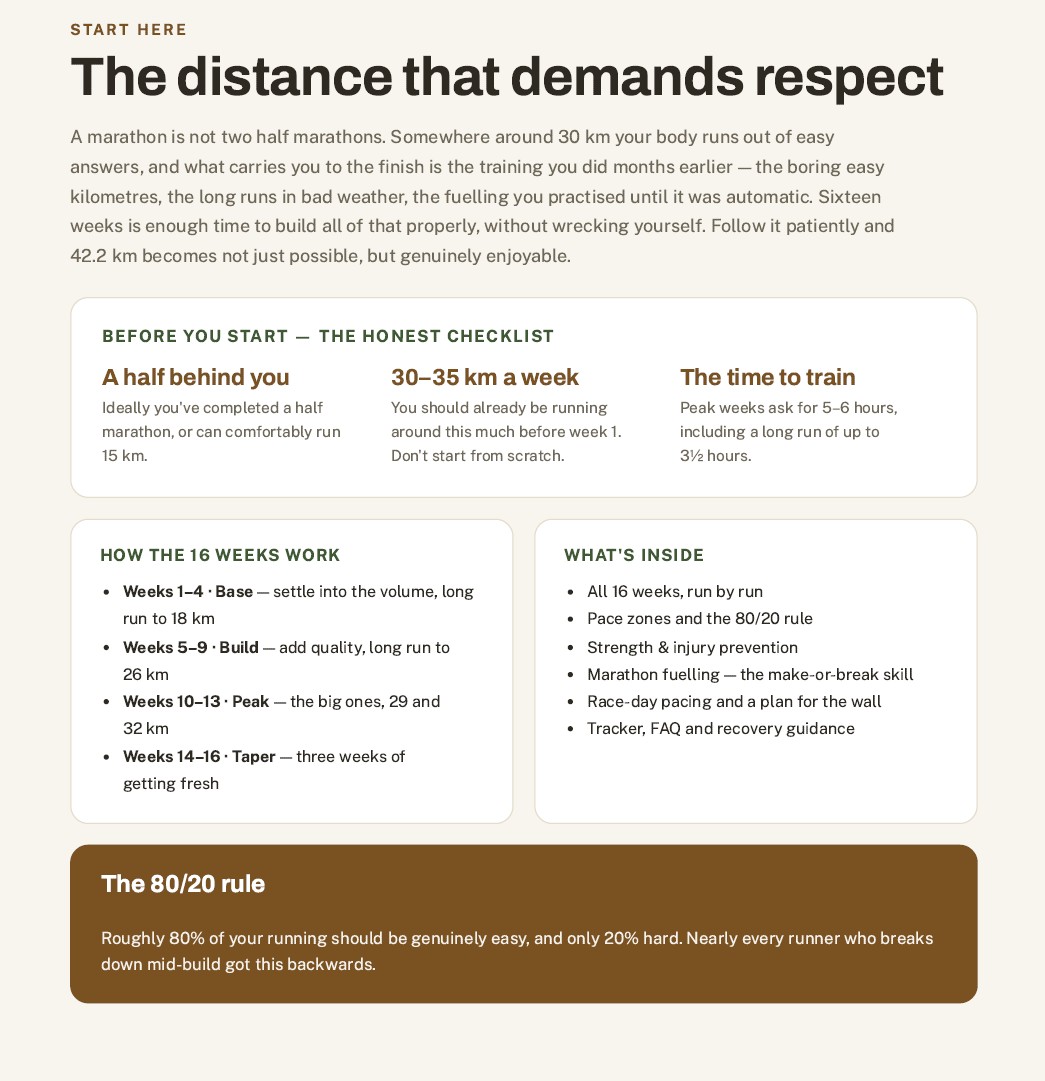
A marathon is not two half marathons. Somewhere around 30 km your body runs out of easy answers, and what carries you to the finish is the training you did months earlier — the boring easy kilometres, the long runs in bad weather, the fuelling you practised until it was automatic.
Sixteen weeks builds all of that properly. Five runs a week (four if life is busy), structured around the 80/20 rule: most of your running genuinely easy, only a fifth of it hard. Your long run climbs from 14 km to the famous 32 km, with recovery weeks every fourth week and marathon-pace finishes built into the later long runs — because finishing fast on tired legs is the most specific marathon training there is.
Then there's the part most plans skim over. Fuelling gets a full page, because your body stores about ninety minutes of running fuel and a marathon takes three to five hours — that gap is the wall. You'll learn the 30–60 g of carbs per hour target, how to train your gut from week one, and a sample race-day plan with gels timed to the kilometre. The 32 km run in week twelve is run as a complete dress rehearsal: same wake-up, same breakfast, same kit, same gels.
You'll also get seven strength exercises that keep you running through the peak weeks, an honest guide to which aches to run through and which to stop for, a three-week taper with advice for the restlessness and phantom niggles, and a race-day plan that breaks 42.2 km into five sections — including what to actually do when it gets hard at 32 km.
Run the easy days easy. Protect the long run. Practise your fuelling until it's boring. Respect the taper. Do those four things for sixteen weeks and you'll cross a line most people never even start toward.
Perfect for: runners who've completed a half marathon or can run 15 km · already running 30–35 km a week · 4–5 runs a week.