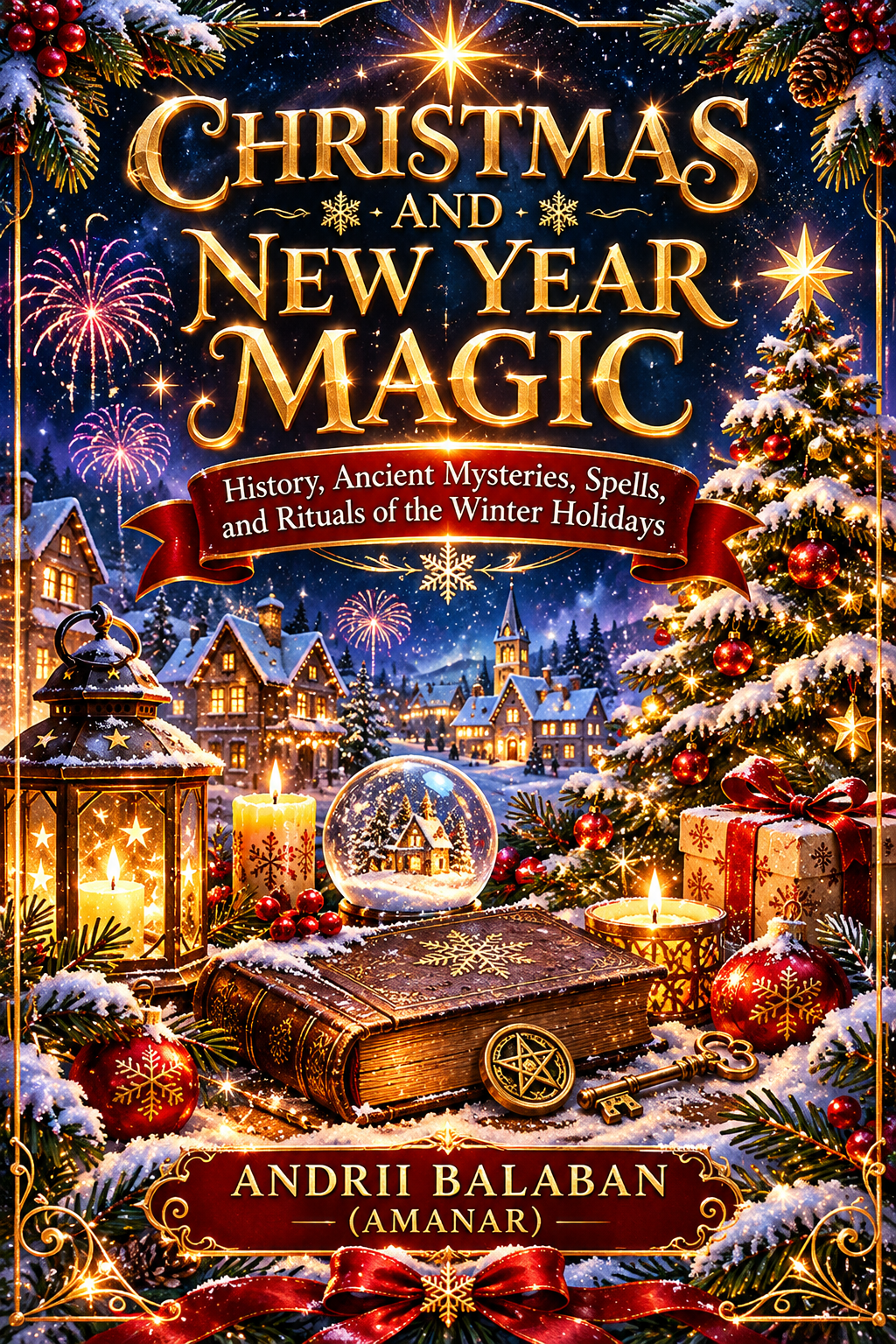
Christmas and new year magic. History, Ancient Mysteries, Spells, and Rituals of the Winter Holidays.
TABLE OF CONTENTS
Chapter 1. The Winter Solstice: The Rebirth of the Sun and the Origins of Winter MagicThe origins of ancient winter festivals associated with the movement of the Sun, the shortening of daylight hours, and the arrival of the longest night of the year. The beliefs of early civilizations concerning the death and rebirth of the Sun, the victory of light over darkness, and the renewal of natural forces. Winter solstice traditions among European peoples, solar deities, sacred fires, and the symbolism of evergreen plants. The magical significance of the transition from one solar cycle to another. Ancient purification ceremonies, protective rituals for the home, spells for attracting prosperity, and incantations intended to awaken the power of the returning Sun.
Chapter 2. The Origins of Christmas: From Ancient Winter Festivals to Christian TraditionThe historical development of Christmas, the establishment of the Christian celebration of the birth of Jesus Christ, and the spread of December 25 as a religious feast day. Roman Saturnalia, the cult of Sol Invictus, ancient winter customs, and scholarly debates concerning their influence on later Christmas traditions. The religious symbolism of birth, light, hope, and spiritual renewal. Folkloric beliefs surrounding the sacred and supernatural qualities of Christmas Eve. Christmas blessings, protective incantations, candle magic, and rituals intended to attract peace, harmony, and prosperity into the family home.
Chapter 3. The History of New Year: Ancient Calendars, Civilizations, and the Magic of Beginning TimeThe origins of New Year celebrations in Mesopotamia, ancient Egypt, Rome, and other civilizations. Different historical dates marking the beginning of the year, the calendar reforms of Julius Caesar, the establishment of January 1 in the Roman calendar, and the subsequent development and adoption of the Gregorian calendar. The evolution of New Year celebrations throughout Europe and the Slavic world, including the reforms of Peter the Great and the formation of modern holiday traditions. The magical interpretation of calendar time, the completion of an old cycle, and the opening of a new one. Rituals for releasing the past, overcoming misfortune, fulfilling wishes, and symbolically shaping personal destiny for the coming year.
Chapter 4. The Twelve Sacred Nights: The Time Between WorldsThe origins and development of beliefs concerning twelve extraordinary winter nights in European folklore, the Germanic traditions of the Rauhnächte, Slavic Sviatki, and popular legends describing supernatural events during the winter holiday season. Historical distinctions between traditional calendar customs and later esoteric interpretations. The magical nature of transitional time, when the old year has lost its influence and the future has not yet acquired its final form. Winter spirits, prophetic dreams, omens, and divination. Twelve consecutive magical rituals devoted to purification, protection, love, health, material prosperity, and the fulfillment of wishes.
Chapter 5. The Christmas Tree: The Sacred Evergreen, Holiday Decorations, and Magical TalismansThe historical use of evergreen plants in winter ceremonies and the emergence of the decorated Christmas tree in European culture. The symbolism of fir, pine, mistletoe, holly, and other plants in traditional folk magic. The magical significance of stars, glass ornaments, bells, garlands, candles, and festive decorations. The Christmas tree as a magical center of the household, connecting the forces of the Earth, nature, and celestial light. The creation of talismans from Christmas decorations, incantations involving evergreen branches, the magic of gift-giving, wish-fulfillment ceremonies, and rituals intended to protect the family throughout the coming year.
Chapter 6. Spirits of the Winter Holidays: From Ancient Deities to Father Christmas and Santa ClausMythological and folkloric representations of winter spirits, supernatural gift-givers, and mysterious beings associated with the cold season. Saint Nicholas, European Christmas figures, and the historical development of Santa Claus, Ded Moroz, and Snegurochka. The Yule Goat, Krampus, Perchta, and other winter spirits found in Germanic and Slavic traditions. Benevolent and dangerous supernatural forces, their symbolic functions, and their place in popular beliefs. Magical interaction with winter spirits within the imaginative universe of the book, ceremonial offerings, protective amulets, incantations of hospitality, and rituals invoking the guardians of the festive season.
Chapter 7. The Magic of Christmas Eve and New Year's Eve: Candles, Fire, Water, and MirrorsTraditional beliefs concerning midnight as a special moment of transition between cycles of time. The symbolic and magical significance of fire, water, mirrors, snow, ice, and festive illumination. Historical customs involving candle lighting, the household hearth, and winter divination. The magical properties attributed to the twelve strokes of midnight and the first moments of the New Year within the magical system developed in this book. Practical rituals involving candles, water, mirrors, and written incantations. The purification of ceremonial space, consecration of magical objects, creation of protective circles, and performance of a solemn ceremony marking the passage into a new year.
Chapter 8. Christmas Divination: Predicting Destiny, Love, and Future EventsThe history of winter divination in European and Slavic folk cultures. Sviatki as a traditional period of fortune-telling, including divination with wax, water, mirrors, rings, cards, shadows, and accidental signs. Beliefs concerning prophetic dreams, symbolic encounters, and omens of the coming year. A magical theory of foresight, destiny, and the probability of future events in a world where divination functions as a genuine supernatural ability. Preparation for divination, protective formulas, incantations for revealing the future, interpretation of symbolic messages, and the proper conclusion of prophetic ceremonies.
Chapter 9. Christmas and New Year Love Magic: Romance, Marriage, and Family HarmonyChristmas and New Year as celebrations of the household, family unity, romantic love, and emotional connection. Historical traditions of winter marriage divination, customs associated with mistletoe, and the symbolism of the festive table and shared hearth. Magical concepts of love, fidelity, reconciliation, and family continuity. Rituals intended to attract mutual love, strengthen marital relationships, restore family harmony, and protect the household. Christmas candle incantations, talismans for lovers, ceremonies for domestic happiness, and symbolic rituals celebrating the beginning of a new life together.
Chapter 10. The Money Magic of the Winter Holidays: Wealth, Good Fortune, and ProsperityThe history of New Year customs associated with abundance, harvests, gifts, coins, festive foods, and wishes for prosperity. Folk beliefs concerning money, debts, the first visitor of the year, the first purchase, and the condition of the household at the beginning of a new annual cycle. The symbolism of gold, grain, bread, salt, coins, and traditional holiday dishes. A magical theory of material prosperity and favorable opportunities. Rituals for attracting money, achieving professional success, developing business activities, and overcoming financial difficulties. The creation of New Year money talismans, prosperity incantations, and a ceremony intended to open the pathways of abundance throughout the twelve months ahead.
Chapter 11. Christmas and New Year Omens, Taboos, and the Secret Signs of DestinyThe origins of folk beliefs associated with weather, snowfall, frost, wind, animal behavior, festive encounters, and events occurring during the first days of the New Year. Traditional interpretations of favorable and unfavorable signs, prohibitions against particular actions, the special importance of the first visitor, and the symbolic power of the first words spoken after midnight. Comparisons of holiday omens among different cultures and an examination of the psychological mechanisms underlying their development. A magical system for recognizing signs of destiny, interpreting apparently accidental events, and symbolically anticipating the future. Protective incantations against unfavorable omens, rituals for neutralizing negative signs, and ceremonies intended to attract fortunate circumstances.
Chapter 12. The Great Magic of the New Year: Twelve Months of a New DestinyThe completion of the annual magical cycle and the integration of Christmas, New Year, and ancient winter solstice traditions into a unified system of ceremonial magic. Reflecting upon the passing year, releasing the burdens of the past, purifying the mind and household, and establishing intentions for the future. The twelve months as twelve successive stages of personal magical development. Creating an individual ritual calendar, constructing an annual talisman, selecting protective symbols, and compiling a personal Book of Wishes. A detailed ceremony of the Great New Year Ritual, incorporating twelve candles, twelve incantations, and twelve magical intentions devoted to love, health, protection, prosperity, success, and harmony throughout the coming year.