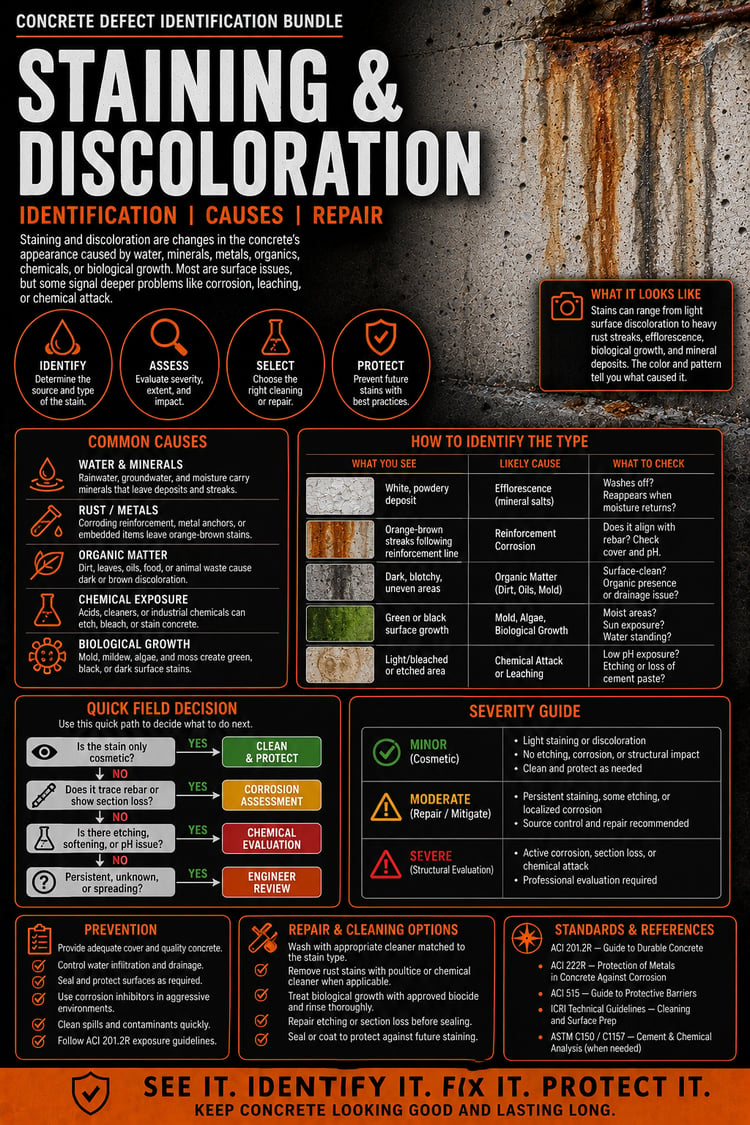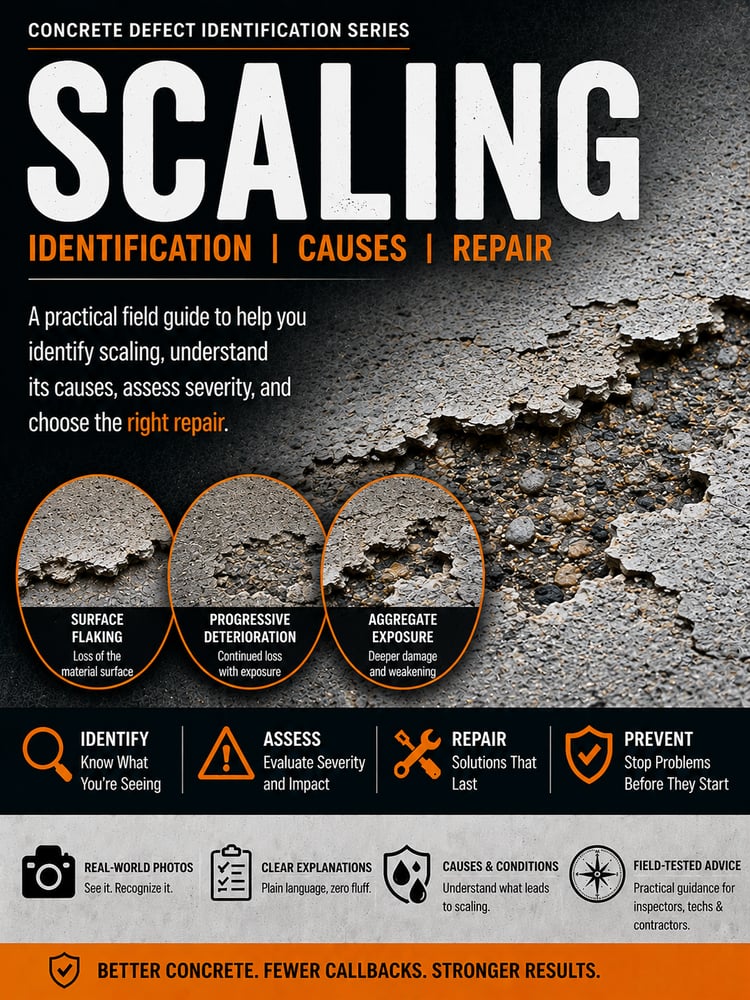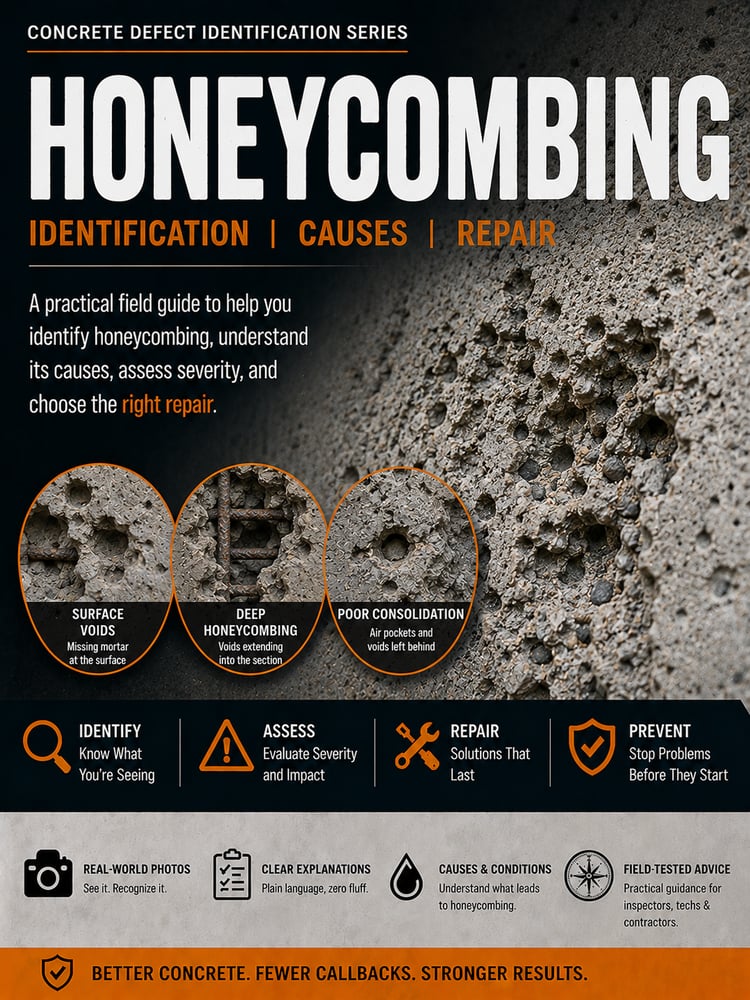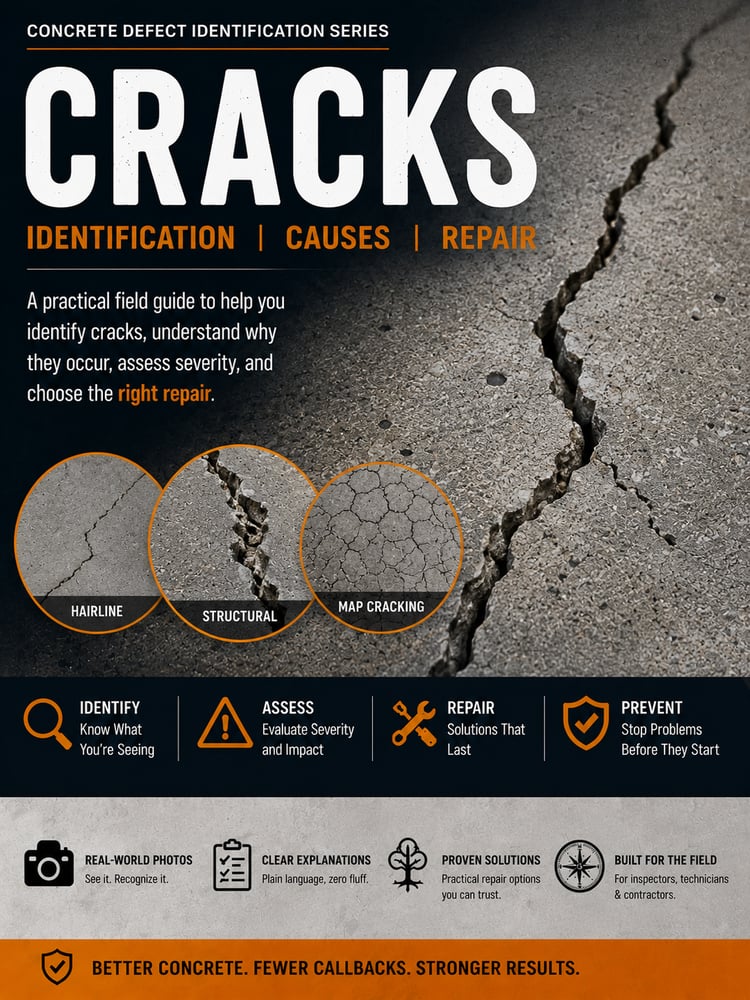

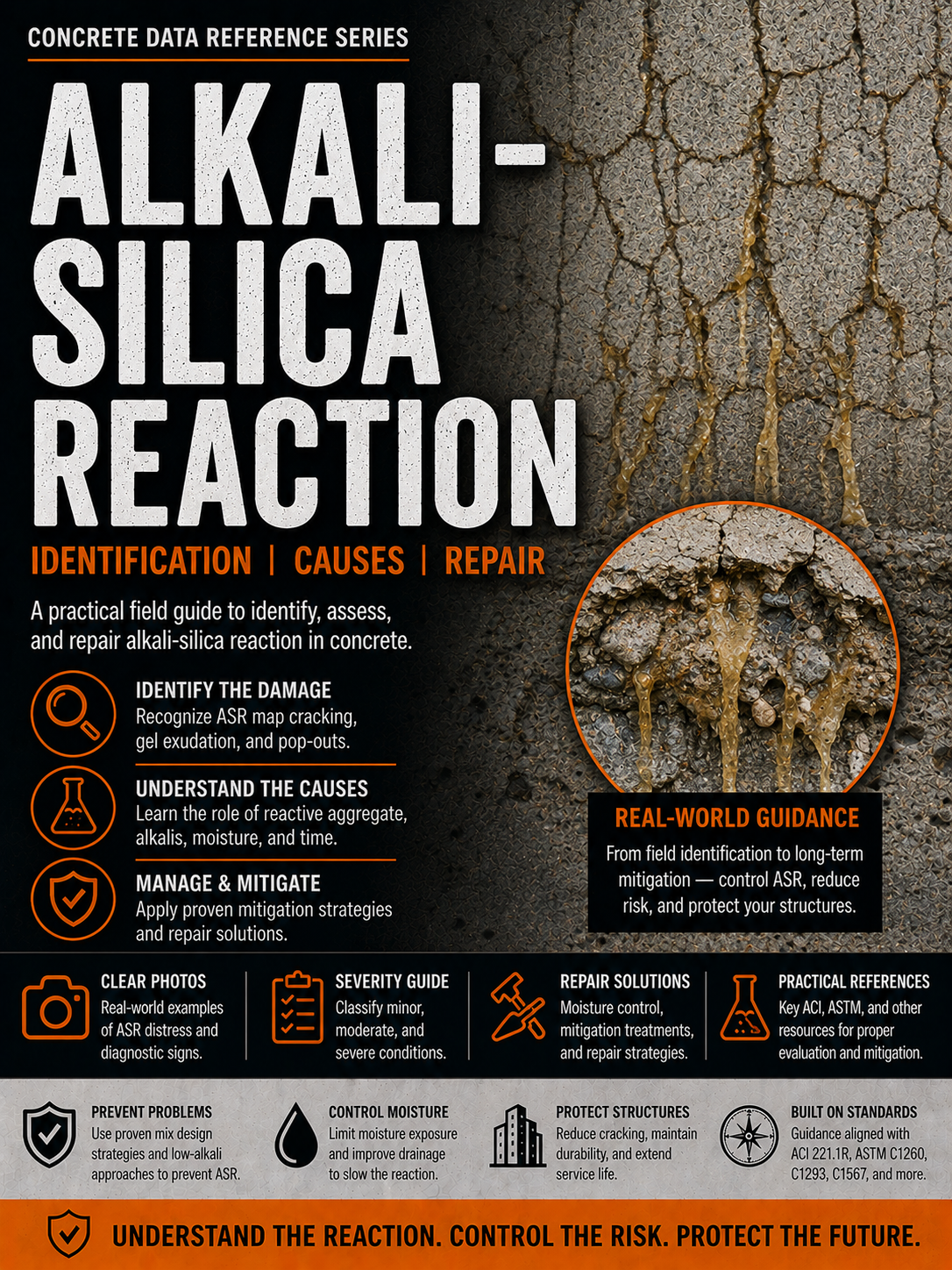
Concrete Defects - Alkali Silica Reaction
Alkali-Silica Reaction Guide —
Identify ASR before map cracking, gel staining, expansion, and internal concrete damage become a bigger problem.
Alkali-silica reaction, commonly called ASR, is one of the most misunderstood concrete deterioration mechanisms. It is not just surface cracking. ASR is an internal chemical reaction between reactive silica in certain aggregates, alkalis in the cementitious system, and moisture. When those conditions come together, an expansive gel can form inside the concrete, absorb water, swell, and create internal pressure that cracks the concrete from within.
The Alkali-Silica Reaction Guide gives concrete professionals a practical, field-ready reference for identifying, understanding, and responding to ASR. This guide explains what ASR is, what it looks like, why it matters, how to assess severity, when to monitor, when to confirm by petrography, and when engineering evaluation is required.
This is built for real-world concrete work — not just theory. It helps inspectors, contractors, QC teams, producers, technicians, and repair professionals recognize the warning signs of ASR, distinguish it from shallow cosmetic cracking, and understand the proper next steps before damage progresses.
Inside, you’ll find clear guidance on ASR indicators such as map cracking, gel exudation, pop-outs, progressive expansion, joint closure, staining, and serviceability distress. The guide also explains the major contributing factors: reactive aggregates, alkali availability, moisture, warm conditions, and lack of effective mitigation.
What’s Included
- Clear explanation of what alkali-silica reaction is
- Field signs of ASR, including map cracking, gel staining, pop-outs, and expansion
- Common causes and required conditions for ASR development
- Minor / moderate / severe severity classification
- Guidance on distinguishing ASR from cosmetic crazing
- Petrographic confirmation guidance
- Universal escalation rules for higher-risk conditions
- Quick field decision path for monitoring, confirmation, mitigation, or engineering review
- Prevention strategies using aggregate testing, SCMs, low-alkali approaches, lithium-based admixtures, moisture control, and drainage
- Repair and mitigation options focused on slowing the reaction and managing the damage
- Engineering evaluation triggers
- Cost impact if ASR is left unaddressed
- ASTM / ACI / AASHTO / FHWA reference list
- At-a-glance action table
- Field inspection checklist
Built for Field Use
This guide helps answer the questions that matter on site:
Is this just surface cracking, or could it be ASR?
Is there gel, staining, pop-outs, expansion, or joint distress?
Does this need monitoring, petrographic testing, moisture control, mitigation, or engineering evaluation?
What should be documented before the condition gets worse?
ASR can be slow, progressive, and difficult to stop once active. This guide gives you a clear way to recognize the signs, document the condition, classify severity, and select the right next step.
Best For
- Concrete inspectors
- Contractors and repair crews
- Ready-mix producers
- Quality control professionals
- Field technicians
- Pavement and bridge maintenance teams
- Engineers and engineering support staff
- Facility owners and maintenance personnel
- Anyone building a practical concrete defect reference library
Why This Guide Matters
ASR affects the body of the concrete, not just the surface. When expansion continues, it can lead to progressive cracking, distress at joints and restrained areas, secondary durability problems, corrosion exposure, and reduced service life. Severe ASR in pavements, bridges, dams, foundations, and structural members can become a major serviceability or structural concern.
The Alkali-Silica Reaction Guide gives you a practical way to identify the warning signs, understand the mechanism, confirm the cause, and respond with the right level of action.
Understand the reaction. Control the risk. Protect the future.