
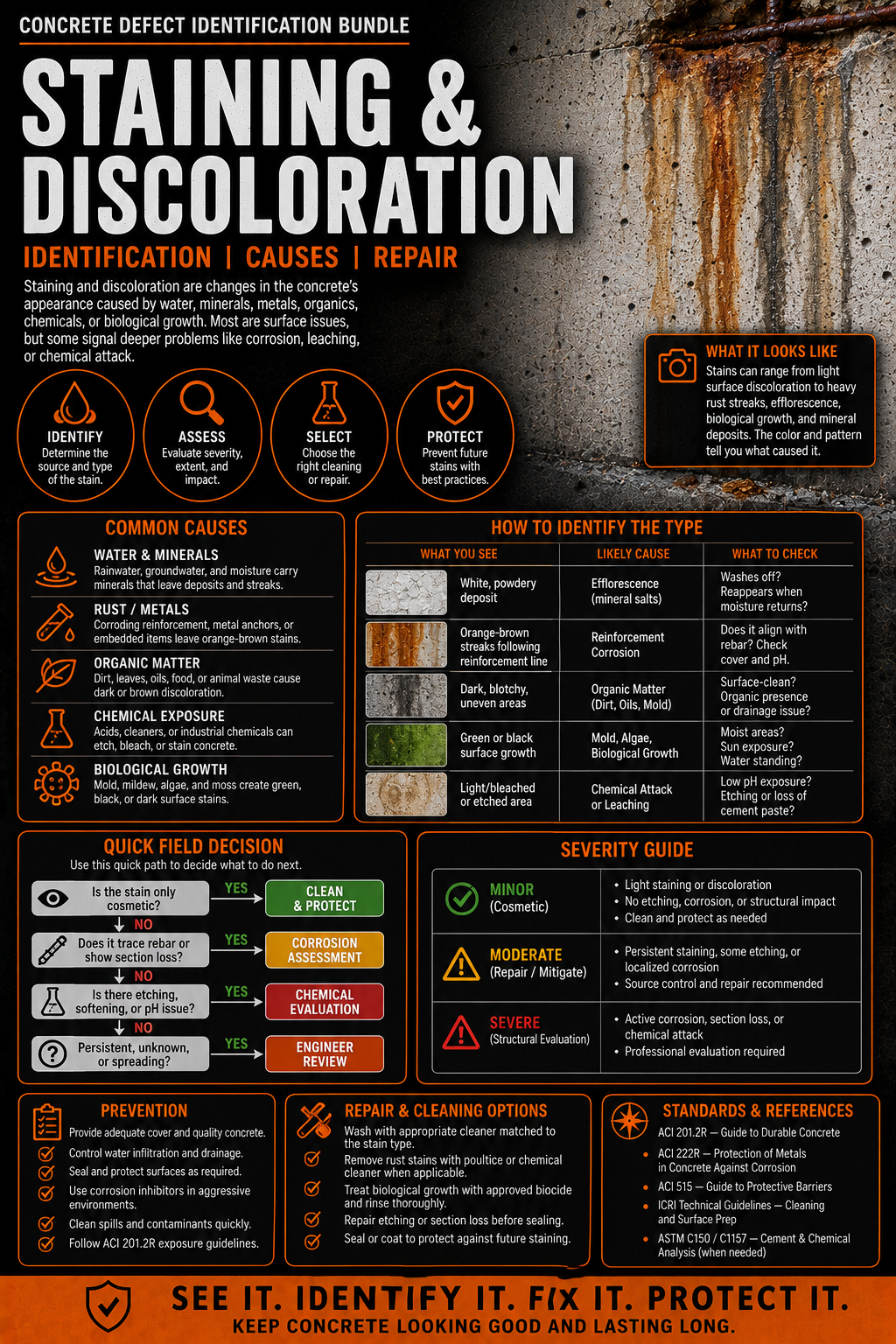
Concrete Defects - Staining and Discoloration
Staining & Discoloration Guide —
Know the difference between a cosmetic color issue and a warning sign of a deeper concrete problem.
Staining and discoloration are common concrete surface concerns, but they are not all the same. Some color variation is mainly cosmetic. Other stains can point to rusting reinforcement, active moisture, chemical exposure, biological growth, contamination, or a recurring source that needs to be corrected before cleaning or repair.
The Staining & Discoloration Guide gives concrete professionals a practical, field-ready reference for identifying color changes, understanding likely causes, judging severity, and choosing the right next step.
This guide explains the difference between discoloration, which usually comes from within the concrete, and staining, which is introduced from an outside source. Discoloration may come from mix variation, finishing, curing, calcium chloride, inconsistent materials, hard troweling, or weathering. Staining may come from rust, oil, grease, fuel, curing compound residue, form-release residue, leaves, tannins, algae, mildew, chemical reactions, deicing salts, or contact with dissimilar materials.
Most staining and discoloration is an appearance issue, but some patterns should not be ignored. Rust streaks following reinforcement, recurring stains after cleaning, persistent moisture, biological growth, and chemical staining can all point to conditions that require further investigation.
What’s Included
- Clear explanation of staining vs. discoloration
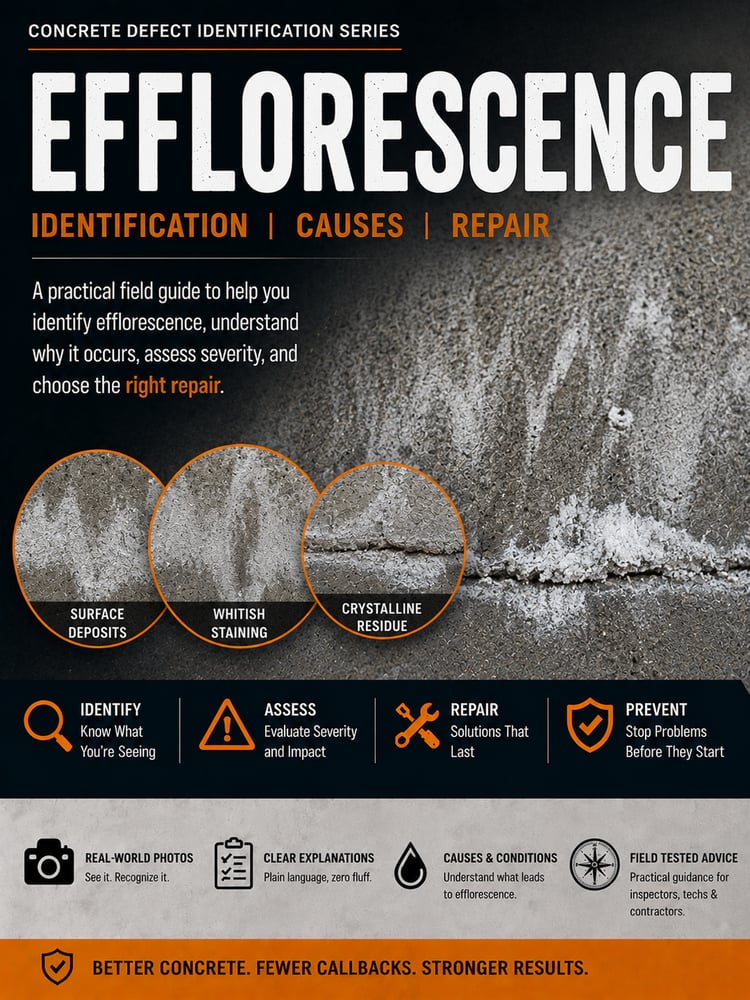
- Field signs of blotching, mottling, darkening, rust staining, oil staining, biological growth, white deposits, and chemical staining
- Common causes from mix variation, finishing, curing, calcium chloride, moisture, metals, oils, organics, biological growth, and chemicals
- Minor / moderate / severe severity classification
- Guidance for determining whether the issue is cosmetic or source-driven
- Quick field decision path for clean-up, source investigation, corrosion assessment, correction, or monitoring
- Prevention guidance for water control, consistent materials, curing, finishing, non-staining products, and surface protection
- Repair and cleaning options for discoloration and staining
- Guidance to test cleaners on a small area before full treatment
- Warnings about aggressive cleaners and muriatic acid on architectural or decorative concrete
- Further evaluation triggers
- Cost impact if the problem is left uncorrected
- ASTM / ACI / PCA / NRMCA / ICRI reference list
- At-a-glance action table
- Field inspection checklist
Built for Real Field Use
This guide helps answer the questions that matter when a concrete surface does not look right:
Is the color change coming from within the concrete or from an outside source?
Is it cosmetic, or does it indicate moisture, corrosion, chemical attack, or contamination?
Does the stain follow reinforcement or another pattern?
Will cleaning solve it, or will the stain come back because the source is still active?
Does the surface need cleaning, color correction, monitoring, source correction, or further evaluation?
The guide keeps the field process practical: identify the pattern, determine the source, classify the severity, test cleaning methods carefully, document the area, and correct the source when needed.
Best For
- Concrete inspectors
- Contractors and repair crews
- Ready-mix producers
- QC and QA professionals
- Finishers and flatwork crews
- Architectural concrete teams
- Decorative concrete contractors
- Field technicians
- Engineers and engineering support staff
- Facility maintenance teams
- Anyone building a practical concrete defect reference library
Why This Guide Matters
Concrete staining and discoloration can create major appearance complaints, customer disputes, rejected architectural finishes, coating problems, and repeated cleaning costs. More importantly, some stains are symptoms of a bigger issue. Rust staining may indicate active reinforcement corrosion. Chemical staining may point to contamination or attack. Recurring stains often mean the moisture or material source has not been corrected.
This guide helps users avoid the common mistake of cleaning the surface without fixing the source. It also gives a practical at-a-glance path: light surface discoloration may only need flushing, blending, or time; oil and organic stains may need a degreaser or poultice; rust staining should trigger corrosion assessment; and chemical or biological staining should trigger source investigation.
Important Note
This guide supports field identification and decision-making. It does not replace project specifications, engineering judgment, laboratory testing, ASTM standards, ACI documents, or qualified structural evaluation. Final repair or cleaning methods should be based on the actual source, surface type, exposure, project requirements, and applicable standards.
Read the pattern. Find the source. Clean it right. Prevent the return.