
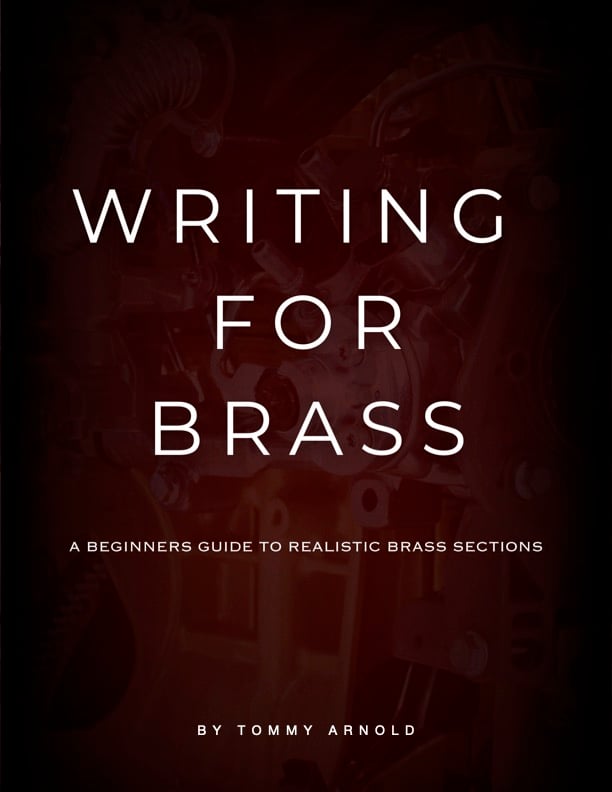
Writing for Brass
Writing for Brass: A Beginner's Guide to Realistic Brass Sections
The essential guide for aspiring film composers who want their brass to sound powerful, professional, and real.
Your brass sounds fake. Here's why — and how to fix it.
Most aspiring film composers make the same mistake: they open a brass library, load up a sustain patch, stack a few notes, and wonder why it sounds nothing like Hans Zimmer or John Williams.
The problem isn't your sample library.
It's that nobody taught you how brass actually works.
What's Inside This Guide
Writing for Brass is a free 10-page PDF designed specifically for aspiring film composers and bedroom producers who want to write orchestral brass that sounds convincing, expressive, and professional — without years of conservatory training.
Inside, you'll learn:
✦ The Brass Family & Their Roles — How each instrument functions in the orchestra, where it sits in the frequency spectrum, and what emotional purpose it serves in a film score
✦ Range & Sweet Spots — The exact ranges where each brass instrument sounds its best in sample libraries, and the danger zones that make your mockups sound fake or strained
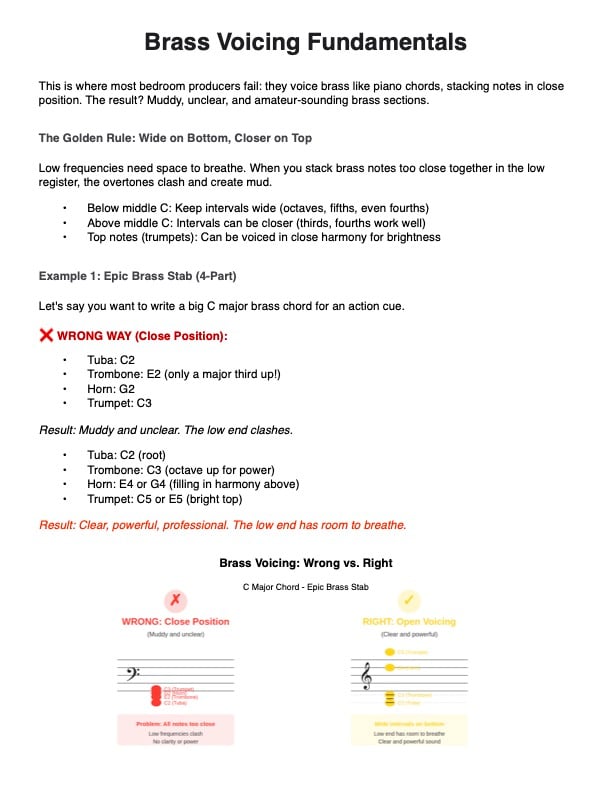
✦ Brass Voicing Fundamentals — The single most important principle for writing brass chords that are clear, powerful, and professional (with a direct before/after comparison)
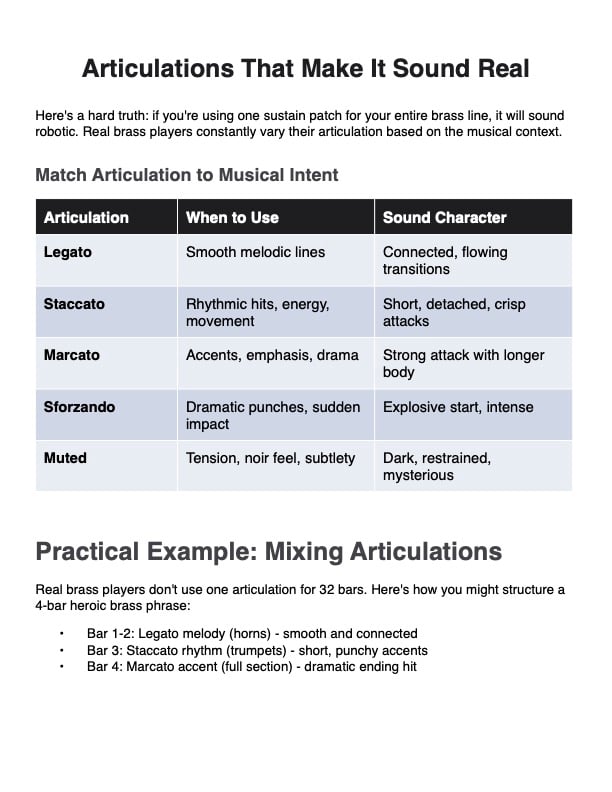
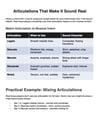
✦ Articulations That Create Realism — How to use legato, staccato, marcato, sforzando, and muted articulations correctly, and when to switch between them for a human feel
✦ Phrasing & Expression — How to use CC1 and CC11 automation to shape brass lines the way a real player would breathe and perform them
✦ Section Balance — How many of each brass instrument to write for, and why getting this wrong makes your section sound thin or chaotic
Who This Is For
This guide was written for composers who are serious about their craft but haven't had formal orchestration training. If you're working in a DAW with sample libraries and you want your brass to stop sounding like MIDI and start sounding like music — this is your starting point.
Who This Is NOT For
If you're already scoring professionally or have formal orchestration training, this guide covers foundational territory you likely already know. It's intentionally designed for composers who are earlier in their journey.
Free. No catch.
Enter your email, download the PDF, and start writing better brass today.
Already want to go deeper? Check out Virtual Orchestration: A Composer's Guide — the complete system for writing realistic orchestral music across all four sections.