Rewarding Without the Pressure: A Gentle Reinforcement Guide for Families with PDA (FREE Guide + Interactive Companion)
Why "Well Done!" sometimes makes things harder (and what to do instead)
You've probably been told to praise more. Use reward charts. Say "Good job!" when things go well.
But if your child has a demand-avoidant profile, you might have noticed something puzzling: the praise you give sometimes makes them more anxious, not less. The reward chart works once, then causes a meltdown. Saying "well done" triggers a refusal to do it again.
You're not doing it wrong. Their nervous system is wired differently — and once you understand why, there are quieter, more effective ways to encourage the behaviour you want to see more of.
WHAT'S INSIDE THE GUIDE
Here's What's Happening Under the Hood — No jargon. Why praise can register as a demand for a PDA brain, and the "Praise Paradox" that turns encouragement into a threat signal.
The Golden Rule of PDA-Friendly Reinforcement — Make the good feeling happen before they know you noticed. Three things to aim for: natural, low-pressure, autonomy-led.
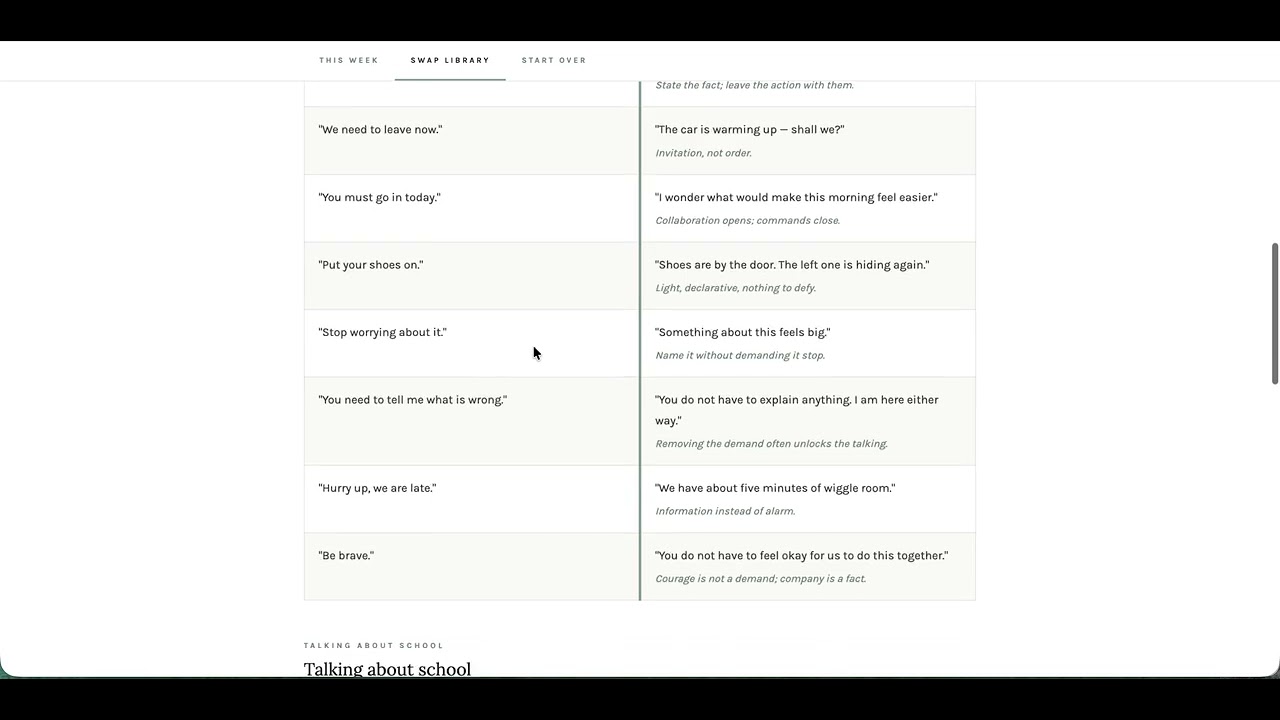
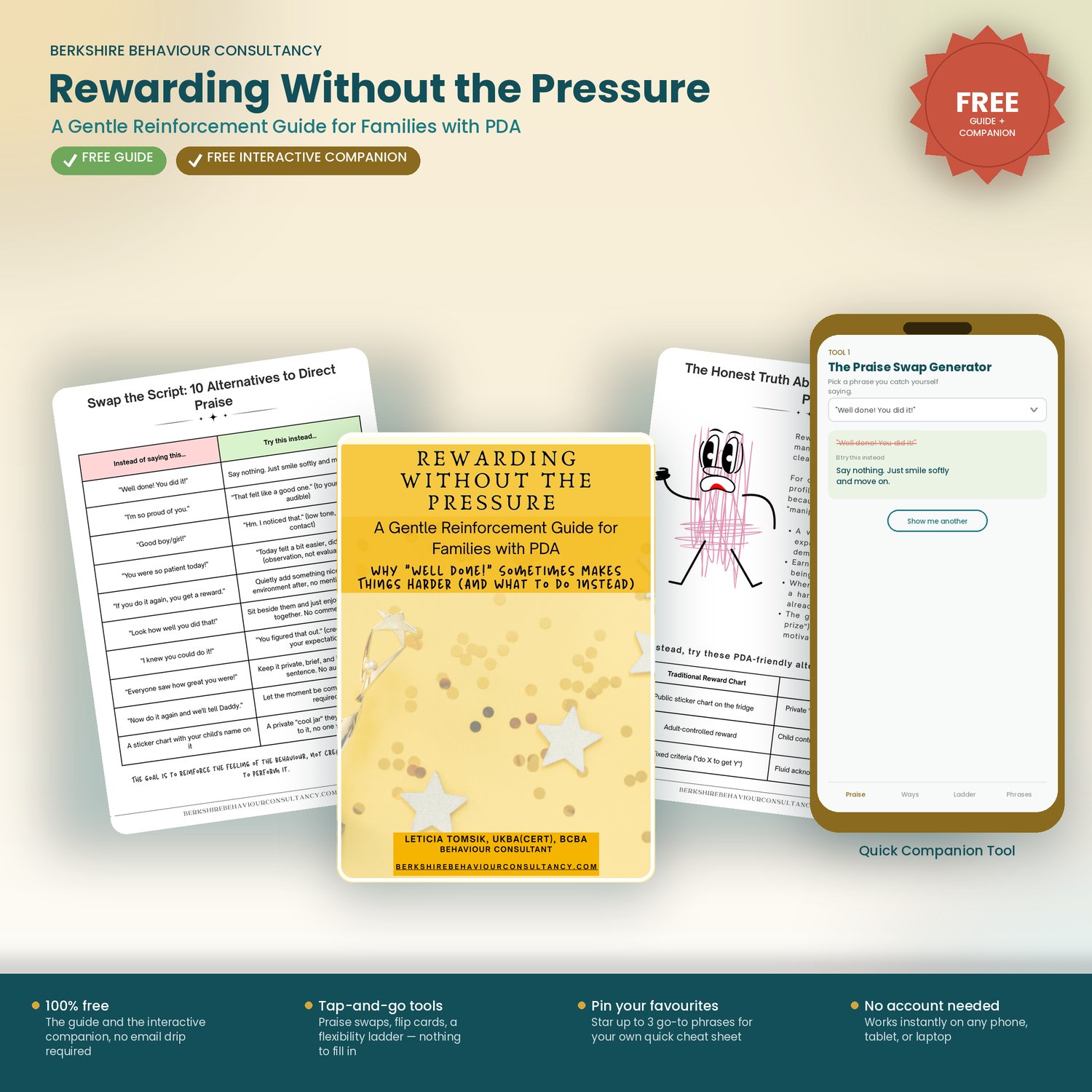
Swap the Script: 10 Alternatives to Direct Praise — A full side-by-side table taking common phrases like "Well done! You did it!" and "I'm so proud of you" and showing you what tends to work better instead.
5 Ways to Say "That Was Great" Without Actually Saying It — The Soft Narrate, the Environmental Add, the Parallel Enjoy, the Delayed Whisper, and the "I" Statement — each with a real example and why it works.
Building Flexibility: Start Tiny, Celebrate Quietly — A 5-rung Flexibility Ladder for building tolerance to change safely, from one tiny unexpected detail through to managing a bigger change with support.
When Words Feel Like Too Much: Non-Verbal Reinforcement — A full toolkit for reinforcing with no words at all, for the moments any verbal response creates pressure.
The Honest Truth About Reward Charts and PDA — Why traditional sticker charts often backfire, and PDA-friendly alternatives like the private "win jar" your child controls.
Your Pocket-Sized Reinforcement Cheat Sheet — Quick do's, don'ts, and a list of low-pressure phrases to keep nearby.
PLUS: THE FREE INTERACTIVE COMPANION
Four tap-and-go tools to try the ideas from the guide right now — nothing to fill in unless you want to:
- The Praise Swap Generator — pick a phrase you often say, instantly see the quieter alternative
- 5 Quiet Ways flip cards — tap to flip and see why each one works
- The Flexibility Ladder — tap through all 5 rungs, mark the ones you've tried
- My Go-To Phrases — star up to 3 favourites to pin as your own quick cheat sheet
No app download, no login, no email required. Works instantly on your phone, tablet, or laptop.
WHO THIS IS FOR
Parents and carers of children with a PDA profile who've noticed that traditional praise and reward systems don't land the way they're supposed to — and want a gentler, more effective way to reinforce the behaviour they want to see.
No scoring, no shame, no sticker charts with your child's name on the fridge. Just quieter ways to let them know you noticed.