
How Gut Health Affects the Sensory Nervous System
How Gut Health Affects the Sensory Nervous System — Educational Infographic (Printable, A2)
You will receive the printable unwatermarked version of this infographic
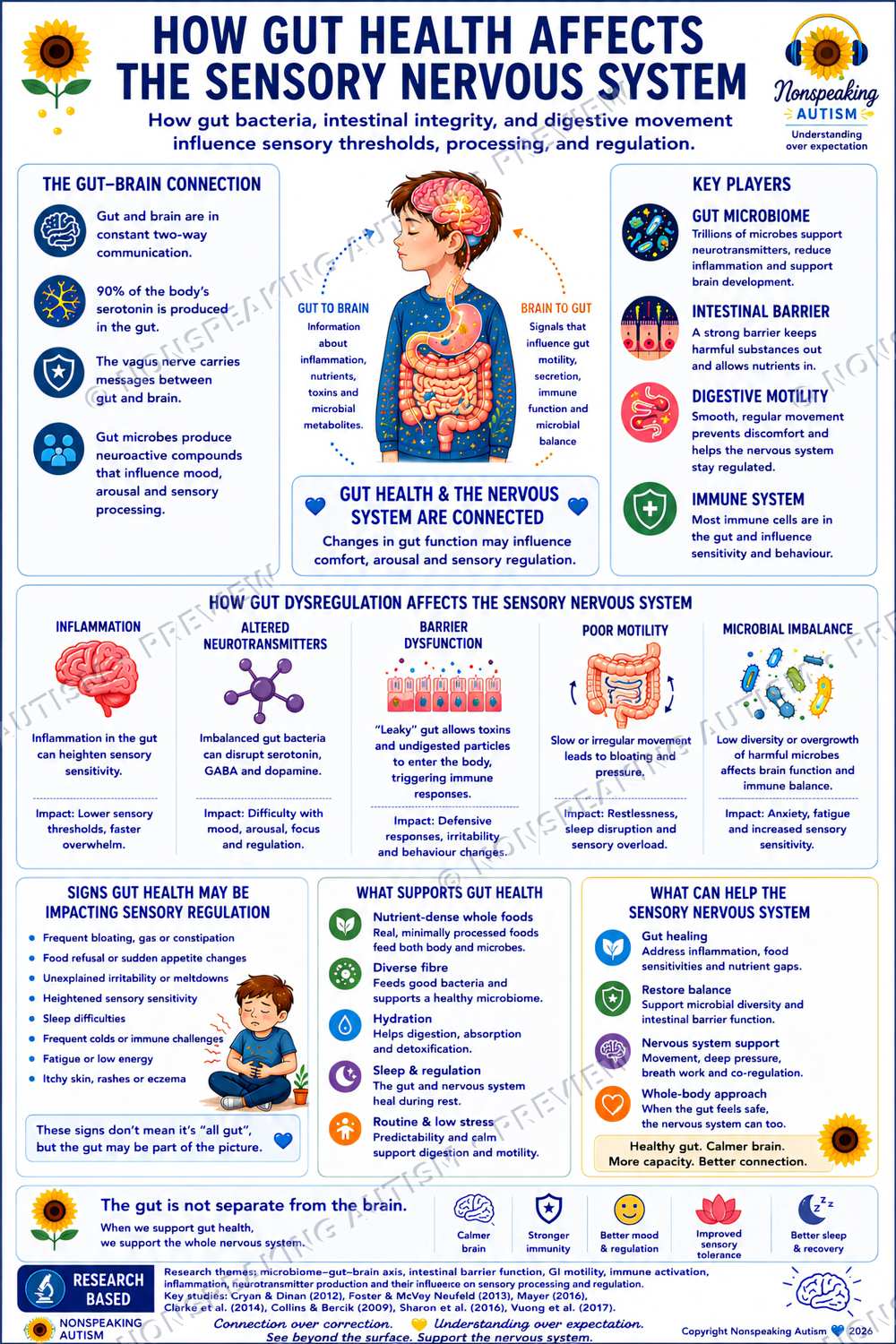
The gut and brain are in constant two-way communication — gut bacteria, intestinal integrity and digestive movement all influence sensory thresholds, processing and regulation.
This infographic covers:
- The gut-brain connection — the vagus nerve, serotonin production in the gut, and gut microbes producing neuroactive compounds
- Gut to brain / brain to gut signalling — how information about inflammation, nutrients and microbial metabolites travels each way
- Key players — gut microbiome, intestinal barrier, digestive motility, and immune system
- How gut dysregulation affects the sensory nervous system — inflammation, altered neurotransmitters, barrier dysfunction, poor motility, and microbial imbalance, each with its sensory/behavioural impact
- Signs gut health may be impacting sensory regulation — bloating, food refusal, irritability, heightened sensitivity, sleep difficulties, frequent illness, fatigue, skin issues
- What supports gut health — nutrient-dense whole foods, diverse fibre, hydration, sleep, routine and low stress
- What can help the sensory nervous system — gut healing, restoring microbial/barrier balance, nervous system support, and a whole-body approach
- Research-based themes citing key studies on the microbiome-gut-brain axis, barrier function, motility, immune activation and neurotransmitter production
What you get:
- High-resolution PDF, print-ready and scalable up to A2 (420 × 594mm)
- Instant digital download
Perfect for: SEND and clinical training, therapy rooms, staff CPD, parent carer forums, and personal understanding.
For personal, classroom, and professional educational use. Not for resale or redistribution.
© Nonspeaking Autism
Disclaimer:
This resource is intended for educational and informational purposes only. It is designed to support understanding of autism, sensory processing, nervous system regulation, and behaviour from a neurodevelopmental perspective.
The information provided is not medical, psychological, therapeutic, or legal advice and should not be used as a substitute for assessment, diagnosis, or treatment by a qualified healthcare professional.
Every autistic person is unique. Strategies and supports should always be tailored to the individual's needs, strengths, and circumstances.
If a child displays a sudden change in behaviour, severe distress, signs of illness, injury, or behaviours that place themselves or others at risk, seek appropriate medical advice or emergency assistance where necessary.
While every effort has been made to ensure the information is accurate and reflects current understanding, knowledge in autism and neuroscience continues to evolve.
This resource is for the purchaser's personal, educational, or professional use only. It may not be copied, redistributed, resold, edited, shared publicly, or reproduced in whole or in part without prior written permission.
© Nonspeaking Autism 💙