
The LPR Forage Guide
The Lost Plants Field Guide
30 medicinal plants hiding in plain sight across the United States.
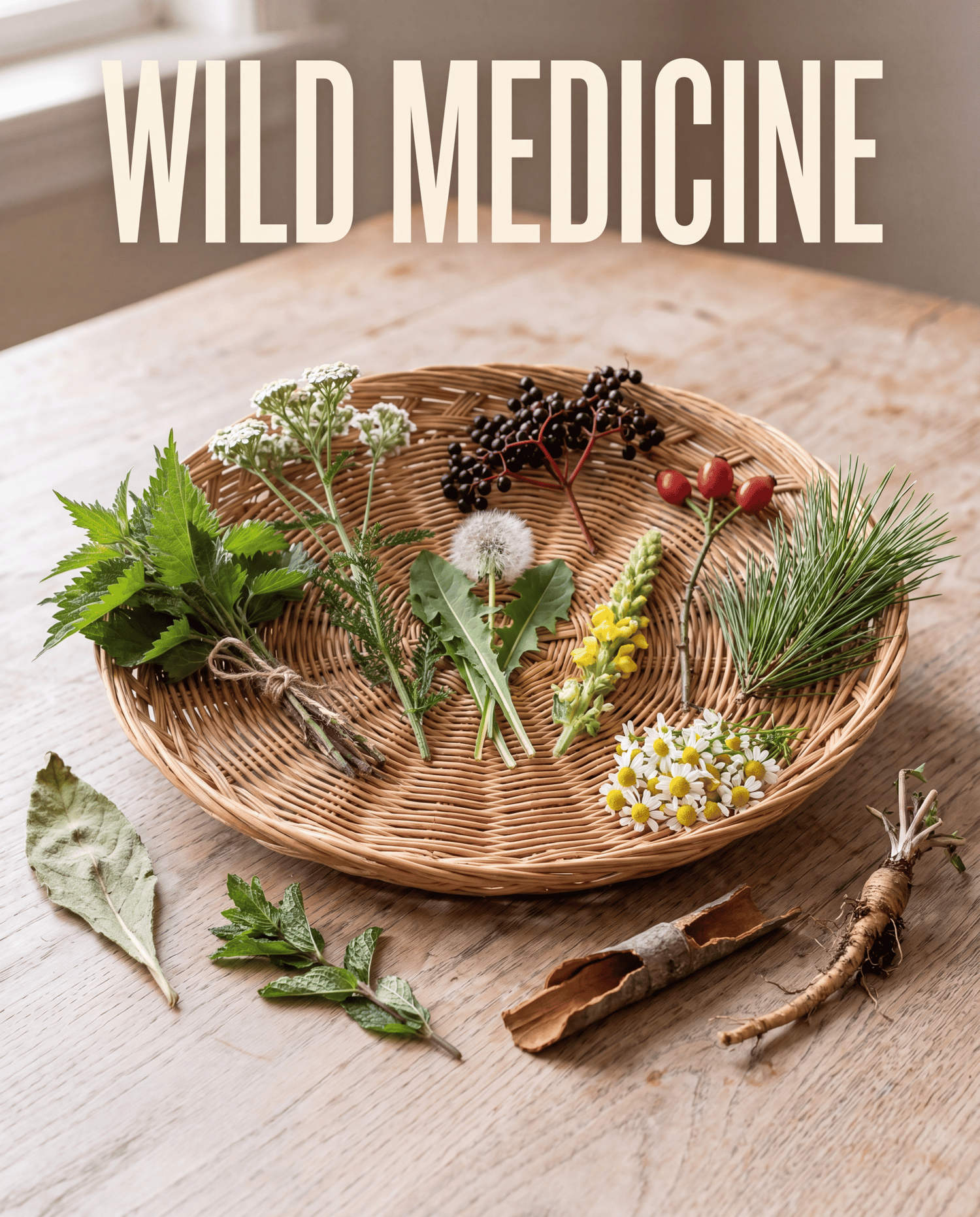
Most of the plants in this guide are growing right now within a hundred feet of where you're sitting. Lawn weeds you were taught to spray. Fence berries you walk past every year. Trees whose bark was the original source of medicines now stocked behind the pharmacy counter. A layer of traditional plant medicine sits on top of the ordinary American landscape, and once you learn to see it, you can't un-see it.
This is the entry-level guide. It teaches you to recognize, harvest, and use 30 of the most common and useful wild medicinal plants — written conservative-first, with serious safety content on every page.
Four sections, organized by where you'll find them:
- Lawn and yard weeds — dandelion, plantain (broad and narrow leaf), chickweed, purslane, red and white clover, yarrow, wild violets, wood sorrel
- Hedgerow and field edges — stinging nettle, elder, blackberry, wild rose, mullein, burdock, mugwort, St. John's wort, goldenrod, milk thistle
- Woodland and tree-line — Eastern white pine, birch, willow, black walnut, sassafras, hawthorn, chaga
- Kitchen herbs gone feral — lemon balm, peppermint, chamomile
Each plant gets one page covering:
- Identification (4–5 features to confirm what you have)
- Toxic lookalikes to rule out, flagged in detail where they exist
- Where and when to find it
- Traditional use, written with real study citations where they exist and honest "traditionally used for" language where they don't
- One or two simple kitchen preparations
- Plant-specific safety notes and drug interactions
Plus front matter on foraging safety (the five rules, the seven most dangerous lookalikes you must learn first, US public-land regulations) and a back section with a seasonal harvest calendar and a preparation cheat sheet covering tea, decoction, tincture, infused oil, and honey infusion.
Who this is for
Written for someone who has never foraged before and wants a conservative, safety-first starting point — not an experienced herbalist looking for deep pharmacology. If you want to finally learn the names of the plants you walk past every day, and have a small kit of preparations you can actually make from them, this is for you.
What's next
Once you're comfortable identifying and using a few wild plants, the natural next step is The 14-Day Medicine Cabinet Reset — a two-week kitchen protocol that turns six traditional ferments into a working replacement for most of the supplements in your medicine cabinet. Both books share the same conservative voice and the same safety-first approach.
Format
52-page PDF, US Letter, print-ready. Instant download. Lifetime re-download via your Payhip account.