
Clinical Decision Support Tool: DSM-5-TR Differential Diagnosis and Treatment Planning
Clinical Decision Support Tool: DSM-5-TR Differential Diagnosis and Treatment Planning
Short Description
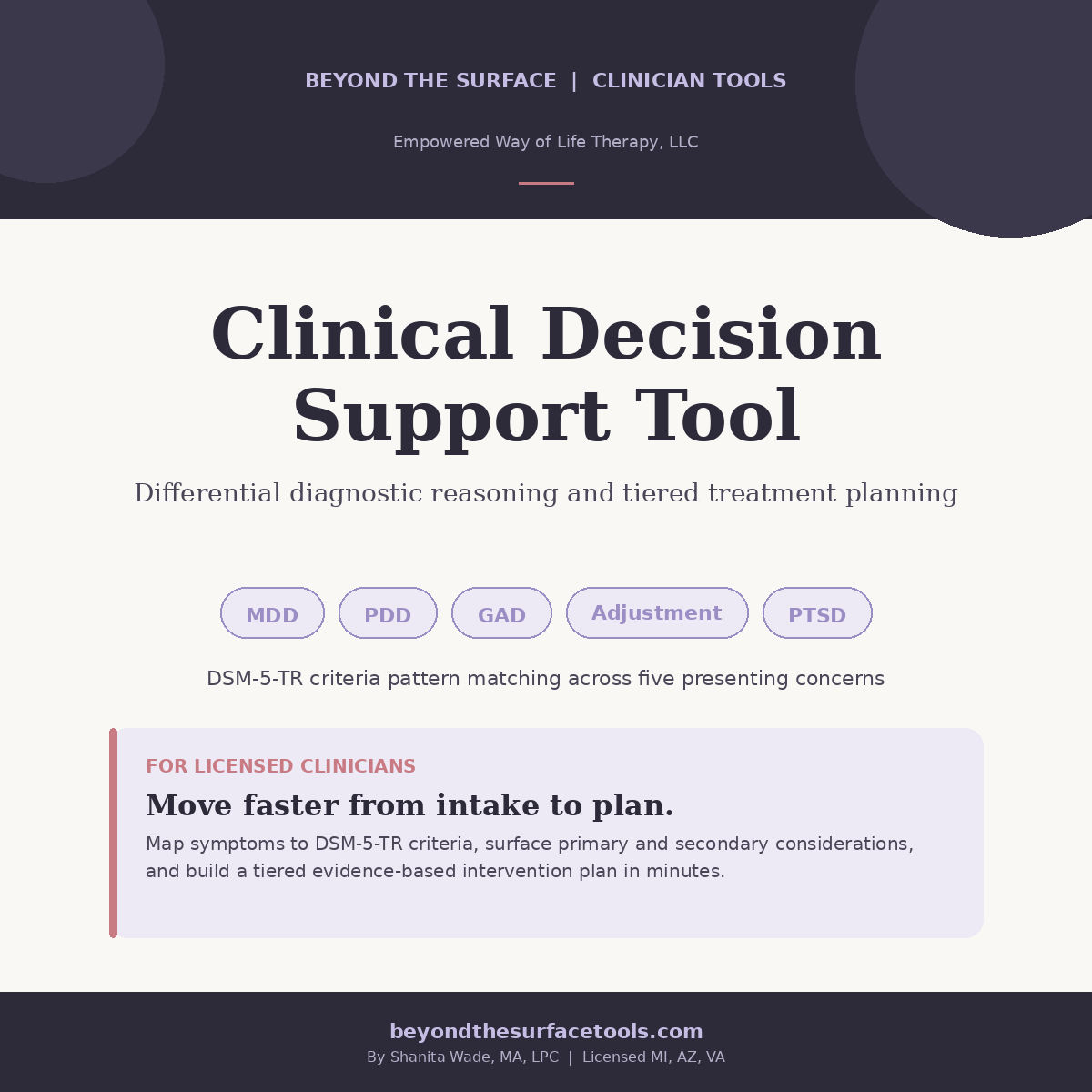
Interactive clinical decision support for licensed clinicians. Map symptoms to DSM-5-TR criteria across anxiety, depression, adjustment, and trauma presentations, and generate a tiered evidence-based intervention plan.
Full Description
Built by Shanita Wade, MA, LPC, this is a structured clinical decision support tool for licensed mental health clinicians who want a faster, more organized way to move from presenting concern to differential impression to intervention plan.
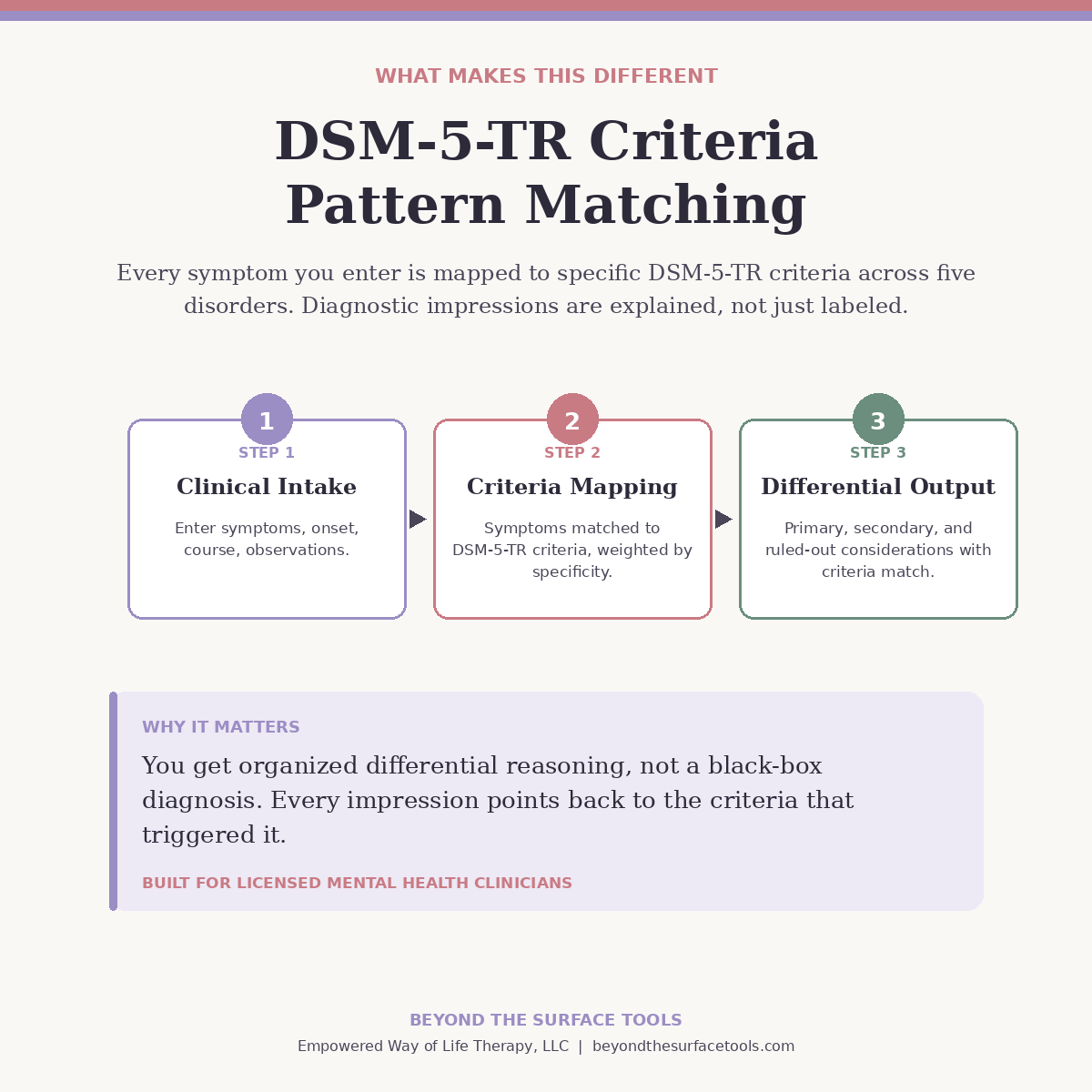
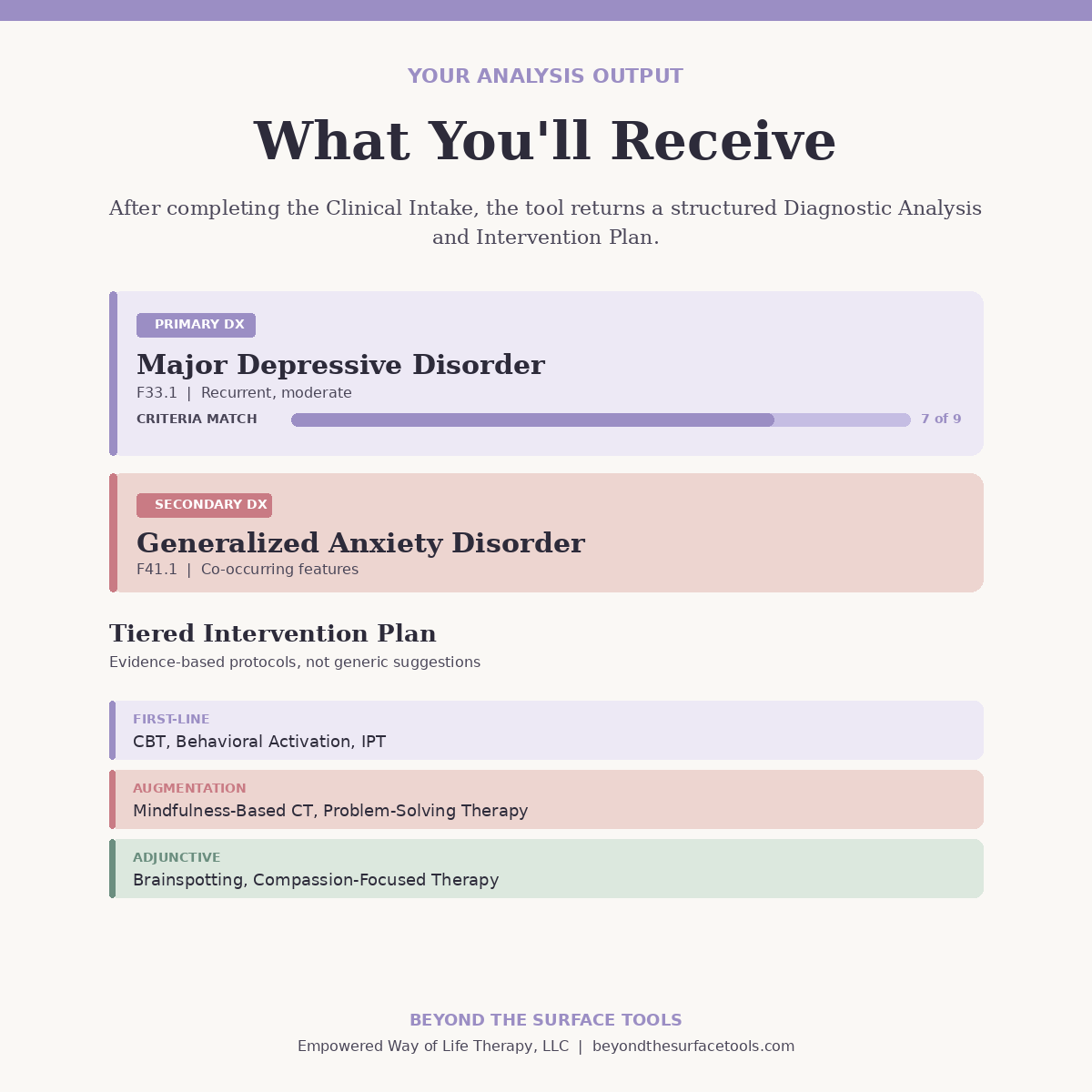
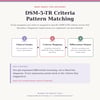
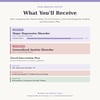
Drop in your clinical observations, symptom presentation, and onset and course data. The tool maps the picture to DSM-5-TR criteria across five common presenting concerns and returns a differential diagnostic impression with primary, secondary, and ruled-out considerations, criteria match indicators for each, and a tiered evidence-based intervention plan.
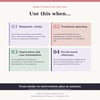
Use this when
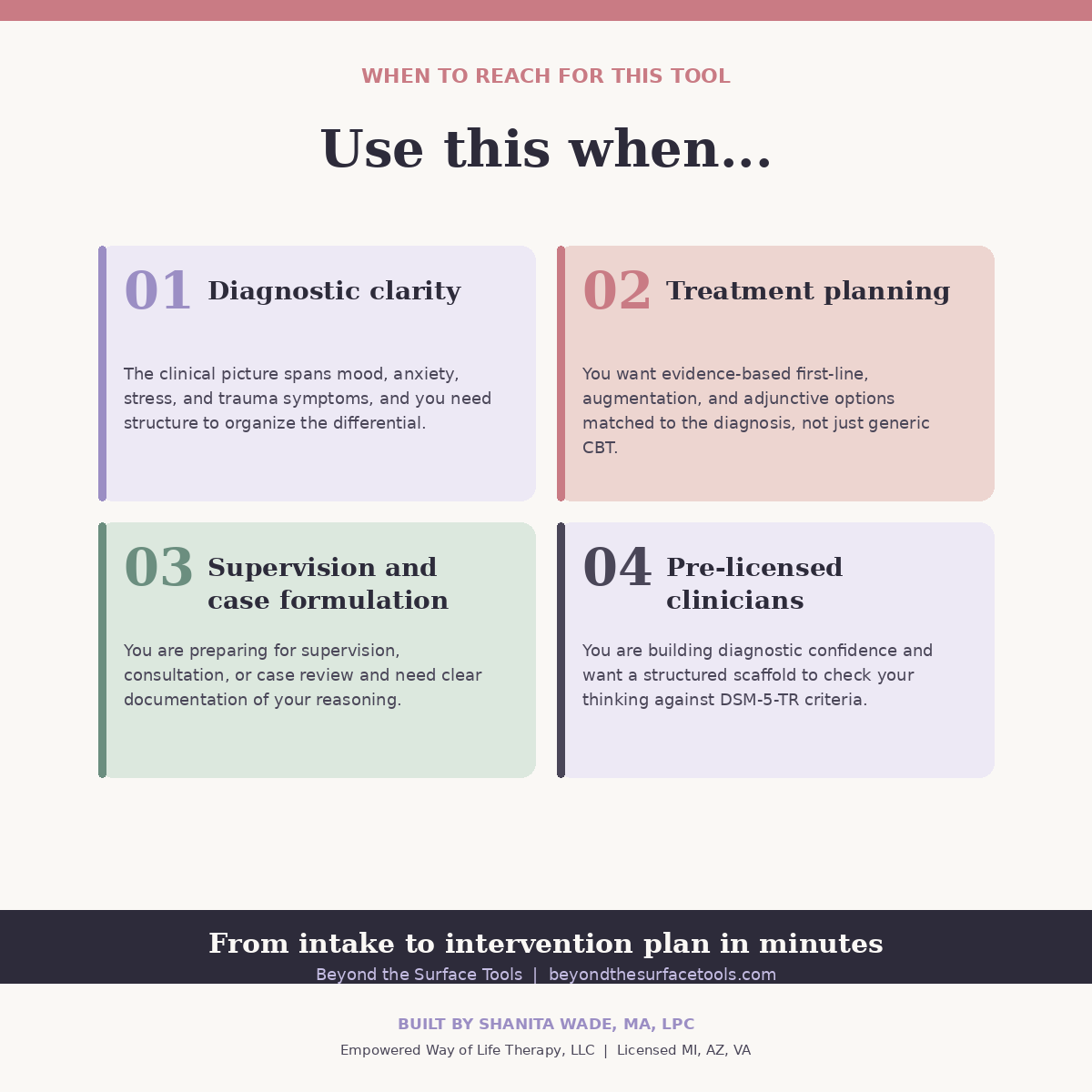
A client's clinical picture spans overlapping mood, anxiety, stress, and trauma symptoms, and you need a structured way to organize differential thinking and select evidence-based first-line, augmentation, and adjunctive interventions.
This helps you
· Move from messy intake notes to organized differential reasoning in minutes.
· Anchor diagnostic impressions in DSM-5-TR criteria rather than gestalt.
· Surface ruled-out diagnoses and competing considerations clearly.
· Match each diagnosis to current outcome research and named protocols.
· Build a tiered treatment plan with first-line, augmentation, and adjunctive options.
· Document your clinical reasoning for case files, supervision, and consultation.
What's included
· Full access to the interactive web-based clinical decision support tool.
· Coverage of Major Depressive Disorder, Persistent Depressive Disorder, Generalized Anxiety Disorder, Adjustment Disorder, and Posttraumatic Stress Disorder.
· Built-in Clinician Access Agreement gate with licensure and scope confirmation.
· DSM-5-TR criteria match indicators on every diagnostic card.
· Tiered intervention recommendations across CBT, ACT, IPT, BA, CPT, PE, EMDR, Brainspotting, CBASP, Schema Therapy, MBCT, CFT, and additional named protocols.
· PDF and Word export of every analysis for case files and supervision.
· Access Guide PDF with the live tool URL and clinical use guidance.
· Lifetime access. No subscription.
Who it's for
Licensed mental health clinicians (LPC, LCSW, LMFT, psychologists, psychiatric NPs and MDs), supervised pre-licensed clinicians, clinical supervisors using the tool as a teaching scaffold for differential reasoning, and graduate trainees in clinical settings.
Who it's not for
Clients, the general public, or anyone outside of a clinical role. The tool is gated by a clinician access agreement and is licensed for individual clinician use.
How it works
1. Purchase here. You receive the Access Guide PDF with the tool URL.
2. Open the link in any browser. Confirm licensure on the Clinician Access Agreement screen.
3. Complete the Clinical Intake with symptom presentation, onset, course, and clinical observations.
4. Receive your Diagnostic Analysis and Intervention Plan. Export to PDF or Word.
About the creator
Shanita Wade, MA, LPC, is the founder of Empowered Way of Life Therapy, LLC, a fully virtual private practice licensed in Michigan, Arizona, and Virginia. She specializes in relational trauma, Brainspotting, EMDR, hypnotherapy, and clinical supervision. Beyond the Surface Tools is her clinician-facing suite of evidence-informed decision support and intervention resources.
Disclaimer
This tool is clinical decision support and not a substitute for licensed clinical judgment, full diagnostic interview, collateral data, or ongoing case formulation. It does not establish a therapeutic relationship. It is not for crisis use. If you or someone you are supporting is in crisis, contact the 988 Suicide and Crisis Lifeline, dial 911, or go to the nearest emergency department. All diagnostic impressions must be confirmed by the licensed clinician.