
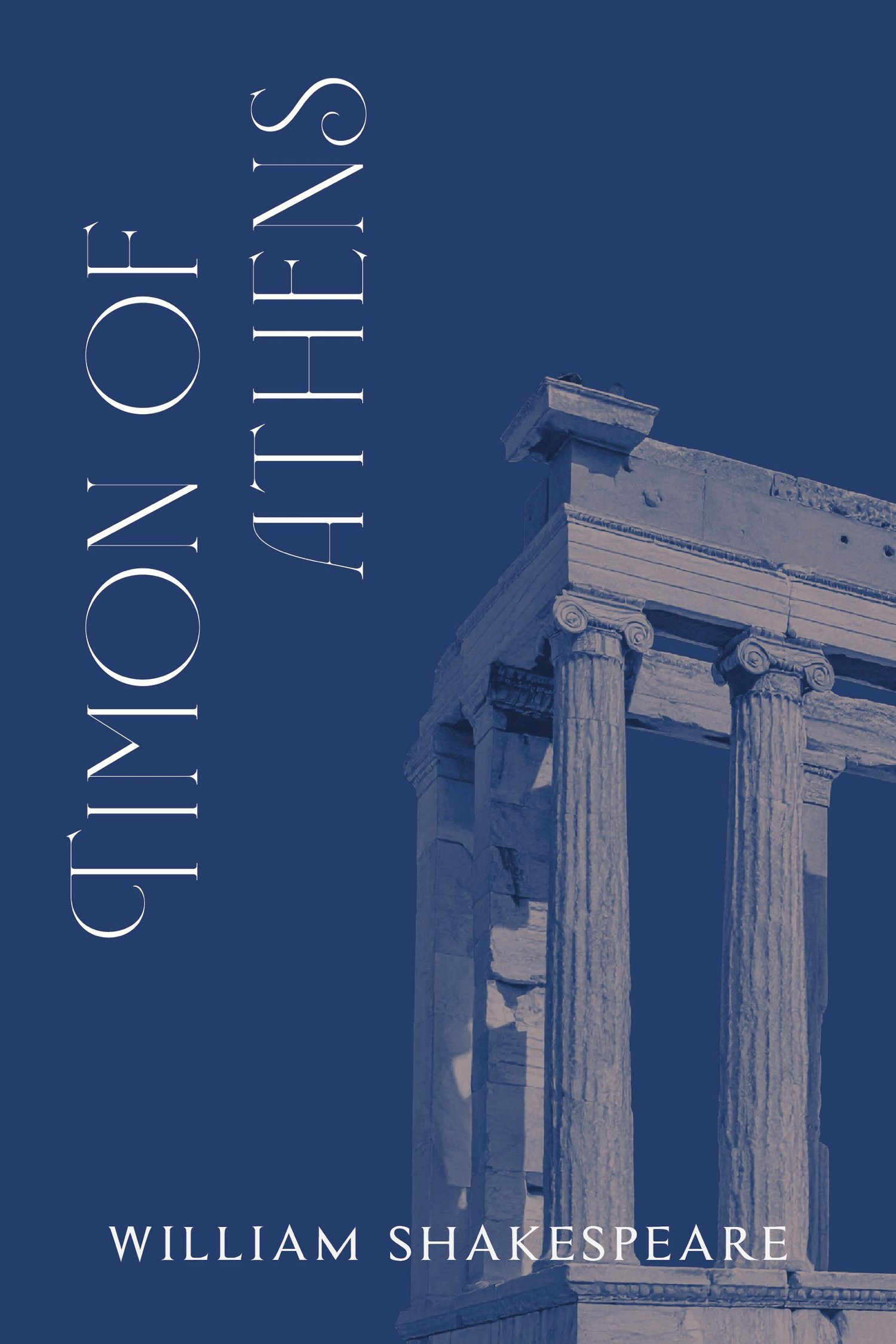
Timon of Athens
In Timon of Athens, Shakespeare turns his sharpest blade on wealth, friendship, and the fragile illusions that hold society together. Timon begins as the most admired man in Athens—lavish, open-handed, and adored for his generosity. Gold flows freely, banquets overflow, and gratitude appears endless. Beneath the spectacle, however, lies a dangerous belief: that affection can be bought and loyalty secured by abundance.
When Timon’s fortune collapses, so does the world he thought he knew. Friends who once praised him disappear, creditors close in, and civility gives way to cold calculation. What follows is one of Shakespeare’s most unsettling transformations—a man who loved humanity without reserve becomes its fiercest accuser. Retreating from society, Timon unleashes scorching denunciations of greed, hypocrisy, and moral emptiness, exposing the rot beneath Athens’ polished surface.
Bleak, unsparing, and uncannily modern, Timon of Athens is less a tragedy of one man than a ruthless anatomy of a money-driven world. Shakespeare offers no easy redemption, only a piercing vision of how generosity is exploited, admiration proves conditional, and idealism curdles into despair.
For readers who loved Macbeth and Emily Brontë’s Wuthering Heights, Shakespeare delivers a searing tale of disillusionment and fury that strips society down to its coldest truths.
About the author
William Shakespeare (1564-1616) is widely regarded as the greatest writer in the English language and the world’s preeminent dramatist. Born in Stratford-upon-Avon, he wrote approximately 39 plays and 154 sonnets that have shaped literature, theater, and the English language itself for over four centuries. His works, from tragedies like Hamlet and King Lear to comedies like A Midsummer Night’s Dream and histories like Henry V, explore the full range of human experience with unmatched psychological insight, poetic brilliance, and emotional power. Shakespeare’s influence extends far beyond the stage; his phrases and characters have become woven into the fabric of modern culture, and his exploration of timeless themes—love, power, ambition, jealousy, mortality—continues to resonate with audiences worldwide. Despite the passage of centuries, his work remains startlingly contemporary, speaking to each new generation with fresh relevance and inexhaustible depth.