
💛 Beyond Sensory Overload – Quick Tools
Beyond Sensory Overload – Volume 2 | Quick Tools
FREE 5-Page A4 Printable Companion | UK Edition
💛 FREE DIGITAL DOWNLOAD
Practical tools for recognising distress, supporting communication, responding to possible pain and helping autistic children and young people feel safer and better understood.
Created by Nonspeaking Autism, this free five-page printable companion accompanies Beyond Sensory Overload –
Volume 2.
It brings together quick-reference information, pocket cards, a home–school planning example and a summary for
school staff.
The aim is simple: help adults look beyond behaviour, recognise possible unmet needs and respond with understanding, safety and appropriate support.
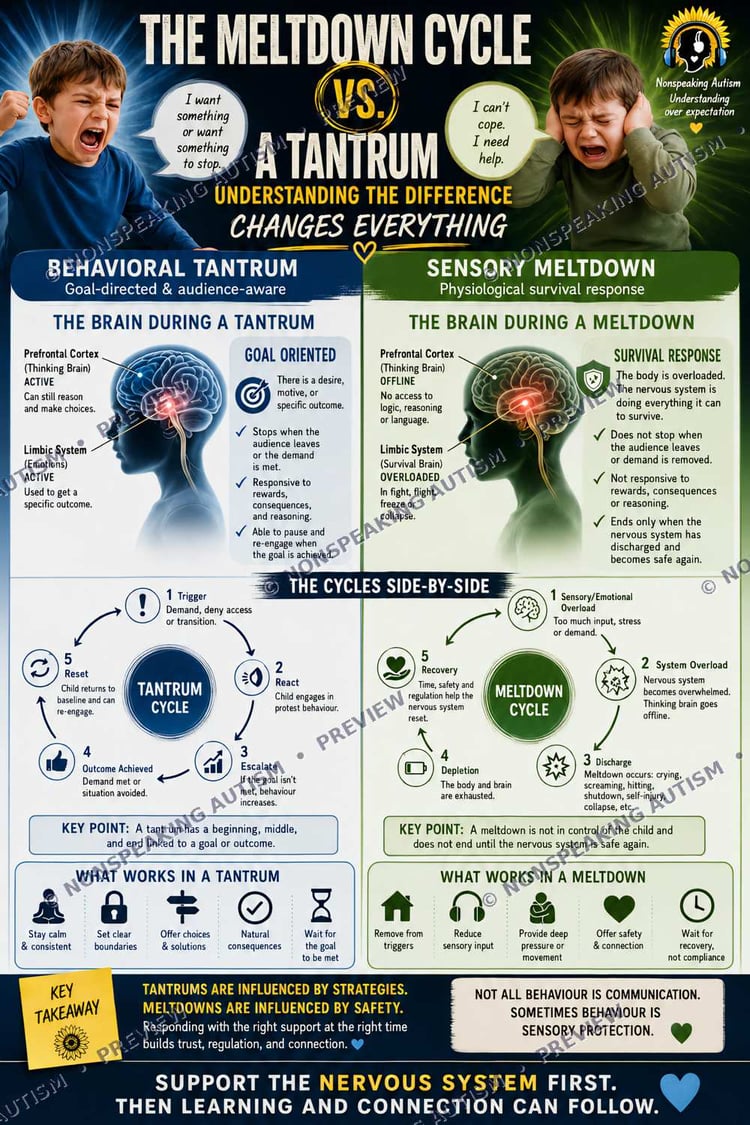
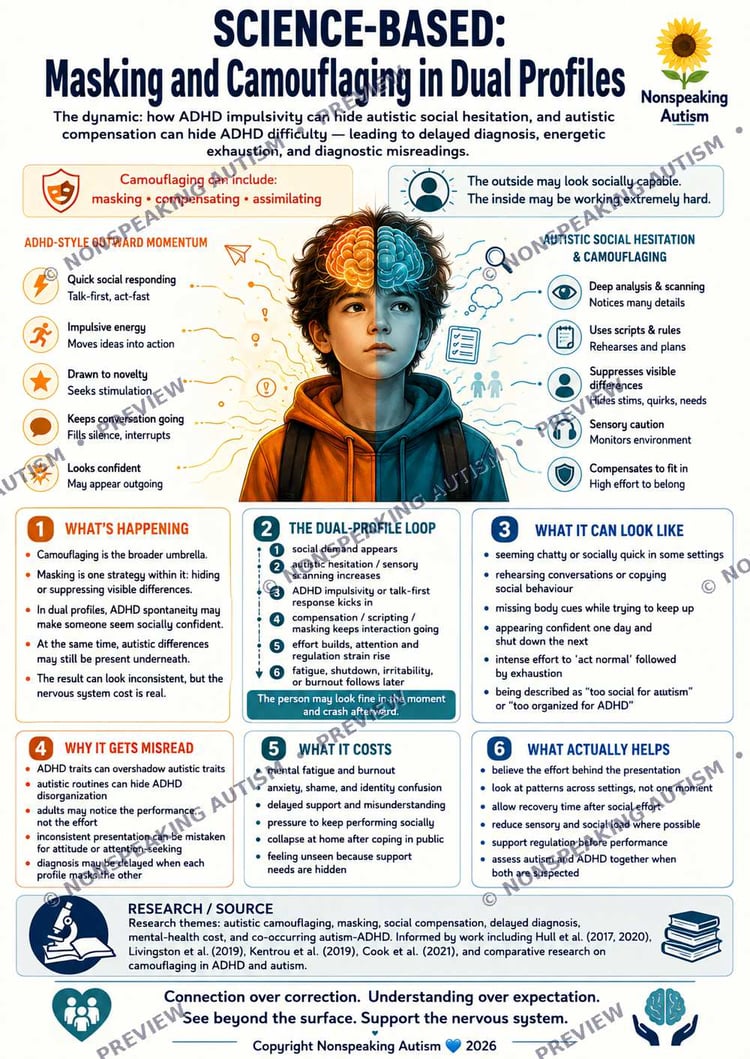
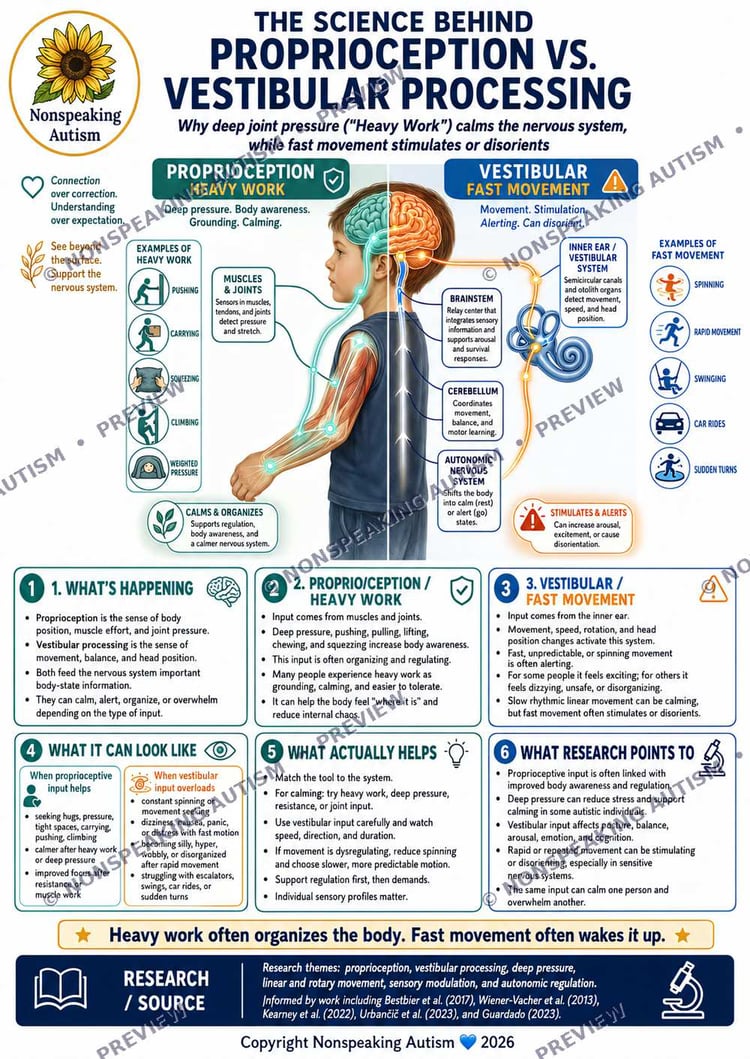
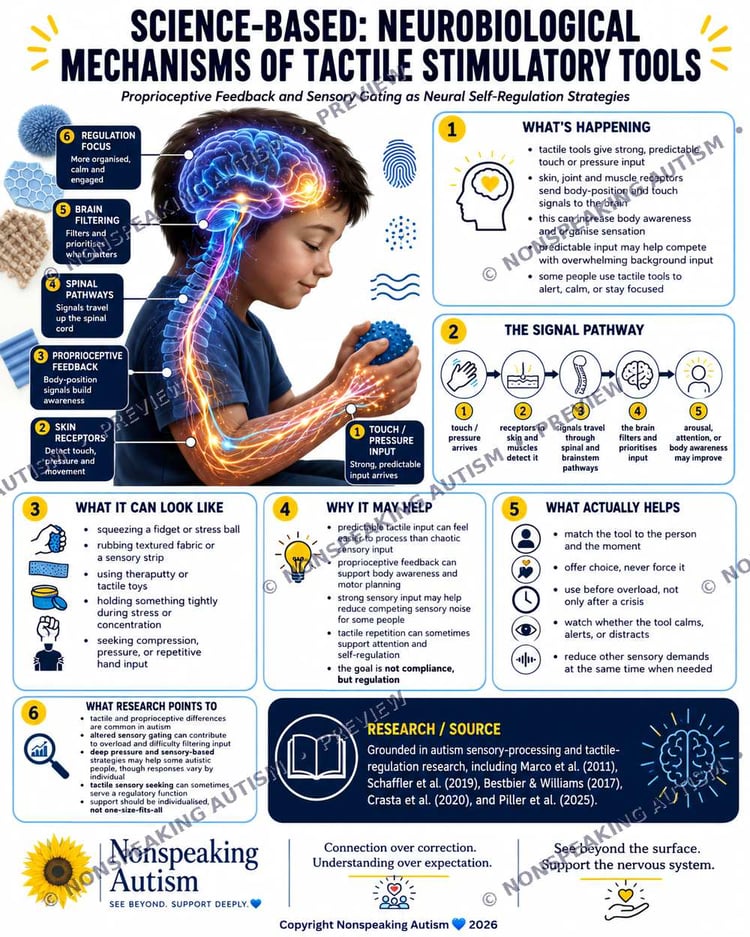
Rather than assuming that every difficult moment is caused by sensory overload, these tools encourage adults to consider communication differences, pain, illness, fatigue, environmental demands and other possible contributing factors.
🧠 What This Resource Includes
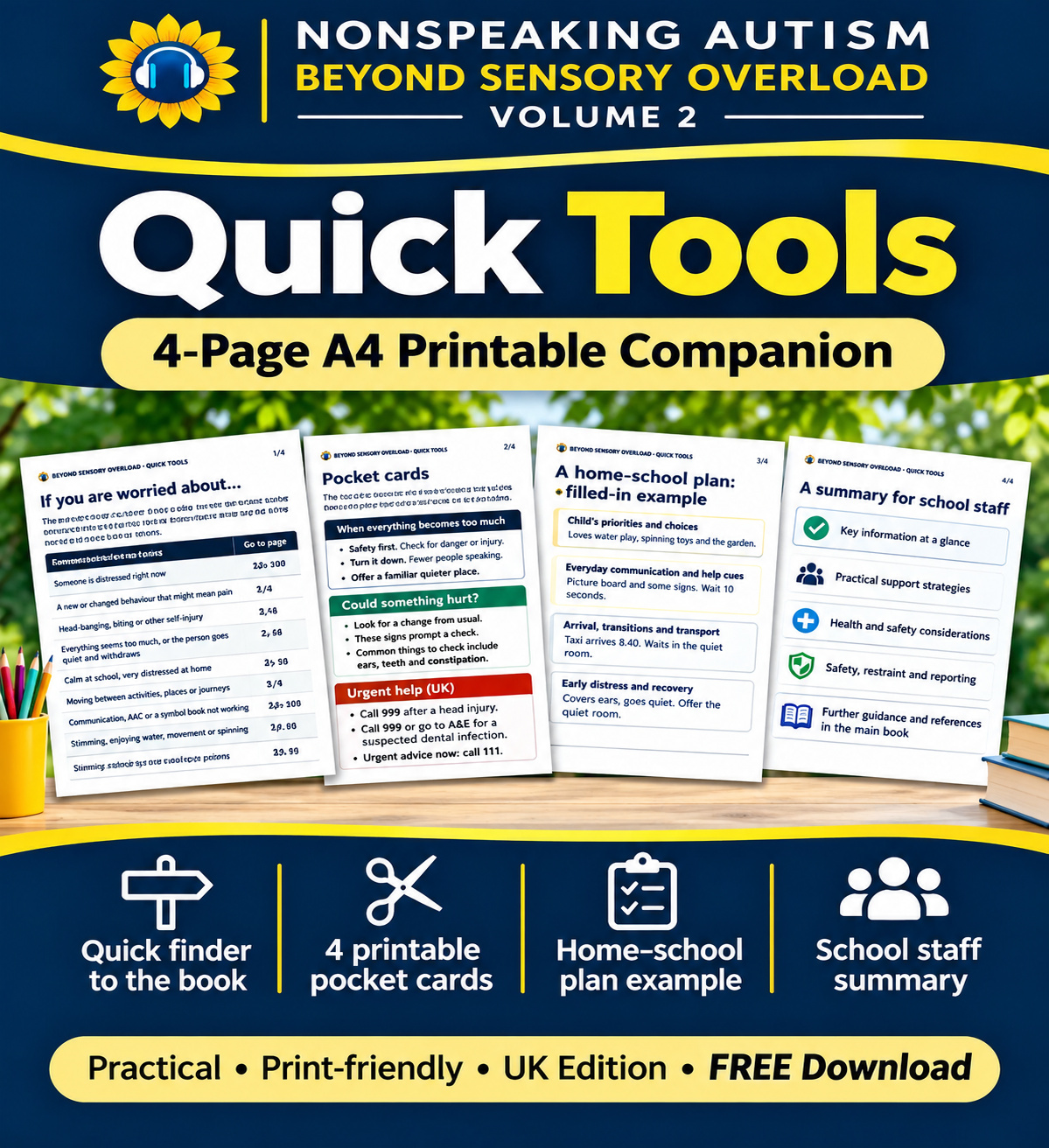
📄 Page 1 – If You Are Worried About…
A quick finder to the main book
A practical reference sheet to help readers find relevant information in Beyond Sensory Overload – Volume 2.
It covers situations such as:
- A child or young person becoming distressed.
- Changes in behaviour that might indicate pain.
- Head-banging, biting or other self-injury.
- Feeling overwhelmed, withdrawing or becoming unusually quiet.
- Appearing calm at school but distressed at home.
- Difficulties with transitions, activities or journeys.
- Communication difficulties or AAC not working as expected.
- Stimming, movement and repetitive sensory activities.
The quick finder helps adults locate the relevant sections of the main book without having to search through the whole resource.
📄 Page 2 – Printable Pocket Cards
Short reminders for moments when quick guidance matters
This page contains four printable pocket cards covering key situations, including:
When everything becomes too much
Reminders to prioritise safety, reduce demands and offer a familiar, quieter environment where appropriate.
Could something hurt?
Prompts to consider changes from the child's usual presentation and possible sources of physical discomfort.
Urgent help (UK)
A quick reminder about accessing appropriate urgent or emergency medical support.
These cards can be printed and kept somewhere accessible for adults supporting the child or young person.
📄 Page 3 – A Home–School Plan: Filled-In Example
An illustration of how practical support can be recorded and shared
The example demonstrates how a simple plan can describe:
- The child's priorities, interests and choices.
- Everyday communication and preferred supports.
- Arrivals, transitions and transport.
- Early signs of distress.
- What may help during recovery.
It encourages consistency between home and school while recognising that every child's needs, preferences and communication methods are individual.
Important: This is an example, not an individualised assessment or a replacement for a child's existing support plan.
📄 Page 4 – A Summary for School Staff
Important information at a glance
A concise reference for teachers, teaching assistants, SENCOs and other school professionals.
Topics include:
- Key information about the child.
- Practical support strategies.
- Health and safety considerations.
- Safeguarding, restraint and reporting.
- Further guidance and references in the main book.
This page can support professional discussion and help staff consider a child's needs beyond outward behaviour.
📄 Page 5 – Additional Printable Companion Page
The updated download contains five A4 pages in total.
The fifth page is included in the downloadable resource but is not individually shown in the current promotional cover image.
💙 Why These Quick Tools Matter
Autistic children and young people may communicate distress in many different ways.
Some may cry, withdraw, pace, become quieter, use AAC differently, seek movement or show changes in their usual behaviour.
These changes do not automatically identify a single cause.
A child who appears overwhelmed might also be experiencing pain, illness, fatigue, anxiety, communication barriers or several contributing factors at once.
Recognising these possibilities can help adults respond more thoughtfully.
The goal is not simply to stop a behaviour. It is to understand what support may be needed.
🌻 Practical Ways to Use This Resource
These pages can be used to:
- Find relevant guidance quickly in the main book.
- Support conversations between parents, carers and professionals.
- Prepare for school meetings or support-plan reviews.
- Keep simple safety and communication reminders accessible.
- Help staff recognise changes from a child's usual presentation.
- Encourage consistent, compassionate approaches across settings.
The tools work best when used alongside the child's own communication, preferences, health information and individual support arrangements.
👨👩👧 Who Is This Resource For?
This free companion may be useful for:
- Parents, carers and family members.
- Autistic children and young people, with support where wanted.
- Teachers and teaching assistants.
- SENCOs and SEND teams.
- Special schools and mainstream schools.
- Speech and language therapists.
- Occupational therapists.
- Health and social care professionals.
- Support workers and respite-care teams.
- Professionals involved in planning reasonable adjustments and individual support.
It is intended to encourage understanding and collaboration rather than provide a one-size-fits-all response.
🔬 Research and Guidance-Informed Approach
The companion draws on the broader educational themes explored in Beyond Sensory Overload – Volume 2, including sensory differences, communication, distress, physical health, safeguarding and individualised support.
Its approach is consistent with principles found in UK autism guidance, including the importance of considering environmental factors, communication needs, physical health and possible reasons for behaviour that challenges.
📚 Selected Supporting Guidance
National Institute for Health and Care Excellence (NICE)
Autism spectrum disorder in under 19s: support and management (CG170).
https://www.nice.org.uk/guidance/cg170
National Autistic Society
Information and guidance about sensory differences, communication and support for autistic children and young people.
NHS
Information about urgent medical advice, emergencies and recognising health concerns.
FURTHER RESOURCES • Childline (under 19s, UK): 0800 1111 — https://www.childline.org.uk • Contact, for families with disabled children: 0808 808 3555 — https://contact.org.uk • National Autistic Society — https://www.autism.org.uk • Communication Matters (AAC) — https://www.communicationmatters.org.uk • IPSEA (special educational needs rights) — https://www.ipsea.org.uk • ERIC, The Children's Bowel & Bladder Charity — https://www.eric.org.uk • NHS 111 for urgent advice in England, Scotland and Wales. Call 999 in an emergency. RESEARCH & REFERENCES • NHS (2025). Head injury and concussion. https://www.nhs.uk/conditions/head-injury-and-concussion/ • NHS (2026). Dental abscess. https://www.nhs.uk/conditions/dental-abscess/ • NHS (2026). Dehydration. https://www.nhs.uk/conditions/dehydration/ • NHS (2025). Ear infections. https://www.nhs.uk/conditions/ear-infections/ • NICE (2013; updated 2021). Autism spectrum disorder in under 19s: support and management (CG170). https://www.nice.org.uk/guidance/cg170 • Johnson, van Zijl & Kuyler (2023). Pain communication in children with autism spectrum disorder: a scoping review. Paediatric & Neonatal Pain, 5(4), 127–141. https://doi.org/10.1002/pne2.12115 • National Joint Committee (2024). Communication Bill of Rights, 3rd edition. https://www.asha.org/njc/communication-bill-of-rights/ • Department for Education (2025). Restrictive interventions, including use of reasonable force, in schools (in effect from 1 April 2026). https://www.gov.uk/government/publications/use-of-reasonable-force-in-schools • The Schools (Recording and Reporting of Seclusion and Restraint) (No. 2) (England) Regulations 2025. https://www.legislation.gov.uk/uksi/2025/1348/contents/made • Mullally & Connolly (2025). An exploration of the parental lived experience of school distress. Frontiers in Psychiatry, 16, 1489316. https://doi.org/10.3389/fpsyt.2025.1489316 The full list of 14 sources is on page 5 of the PDF.
Evidence Note
This resource is an educational companion, not a validated assessment tool. The examples and strategies are not guaranteed to work for every child.
Individual responses to sensory input, communication demands and environmental changes vary. Support should be guided by the child's preferences, observed needs, safety and relevant professional advice.
The main book contains further information and references.
📦 What You Receive
💛 FREE DOWNLOAD – NO PURCHASE REQUIRED
- 1 × five-page A4 printable PDF
- UK English edition.
- Quick finder to the main book.
- Printable pocket-card guidance.
- Filled-in home–school planning example.
- School staff summary.
- An additional fifth companion page.
- Designed for printing and practical reference.
- Digital download only — no physical product will be posted.
File format: PDF
Page size: A4 (210 × 297 mm)
Total pages: 5
Price: FREE
The resource is intended to be provided without a promotional watermark on the downloadable pages.
⚠️ Important Educational and Safeguarding Disclaimer
This resource is provided for general educational and informational purposes only.
It is not a medical assessment, diagnostic tool, individualised behaviour support plan, safeguarding assessment or substitute for professional advice.
Changes in behaviour or communication may have multiple explanations. Pain, illness, injury and other medical concerns should not be dismissed as sensory difficulties or autism-related behaviour.
Seek appropriate professional assessment for new, persistent, worsening or concerning symptoms.
UK urgent and emergency help:
- Call 999 for a life-threatening emergency.
- Contact NHS 111 for urgent medical advice when appropriate.
- Follow local safeguarding procedures and individual care plans.
Any intervention involving physical restraint must comply with applicable law, safeguarding requirements and organisational policies. This resource does not provide restraint instructions.
©️ Copyright and Permitted Use
© 2026 Nonspeaking Autism. All rights reserved.
This resource is provided free of charge to support understanding and inclusive practice.
Permitted use:
- Downloading and printing for personal or family use.
- Printing for use within classrooms, schools, clinics and support settings.
- Sharing unchanged copies within educational, care and professional training settings, with Nonspeaking Autism credited.
- Using the resource in non-commercial educational discussions and staff development.
Not permitted:
- Selling or reselling the resource.
- Altering or removing the branding or copyright information.
- Presenting the resource as your own work.
- Including it in paid products or commercial resource bundles.
- Uploading the PDF to public download websites or redistributing it commercially without permission.
For wider distribution or other uses, please contact Nonspeaking Autism.
Website: nonspeaking-autism.com
💛 The Message Behind the Resource
A child should not have to communicate distress in a particular way to deserve understanding.
Their behaviour, movements, expressions, communication choices and changes from their usual patterns may all provide important information.
Look beyond the behaviour. Consider the whole child. Protect safety. Support communication.
Connection over correction. Understanding over expectation.
Nonspeaking Autism © 2026