
Brave Comes First: Building Confidence for Kids
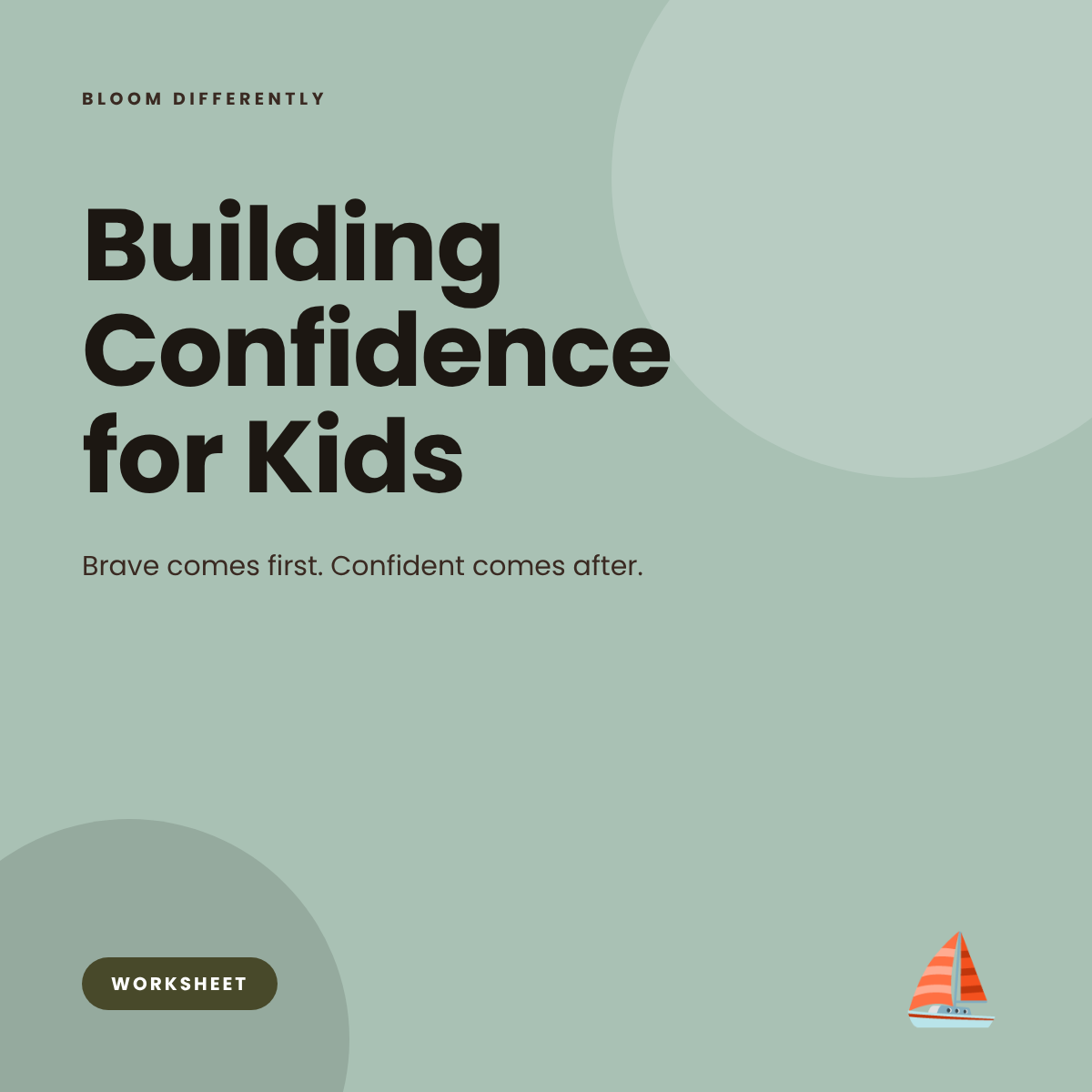
Brave Comes First: Building Confidence for Kids
A kid-friendly CBT and strengths-based worksheet that helps children build real confidence, one small brave step at a time.
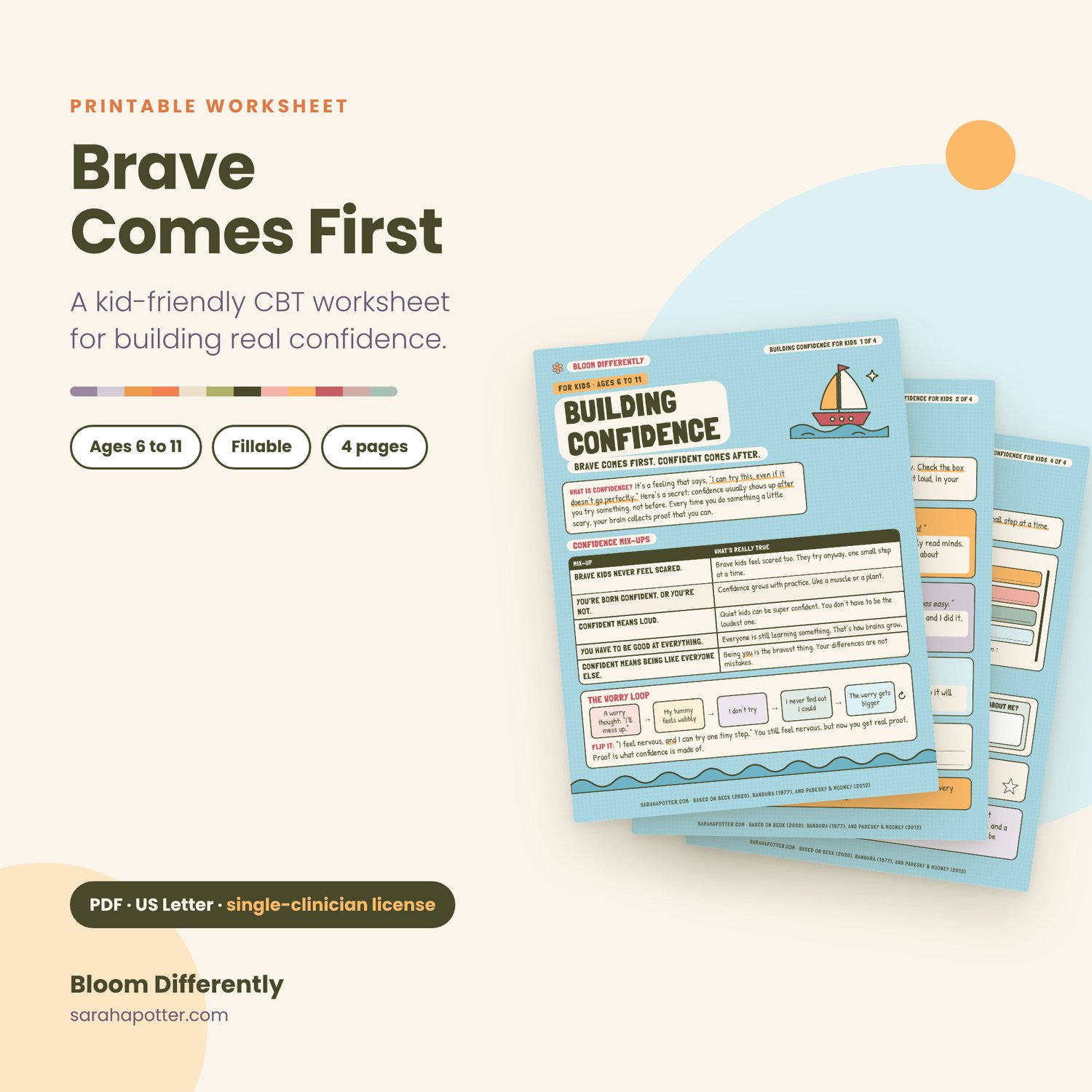
Many kids wait to feel confident before they try something. Confidence actually works the other way around: it shows up after you try. Every time a child does something a little scary, their brain collects proof that they can. This 4-page worksheet uses ocean-themed, hand-drawn pages to help kids ages 6 to 11 understand how confidence really works, talk back to worry thoughts, notice their own strengths, and turn all of it into small, doable brave steps.
What’s inside
- What is confidence? It’s a kid-sized explanation: “I can try this, even if it doesn’t go perfectly.”
- Confidence mix-ups: five myths and what’s really true, including “Brave kids feel scared too” and “Being you is the bravest thing.”
- The worry loop: a simple picture of how worry thoughts keep kids stuck, with a “flip it” to break the cycle.
- Tricky thoughts that shrink confidence: six common thinking traps with kid-friendly names: the Comparer, the Mind Reader, All or Nothing, the Forgetter, the Name Caller and the Fortune Teller. Each one comes with a checkbox and a brave talk-back.
- My own tricky thought: space for kids to write their own thought and their own talk-back.
- My strength superpowers: 20 strengths to check, such as “Knows LOTS about my favorite things” and “Great with animals,” plus space to add their own.
- My keep-going story: a prompt to find something they already keep trying at, like a game, building, drawing or caring for a pet.
- My brave rules: a “When ___, I ___” practice that turns those strengths into rules for hard moments.
- My brave ladder: a plan, a recess example and a fill-in ladder from Step 1 up to the Goal.
- Check the proof: three boxes for after each step: What really happened? Was it as bad as my worry said? What did I learn about me?
- Color a star each time you’re brave: 10 stars to track progress.
- Grown-up Corner: tips for parents on praising effort, keeping steps small, and being a steady base to be brave from.
Who it’s for
- Kids ages 6 to 11 who hold back, say “I can’t,” or get stuck in worry before trying something new.
- Neurodivergent kids who’ve heard “you’re too much” or “why can’t you just…” and need to hear that their differences aren’t mistakes.
- Parents who want a simple, hands-on way to build their child’s confidence at home.
- Therapists, school counselors and play therapists who want a kid-friendly CBT tool for session or homework.
Ways to use it
- Work through one page per session, with the ladder as between-session homework.
- Read and fill it out with a parent at home.
- Use it in a small group or a social-emotional learning lesson.
- Fill it in on screen or print it out, since the pages are fillable.
- Keep the brave ladder and star tracker on the fridge as reminders.
Why it’s different
Many kids’ confidence worksheets stop at positive affirmations. This one teaches the real mechanism: brave action builds confidence, and proof shrinks worry. It’s grounded in CBT and strengths-based CBT, and it starts with what’s already going well for the child rather than what needs fixing. The language is neurodivergent-affirming throughout: quiet kids can be confident, and being yourself counts as brave.
What you get
- 1 printable, fillable PDF, 4 pages, US Letter
- Psychoeducation, 6 tricky thoughts with talk-backs, a strengths checklist, brave rules, a brave ladder, a proof check, a star tracker and a Grown-up Corner
- Single-clinician license included
Pairs well with
- Building Confidence (the teen version)
- ANTs (Automatic Negative Thoughts)
- Thoughts vs. Feelings
- My Coping Toolbox (ages 6 to 9)