
Civic Literacy U3 L3 | Judicial Review and Separation of Powers
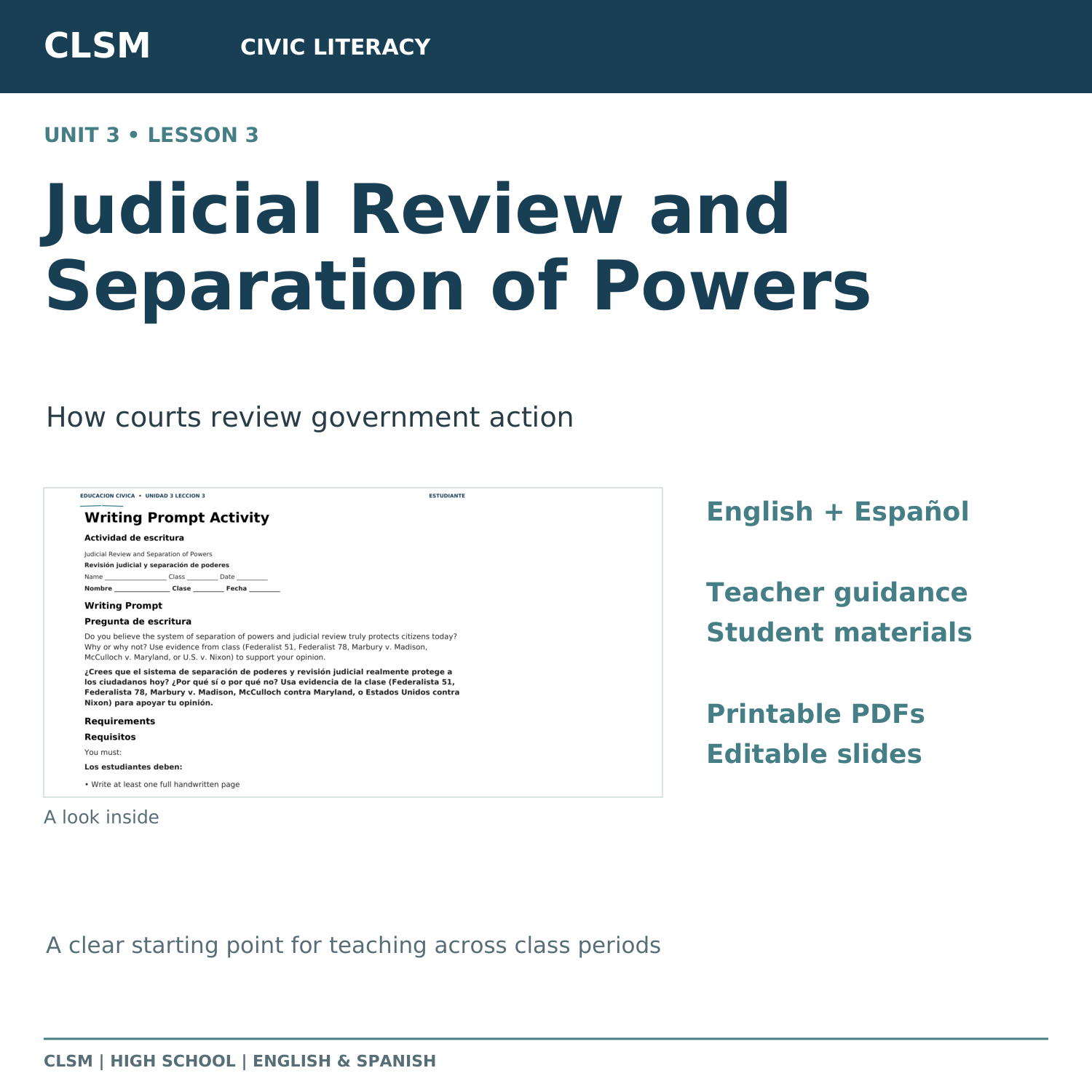
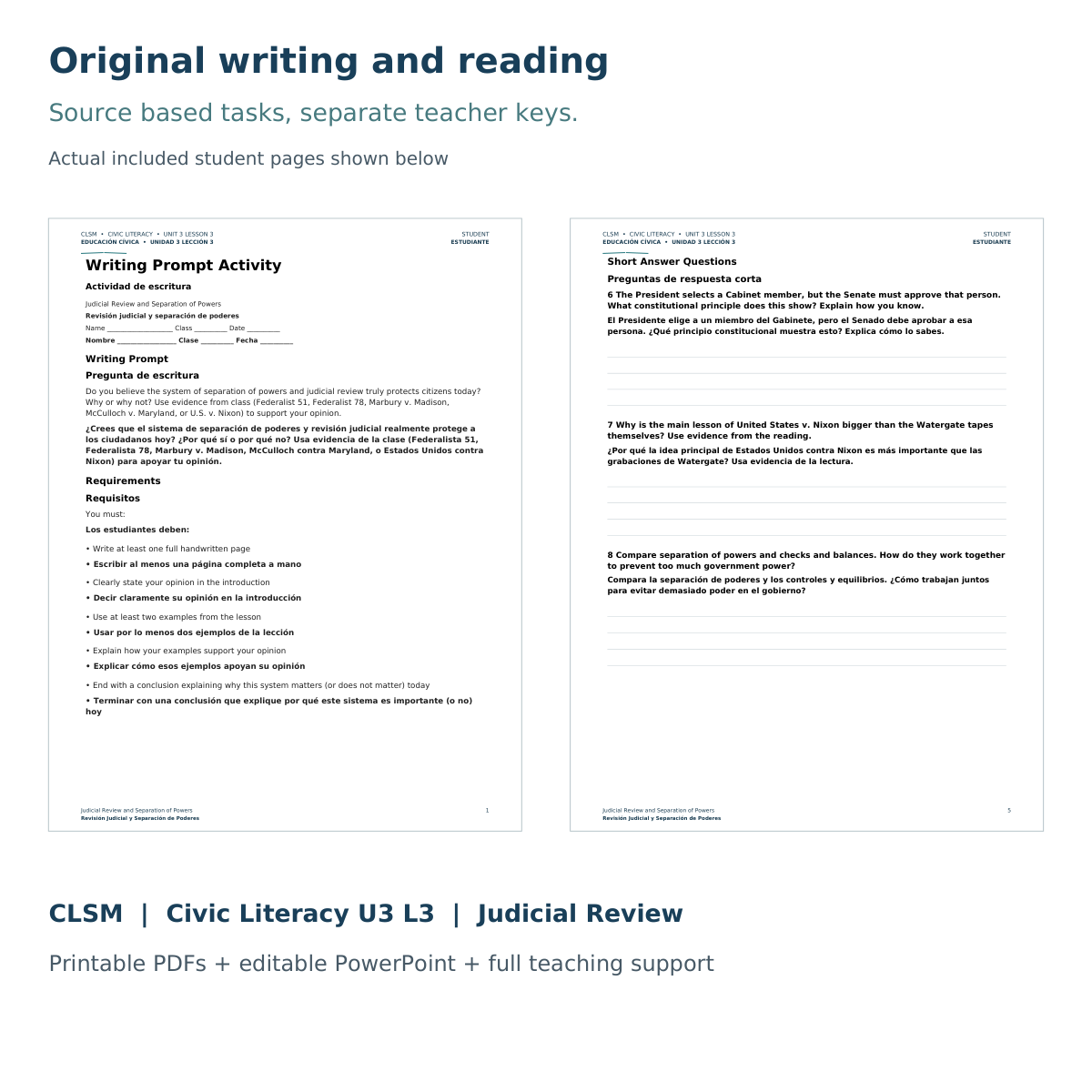
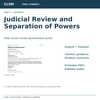
Do separation of powers and judicial review protect citizens today? Students develop their own answer in a written argument, using at least two examples from the lesson and explaining how each example supports their position.
This lesson moves from learning the concepts to making a supported judgment about them. Students may argue yes, no, or a qualified position. The writing support helps them choose evidence, connect it to a claim, and explain why the system matters or where it falls short.
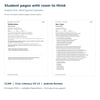
The standard and supported materials address the same content. For students who need more structure, the DECIDE, PLAN, WRITE, CHECK guide breaks the response into manageable steps and provides bilingual sentence starters. It supports the student's reasoning without supplying a position for them to copy.
What's included
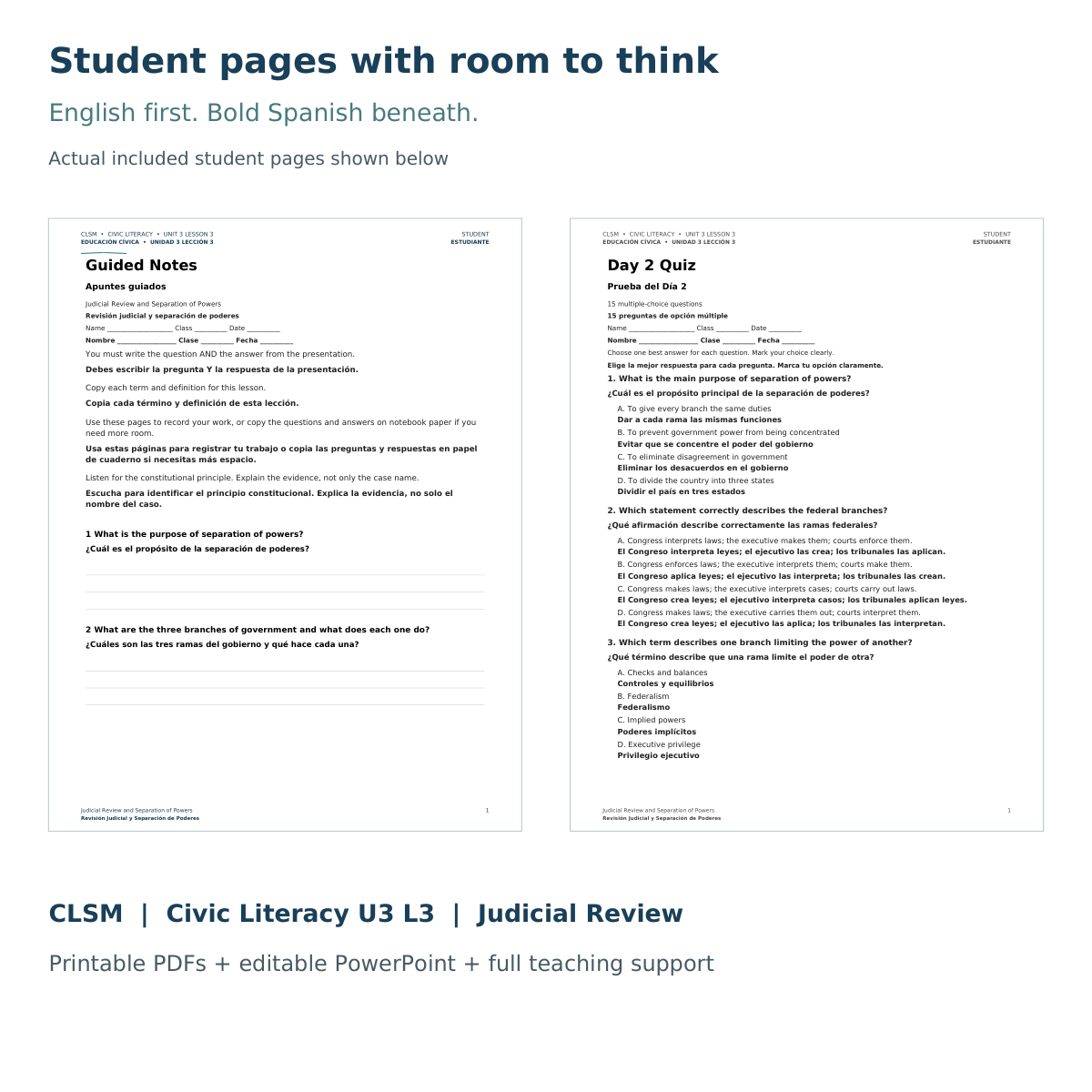
• Guided notes with 10 questions and eight vocabulary terms, with standard and supported versions.
• Full English and bilingual teacher lectures.
• Editable PowerPoint with bilingual speaker notes and a matching PDF presentation. Core teaching is followed by optional reference and reteaching material.
• Recall questions and answer keys.
• A 15-question quiz with explanations for each answer choice.
• The judicial review and separation of powers writing prompt, standard and supported writing materials, planning support, and a teacher key.
• Reading and answer key, lesson guidance, and standards and source information.
• A short introduction to Congressional Leadership and Committees. The complete next lesson is not included.
Writing expectations
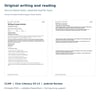
This lesson follows U3 L2 National Supremacy. The assignment calls for at least one full handwritten page, a clear claim, and at least two lesson examples with explanations connecting the evidence to the claim. The planning guide supports an introduction, two evidence paragraphs, and a conclusion. Documented accommodations may provide an equivalent response format. Plan time for students to choose their evidence and develop their explanations, not simply name cases or define terms.
Bilingual materials
Student-facing materials use English followed by bold Spanish. The supported notes and writing guide offer language and planning help while retaining the same intellectual task. Implementation and source guidance is in English.
File and software notes
Handouts are printable PDFs, not interactive fillable forms or editable Word documents. The PowerPoint is editable and includes the teacher's speaker notes. Optional Gamma prompts require a separate account only if used.
Resumen en español
Los estudiantes escriben un argumento sobre si la separación de poderes y la revisión judicial protegen a los ciudadanos. Deben usar al menos dos ejemplos de la lección y explicar cómo apoyan su postura. Incluye apuntes y materiales de escritura bilingües, versiones con apoyo, presentaciones, repaso, evaluación, lectura y claves. La respuesta requiere al menos una página completa escrita a mano, con formatos equivalentes cuando corresponda por adaptaciones documentadas.