
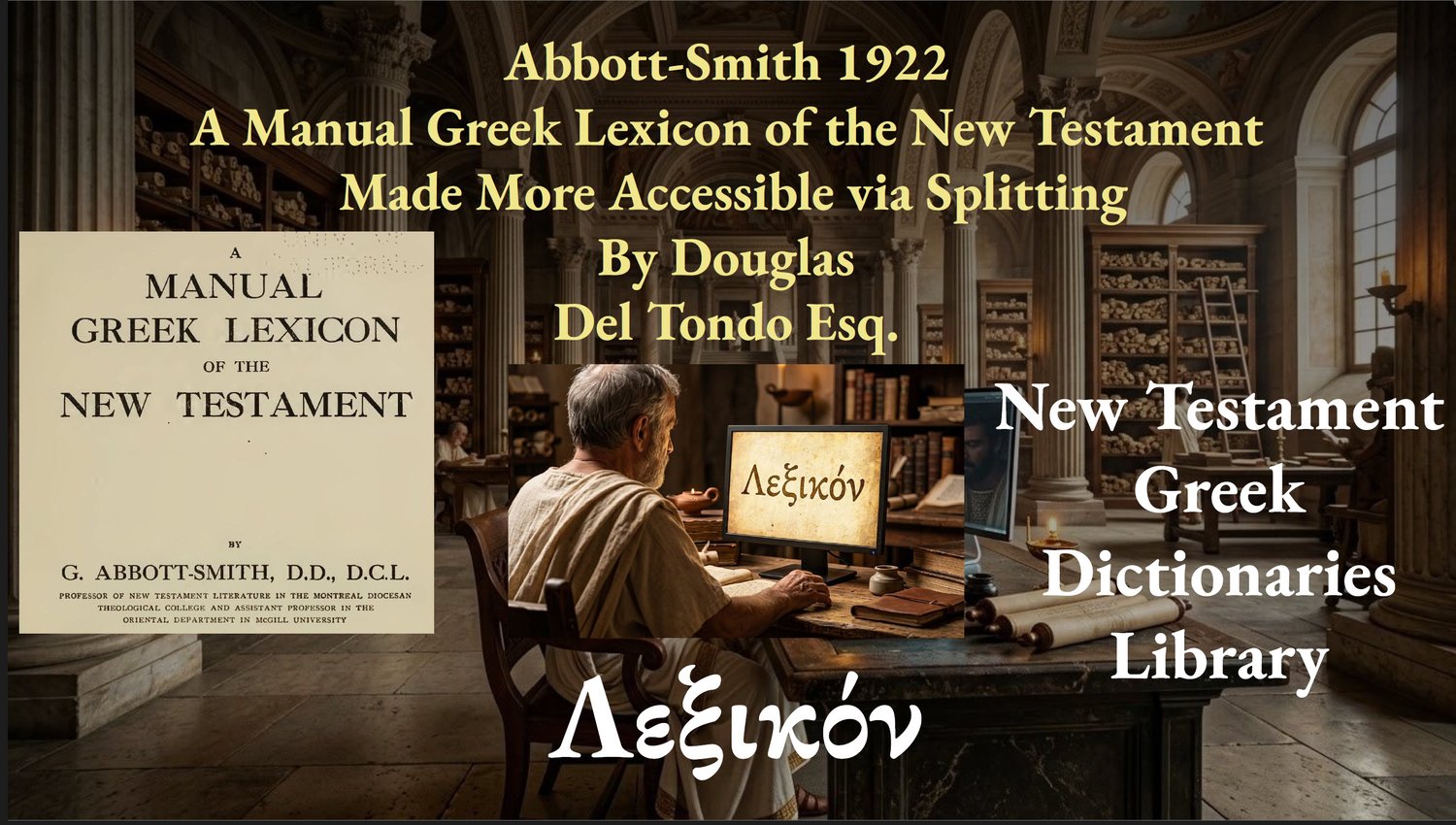
Abbott-Smith Manual of Greek Lexicon of New Testament with Introduction
The Benefits of the Abbott-Smith Lexicon.
In his preface, Abbott-Smith explicitly states that while standard lexicons like Thayer’s were monumental, they were "rather too bulky to serve as a table companion to the New Testament for the average man." He specifically designed this manual to be a smaller, more accessible book that "would lend itself more readily to constant reference" for everyday students.
Built on Groundbreaking Papyri Discoveries. This lexicon was written right after a quarter-century of explosive progress due to the discovery of vast numbers of everyday, non-literary papyri in Egypt. Abbott-Smith incorporated these discoveries to systematically revise older views on New Testament vocabulary, proving that the diction of the Greek New Testament was not a "peculiar isolated idiom" but rather the "common speech of the Greek-speaking world."
Valuable Distinctions Between Synonyms
To further assist the student, Abbott-Smith’s manual includes a "brief treatment... of the more important synonyms." Abbott-Smith believed it was a great advantage for readers to learn the distinctive features of synonymous words by tracing their etymology and literary history.