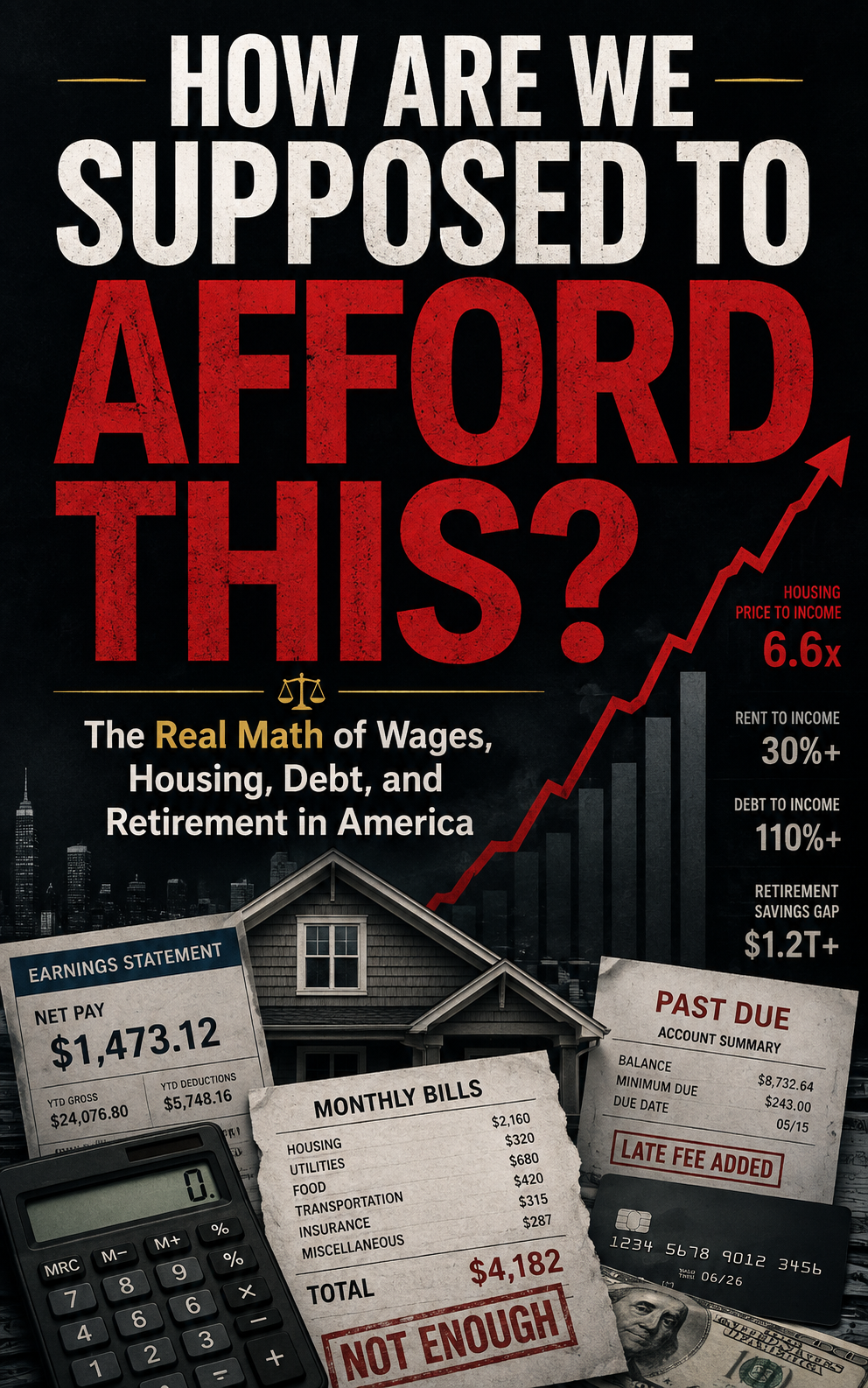
How Are We Supposed to Afford This? The Real Math of Wages, Housing, Debt, and Retirement in America
How Are We Supposed to Afford This?
The Real Math of Wages, Housing, Debt, and Retirement in America
This is not another budgeting book telling people to cut coffee, cancel subscriptions, and somehow make impossible numbers work. It asks a more basic question: have the major costs of ordinary life stayed in a reasonable relationship to what people earn?
Using real-life examples, federal GS pay tables, public economic data, and simple cost-to-income ratios, this book compares wages with housing, cars, student debt, rent, transportation, and retirement across decades. The numbers reveal an important truth: not everything became less affordable at the same rate. Some costs held up reasonably well relative to income. Housing did not.
A brand-new Toyota Camry LE, for example, can be compared across generations using the same federal pay grade. That comparison does not show the dramatic deterioration people might expect. Housing tells a very different story. A modest house that once cost close to one year of income can now represent several years of earnings, while rent consumes a growing share of many paychecks before food, transportation, insurance, debt, or retirement savings even enter the picture.
The book also explains inflation and CPI without using them to hide the more important question: what percentage of income does a major expense demand? It examines FHA financing, credit cards, student debt, the cost of getting to work, retirement pressures, and why simply telling people to “work more” is often an incomplete answer.
The final chapters explore realistic ways households can create more financial margin, including online leverage and AI-assisted work. AI can make certain tasks faster, but it does not make income passive, seamless, or easy.
The central message is simple:
Prices went up. Wages went up. But the ratios did not stay the same.
For millions of households, that is the real cost-of-living story.