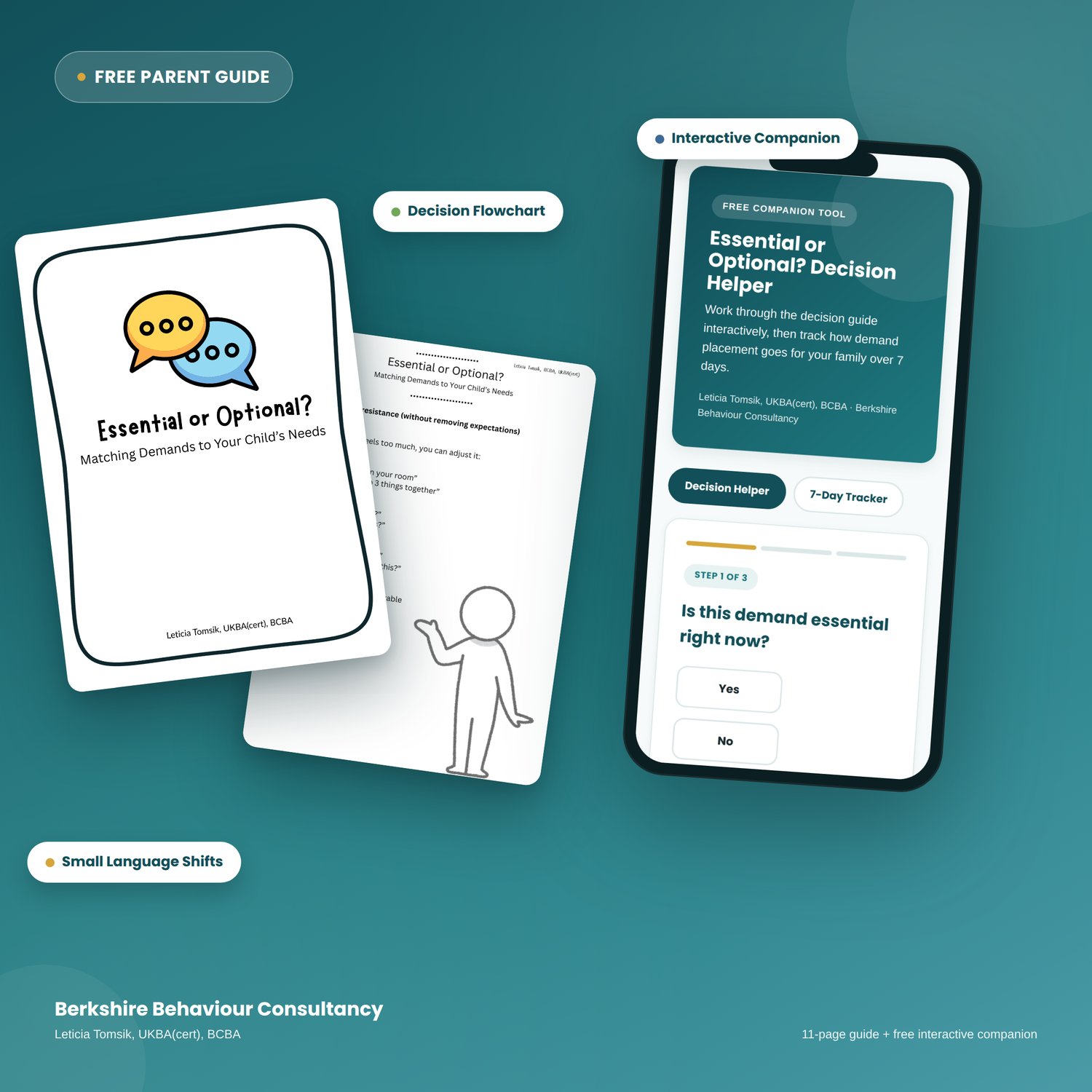
Essential or Optional? Matching Demands to Your Child's Needs (Free Guide + Interactive Companion Tool)
An 11-page guide plus a free interactive tool to help you place demands at the right time, in the right way.
Every day, you ask your child to do things — get dressed, tidy up, start homework, come to the table. Most days, that goes fine. Some days, even the smallest request tips into resistance, tears, or a full meltdown, and you're left wondering what just happened.
Often, it isn't about the task itself. It's about timing.
Essential or Optional? is a free guide built around one simple, powerful question: does this demand need to happen right now, or could it wait? By learning to tell the difference, you'll place fewer unnecessary demands, reduce daily power struggles, and help your child succeed more often — without lowering your expectations.
This isn't about permissiveness. It's about precision.
What's inside the guide (11 pages)
- Why children resist demands — and what that resistance is usually communicating
- The hidden demands most parents miss (transitions, social expectations, sensory load, and more)
- A step-by-step decision framework: essential? skill? regulated? — then place the demand
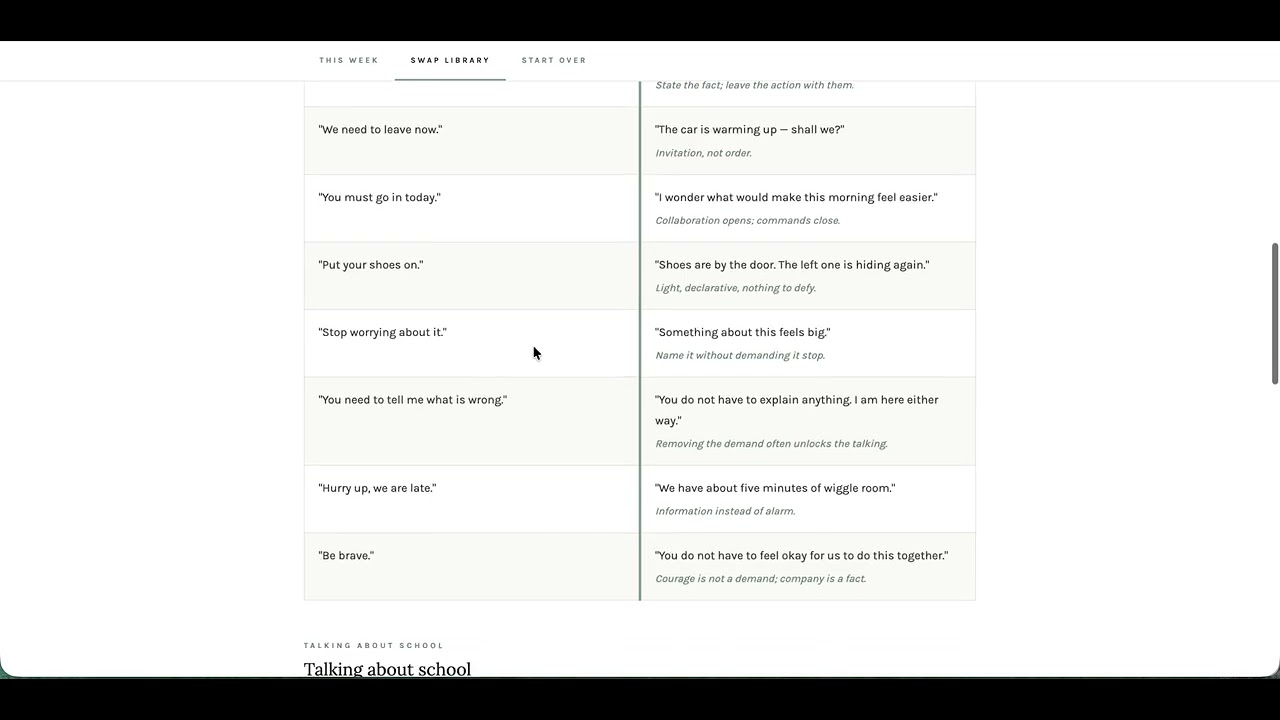
- Five practical ways to adjust a demand that feels too big, including reducing size, offering choice, and small language shifts
- A "what this looks like in real life" page with real morning, homework, and leaving-the-house examples
- A 7-day reflection tracker to notice what's working for your family
Plus, a free interactive companion tool
This guide now comes with a browser-based tool you can save straight to your phone — no login, no app store, nothing to install:
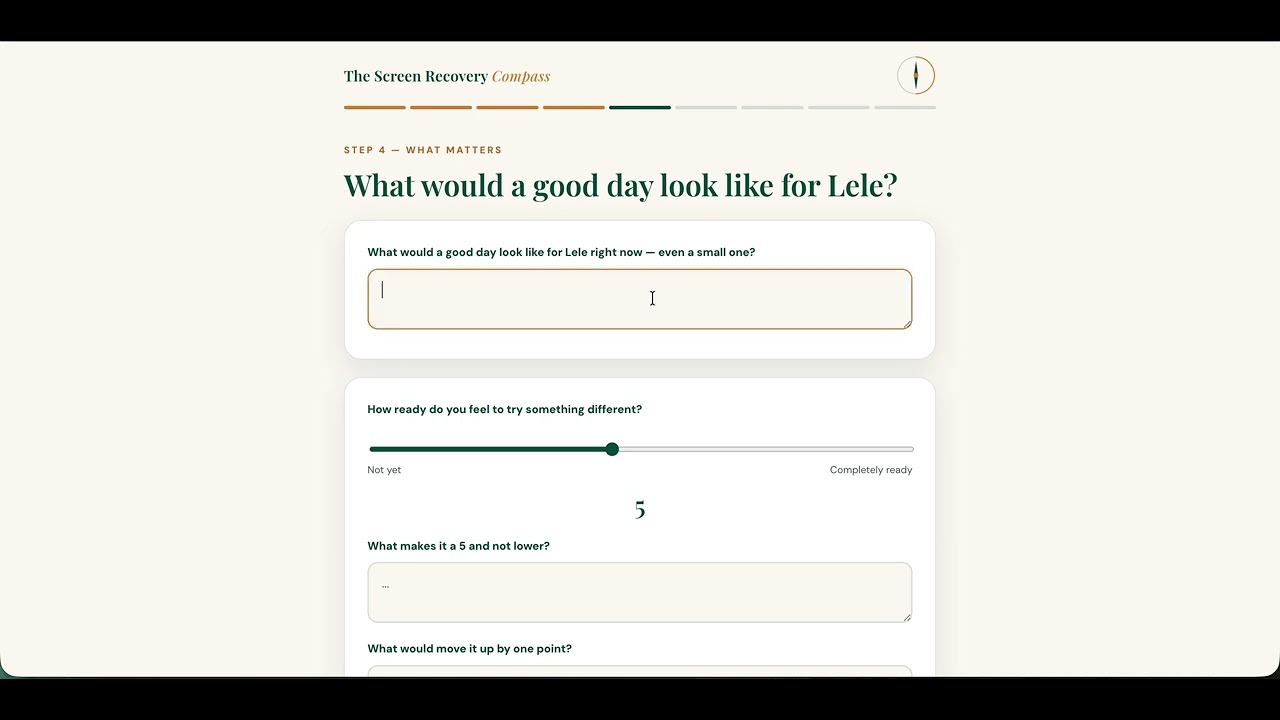
- Decision Helper — work through the same essential/skill/regulation questions interactively, with tailored guidance and example phrases at each step
- 7-Day Tracker — tick off each day and jot down reflections, with everything autosaving on your device
Use it in the moment, before a demand feels like it's about to go wrong — or each evening, to notice the pattern behind your week.
Who this is for
Parents of neurodivergent children — including those with PDA, autism, ADHD, or anxiety profiles — who find that ordinary requests sometimes spark bigger reactions than expected. It's equally useful if you're just looking for a calmer, clearer way to ask things of your child day to day.
A note on approach
This guide draws on the same evidence-based framework I use across all my work: connection and regulation come before any demand is placed. You're not doing anything wrong by asking things of your child — you're learning to see the fuller picture of what makes a request land well