
Why Do Fidget Toys Calm and Ground the Sensory Nervous System?
Why Do Fidget Toys Calm and Ground the Sensory Nervous System? — Educational Infographic (Printable, A2)
You will receive the printable unwatermarked version of this infographic
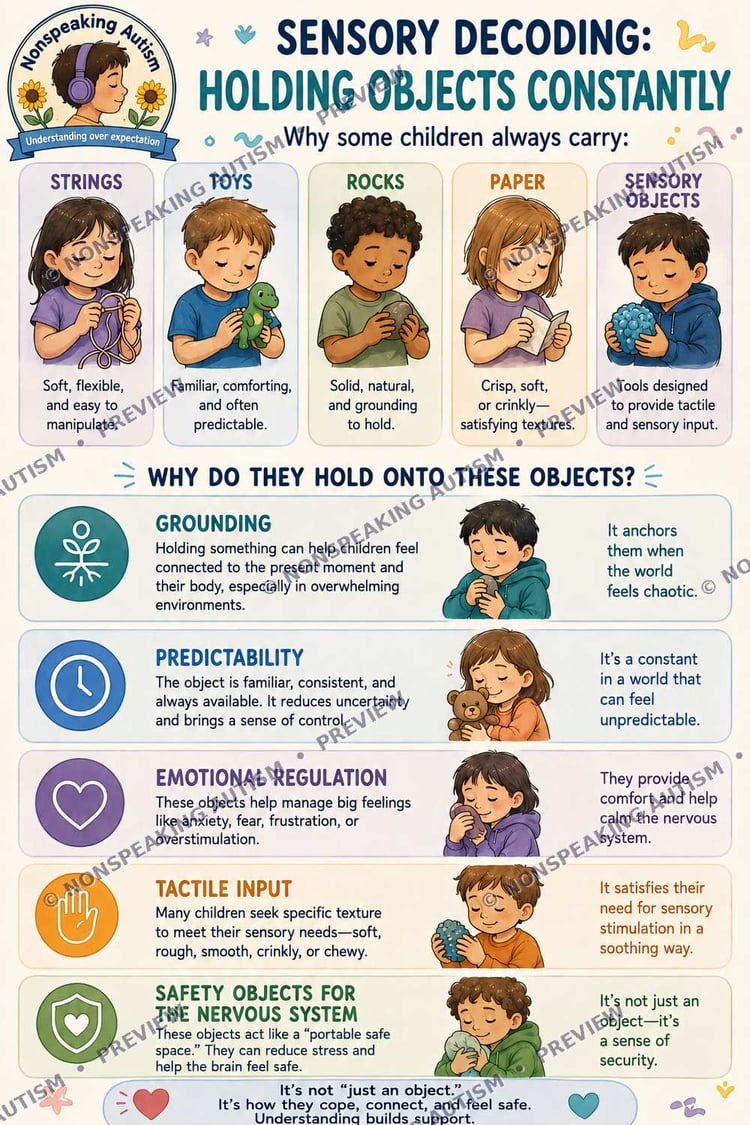
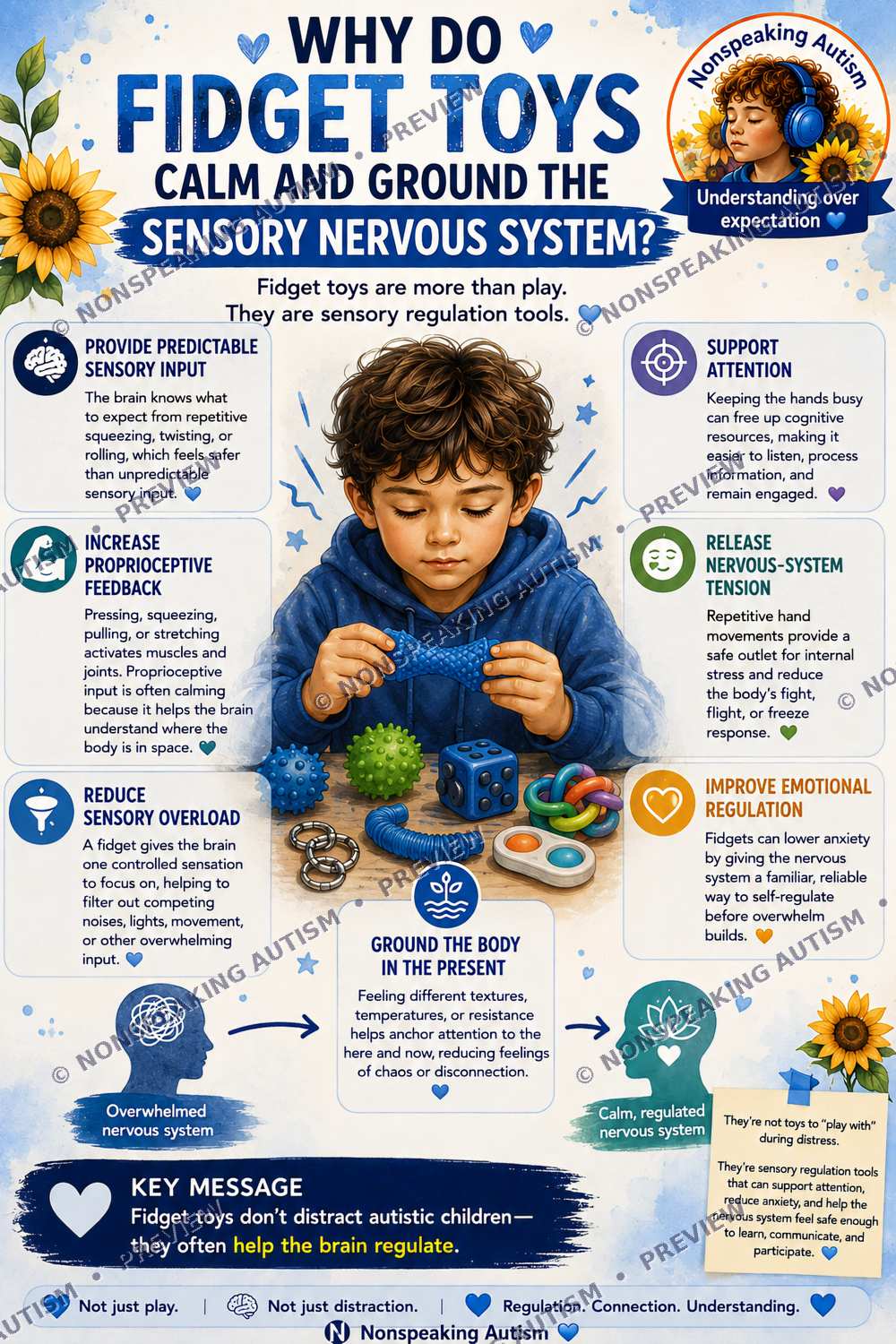
A warm, clear visual explaining why fidget toys are sensory regulation tools, not just play.
This infographic covers:
- Provide predictable sensory input: repetitive squeezing, twisting, or rolling feels safer than unpredictable input
- Increase proprioceptive feedback: pressing, squeezing, pulling activates muscles and joints, helping the brain understand where the body is
- Reduce sensory overload: gives the brain one controlled sensation to focus on, filtering out competing input
- Support attention: keeping hands busy can free up cognitive resources for listening and processing
- Release nervous-system tension: repetitive hand movements provide a safe outlet, reducing fight/flight/freeze response
- Improve emotional regulation: fidgets lower anxiety by giving the nervous system a familiar, reliable way to self-regulate
- Ground the body in the present: from overwhelmed nervous system to calm, regulated nervous system
- Key message: fidget toys don't distract autistic children — they often help the brain regulate
What you get:
- High-resolution PDF, print-ready and scalable up to A2 (420 × 594mm)
- Instant digital download
Perfect for: SEND training, therapy rooms, classrooms, parent carer forums, and home use.
For personal, classroom, and professional educational use. Not for resale or redistribution.
© Nonspeaking Autism
Disclaimer:
This resource is intended for educational and informational purposes only. It is designed to support understanding of autism, sensory processing, nervous system regulation, and behaviour from a neurodevelopmental perspective.
The information provided is not medical, psychological, therapeutic, or legal advice and should not be used as a substitute for assessment, diagnosis, or treatment by a qualified healthcare professional.
Every autistic person is unique. Strategies and supports should always be tailored to the individual's needs, strengths, and circumstances.
If a child displays a sudden change in behaviour, severe distress, signs of illness, injury, or behaviours that place themselves or others at risk, seek appropriate medical advice or emergency assistance where necessary.
While every effort has been made to ensure the information is accurate and reflects current understanding, knowledge in autism and neuroscience continues to evolve.
This resource is for the purchaser's personal, educational, or professional use only. It may not be copied, redistributed, resold, edited, shared publicly, or reproduced in whole or in part without prior written permission.
© Nonspeaking Autism 💙