
POTS Symptom Tracker — Heart Rate, Hydration & Daily Log (Google Sheets + Excel)
The CareLog POTS Tracker is a Google Sheets and Excel template for people with Postural Orthostatic Tachycardia Syndrome. It logs heart rate, dizziness, fatigue, hydration, salt intake, and daily activity in one organized file. Designed by a medical doctor to track what is clinically relevant for POTS - not a generic symptom log.
POTS symptoms are mostly invisible in a fifteen-minute appointment. Your heart rate behaves, the dizziness stays home, and "I've been really symptomatic lately" is hard to act on. What changes the conversation is data: standing heart rates with dates attached, hydration that was actually measured, the pattern between a bad week and what preceded it.
This template gives you that record. Two to three minutes a day, and the dashboard does the pattern-finding for you.
WHAT IT TRACKS
- Heart rate (resting and on standing)
- Dizziness and presyncope episodes
- Fatigue level (1-10 scale)
- Daily hydration volume
- Salt intake
- Physical activity and exertion level
- Medications taken
- Daily symptom notes
WHAT IS INCLUDED
Free version:
- 7-day daily log - track symptoms immediately at no cost
Full version ($12.99) - most people choose this one:
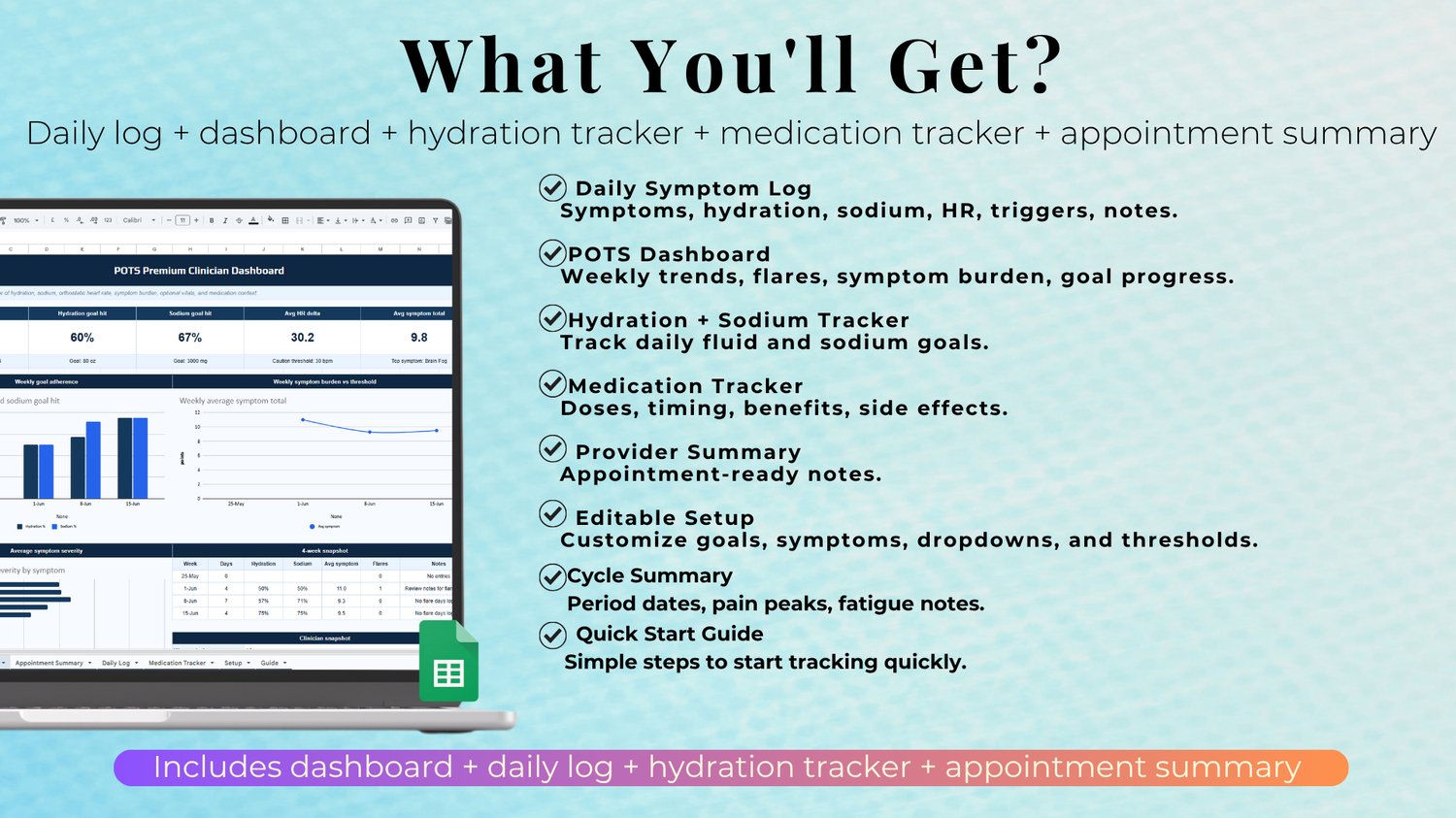
- 30+ day daily log with automatic calculations
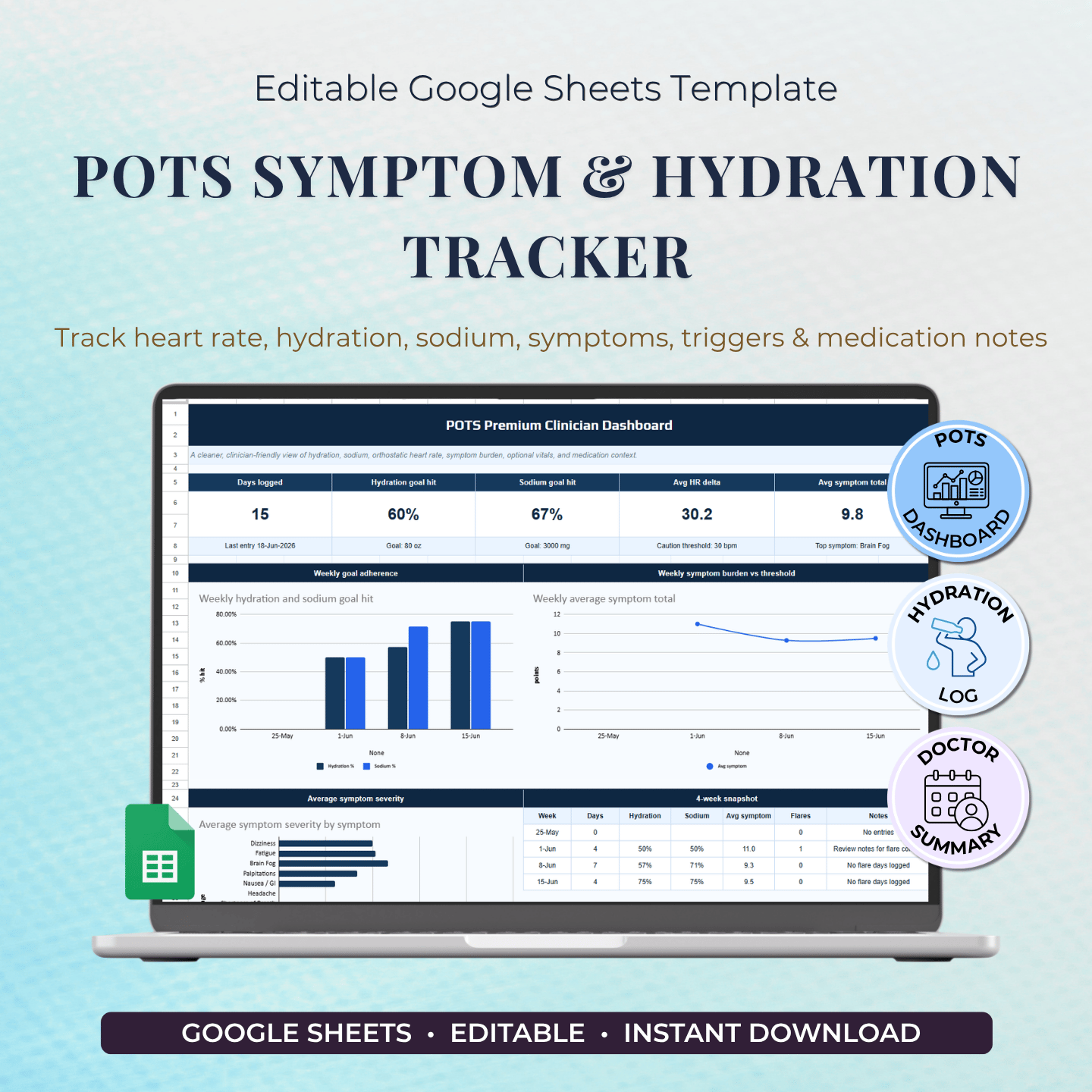
- Pattern dashboard - see which days are worse and why
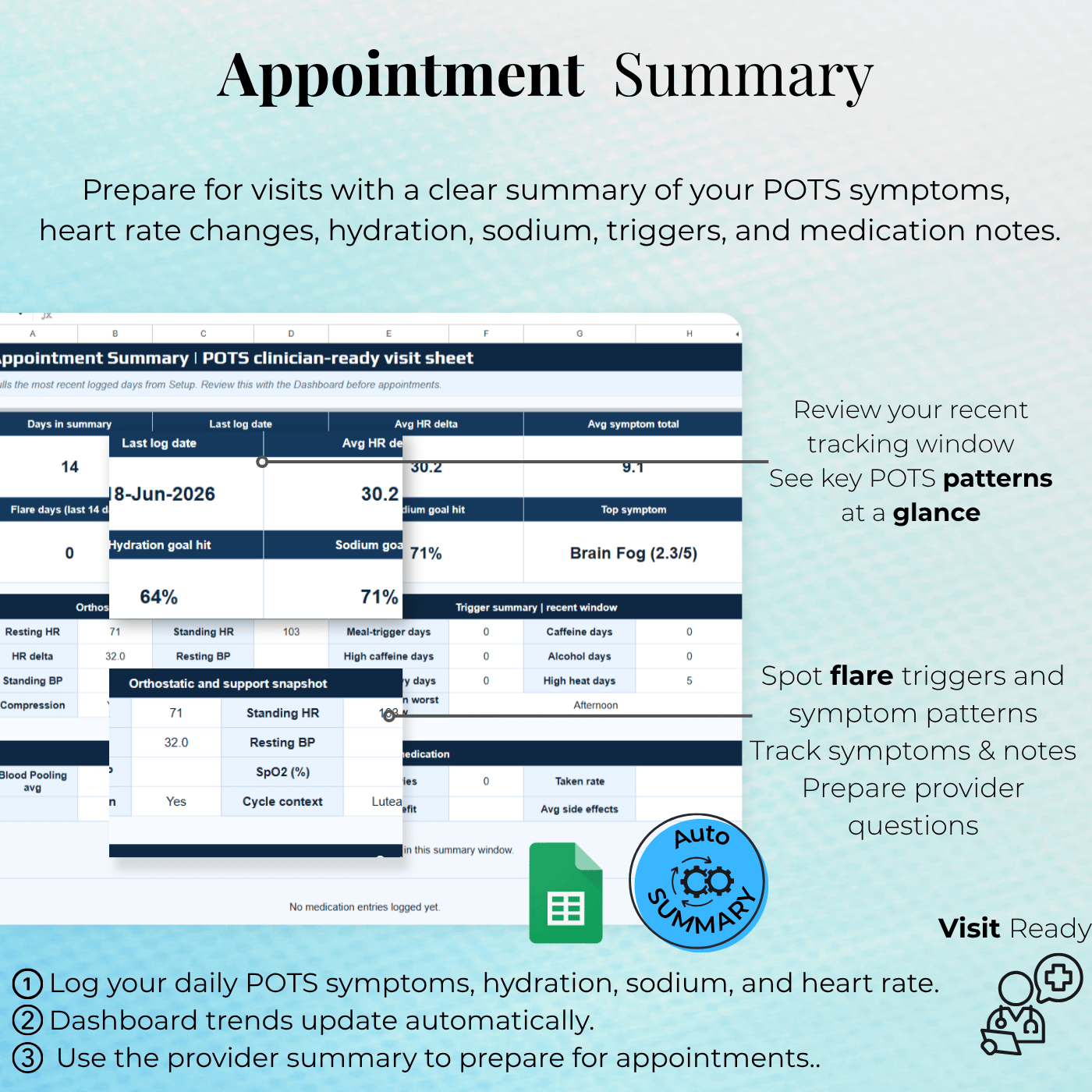
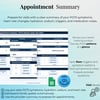
- Appointment summary tab - organized notes ready to share with your cardiologist or specialist
- Google Sheets + Excel files included
Premium version ($16.99):
- Everything in the full version
- Enhanced dashboard with extended chart views
- Full tracking history across multiple months
Using the free version? Select the Full Tracker from the options above when you want the dashboard and appointment summary.
WHO THIS IS FOR
- People diagnosed with POTS who want to track symptoms over time
- People preparing for a cardiology or autonomic specialist appointment
- People monitoring how hydration, salt, activity, and medications affect their symptoms
HOW IT WORKS
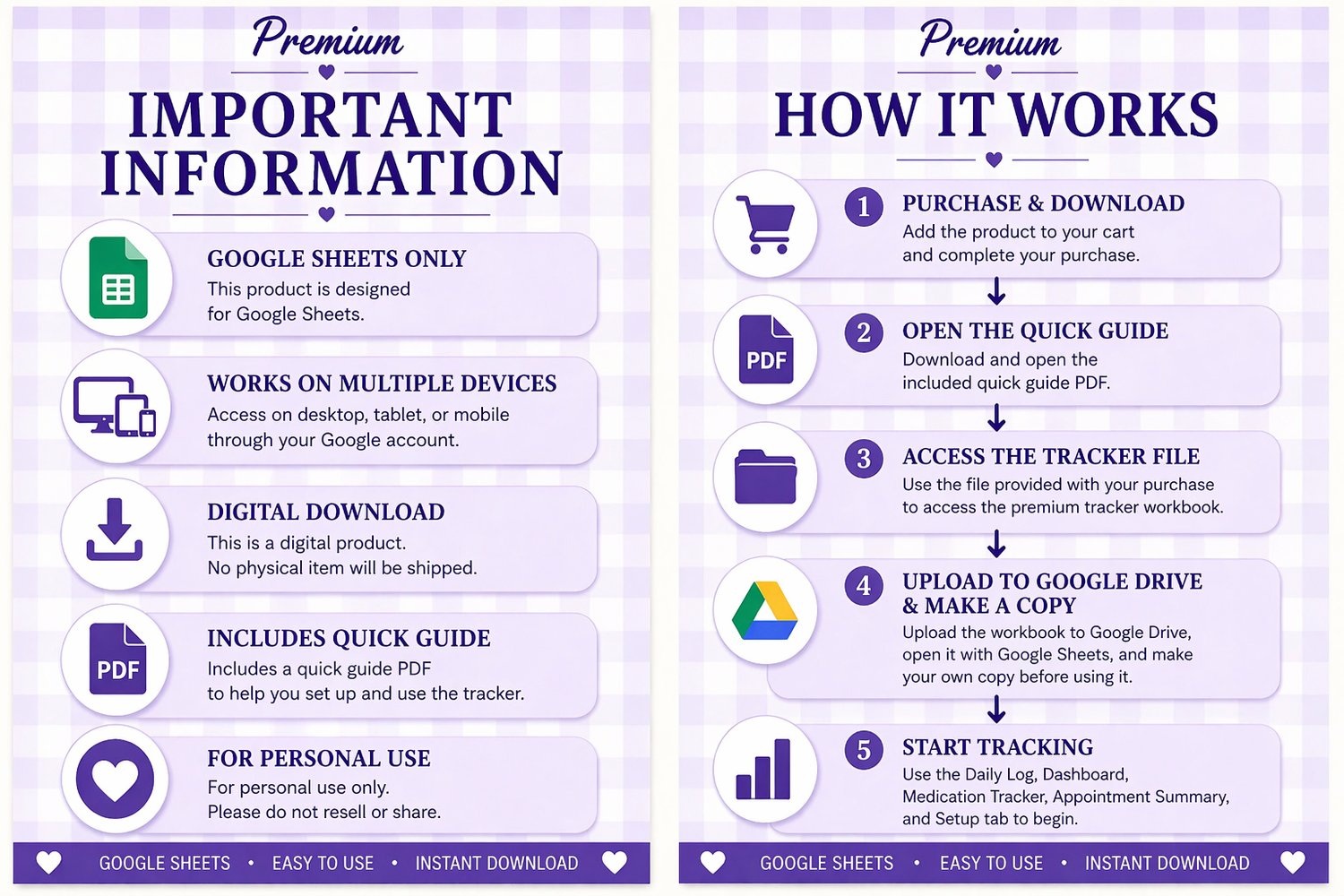
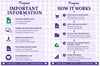
Download the file. Make a copy in Google Sheets (free with any Google account). Fill in your symptoms each day - most entries take two to three minutes. After a week, the dashboard shows you patterns: which days were worse, what your heart rate trends looked like, how hydration lined up with symptoms.
CREATOR
Designed by Yonatan Gabriel, MBBS. Medical doctor. CareLog.
FREQUENTLY ASKED QUESTIONS
Q: What is a POTS symptom tracker?
A daily log for recording the measurements and symptoms relevant to Postural Orthostatic Tachycardia Syndrome - primarily heart rate, dizziness, fatigue, hydration, and activity. This is a pre-built template with automatic calculations and a pattern dashboard, so you see trends without manual analysis.
Q: What should I track with POTS?
The most useful data points are: resting heart rate, heart rate on standing, dizziness or presyncope episodes, daily hydration volume, salt intake, activity level, fatigue score, and medications taken. This template includes fields for all of these.
Q: I already use a heart rate app - why a spreadsheet?
Your watch records heart rate; it does not connect it to hydration, salt, medications, and symptoms in one place - and it does not produce an appointment summary you can hand to your cardiologist. This file does, offline, with no subscription.
Q: Do I need to know how to use spreadsheets?
No. You fill in cells like a form - no formulas to write. A Quick Guide is included.
Q: Can I use this to prepare for a cardiology appointment?
Yes. The full and premium versions include an appointment summary tab that compiles your tracked data into organized notes for your cardiologist, autonomic specialist, or GP.
Q: Does this work on mobile and in Excel?
Yes. Google Sheets works on Android and iOS, and an Excel version is included.
This template is for personal tracking and organization only. It does not diagnose, treat, cure, or prevent any medical condition. Always speak with a qualified healthcare professional about symptoms, treatment, or medical decisions.
Last updated: June 2026