
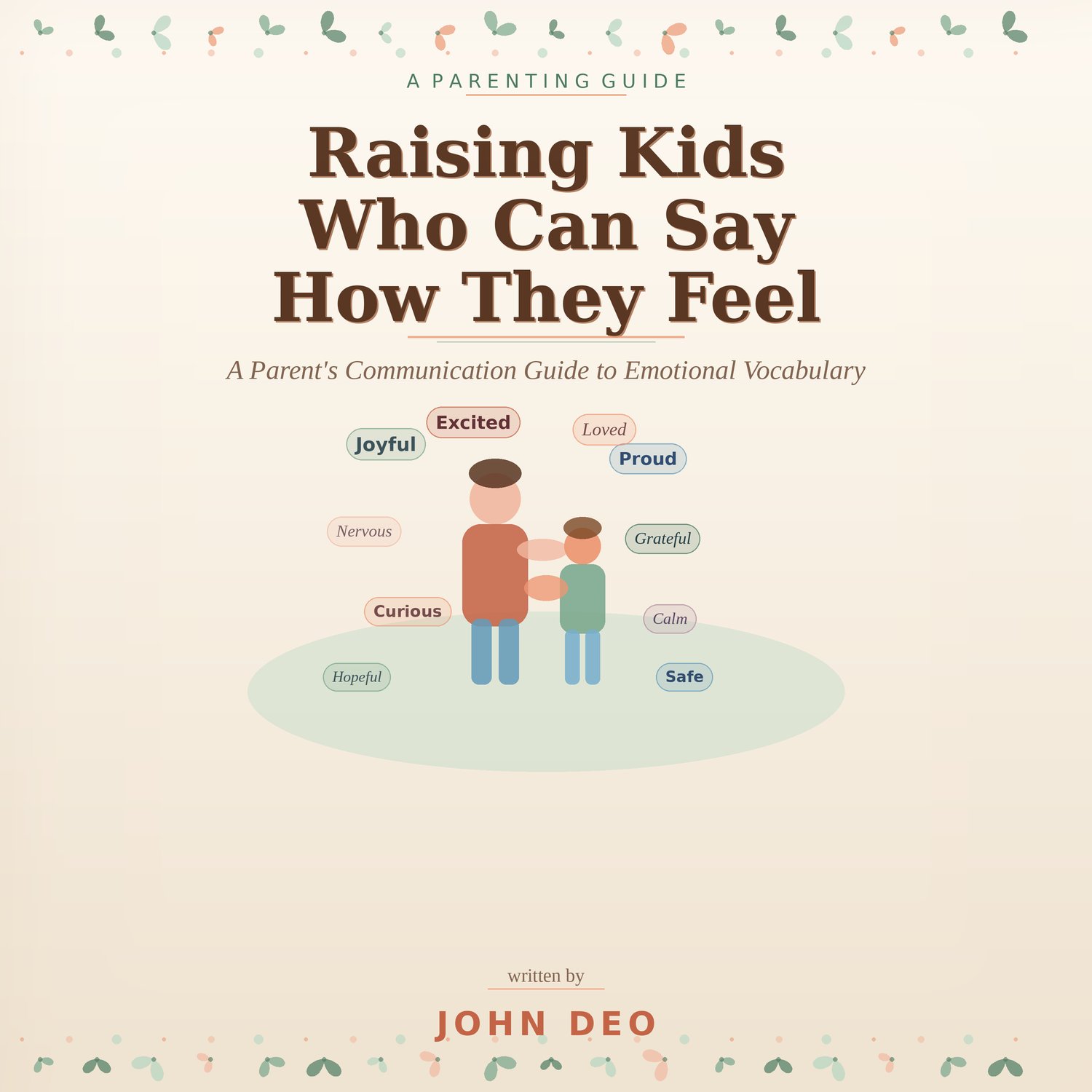
Raising Kids Who Can Say How They Feel:A Parent's Communication Guide to Emotional Vocabulary
Parenting · Emotional Intelligence
Raising Kids Who Can Say
How They Feel
A practical daily guide to building your child's emotional vocabulary — for better mental health, stronger relationships, and a happier home.
$3.99
Instant download
EPUB · 2MB
Pay once, keep forever. Works on any device.
just saying
MAD
Frustrated
Overwhelmed
Humiliated
Resentful
Betrayed
Powerless
Irritated
Dismissed
The problem most parents don't see
Most kids only know five emotions.
"Fine" isn't one of them.
Happy
Sad
Mad
Scared
Fine
When children can't name what they feel, they act it out — through tantrums, shutdowns, aggression, and tears that seem to come from nowhere. The solution isn't more discipline. It's language. Children with a rich emotional vocabulary have better mental health outcomes, stronger friendships, higher academic performance, and significantly fewer behavioral problems.
What you'll find inside
Eight tools. One small conversation at a time.
Every chapter is designed to fit real family life — no therapy degree required.
🌱
The Emotion Expansion System
A step-by-step framework for introducing new emotional words by age — from toddlers through teenagers.
☀️
Daily Micro-Conversations
5-minute scripts for morning, dinner, and bedtime that build emotional fluency without feeling like therapy.
🎮
50 Games and Activities
Fun, screen-free ways to teach emotional vocabulary that kids actually want to participate in.
📚
The Feelings Word Library
200+ emotion words organized by intensity, category, and age-appropriateness — a reference you'll return to constantly.
💬
Scripts for Difficult Moments
Exactly what to say when your child shuts down, explodes, or answers everything with "I don't know."
🫀
The Body–Feelings Connection
Teaching kids to recognize emotions in their body before they escalate — catching the signal early.
Is this for you?
Recognize any of these?
- ✓
- Your child says "I'm fine" when something is clearly wrong
- ✓
- Meltdowns happen with no warning and no explanation
- ✓
- Your teenager has started shutting you out completely
- ✓
- You want to raise emotionally intelligent kids but don't know where to start
- ✓
- You work in therapy, education, or child wellness and need a parent-friendly resource to recommend
"A child who knows the difference between frustrated and humiliated responds differently to each. A teenager who can say 'I feel overlooked' instead of slamming a door changes the entire trajectory of a conversation."
200+
Emotion words organized by age and intensity
50
Hands-on activities kids actually enjoy
Age-by-age milestones
What to expect at every stage
3
yrs
Naming the basics
Learning to distinguish between happy, sad, scared, and mad as distinct body feelings, not just words.
5
yrs
Expanding the range
Beginning to use words like worried, proud, jealous, and embarrassed with some understanding of context.
8
yrs
Shades of feeling
Grasping emotional intensity — the difference between annoyed, frustrated, and furious.
10
yrs
Social and relational emotions
Naming complex states like betrayal, loneliness, and admiration in real relationships.
13
yrs
Self-aware regulation
Using emotion language proactively — "I feel overlooked" — rather than reacting without words.
Give your child the words that change everything.
You don't need a psychology degree to build this skill. You need the right words, the right moments, and this guide.
Instant EPUB download · 2MB · Works on Kindle, Apple Books, and any reader
© 2024 Mindstop · Purchase on Payhip