
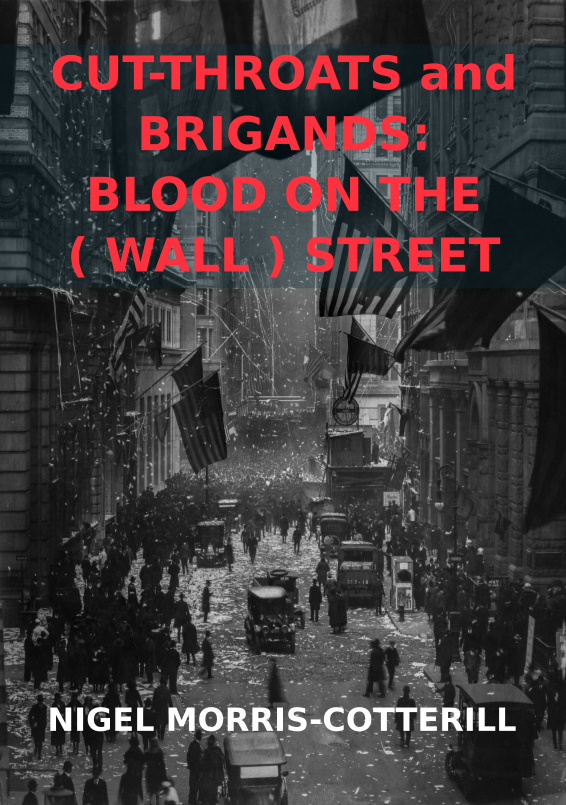
Cut-Throats and Brigands: Blood on the (Wall) Street
At the turn of the 20th Century, in the USA, the financial markets were, again, in turmoil. It happened a lot. Sometimes it started in the USA and sometimes it started in London but as the world ticked into 1902, the crisis on Wall Street was entirely home grown.
In the middle of it all was Thomas W. Lawson. He was immensely wealthy and when people said they mixed with the rich and famous, he was who they were talking about. While the financial world worked in crowded and chaotic conditions in the money pits, Lawson worked from home. He used telephones when in much of the UK only a relatively few people would have their own phone 50 years later. He had teletype when his competitors relied on messengers. He built the biggest sail-powered cargo ship - which sank, in a storm, off the Isles of Scilly spilling a quarter of a million gallons of cooking oil into the sea. His estate was renowned for ts fine horses and yacht racing. Lawson was a legend in his own lifetime but not long after his death he was all but forgotten.
In 1902, he published a novella in a series of chapters in a publication that, it seems, he had a significant interest in. In 1907, he published it as a book. It was called Friday the Thirteenth and it told, in fictional form, the story of the crash and - making no bones about naming names - those he thought had been the cause of it.
Lawson also examined insider trading, cartels and the emotional strain on those betting big on share performance. Special attention is paid, without expressing it, to those who invest in companies and those who gamble on stock markets.
Almost 120 years later, Nigel Morris-Cotterill, a pioneer in the field of financial crime risk and compliance, came across the book and was surprised to see that many of the lessons in the book remain unlearned today.
Cut-throats and Brigands is a review of market collapses, of Lawson's book, and identifying persistent points of failure. He also suggests a simple - but probably unpopular approach to one of the most common features of volatility and crises.
The book is available in hardback and paperback through Amazon.com
-----------
Instant download of a digital book: sales are final, no refund permitted.
Distributing ("sharing") copies is a copyright offence .