
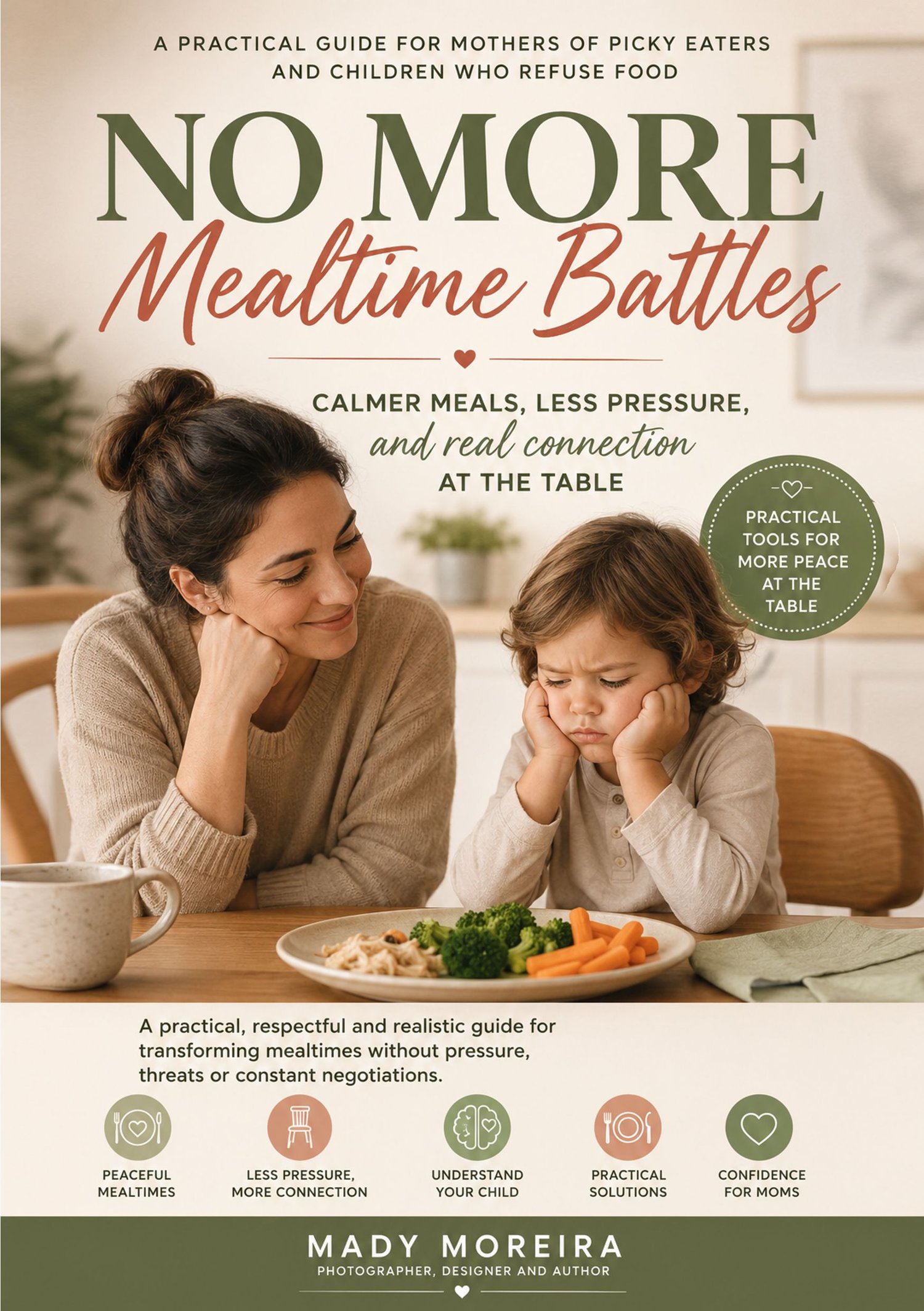
No More Mealtime Battles
No More Mealtime Battles
How to Help Your Child Accept New Foods, Even If They Refuse Almost Everything, Without Pressure, Bribes, or Guilt
Calmer meals. Less pressure. More trust at the table.
You prepare the food.
You place it on the table.
Your child looks at the plate and immediately says:
“I don’t like it.”
They have not tasted it.
Sometimes, they have barely looked at it.
You encourage them.
You ask for one bite.
Then one more spoonful.
You promise dessert.
You threaten to remove dessert.
You prepare something else because you are afraid they will go to bed hungry.
And by the end of the meal, everyone is exhausted.
Your child is upset.
You feel frustrated.
And the guilt follows you long after the plates have been cleared.
If this sounds familiar, you are not failing.
Your child may not be trying to challenge, manipulate, or reject you.
They may be overwhelmed by unfamiliar textures, strong smells, mixed foods, large portions, changes in routine, tiredness, physical discomfort, or the pressure surrounding the meal.
No More Mealtime Battles is a practical, compassionate guide for mothers who want to help their children build a safer relationship with food—without turning every meal into a test of patience.
What if the first goal was not to make your child eat?
What if the first goal was to make the table feel safer?
Many children need to see, smell, touch, and tolerate a food before they feel ready to taste it.
But when every unfamiliar food arrives with pressure, bargaining, comments, or disappointment, the child may become even more resistant.
This guide will help you move away from questions such as:
“How do I make my child eat?”
And begin asking:
“How can I make this meal feel less frightening, less emotionally charged, and more manageable?”
That shift changes the entire atmosphere.
It does not remove boundaries.
It does not mean cooking a different meal every time your child refuses.
It does not mean allowing sweets whenever they ask.
It means learning how to lead with structure while respecting your child’s body, pace, and sensory needs.
This book is for you if…
- Your child refuses unfamiliar foods before tasting them.
- They accept only a small number of foods.
- Small changes in brand, shape, texture, or presentation cause resistance.
- They become distressed when foods touch or are mixed together.
- Meals often involve bargaining, threats, rewards, or tears.
- You prepare a second dinner because you are afraid your child will go hungry.
- Dessert has become the main subject of every meal.
- Screens feel like the only way to keep your child at the table.
- Grandparents, relatives, or school staff make comments that increase the pressure.
- You feel anxious, judged, or guilty whenever your child does not eat.
- You want practical guidance without rigid meal plans or unrealistic promises.
What you will learn
Understand what may be behind the refusal
Not every refusal is stubbornness.
You will learn how tiredness, digestion, sensory sensitivity, food neophobia, routine changes, fear, and the need for autonomy may influence what happens at the table.
Stop turning every bite into a negotiation
Discover how pressure, rewards, threats, comparison, and repeated requests for “just one more bite” can unintentionally make resistance stronger.
Maintain boundaries without forcing
Learn how the adult can remain responsible for what, when, and where food is offered while allowing the child to decide whether to eat and how much.
Create a plate that feels more manageable
You will learn how smaller portions, separated foods, predictable textures, protected safe foods, and visual space can reduce alarm before the child even begins eating.
Introduce unfamiliar foods without obligation
Use gradual exposure, the museum plate, sensory exploration, and food bridges to help unfamiliar foods become less threatening over time.
Handle dessert without rewards or guilt
Learn how to stop using sweets as payment for eating while still maintaining clear limits around quantity and frequency.
Use phrases that calm instead of trigger
Replace pressure, shame, and bargaining with short, clear phrases that protect both the boundary and the relationship.
Respond to grandparents, school staff, and other caregivers
Create simple agreements so the adults around your child can support the same calmer approach.
Recognise progress before the first bite
Learn to notice the small victories that are easy to miss:
Looking at a food.
Tolerating it on the plate.
Touching it with a fork.
Smelling it.
Sitting at the table without crying.
Finishing the meal with less tension.
Not all progress happens through the mouth.
Inside the eBook
No More Mealtime Battles includes 20 practical chapters organised into five clear parts.
Part One — Leaving the Battle Behind
Understand how pressure, anxiety, expectations, and the clean-plate mentality affect the meal.
Part Two — Understanding the Refusal
Explore food neophobia, sensory differences, textures, smells, tiredness, digestion, and warning signs.
Part Three — Preparing the Table for Peace
Create calmer transitions, simpler plates, predictable routines, and more present meals.
Part Four — Opening the Way to New Foods
Use sensory exploration, food bridges, cooking, stories, and repeated exposure without pressure.
Part Five — Sustaining Change in Real Life
Learn how to handle difficult days, family comments, setbacks, dessert, school, and the slow progress that happens in real homes.
You will also receive practical printable resources
This is not only a book to read.
It is a toolkit you can use at home.
The eBook includes:
- Safe Foods List
- Sensory Map
- 7-Day Food Diary
- Small-Victories Tracker
- Breathing-Space Plate Checklist
- Food Bridge Worksheet
- Seven-Day Action Plan
- Printable Phrase Cards
- Mini Guide for Grandparents and School
- Red Flags Checklist
- Quick Emergency Guide for Difficult Meals
- Final Getting-Started Checklist
- A Personal No More Mealtime Battles Commitment Page
You can print the resources, keep them in a folder, place selected phrases on the fridge, or use only the worksheet that fits your current challenge.
You do not need to use everything at once.
A realistic seven-day starting plan
You do not need to change your entire household tomorrow.
The book includes a simple seven-day plan to help you begin with:
Day 1
Observe without correcting.
Day 2
Create a simple transition before the meal.
Day 3
Redesign the plate.
Day 4
Remove one source of pressure.
Day 5
Offer one unfamiliar food without obligation.
Day 6
Include your child in one small task.
Day 7
Review the small victories and choose one next step.
The purpose is not to solve picky eating in seven days.
The purpose is to help your family begin without becoming overwhelmed.
This book will not tell you to…
- Force your child to taste.
- Hide difficult foods inside safe foods.
- Count every bite.
- Prepare complicated recipes every day.
- Create perfect decorative plates.
- Remove every preferred food.
- Use hunger as punishment.
- Turn dessert into a reward.
- Eliminate screens overnight if that creates even greater conflict.
- Blame yourself for what has happened until now.
This is not a rigid nutrition plan.
It is not a promise that your child will suddenly eat everything.
It is a practical guide for creating the conditions in which trust, curiosity, and gradual progress can grow.
What may begin to change
After applying the approach consistently, you may begin to notice:
- Less shouting and bargaining.
- Shorter and calmer meals.
- Greater clarity about what your role is.
- Less guilt when your child refuses.
- More predictable routines.
- A safe food included without shame.
- Unfamiliar foods appearing with less drama.
- Dessert losing its power as a bargaining tool.
- Better communication with grandparents and school staff.
- More awareness of sensory and physical warning signs.
- Small signs of curiosity that previously went unnoticed.
Your child may not eat a new vegetable immediately.
But if they can tolerate it on the plate without panic, that is a beginning.
If you can respond without pressure, that is progress too.
Imagine your next difficult meal
Your child pushes the plate away.
But this time, you do not immediately begin bargaining.
You take a breath.
You remember your anchor phrase.
You say:
“The food is here. You can eat what you are able to manage.”
There is still a boundary.
There is still structure.
But there is less fear.
Less pressure.
Less emotional weight.
The meal may not be perfect.
It does not need to be.
The goal is not perfection.
The goal is to stop returning to war.
About the author
Mady Moreira is a photographer, designer, and author of practical guides for mothers living through real motherhood—with all its beautiful, tiring, intense, and imperfect days.
With more than twenty years of experience in photography and over twenty-six years connected to children, families, celebrations, and meaningful childhood moments, Mady has developed a careful eye for the details that are often missed:
A mother’s exhaustion.
A child’s expression.
The tension hidden inside an ordinary routine.
The beauty of small new beginnings.
In No More Mealtime Battles, she combines sensitivity, observation, and clear practical guidance to help mothers approach children’s eating with less fear, less guilt, and greater understanding.
Important note
This eBook is an educational and practical support resource.
It does not replace personalised medical, nutritional, psychological, or therapeutic guidance.
If your child experiences weight loss, growth concerns, persistent vomiting, choking, coughing while eating, difficulty swallowing, severe constipation, refusal of fluids, progressive loss of accepted foods, or intense distress around meals, seek guidance from a qualified healthcare professional.
Your table does not need to become perfect
It only needs a possible first step.
One calmer phrase.
One smaller portion.
One protected safe food.
One unfamiliar food offered without pressure.
One meal that ends with less tension.
No More Mealtime Battles will help you begin there.
Start creating calmer, safer, and more connected mealtimes today.
Get your copy of No More Mealtime Battles
Digital eBook + Printable Practical Resources
Price: €12.90
Download the eBook and take your first small step towards less pressure and more peace at the table.
[GET THE EBOOK NOW]
Final Call to Action
Your child does not need a perfect plate.
You do not need to become a perfect mother.
You need clear guidance, realistic tools, and permission to begin small.
One meal at a time.
One phrase at a time.
One food at a time.
One new beginning at a time.