




The No-Nag Chore System
The No-Nag Chore System
Your kids have chores.
You’re still the one running the whole system.
You remember whose turn it is.
You notice who forgot.
You tell them when to start.
You remind them again.
You check whether “clean the bathroom” somehow meant wiping one counter and disappearing.
And when the chore still isn’t done, you’re the one standing there trying to decide what consequence makes sense while your child presents a surprisingly thorough legal defense. 😅
At some point, a chore chart stops feeling like help when you’re still the person responsible for making the chore chart work.
The No-Nag Chore System is the exact system we use in our family of eight to make responsibilities clear enough that our kids can increasingly handle what belongs to them without Mom and Dad managing every step.
$27 instant PDF download
I didn’t create this because I wanted a spotless house.
I created it because I was tired of being the only person who knew what needed done.
As entrepreneurial homeschool parents of six kids, my husband and I reached a point where I could not keep carrying everything myself. But trying to get help created its own kind of work.
I could put chores on a chart.
I could assign jobs.
I could tell everyone exactly what they were supposed to do.
And somehow I was still the one remembering everything.
“Did you make your bed?”
“Did you switch the laundry?”
“You’re supposed to be doing the dishes.”
“Go back and actually clean the bathroom.”
“Please stop making me ask you again.”
Eventually I’d get so frustrated that I’d say the thing I didn’t want to say:
“Fine. I’ll do it myself.”
And then I’d rage-clean the house while resenting the people I love most.
That wasn’t what I wanted for our family. I didn’t need perfectly folded towels.
I needed help.
And I wanted my kids to learn that being part of a family means contributing to it.
A chore chart tells your child WHAT to do.
That’s only one piece of the problem.
If your child knows they’re supposed to clean the bathroom, but you still have to:
- remember when it needs done,
- tell them to start,
- explain what “clean” means,
- remind them to go back and finish,
- check the work,
- and invent a consequence when they don’t follow through...
you are still managing the chore.
The No-Nag Chore System gives each child a clear structure for:
- what they are responsible for
- when it needs to happen
- exactly what “done well” looks like
- what happens when they finish
- and what happens when they don’t
So the expectation does not change because Mom is tired, annoyed, busy, distracted, or currently being cross-examined by an 8-year-old. 😂
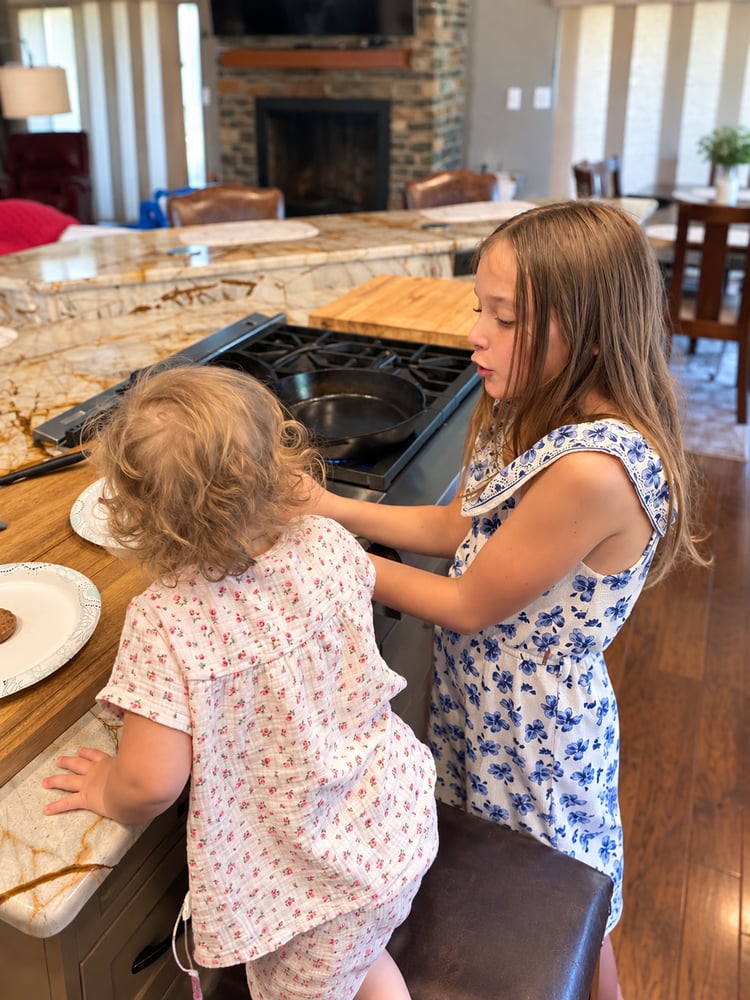
Here’s what makes this different from another chore chart.
1. Responsibilities unlock privileges.
In our house, privileges come after responsibilities.
For example, video games may be available to a child normally, but when their chore window begins, that privilege is unavailable.
They know exactly what needs to happen to get it back:
- finish the assigned chores,
- do them to the standard they’ve already been taught,
- and have the work checked.
If the chores are finished early, great.
The privilege is available again.
If they choose not to do the work, the privilege stays unavailable.
There is no new punishment for Mom to invent.
There is no guessing whether she’s being “too hard.”
There is no moving target.
The system was decided before anyone was frustrated.
And your family does not have to use video games.
You can choose a privilege that actually matters to your child and works for your home.
2. Chores happen inside clear time windows.
Some kids will turn a 20-minute chore into a three-hour lifestyle if given the opportunity. 😂
The system gives them plenty of time to finish without allowing the task to float around all day.
A chore that takes 30 minutes might have a window from 1:00 to 3:00.
At 1:00, the privilege becomes unavailable.
As soon as the work is finished and checked, the privilege comes back.
That gives your child room to manage their own time without Mom standing nearby saying:
“Are you going to start?”
“You have chores.”
“Seriously, go do it.”
“I’ve already asked you twice.”
3. Your child is taught exactly what “done” means.
This is where the SOP comes in.
SOP stands for Standard Operating Procedure.
When we give one of our kids a new responsibility, we do not say “clean the bathroom” and expect them to magically know what that means.
We teach it.
First, the parent does the chore and writes down each step.
Then the child watches and helps.
They learn where the supplies are, what gets cleaned, what gets put away, and what the finished job should look like.
After that, they have a simple one-page SOP they can follow on their own.
So instead of:
“I cleaned it!”
“No, you didn’t.”
“Yes, I did!”
“The mirror still has toothpaste on it.”
“You never said I had to clean the mirror!”
...everyone already knows what counts as finished.
And eventually, Mom doesn’t have to be the only person checking everything either.
If you have older children, you can begin teaching them leadership by pairing them with younger siblings.
An older child can answer questions, help a younger sibling follow an SOP, and eventually check the work.
That means Mom is not being interrupted seven times while she’s trying to teach math, make lunch, answer an email, or read a book to the toddler.
And your older child gets practice helping someone else succeed instead of only managing their own responsibility.
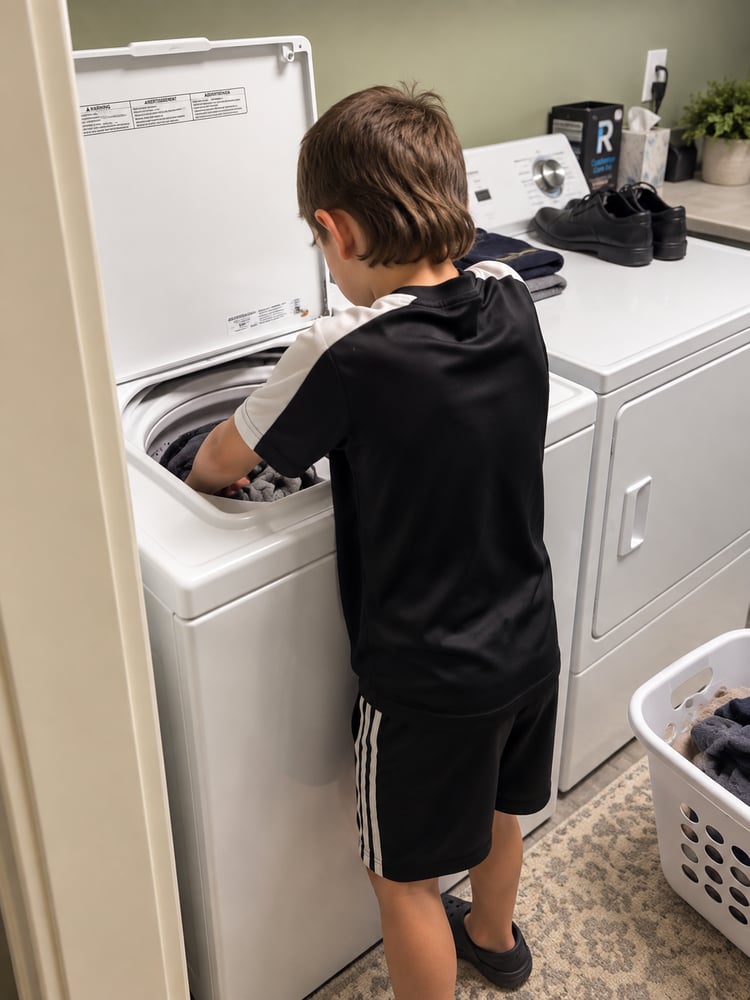
This is what I actually want when I talk about chores.
Not perfectly clean floors.
Not kids who never complain.
Not children who magically notice every single thing that needs done.
I want kids who know how to take responsibility for what belongs to them.
I want to be able to say:
“This needs taken care of.”
And increasingly, they know how to take it from there.
They know how to:
- see the job,
- get started,
- follow the steps,
- finish it well,
- and help someone else when their part is done.
Because one day they will not live in my house.
And I do not want to send adults into the world who still need someone else to notice, assign, explain, remind, and follow up on everything for them.
I want to raise contributors.

And yes, this helps Mom too.
Because raising capable kids should eventually mean you are carrying less, not supervising more.
When the system is working, you can:
sit down and read to your toddler without yelling upstairs for someone to make their bed,
move from breakfast into homeschool without stopping five times to remind people about chores,
know that your child understands exactly what belongs to them,
and stop mentally carrying every undone task in the house.
Your house will still be lived in.
Your kids will still fight sometimes.
Someone will occasionally forget.
Nobody is becoming a tiny domestic robot.
But you are no longer the only person holding the entire household together.
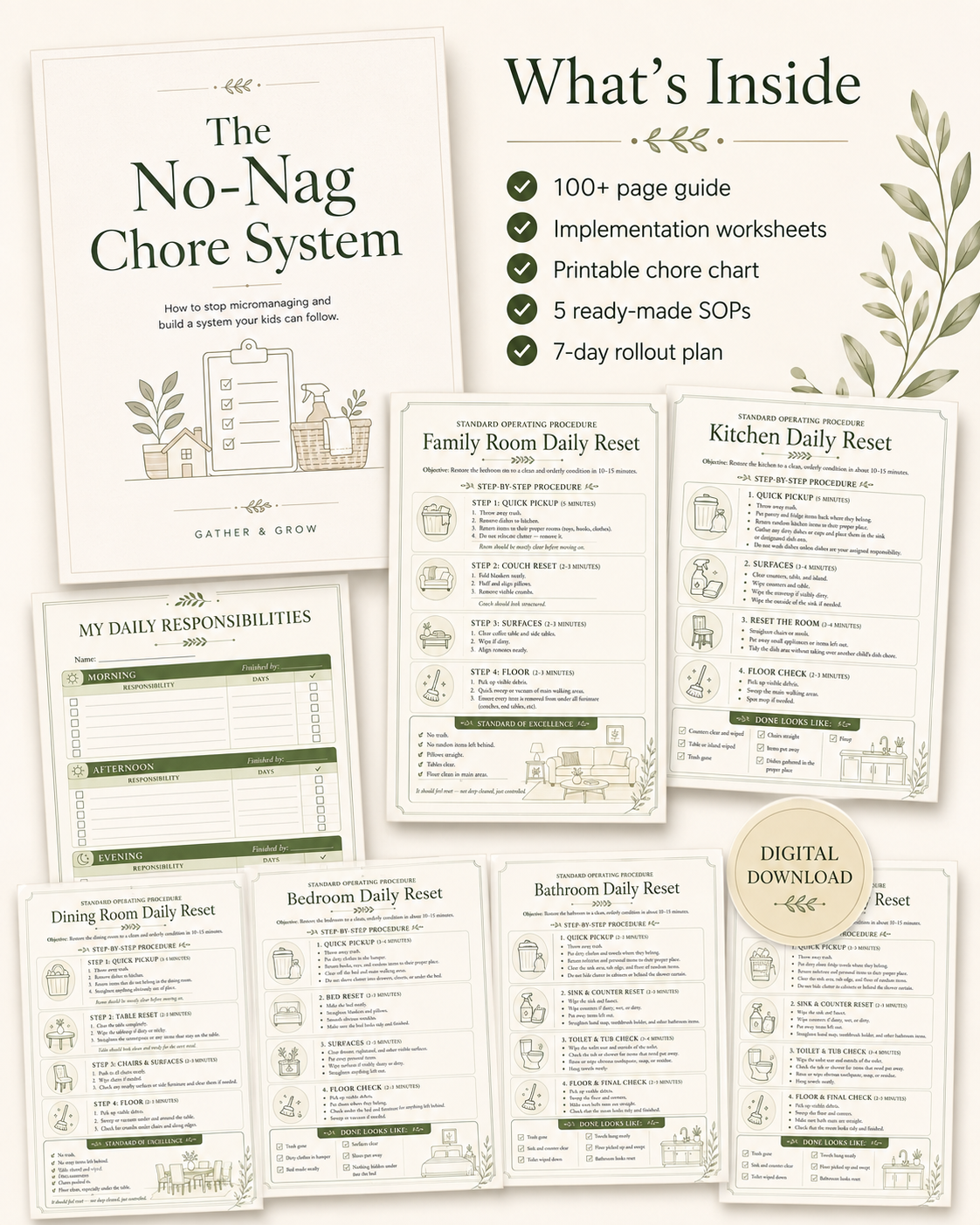
Inside The No-Nag Chore System, you’ll get:
How to Use the Guide
So you understand the system before you start changing anything.
Why Every Chore Chart Has Failed
A look at why traditional charts still leave Mom carrying the mental load.
Build a System Your Kids Can Actually Follow
How to create responsibilities that are clear, realistic, and age-appropriate.
Stop Nagging and Let the System Work
How to connect responsibilities, privileges, time windows, and follow-through without constantly reminding.
Raising Capable Kids in a Real-Life Home
Because this is about more than cleaning. It is about responsibility, ownership, contribution, and life skills.
Build Your No-Nag Chore System
Step-by-step help creating the actual system for your family.
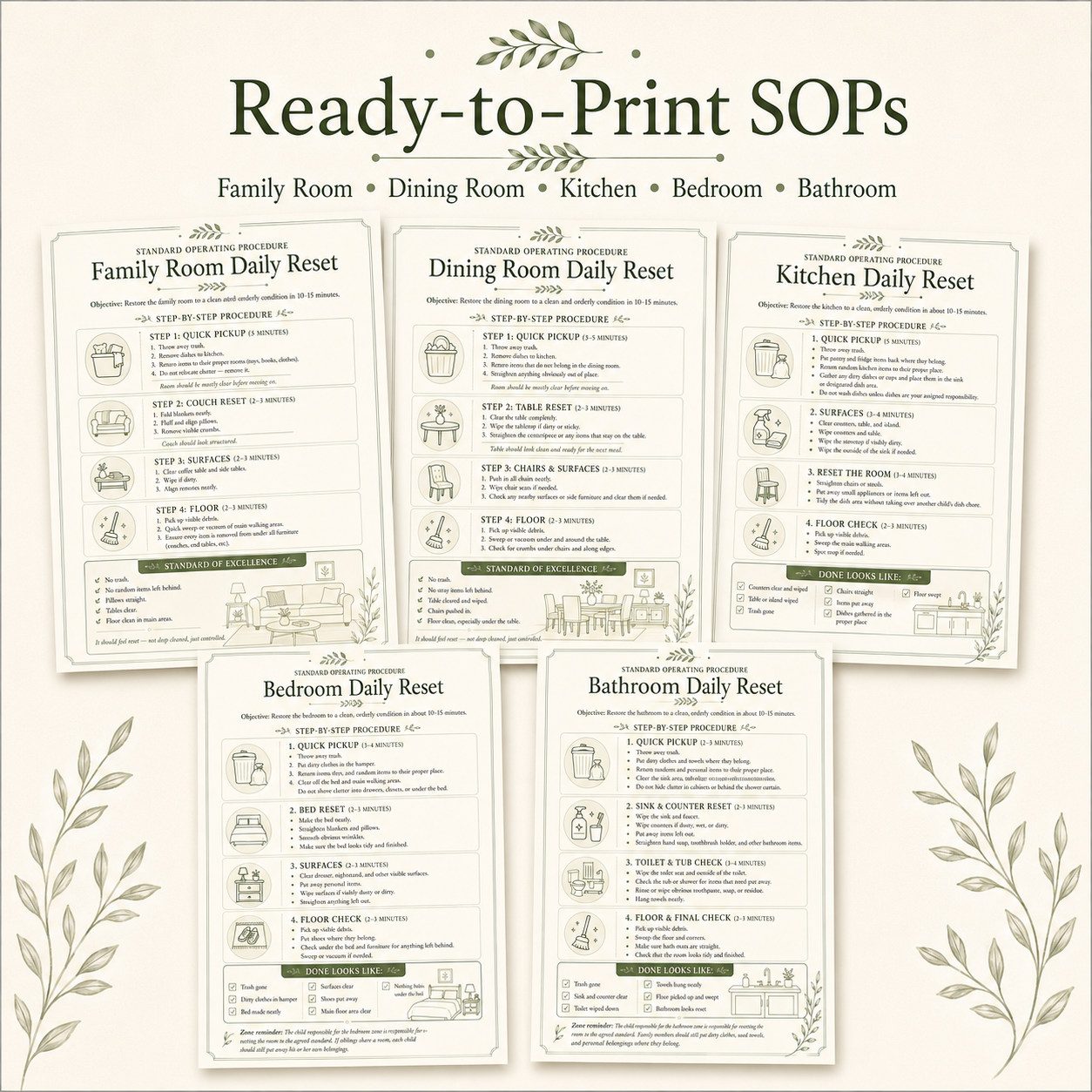
Ready-Made SOPs
Printable step-by-step procedures for common spaces including:
kitchen
bathroom
family room
bedroom
Use them as written or customize them for your house.
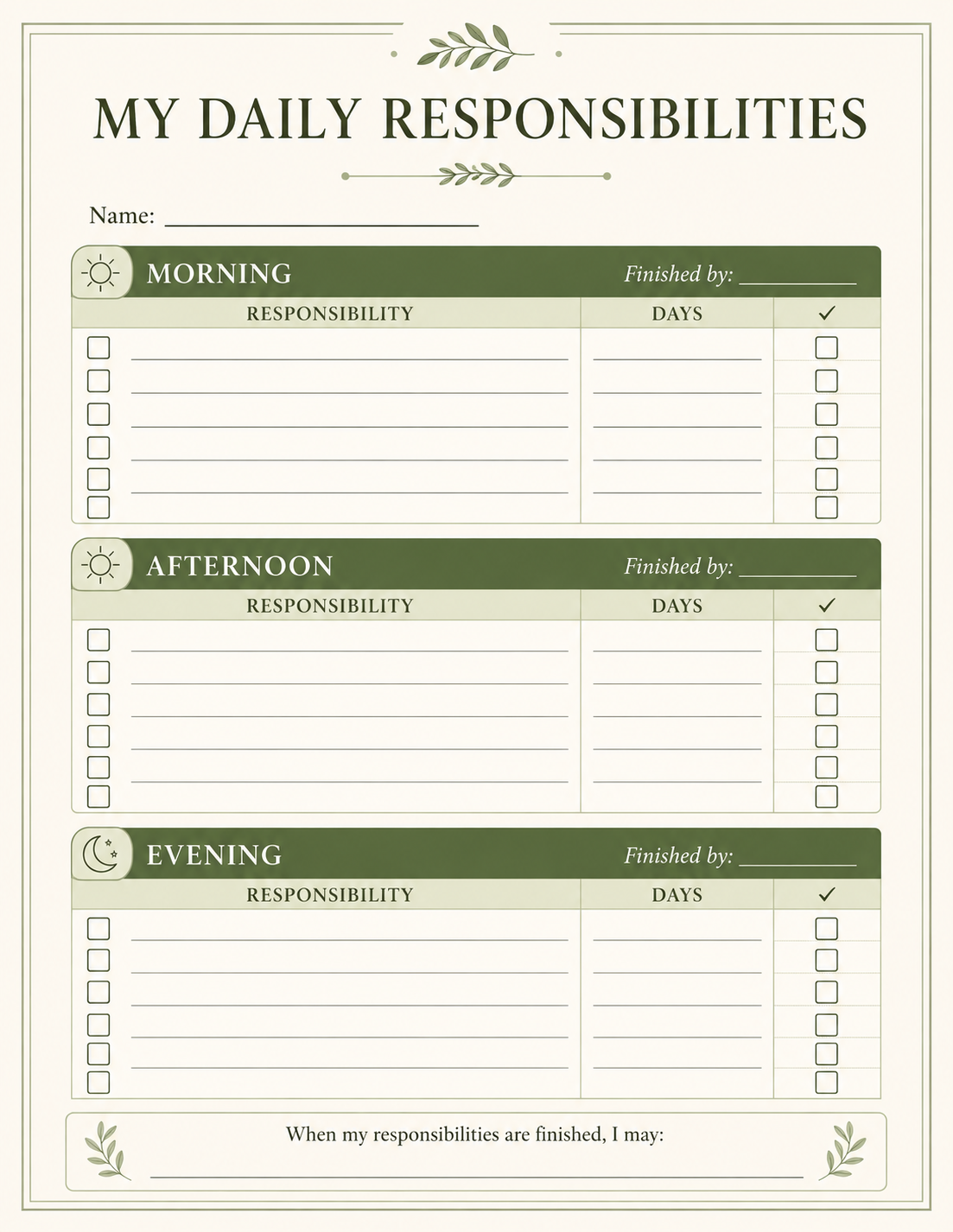
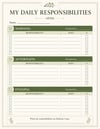
Printable Chore Charts
For families who want each child’s responsibilities displayed on the fridge, inside a binder, or somewhere easy to reference.
FAQ Section
Answers to common questions about getting started, resistance, younger children, expectations, and making the system fit your family.
7-Day Rollout Plan
You do not have to reorganize your entire household in one exhausting weekend.
The rollout walks you through implementing the system gradually so your family can learn it without Mom taking on another giant project.

What this system is NOT
This is not a promise that your children will suddenly love chores.
They probably won’t. 😂
It is not a guarantee that no one will ever need a reminder again.
You are raising children, not programming appliances.
And it is not about controlling every minute of their day or demanding perfection.
The goal is to create expectations clear enough that your children can take increasing responsibility for their part of family life.
“But my kids are young.”
Younger children will need more teaching, practice, and help.
That is expected.
The goal is not to hand a 5-year-old a list and say, “Good luck.”
The goal is to give them responsibilities they are capable of learning, show them how to do the job well, and gradually transfer more ownership as they grow.
The system grows with them.
“My child has ADHD, autism, or another developmental or learning difference.”
Every child is different, and you know your child better than I do.
This system is not medical, therapeutic, or individualized developmental advice.
What it does provide is structure:
clear expectations,
visual steps,
predictable routines,
and consequences that are decided ahead of time.
Some families may find that helpful, while others may need to adapt the timing, chore load, instructions, or privilege structure to fit their child’s needs and abilities.
The goal is not to force every child into the exact same mold.
It is to make responsibility clearer and more manageable for the child in front of you.
“My kids wouldn’t follow this.”
Your kids may not be thrilled the first time their privilege stays unavailable because their responsibilities are unfinished.
That does not mean the system failed.
They are learning that the expectation exists whether Mom repeats herself five times or not.
And importantly, you are not expecting them to figure the entire thing out alone.
You teach the chores first.
You show them what “done” looks like.
You give them enough time to succeed.
Then the system becomes consistent.
“But you’re still telling your kids what to do.”
Yes.
Children have to be taught before they can take ownership.
I am not trying to raise children who mysteriously know every household need without ever being shown.
I am teaching them how to handle responsibility well enough that I do not have to manage them through every individual step forever.
There is a big difference between:
“Clean the kitchen. Now wipe the table. Now put that away. You forgot the dishes. Go back. No, you’re not finished.”
and:
“The kitchen needs taken care of.”
...and having children who already know what that means and how to work together to get it done.
That kind of independence is taught over time.
“Why is this $27?”
Because this is not a printable chore chart.
You are getting the full system we use to teach:
- what needs done,
- when it happens,
- how a child knows what “done” means,
- how privileges connect to responsibility,
- how consequences stay predictable,
- how to train a new chore,
- how to reduce checking and reminding,
- and how to roll the whole thing out without changing your entire house overnight.
You also receive ready-made SOPs and printable tools so you are not starting from a blank page.
If all you need is a cute chart for the refrigerator, you can absolutely find one for less.
This is for the mom who is tired of being the person who has to make the chart work.
You do not need a perfect house.
You need a household where responsibility does not belong to Mom alone.
If you are tired of remembering everybody’s chores...
tired of reminding...
tired of deciding what happens when someone ignores you...
and tired of realizing it would have been faster to do the whole thing yourself...
The No-Nag Chore System will show you how we changed that in our home.
Not overnight.
Not perfectly.
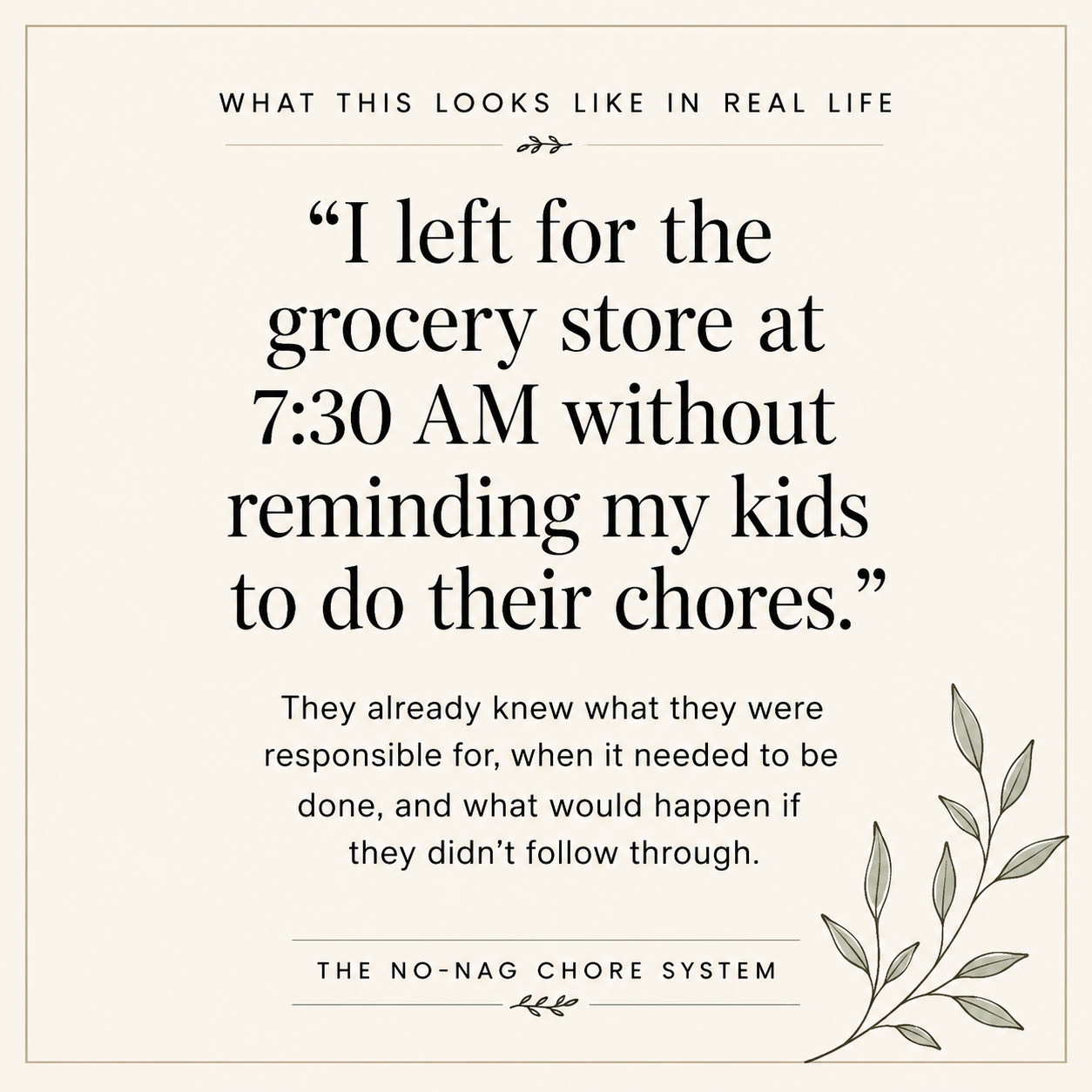
But enough that I can now tell my kids something needs taken care of and watch them increasingly know what to do next.
And that matters to me a whole lot more than perfectly clean floors.
The No-Nag Chore System
Instant PDF Download
$27
You’ll receive the guide immediately after purchase so you can begin setting up your family’s system today.
One week from now could look different.
Not because your children suddenly became obsessed with cleaning.
Because everyone knows what belongs to them.
Because “done” has a definition.
Because privileges and responsibilities are already connected.
Because consequences are not being invented in the middle of an argument.
And because Mom no longer has to personally hold every piece of the system together.
[GET THE NO-NAG CHORE SYSTEM FOR $27]