




Lou Gehrig: The Luckiest Man | Historical Speech Study | Grades 9–12
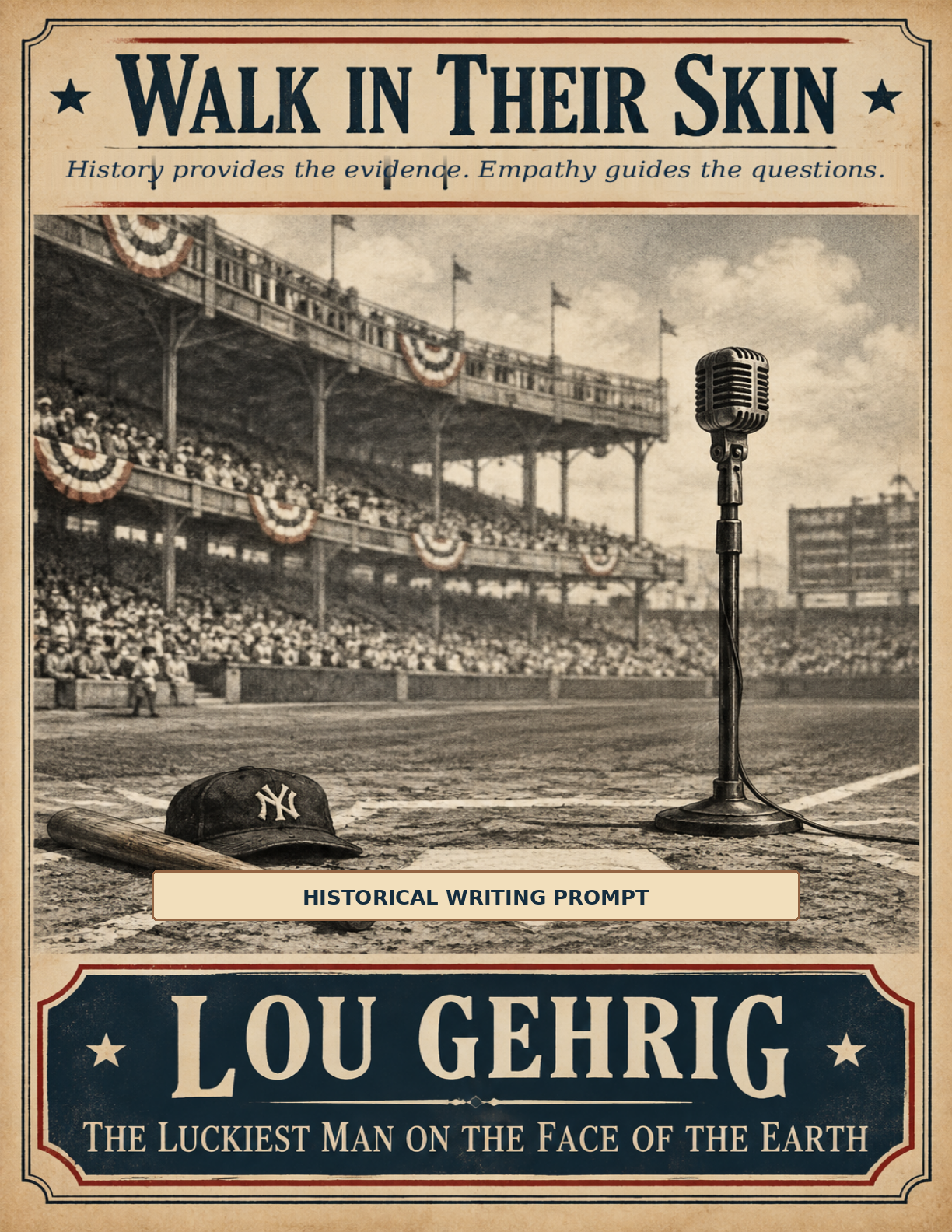
Lou Gehrig: The Luckiest Man on the Face of the Earth
Walk in Their Skin — Historical Speech Study
History provides the evidence. Empathy guides the questions.
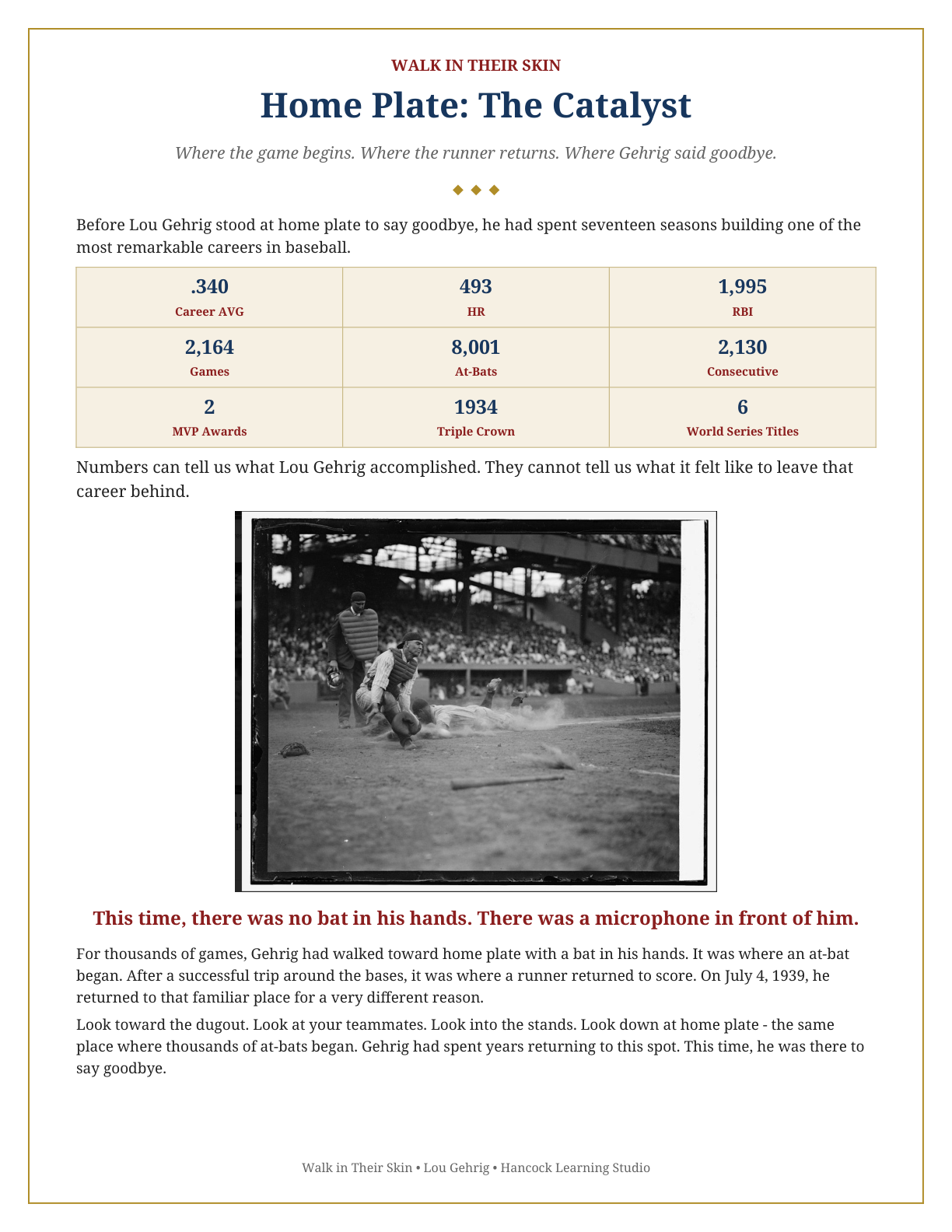
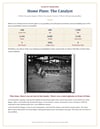
On July 4, 1939, Lou Gehrig stood at home plate in Yankee Stadium before thousands of baseball fans.
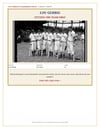
For years, he had been known as the Iron Horse, playing 2,130 consecutive games for the New York Yankees. But only weeks before his farewell ceremony, Gehrig had been diagnosed with amyotrophic lateral sclerosis (ALS), a progressive neurological disease that would end his baseball career and ultimately take his life.
Standing before his teammates, family, and fans, he delivered a speech remembered not for bitterness or anger, but for gratitude.
He called himself the luckiest man on the face of the earth.
What can we learn when we look beyond the famous words and consider the person who spoke them?
More Than a Baseball Story
This historical speech study invites students to explore Lou Gehrig as more than a legendary athlete.
Students investigate the man behind the records: his dedication to baseball, his relationships, his changing health, and the personal circumstances surrounding his farewell.
Through historical research, speech analysis, reflection, and creative writing, students examine how understanding a person's experiences can change the way we interpret their words.
Rather than assuming we know what Gehrig privately thought or felt, students learn to distinguish documented historical evidence from thoughtful interpretation.
What's Included
This 29-page printable PDF includes:
An introduction exploring the power of words and the importance of understanding the person behind them
Historical background on Lou Gehrig's life and baseball career
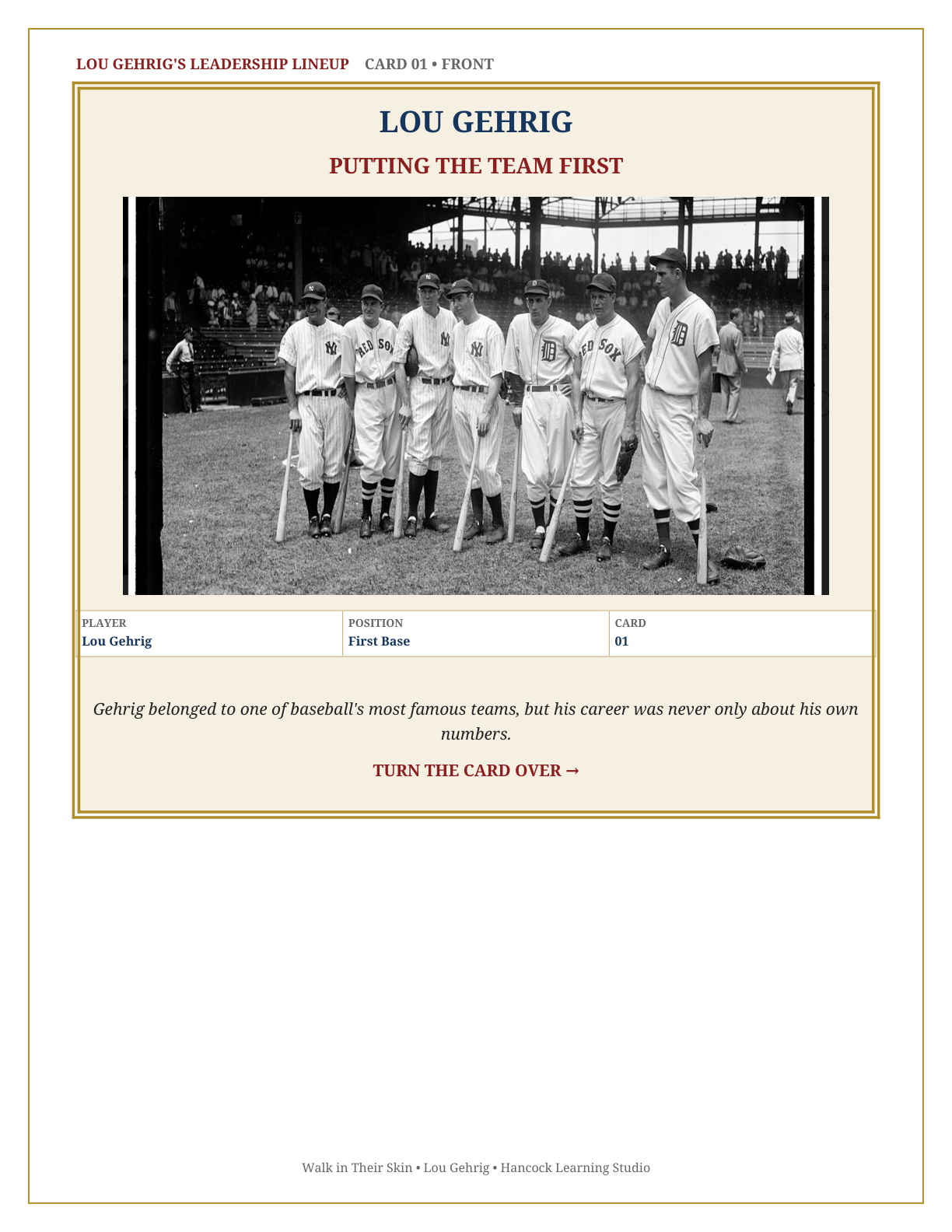
Exploration of his remarkable consecutive-games record and the nickname Iron Horse
Background on his ALS diagnosis and the circumstances leading to his retirement
Examination of the people and relationships that shaped his life
Historical context for the July 4, 1939 farewell ceremony at Yankee Stadium
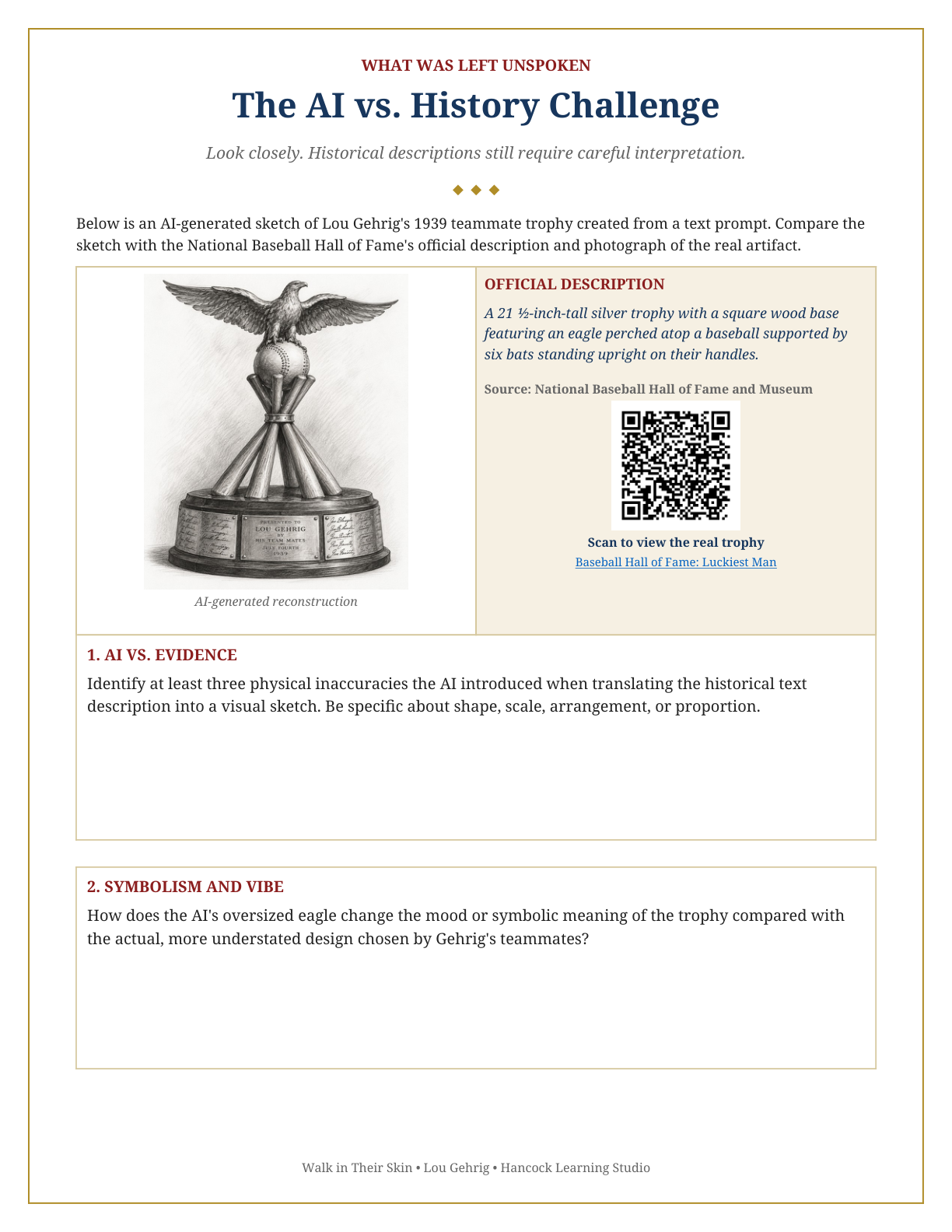
Speech-listening and analysis activities using historical recordings and source materials
Vocabulary, reflection, and critical-thinking questions
Opportunities to examine gratitude, courage, determination, vulnerability, and empathy
Research and historical interpretation activities
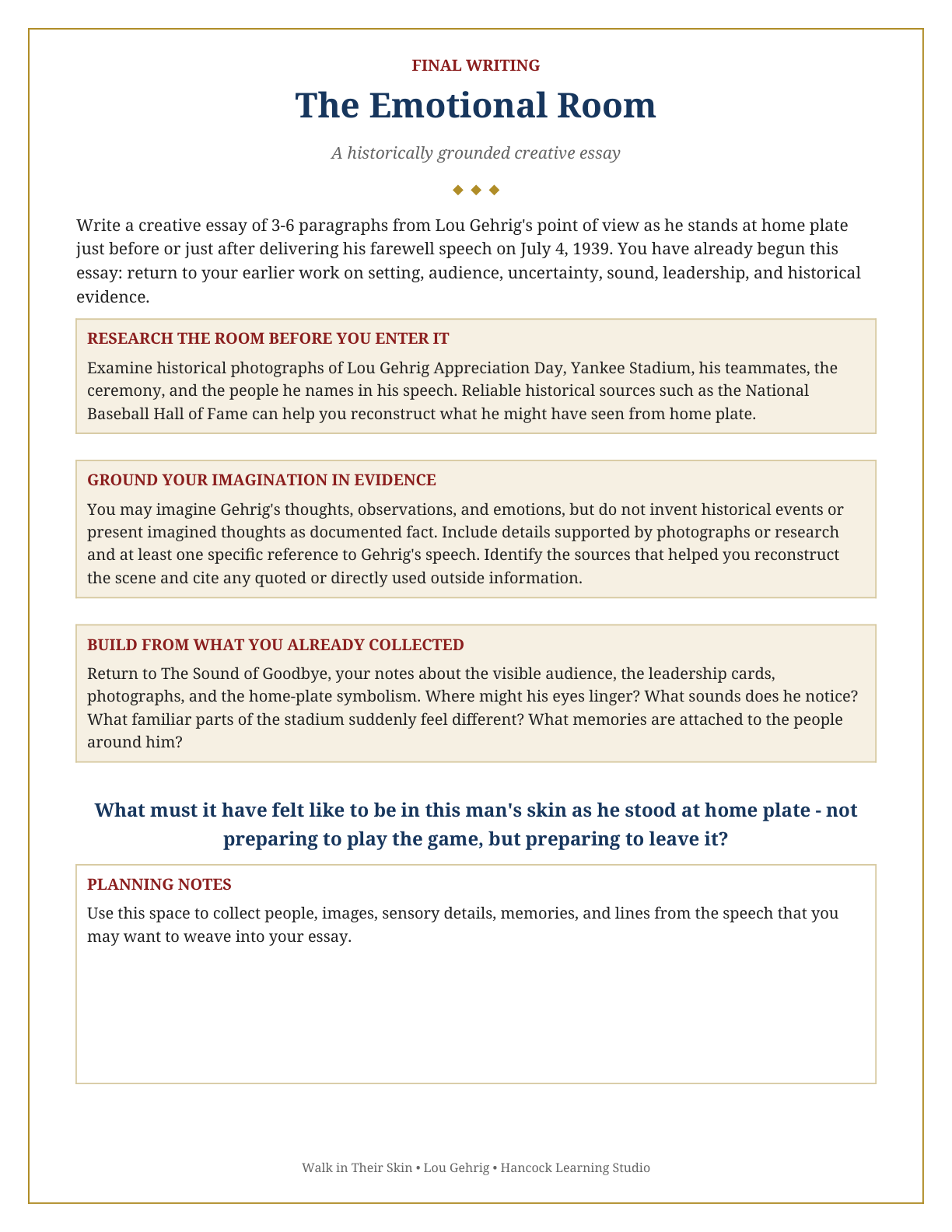
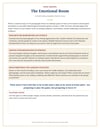
The Emotional Room — a culminating historically grounded creative essay assignment
A 16-point essay grading rubric
The Final Writing Assignment: The Emotional Room
Students bring their research and reflections together in a historically grounded creative essay.
Using evidence from Gehrig's life and farewell, students explore the significance of the moment from his perspective.
The assignment challenges students to consider what the historical record reveals while recognizing that a person's private thoughts and emotions cannot always be known.
History provides the evidence. Empathy guides the questions.
Skills Developed
Historical research and source evaluation
Speech analysis and listening comprehension
Critical thinking and interpretation
Evidence-based writing
Understanding historical perspective
Empathy and character reflection
Distinguishing documented facts from imaginative interpretation
Recommended For
High school students in grades 9–12
Homeschool families
English Language Arts
American History and sports history
Speech and rhetorical analysis
Biography and character studies
Supplemental literature and writing instruction
Product Details
Format: Digital PDF download
Length: 29 pages
Suggested Grade Levels: 9–12
Price: $3.99
This is the complete Lou Gehrig historical speech study, not the shorter standalone writing prompt.
Part of Hancock Learning Studio's Walk in Their Skin collection, which explores historical speeches through the lives and circumstances of the individuals who delivered them.
History provides the evidence. Empathy guides the questions.
Digital download only. No physical product will be shipped.