



Grade 2 | Unit 8 | Habitats
Get your Sundays back. Your next month of second grade science is planned.
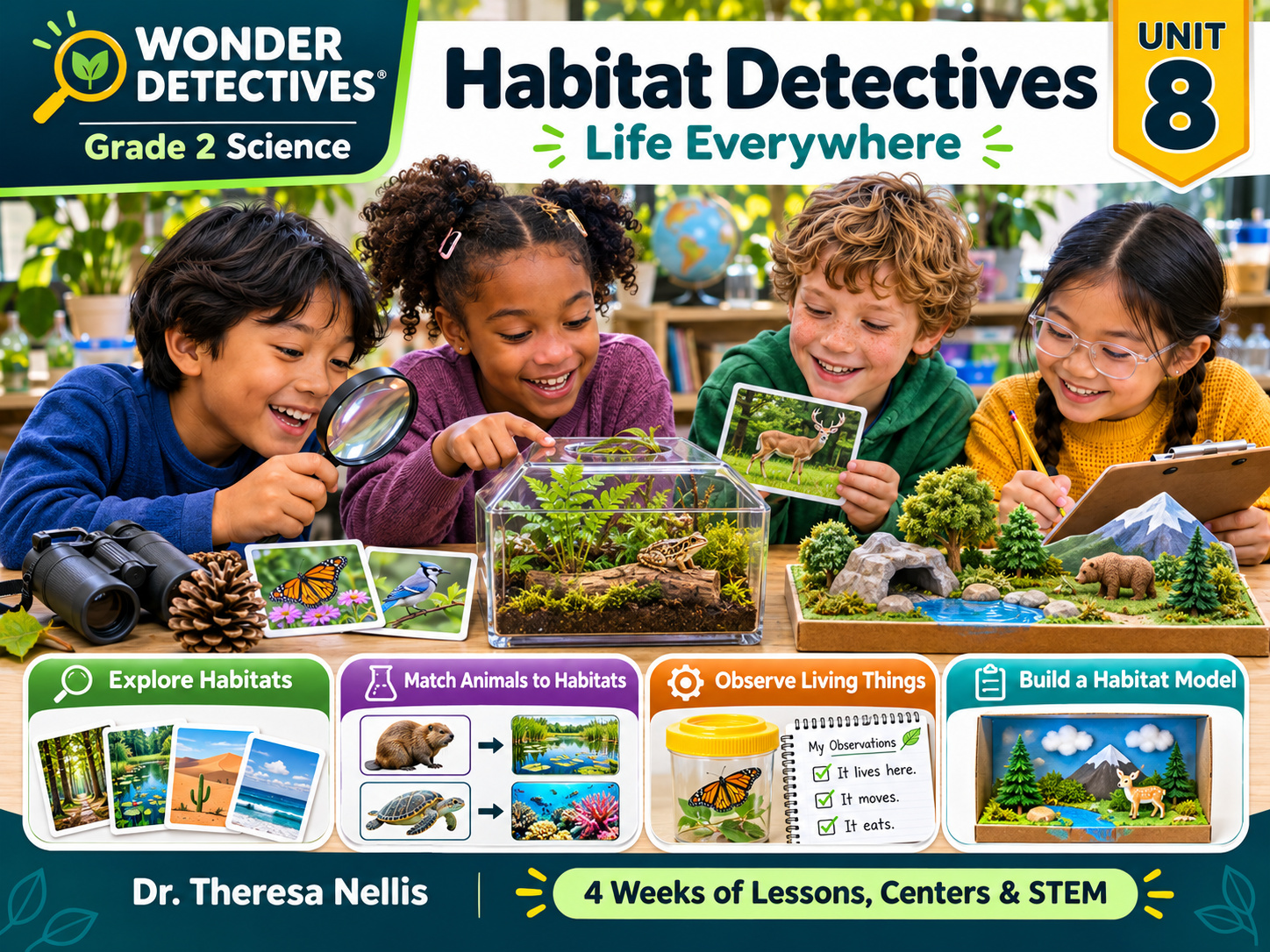
A pond edge, a dry scrub habitat, a woodland patch, and a school garden all hold clues. Habitat Detectives: Life Everywhere helps students look closely, notice different kinds of plants and animals, and explain comparisons with evidence they can actually point to.
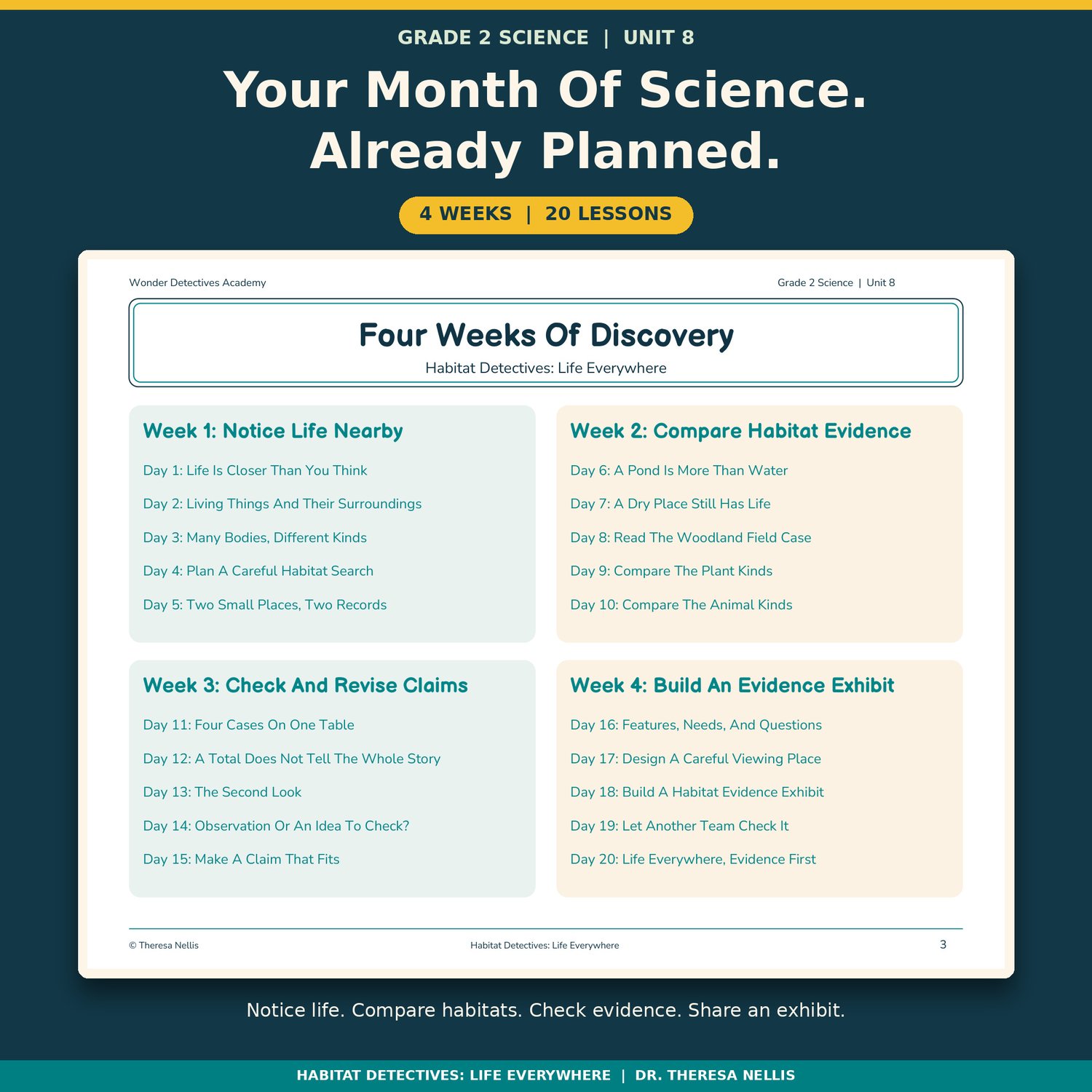
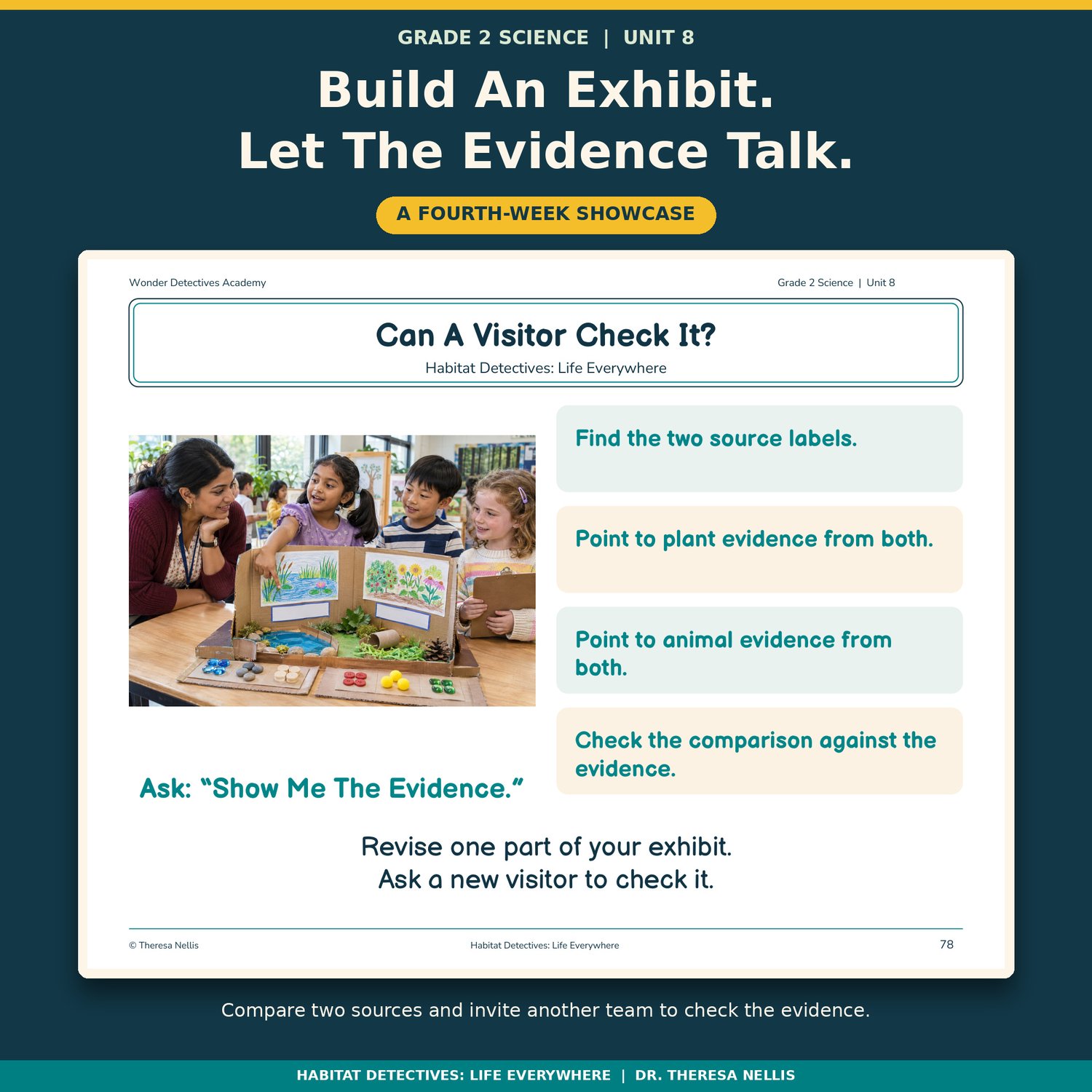
This four-week unit includes 20 daily lessons designed for approximately 40 minutes each. Students move from observing life nearby to comparing habitats, checking claims, and creating an evidence exhibit that another team can investigate.
WHAT'S INCLUDED
- An 87-page complete teaching guide with the full four-week sequence.
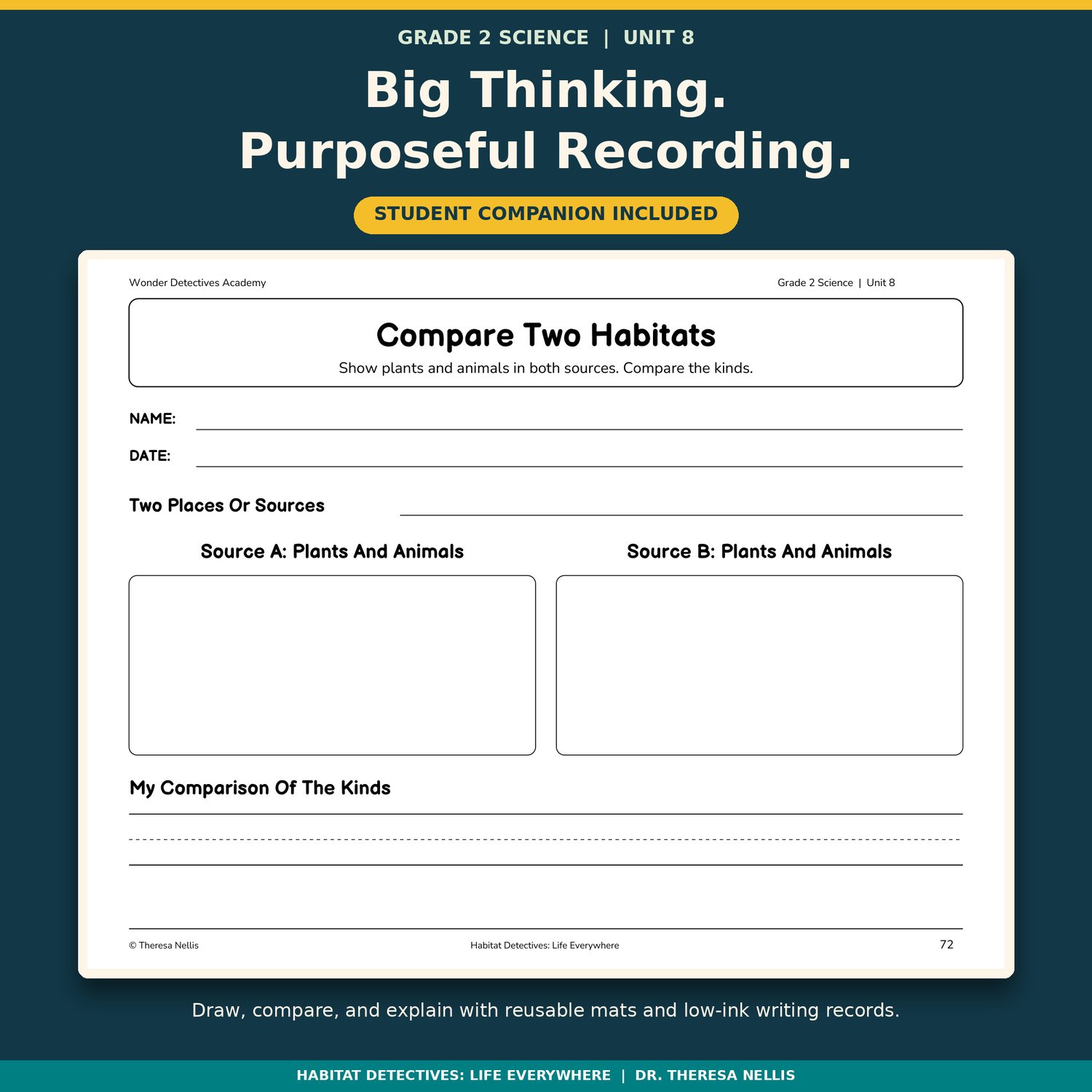
- A separate 28-page Student Companion that gathers reusable resources and recording pages from the complete guide for convenient classroom use.
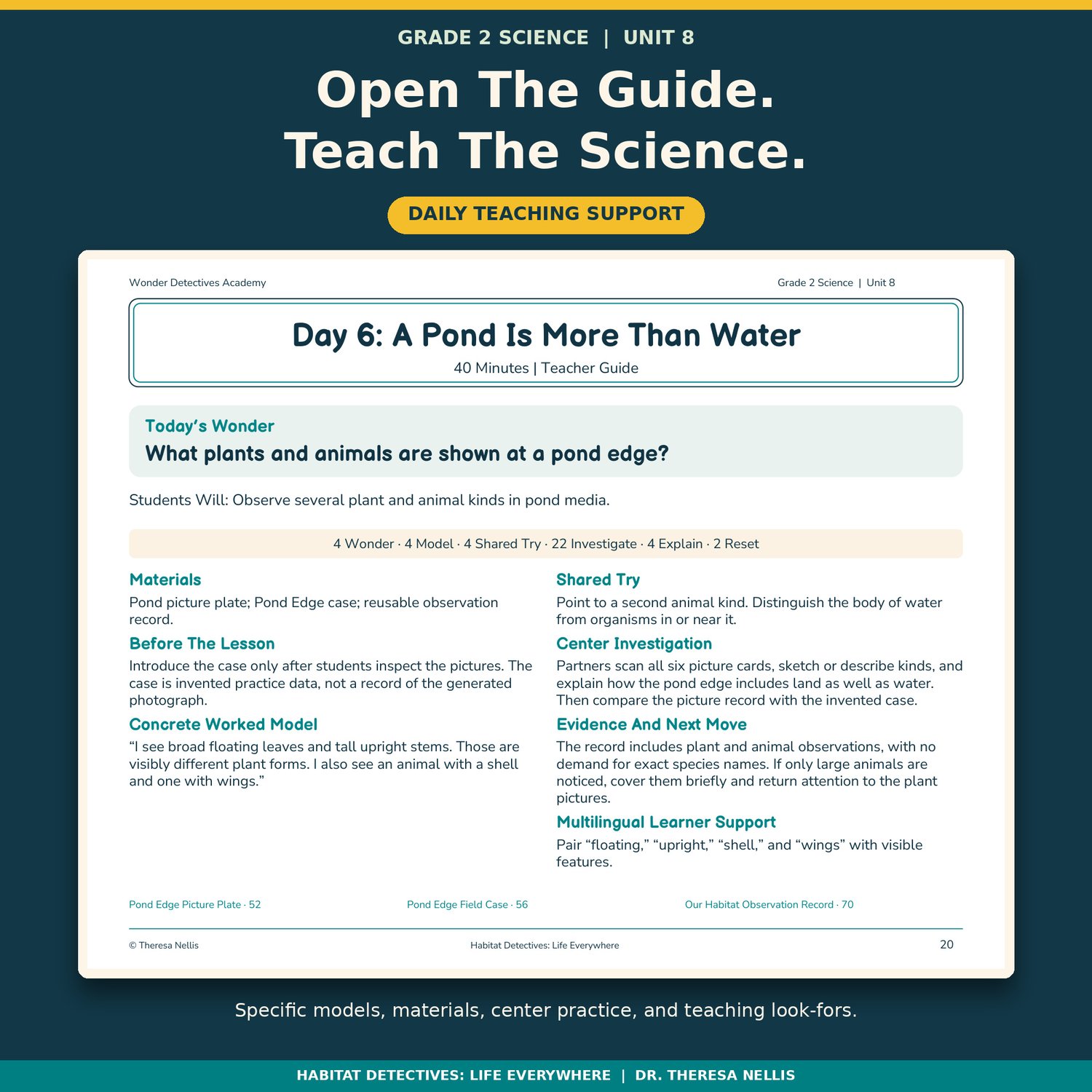
- Daily teacher guides with materials, specific worked models, shared practice, center investigations, multilingual learner support, and teaching look-fors.
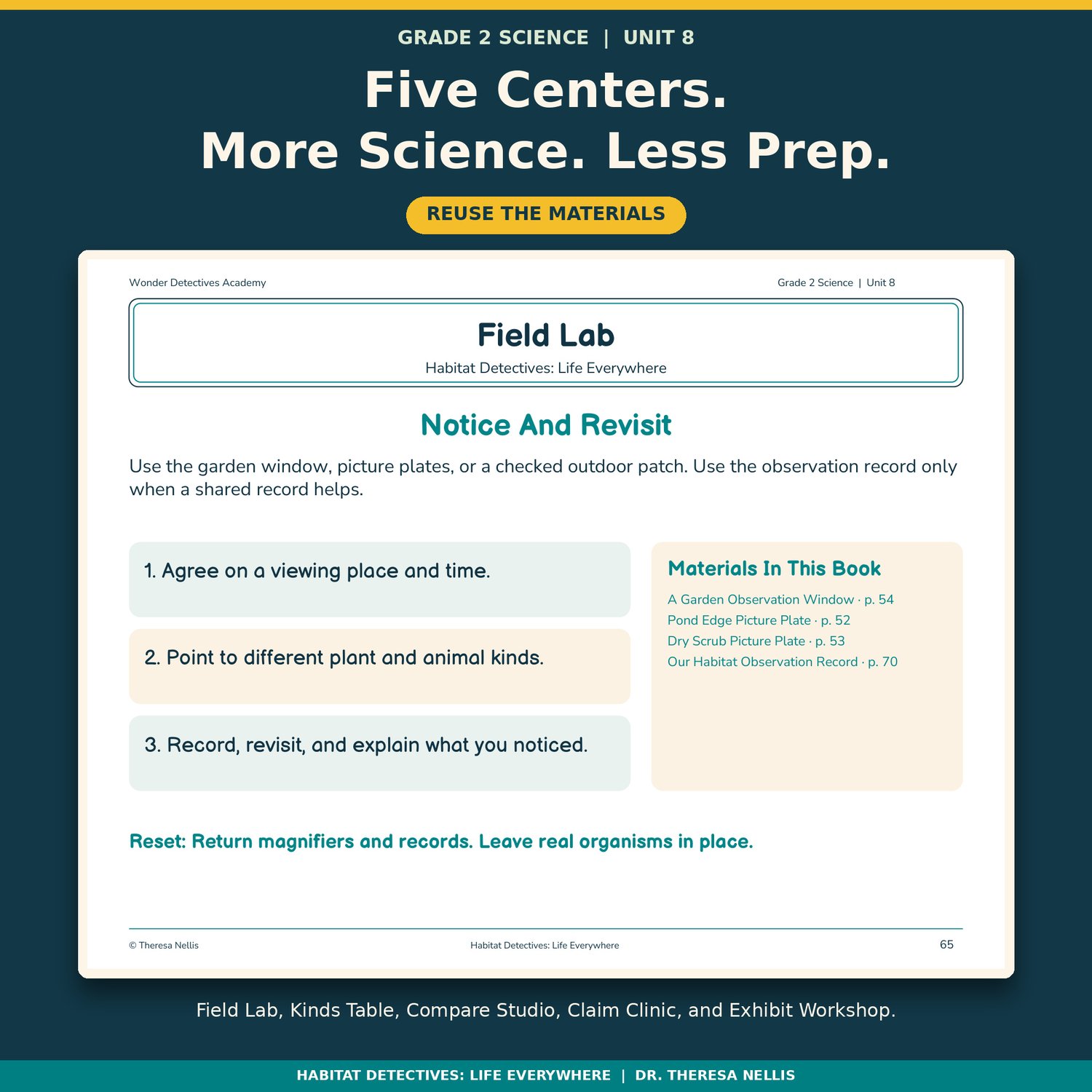
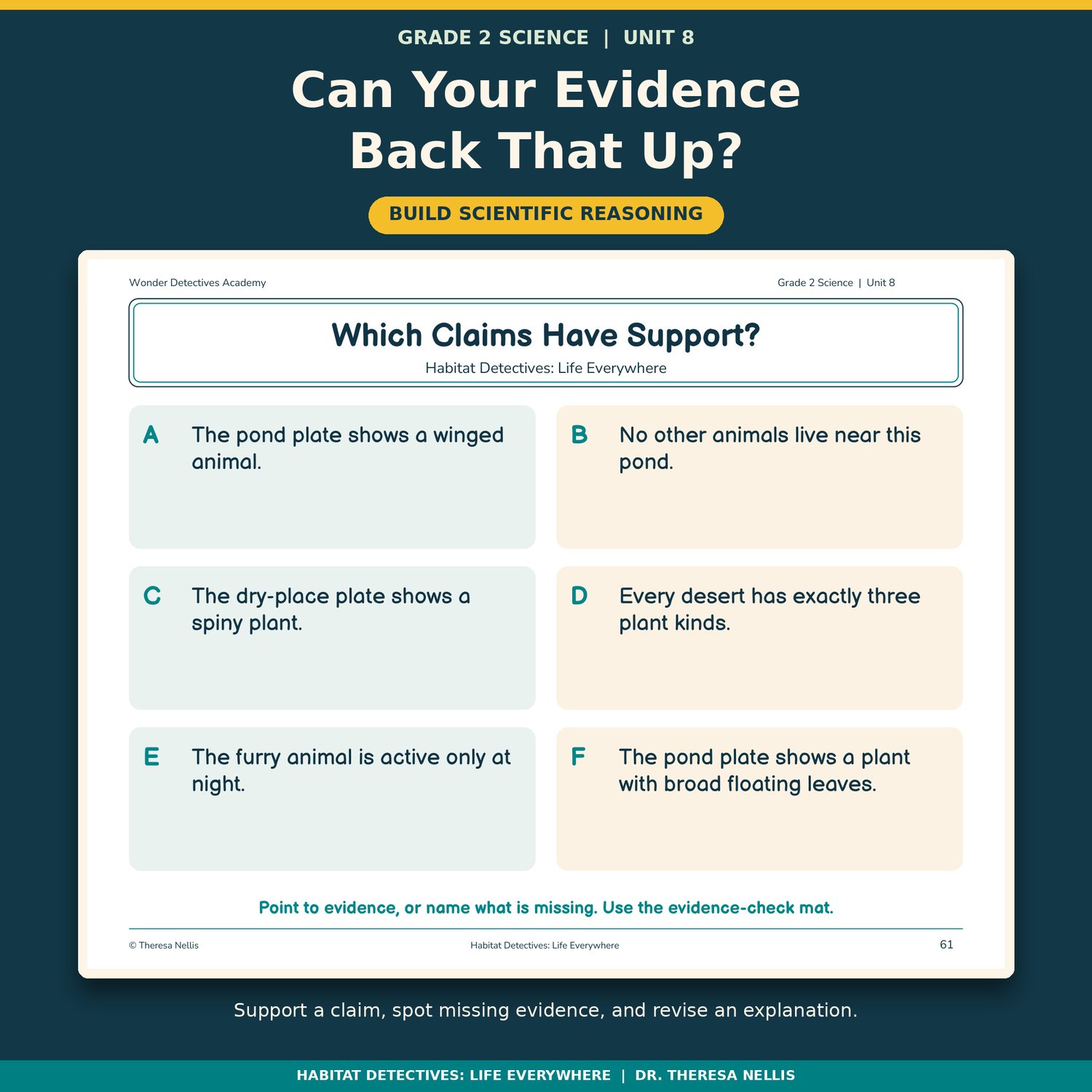
- Five reusable centers: Field Lab, Kinds Table, Compare Studio, Claim Clinic, and Exhibit Workshop.
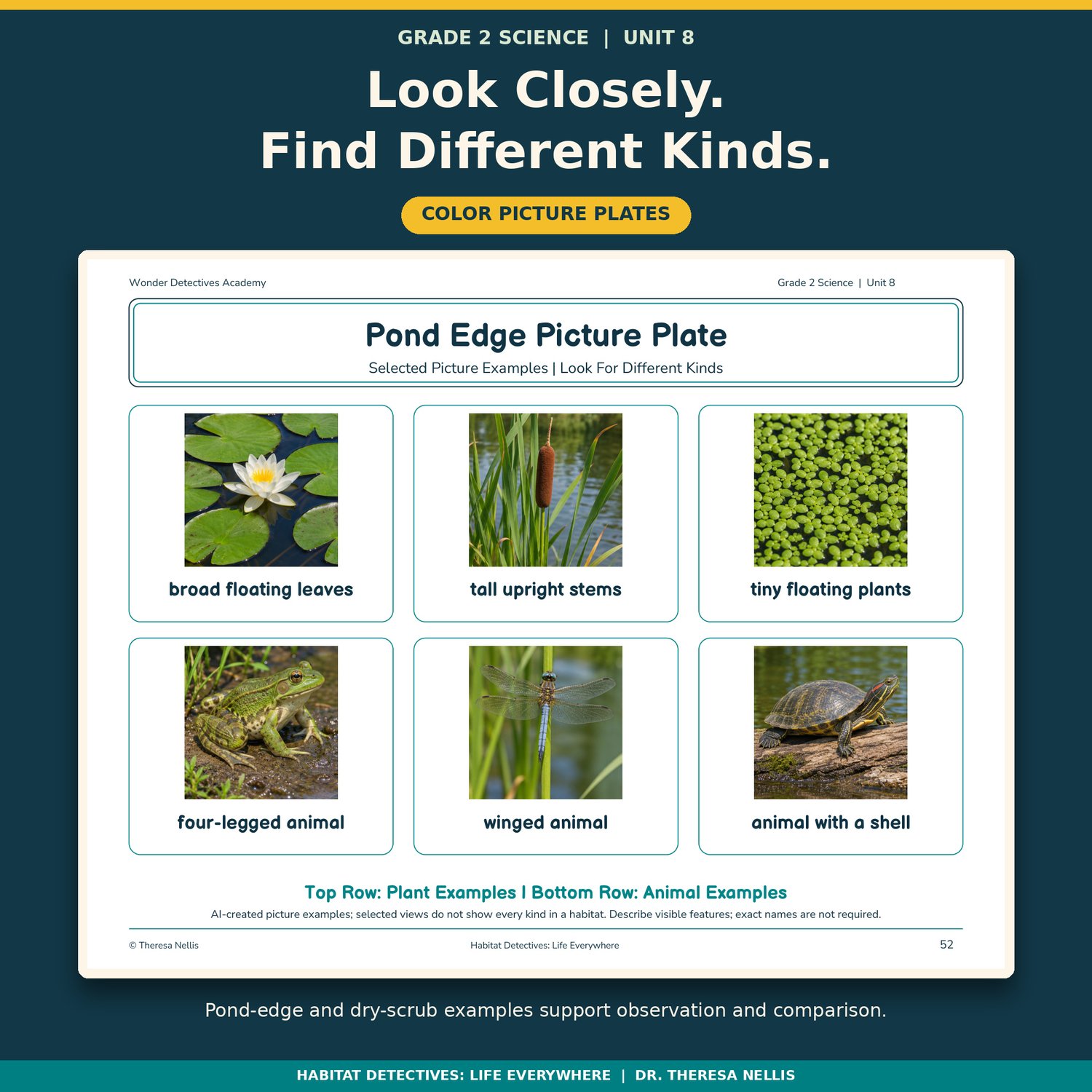
- Color habitat picture plates, a garden observation window, and four clearly labeled teacher-created field cases.
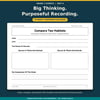
- Comparison mats, claim-checking activities, observation records, and exhibit-planning resources.
- Four Fox and Owl science stories that connect to each week's investigations.
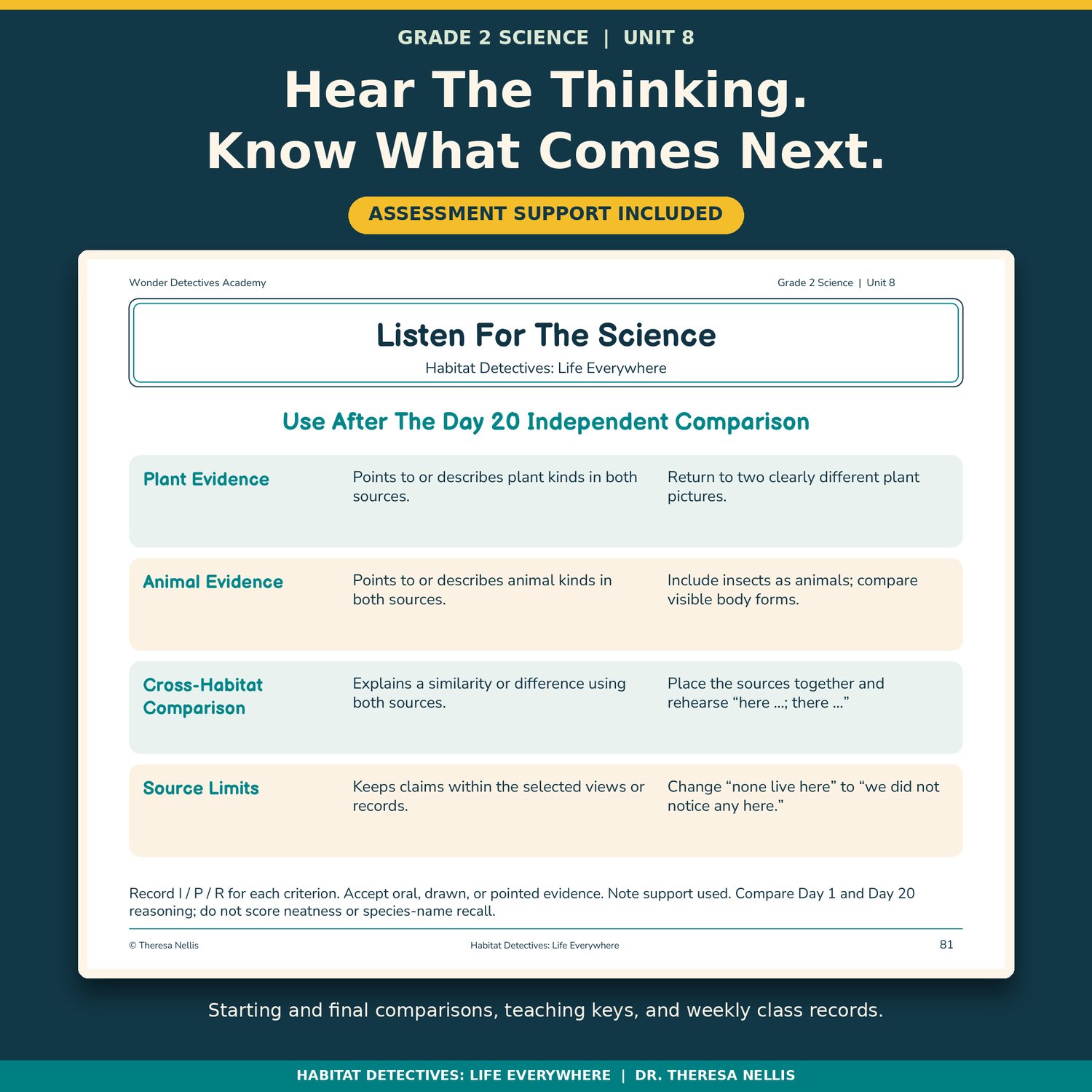
- Teaching keys, starting and final comparison tasks, and weekly class observation records.
THE FOUR-WEEK PROGRESSION
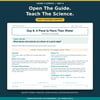
Week 1: Notice Life Nearby — Observe carefully, distinguish individuals from kinds, and plan a respectful search.
Week 2: Compare Habitat Evidence — Examine pond, dry scrub, woodland, and garden sources; compare plant and animal kinds.
Week 3: Check And Revise Claims — Revisit observations, separate evidence from assumptions, and make comparisons that fit the records.
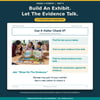
Week 4: Build An Evidence Exhibit — Organize two sources, display a comparison, invite questions, and revise.
MADE FOR REAL CLASSROOMS
Use safe outdoor observation areas or the supplied indoor picture resources. Project color materials, reuse mats with counters or sleeves, and print individual records when they serve a purpose. Students can demonstrate understanding through drawing, pointing, and oral explanation as well as writing.
The core focus is observing and comparing the variety of plant and animal life across habitats. Exact species-name recall is not required. The viewing-route design is an extension; plant-growth experiments, pollination, and seed dispersal belong to other units.
Format: PDF teaching guide and PDF Student Companion. The companion reorganizes resources already included in the complete guide; its pages are not additional unique content. Classroom images and picture examples are AI-created illustrations. Field-case records are teacher-created practice data.
Less time assembling tomorrow's science. More time helping children notice the world.