
The Social Courage Toolkit: A CBT & ACT Resource Pack for Children & Teens (Ages 8–16)
On Sale
£3.25
£3.25
The Social Courage Toolkit: A CBT & ACT Resource Pack for Children & Teens (Ages 8–16)
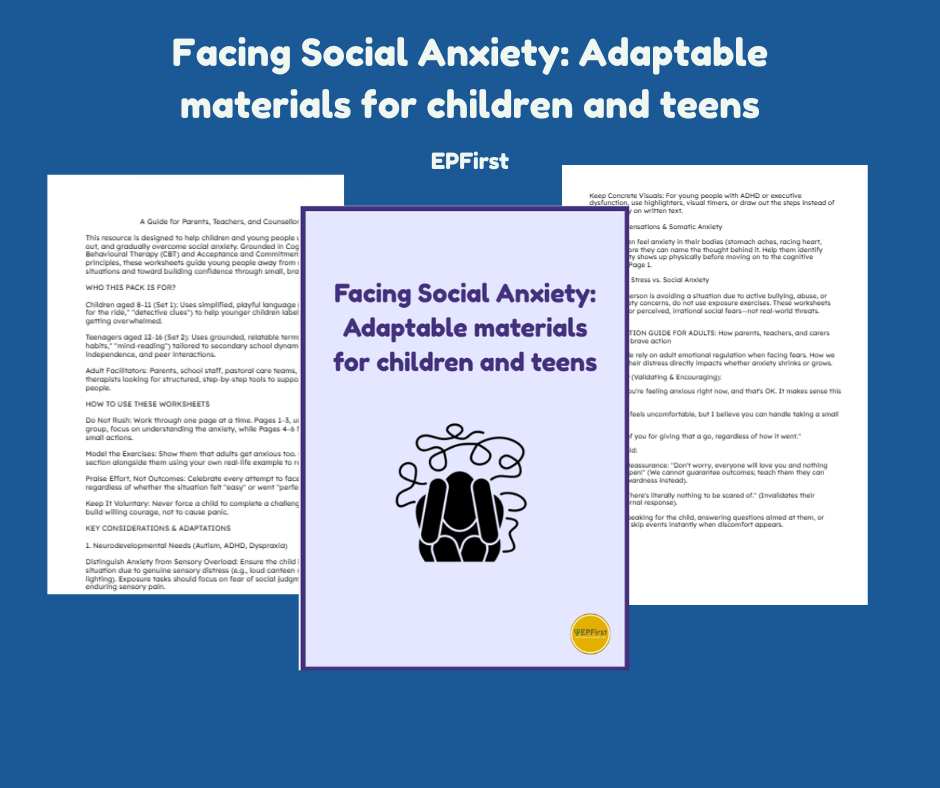
Help children and young people break free from overthinking, avoidant safety habits, and social fear. The Social Courage Toolkit is a complete, printable workbook designed to help young people build genuine social confidence through evidence-based Cognitive Behavioural Therapy (CBT) and Acceptance and Commitment Therapy (ACT) techniques.
Whether you are a therapist, school counsellor, SENCo, teacher, or parent, this pack gives you a structured, gentle, and practical framework to support anxious youth.
What’s Included in the Pack?
- Two Age-Tailored Workbooks:
- Set 1 (Ages 8–11): Child-friendly, visual, and engaging language focusing on "catching worries" and taking small, brave steps.
- Set 2 (Ages 12–16): Grounded, relatable, and teen-focused prompts addressing peer pressure, overthinking, secondary school dynamics, and self-expression.
- Adult Facilitator & Co-Regulation Guide: Clear guidance for parents, carers, and practitioners on how to support young people without accidentally reinforcing avoidance or rescuing them.
- Neurodivergent-Friendly Self-Checks: Specific considerations for Autistic and ADHD youth to separate social judgment fears from genuine sensory overload, masking burnout, or depleted social batteries.
- Bonus Practical Tools:
- Body Clues Map: Helps young people identify somatic anxiety symptoms.
- The Courage Ladder: Step-by-step hierarchy building to break big fears into doable micro-steps.
- Grounding & Calming Toolbox: Quick, evidence-based tools (5-4-3-2-1 reset, box breathing) to sit with discomfort.
- Gamified Social Anxiety Challenge: A 6-page interactive challenge (with points and reward trackers) to turn exposure into a motivating game.
Product Details
- Format: High-resolution digital PDF (Instant Download)
- Language: UK English spelling and grammar
- Page Count: 18+ printable pages
- Best For: Child & Adolescent Therapists, School Support Teams, SENCos, Educational Psychologists, and Parents.