SCORE YOUR FIRST SCENE
The step-by-step path from making music to scoring film — and landing your first credit. No Berklee required.

The step-by-step path from making music to scoring film — and landing your first credit. No Berklee required.
Twenty-three lessons. Six modules. Everything I had to learn the hard way — after a Berklee degree, sixty grand of debt, and years of figuring it out alone — packed into the exact path that works. No fluff. No theory for the sake of theory. Just the stuff that gets you hired.
Here's what you actually get:
🎬 Three fully produced practice scenes — action, drama, suspense/thriller.
Professionally shot. Ready to score. Yours to keep and put on your reel. Most beginners waste months hunting for footage or practicing on YouTube clips they can't legally show anyone. You'll have three real portfolio pieces before you're halfway through the course.
📚 23 video lessons across 6 modules.
From opening a blank session to delivering a finished cue a director actually wants to hire you off of. Everything is taught to picture — because that's how you actually learn to score, not by reading about it.
🧰 The complete composer's toolkit.
Orchestral ranges reference. File delivery and stem naming guide. A pricing ladder for every stage of your career. A composer agreement template you can adapt for your first paid gig. Cold outreach email templates. The plugin and tool list I actually use. All of it, downloadable, yours forever.
🗺️ The map to your first paid credit.
How to find filmmakers. How to reach out without freezing. How to talk to a director once they respond. How to close a deal, sign a contract, and deliver like a pro. This is the half school leaves out.
🎯 The identity shift.
By the end, you don't say "I make music on the side." You say "I score films." And you have the work to back it up.
A director sends you a rough cut on a Tuesday. You drop it into your session, feel the scene, and within an afternoon there's music under it that makes the picture land — the kind of cue that makes the filmmaker fire back a message with three exclamation points and a question about the next project.
You're not guessing anymore. You know how to find the emotional turn in a scene, how to hit it, how to get out of the way when the moment needs silence. You speak the language directors speak, so the conversation feels like a collaboration instead of an audition. When they ask if you can push the second half darker, you know exactly what they mean — and you know exactly what to change.
You have a finished, scored scene in your portfolio — proof you can do this, not a promise that you might. You have a reel that opens doors instead of raising eyebrows. And when a director watches it, they don't wonder if you're ready. They wonder how soon you're free.
The work stops being a lottery. You have a real outreach system, a real pipeline, a real inbox with real conversations in it. The gaps between projects get shorter. The referrals start showing up on their own. One credit becomes two, becomes a rate you can actually name out loud without wincing.
And when someone asks what you do, you don't say "I make music on the side." You don't say "I'm trying to get into film." You say "I score films." And it's true — because you have the credits, the reel, and the phone that keeps ringing to prove it.
That's the transformation. Not a folder of new plugins. Not a new DAW template. A new identity — backed by a body of work you built on purpose.
You’re not guessing anymore. You know how to find the emotional turn in a scene, how to hit it, how to get out of the way when the moment needs silence. You speak the language directors speak, so the conversation feels like a collaboration instead of an audition.
You have a finished, scored scene in your portfolio — proof you can do this, not a promise that you might. And when someone asks what you do, you don’t say “I make music on the side.” You say “I score films.” And it’s true.
That’s the transformation. Not a folder of new plugins. A new identity — backed by a credit you earned.
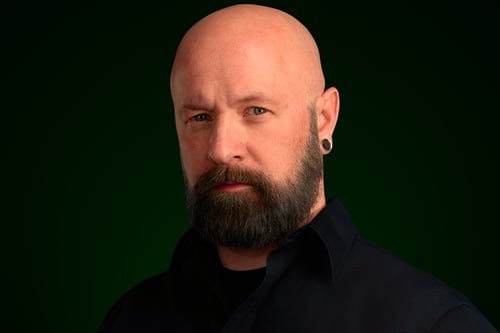
I took the plunge. I enrolled at Berklee online and spent over five years finishing the degree — never taking a break — while working full-time the entire way.
And here's the honest part: Berklee was an incredible training ground. It taught me the craft of writing music, and the craft of writing to picture. I don't regret a minute of it.
But here's what it didn't teach me — what no school teaches you: how to actually find the work. How to manage real life as a freelancer. How to land that first gig and build a network from nothing. The part that actually gets you working, I had to figure out completely on my own — after five years of school and sixty grand of debt.
That's why I built this. Not to replace the craft — to hand you the half school leaves out. The half that takes you from "I can write music" to "I'm getting hired." For the hobbyist, the older musician, the bedroom producer — anyone ready to start finding gigs and building a real network without five years and sixty grand of debt.
And here's the part that matters most: in all my years doing this, not one director, not one client, has ever asked to see my degree. They care about what you've made, what you can bring to their project, and how you communicate. That's it. That's what this course teaches you.
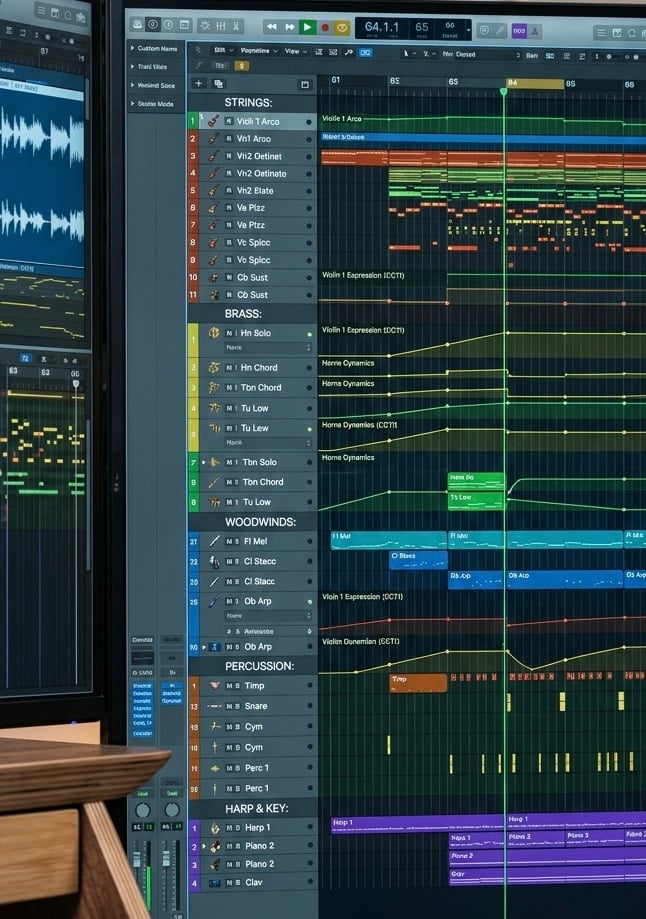
By the end, you won't just know more. You'll be different.
No. If you can already make music in any style — beats, songs, loops, orchestral, anything — you have what you need. This course teaches you how to point those skills at picture. There’s no theory exam and no sheet music required to get started.
Not at all — that’s exactly who this is built for. “Score Your First Scene” assumes you can make music but have never scored to picture. We start from your first look at a director’s scene and walk step by step all the way to a delivered cue. If you make music and have never scored anything, you’re in the right place.
Most courses (and most of YouTube) teach the craft — orchestration, mixing, theory. Some do it well. What almost nobody teaches is the other half: what a director actually sends you, how to spot and sync to picture, how to deliver files professionally, and how to get paid. That’s the half I had to learn the hard way, and it’s the half that turns “I can write music” into “I get hired to write music.”
Any DAW you already use is fine — Logic, Ableton, FL Studio, Cubase, Reaper, whatever. This is a workflow and career course, not a software tutorial, so the principles carry over no matter what you’re on. If you can make music now, your setup is enough to start.
Lifetime. You keep access to every lesson and every resource, including all future updates and additions, for as long as the course exists. Learn at your own pace and come back whenever you need a refresher.
Self-Study is the complete course — all 23 lessons, 6 modules, and every downloadable resource — for you to work through on your own. Coaching includes everything in Self-Study, plus direct feedback from me: a personal video review of your first scored scene, a 30-minute 1:1 call, and a review of your composer reel. If you want eyes on your actual work, choose Coaching.
The founding-member price is only available during the launch window and ends for good on August 8. After that it returns to full price and won’t come back down. If you’re on the fence, joining now locks in the lowest price this course will ever be.
Everything you need to score your first scene — and start getting hired for the next.