







Lolita Lebrón: The Puerto Rican Freedom Fighter Who Dared to Be Heard, Hispanic Heritage
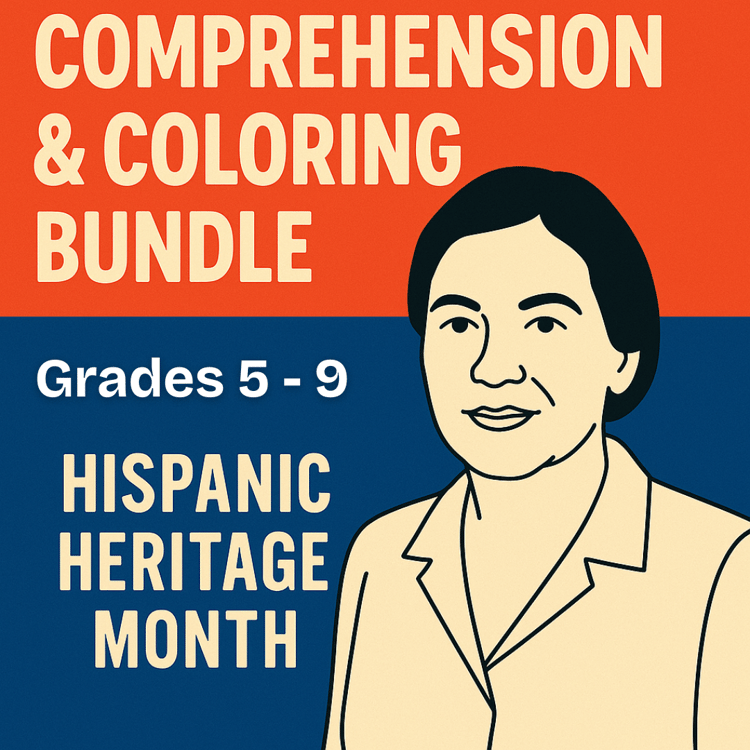
Introduce your students to Lolita Lebrón, a courageous Puerto Rican freedom fighter, with this engaging and educational assignment perfect for Hispanic Heritage Month or any unit on activism and history. This resource includes:
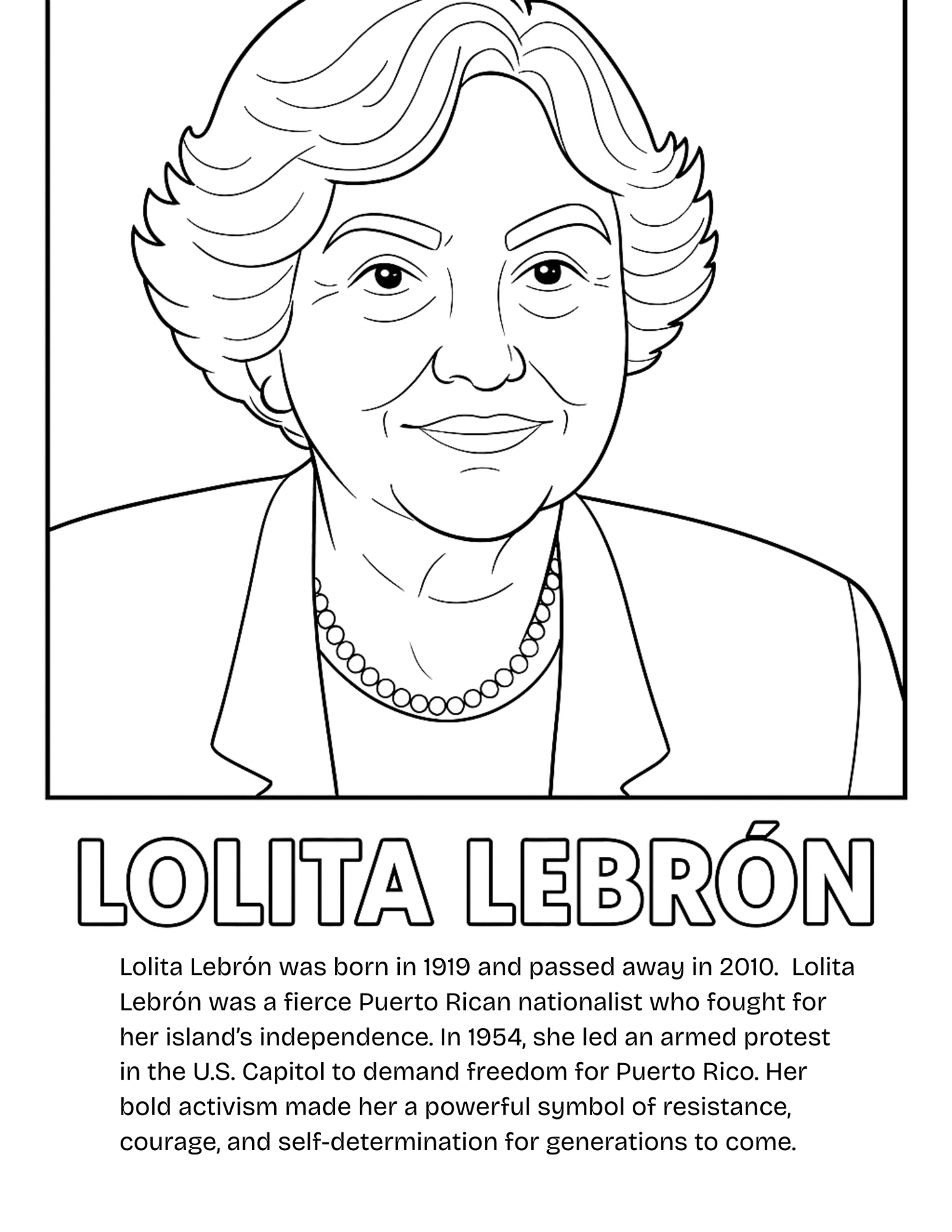
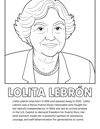
- Coloring Sheet & Quick Bio: A detailed, easy-to-color illustration of Lolita Lebrón paired with a brief overview of her life and legacy to spark interest and creativity.
- Reading Comprehension Passage: A clear, student-friendly 250-word passage that tells the story of Lebrón’s bold activism, including her historic 1954 protest at the U.S. Capitol.
- Comprehension Questions: Five thoughtful questions designed to assess reading understanding, critical thinking, and reflection on her impact.
- Video Extension: Enhance the lesson with the recommended video “Lolita Lebrón and the Puerto Rican Independence Movement” on YouTube, which provides valuable historical context and engaging visuals.
This cross-curricular resource supports literacy, social studies, and cultural appreciation for students in grades 5–9, with adaptable lesson plans that span 45–60 minutes.
🎥 Recommended Video:
Lolita Lebrón and the Puerto Rican Independence Movement
📘 Common Core State Standards (CCSS) – ELA
CCSS.ELA-LITERACY.RI.5.1 – 8.1
Quote accurately from a text when explaining what the text says explicitly and when drawing inferences from the text.
CCSS.ELA-LITERACY.RI.5.2 – 8.2
Determine two or more main ideas of a text and explain how they are supported by key details; summarize the text.
CCSS.ELA-LITERACY.RI.5.3 – 8.3
Explain the relationships or interactions between individuals, events, ideas, or concepts in a historical text based on specific information.
CCSS.ELA-LITERACY.W.5.2 – 8.2
Write informative/explanatory texts to examine a topic and convey ideas and information clearly.
🌍 National Council for the Social Studies (NCSS) Themes
Theme 1: Culture
Understand how cultural values, beliefs, and practices influence individual and group identity.
Theme 2: Time, Continuity, and Change
Analyze historical events, examine cause and effect, and understand people’s roles in shaping history.
Theme 6: Power, Authority, and Governance
Explore how individuals and groups attempt to influence public policy and societal change.
Theme 10: Civic Ideals and Practices
Understand the importance of civic engagement and the role of protest and advocacy in democratic societies.