

Poetry Techniques Explained | Poster + Poetry Detectives Activity Pack
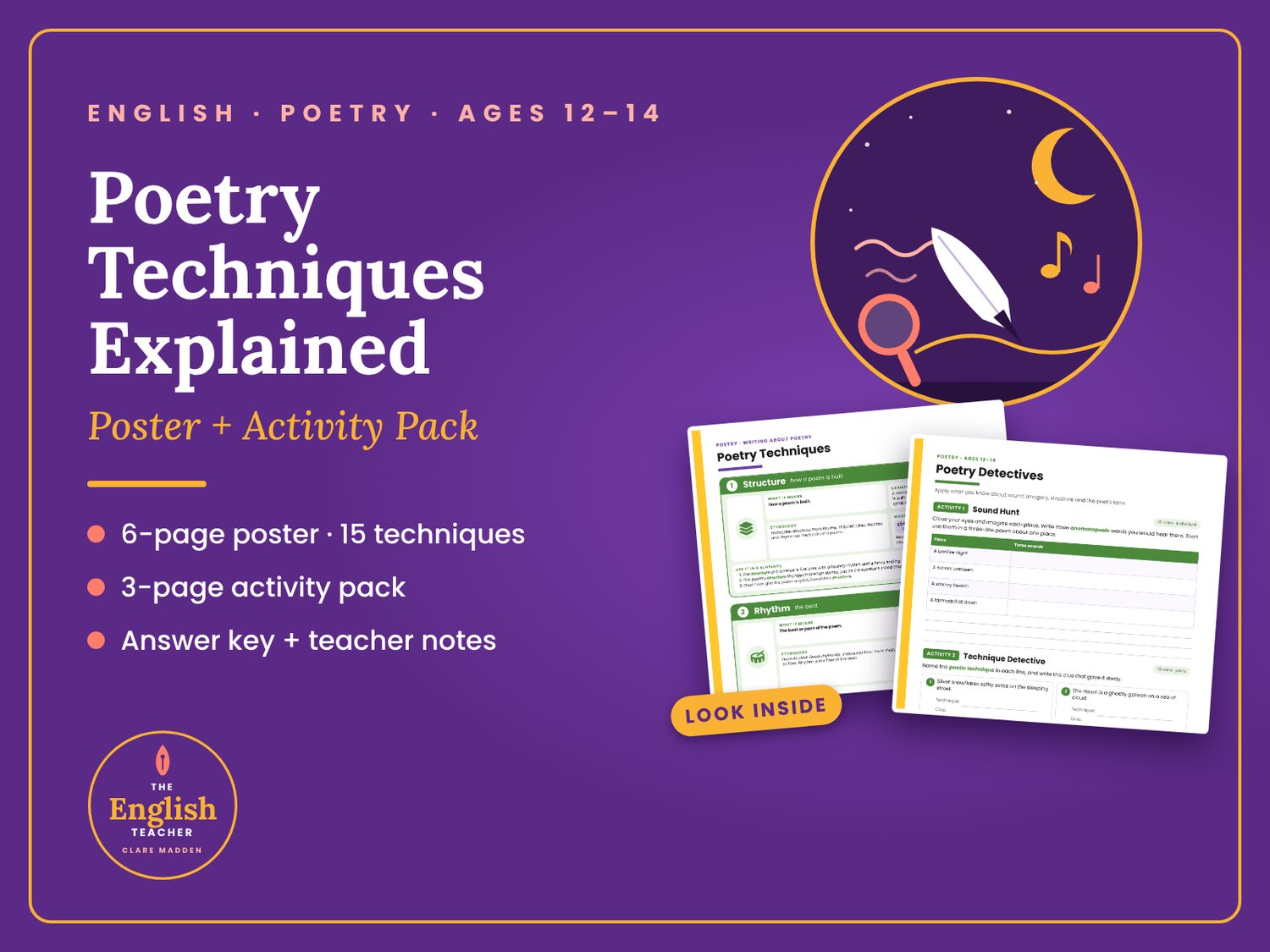
Give students the vocabulary to write about poetry with confidence, then let them hunt for it, build with it and write with it. This pack pairs a six-page poster explaining 15 key poetry techniques with a three-page activity pack.
Written by Clare Madden, secondary English teacher and author of the Touchstones Junior Cycle English series.
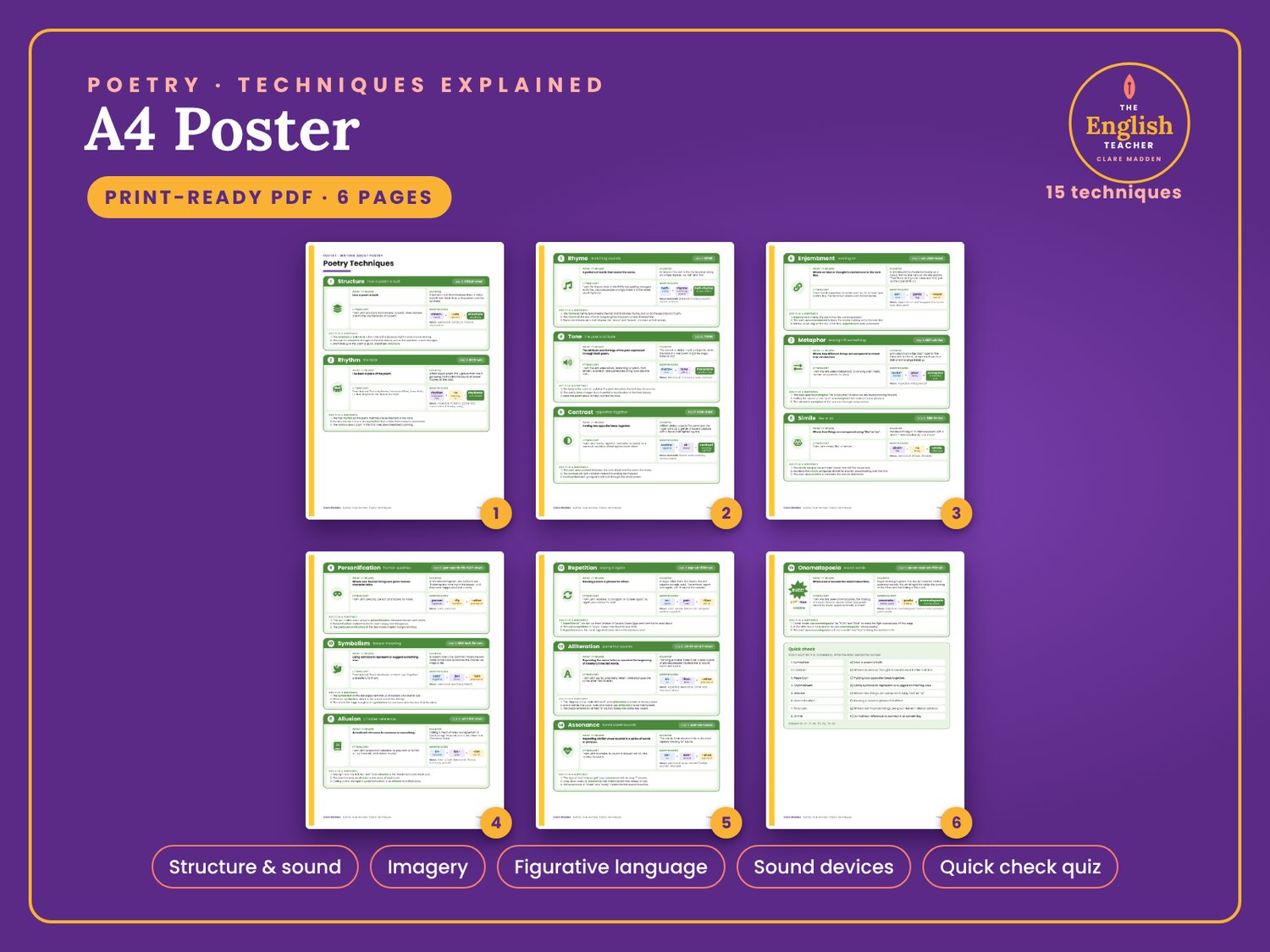
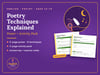
**Poetry Techniques poster: 6 pages, 15 techniques**
structure · rhythm · rhyme · tone · contrast · enjambment · metaphor · simile · personification · symbolism · allusion · repetition · alliteration · assonance · onomatopoeia
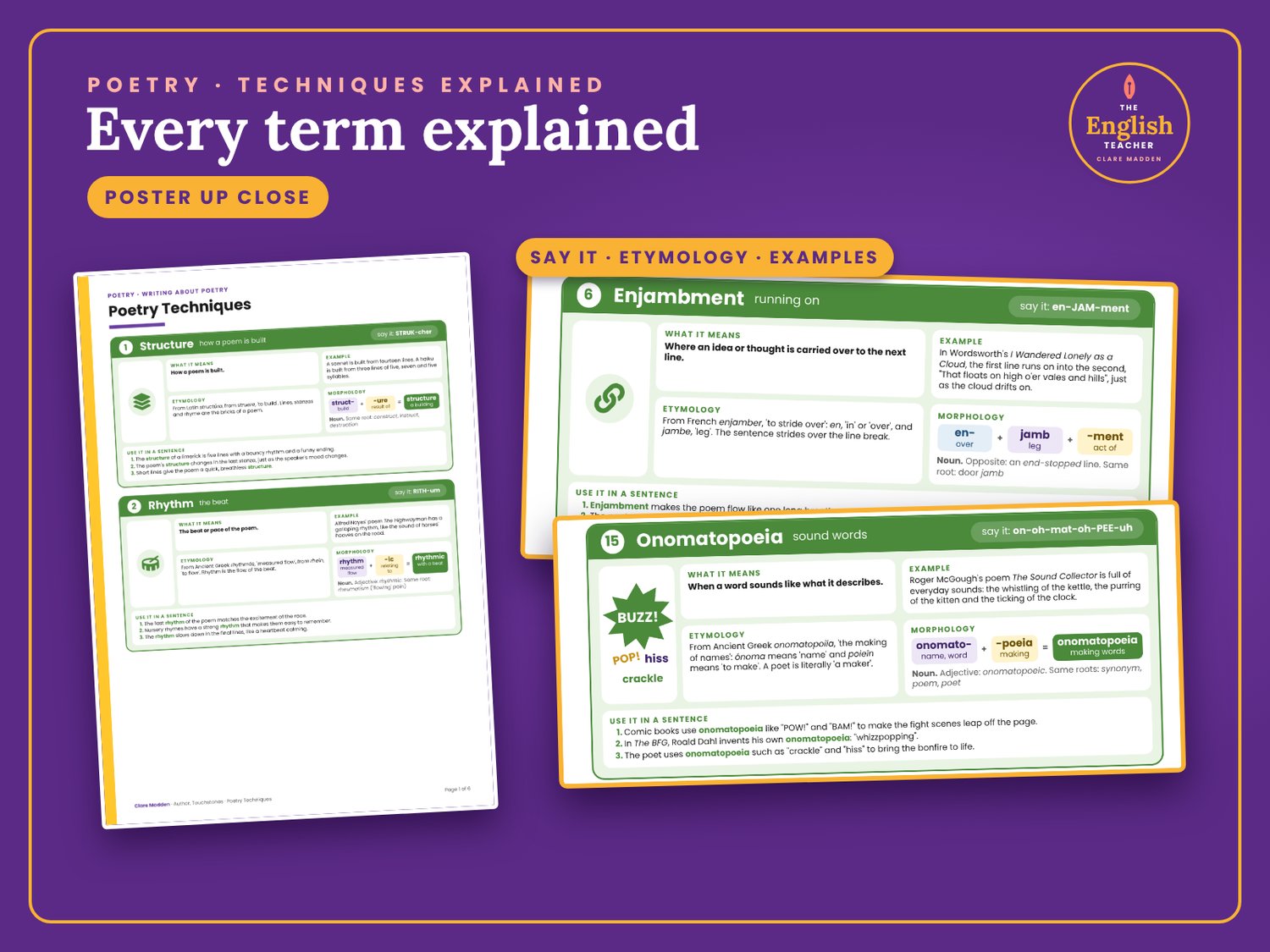
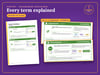
Every technique has:
- Pronunciation ("say it: en-JAM-ment")
- A clear definition and an example from a well-known poem (Wordsworth, Blake, Roger McGough and more)
- Etymology and morphology, showing how the word is built from its roots
- Three "use it in a sentence" models
The poster ends with a **Quick check** matching quiz, with answers. Display it on the wall, or give it out as a reference sheet for any poem.
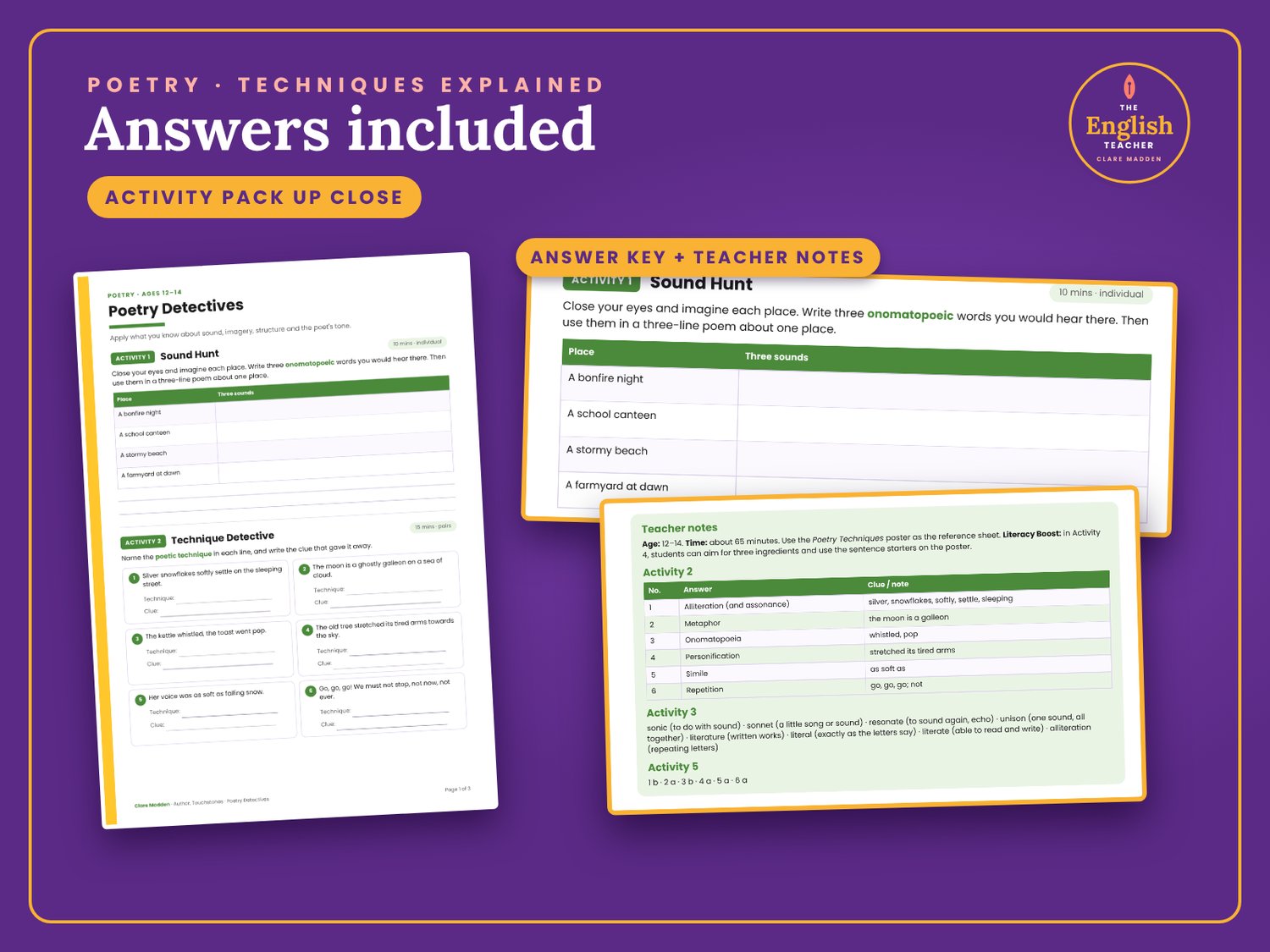
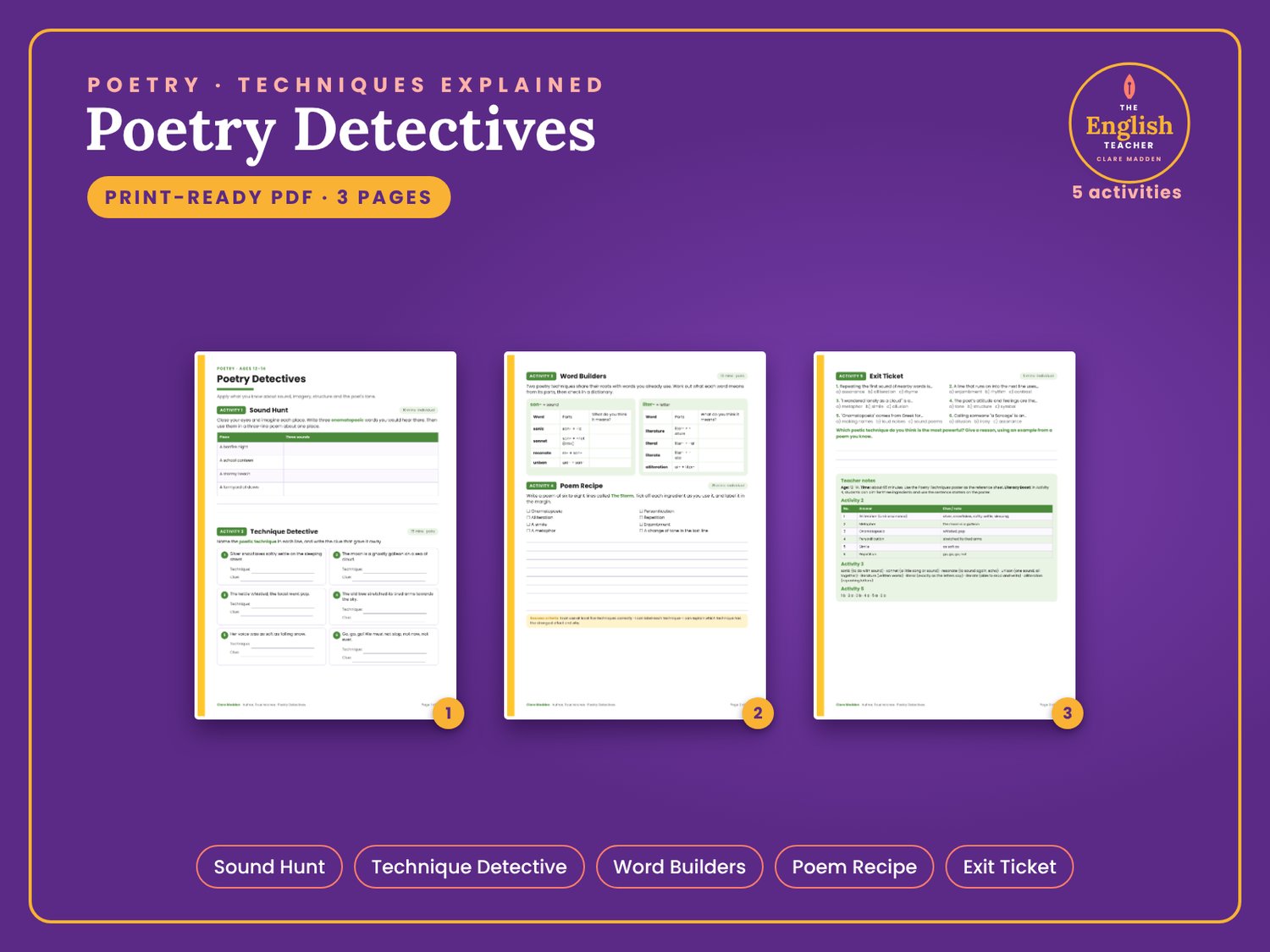
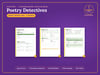
**Poetry Detectives activity pack (3 pages, 5 activities)**
1. **Sound Hunt** (10 mins, individual): imagine four places, collect onomatopoeic words, then write a three-line poem
2. **Technique Detective** (15 mins, pairs): name the technique in six lines of poetry and find the clue
3. **Word Builders** (10 mins, pairs): work out word meanings from the roots *son-* (sound) and *liter-* (letter), from sonnet and unison to literal and alliteration
4. **Poem Recipe** (25 mins, individual): write a six- to eight-line poem called *The Storm*, ticking off and labelling each technique "ingredient"
5. **Exit Ticket** (5 mins): a quick multiple-choice check
**Teacher notes and answers:** suggested timing (about 65 minutes), a Literacy Boost support suggestion, and answers for Activities 2, 3 and 5.
**Who it's for**
- English classes aged 12–14 (Junior Cycle, KS3 or similar)
- An introduction before starting a poetry unit or anthology
- Older students who need a refresher on poetic terms for written answers
**Format:** two print-ready A4 PDFs (poster, 6 pages; activity pack, 3 pages), in full colour.