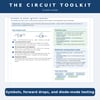
Diode & LED Quick Guide
One-way parts cause two-way confusion. Fix that.
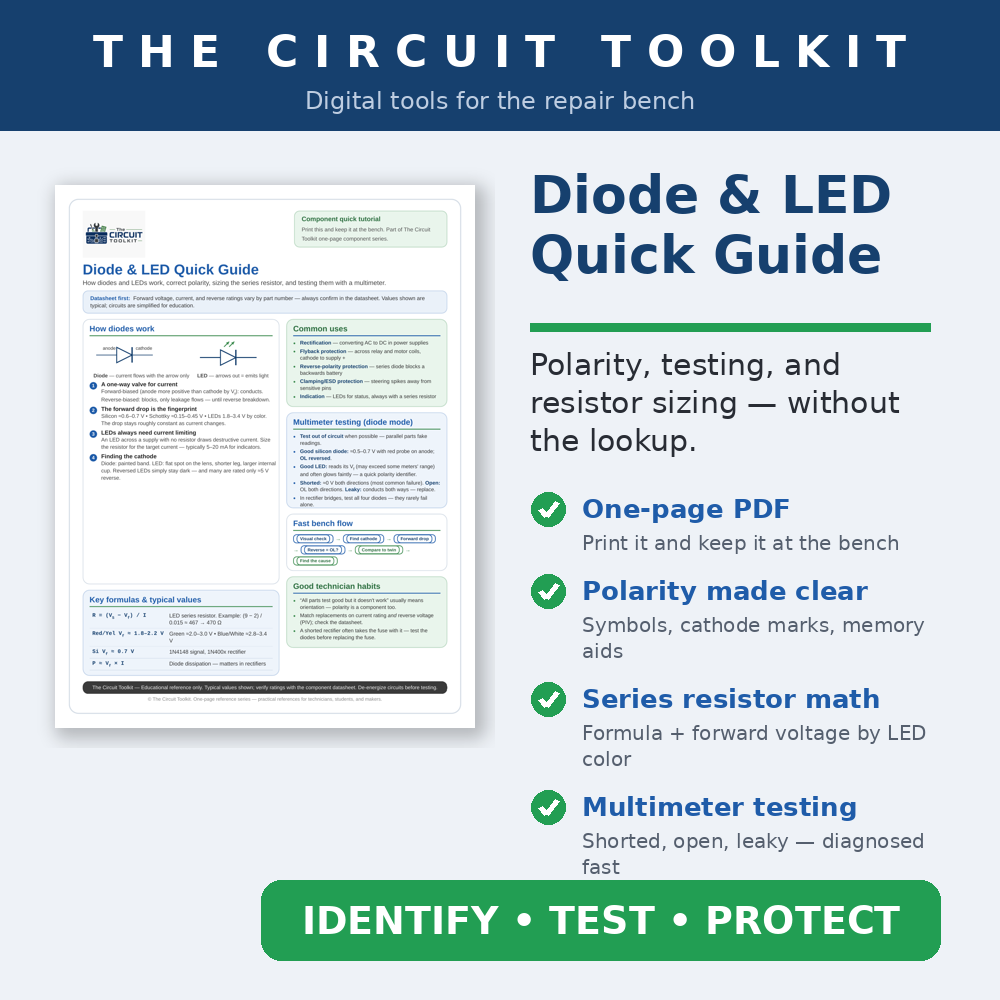
Diodes and LEDs are the simplest components that stop beginners cold — because polarity, forward drops, and series resistors all have to be right at once. This one-page guide covers how they work, which way they go, how to size the resistor, and how to test them with the meter you already own.
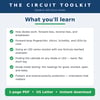
What's inside:
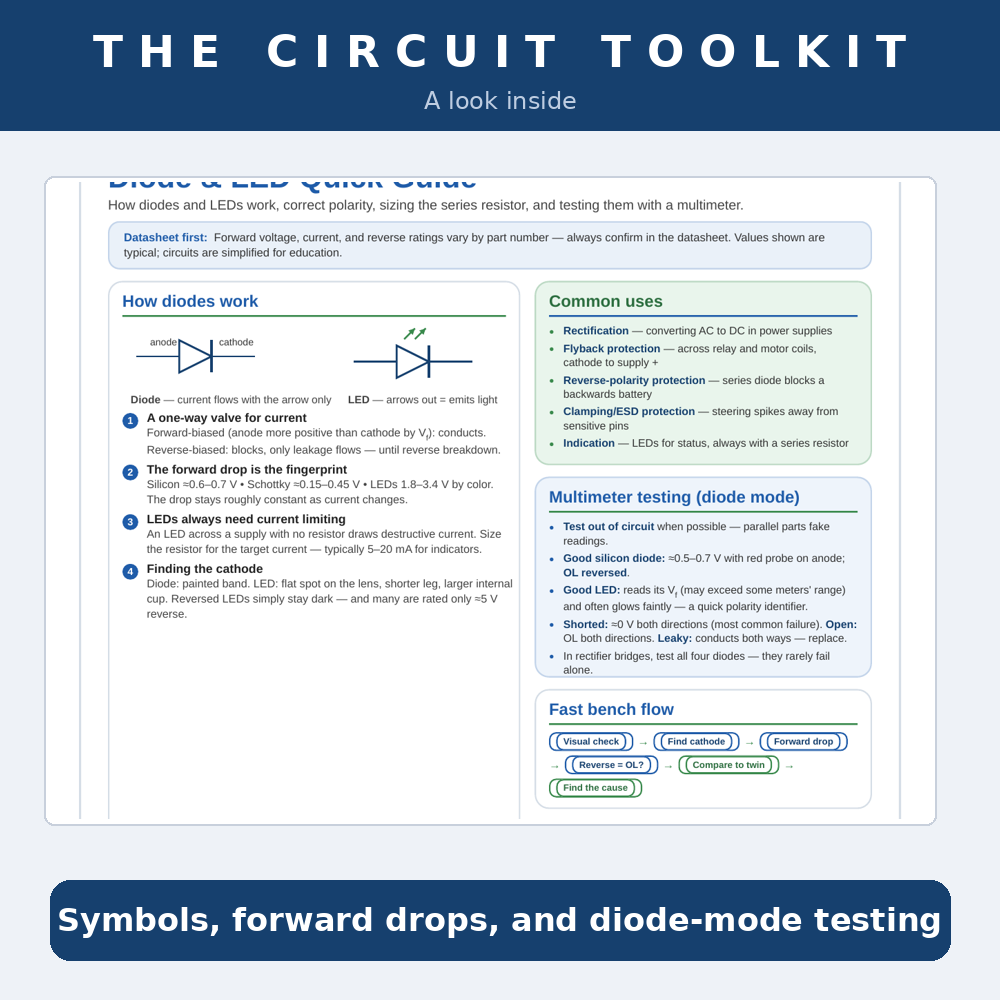
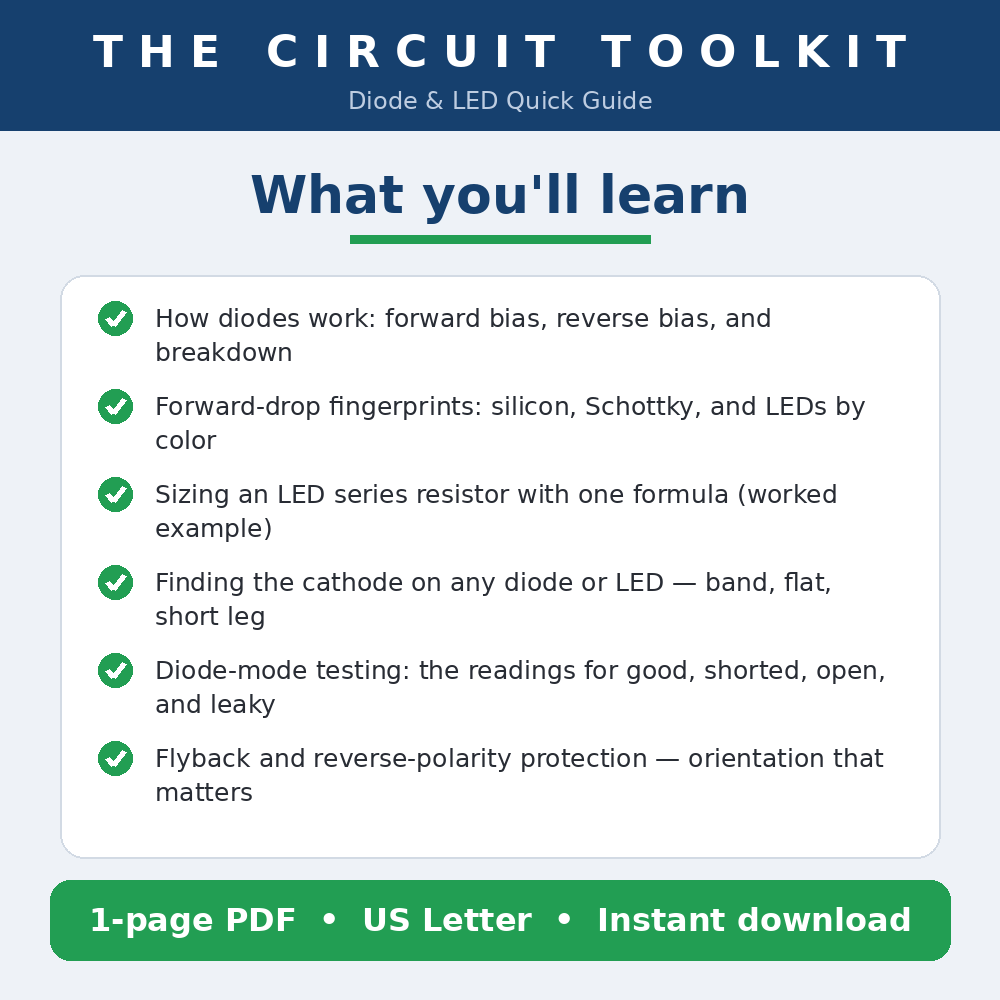
- How diodes actually work: forward bias, reverse bias, and breakdown in plain language
- Both schematic symbols, plus every cathode marking: band, flat spot, short leg
- Forward-voltage fingerprints: silicon (~0.7 V), Schottky, and LEDs by color
- The one LED resistor formula with a worked example — R = (Vs − Vf) / I
- Diode-mode multimeter testing: the exact readings for good, shorted, open, and leaky
- Flyback and reverse-polarity protection — the orientations that matter
- The bench truth behind "all parts test good but it doesn't work": polarity is a component too
Who it's for: beginner and intermediate technicians, students, hobbyists, and repair professionals.
Format: 1-page PDF, US Letter, print-ready. Instant download.
Part of The Circuit Toolkit's Component Quick Tutorial series — practical electronics training from a working electrical engineer.
*Educational reference. Forward voltages and ratings vary by part — always verify with the datasheet.*