
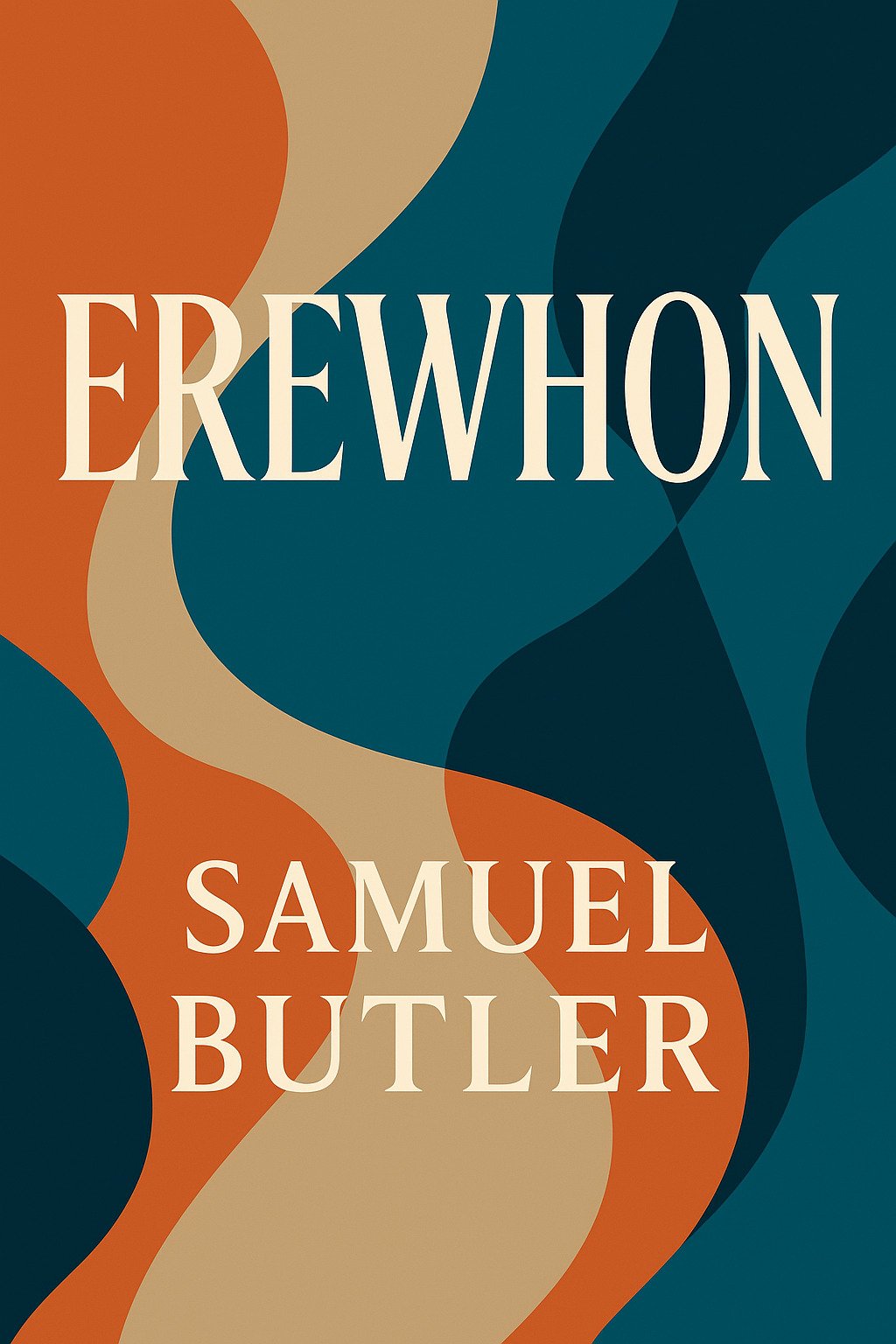
Erewhon
Samuel Butler’s Erewhon (1872) is a groundbreaking work of satirical fiction that turns the conventions of utopian literature on their head. The novel follows the journey of a young traveler, Higgs, who stumbles upon the mysterious land of Erewhon—an anagram of “nowhere.” In this strange society, illness is treated as a crime, crime is seen as an illness, and machines are banned for fear they will evolve and dominate humanity. Through its imaginative premise and biting wit, Erewhon critiques Victorian values, religion, industrialization, and the absurdities of human behavior. Butler’s sharp observations and playful irony make the novel both a thought-provoking exploration of societal norms and a timeless commentary on the human condition.
At its core, Erewhon is a profound meditation on progress, morality, and the contradictions inherent in human civilization. The novel’s most famous chapters, such as “The Book of the Machines,” delve into philosophical debates about technology and evolution, foreshadowing modern concerns about artificial intelligence and humanity’s relationship with innovation. Butler’s ability to blend humor with incisive critique creates a narrative that is as entertaining as it is intellectually stimulating. The absurd yet eerily familiar world of Erewhon challenges readers to question their own assumptions about justice, progress, and the nature of society.
A masterpiece of Victorian literature, Erewhon remains remarkably relevant in today’s world, where debates about technology, ethics, and societal norms continue to evolve. Its imaginative storytelling and bold ideas have inspired generations of readers and writers, cementing its place as a classic of speculative fiction. Whether read as a satire, a philosophical treatise, or a work of imaginative fiction, Erewhon invites readers to reflect on the complexities of human nature and the ever-changing world we inhabit.
About the author
Samuel Butler (1835–1902) was a versatile and provocative English author, satirist, and thinker whose works spanned literature, science, and philosophy. Known for his sharp wit and independent thinking, Butler challenged Victorian conventions in works like Erewhon and The Way of All Flesh. A fierce critic of dogma and authority, he engaged in public debates on evolution, religion, and art, leaving a lasting impact on intellectual thought. Butler’s legacy endures through his fearless exploration of human nature and his ability to blend humor with profound insight, making him one of the most original voices of the 19th century.