
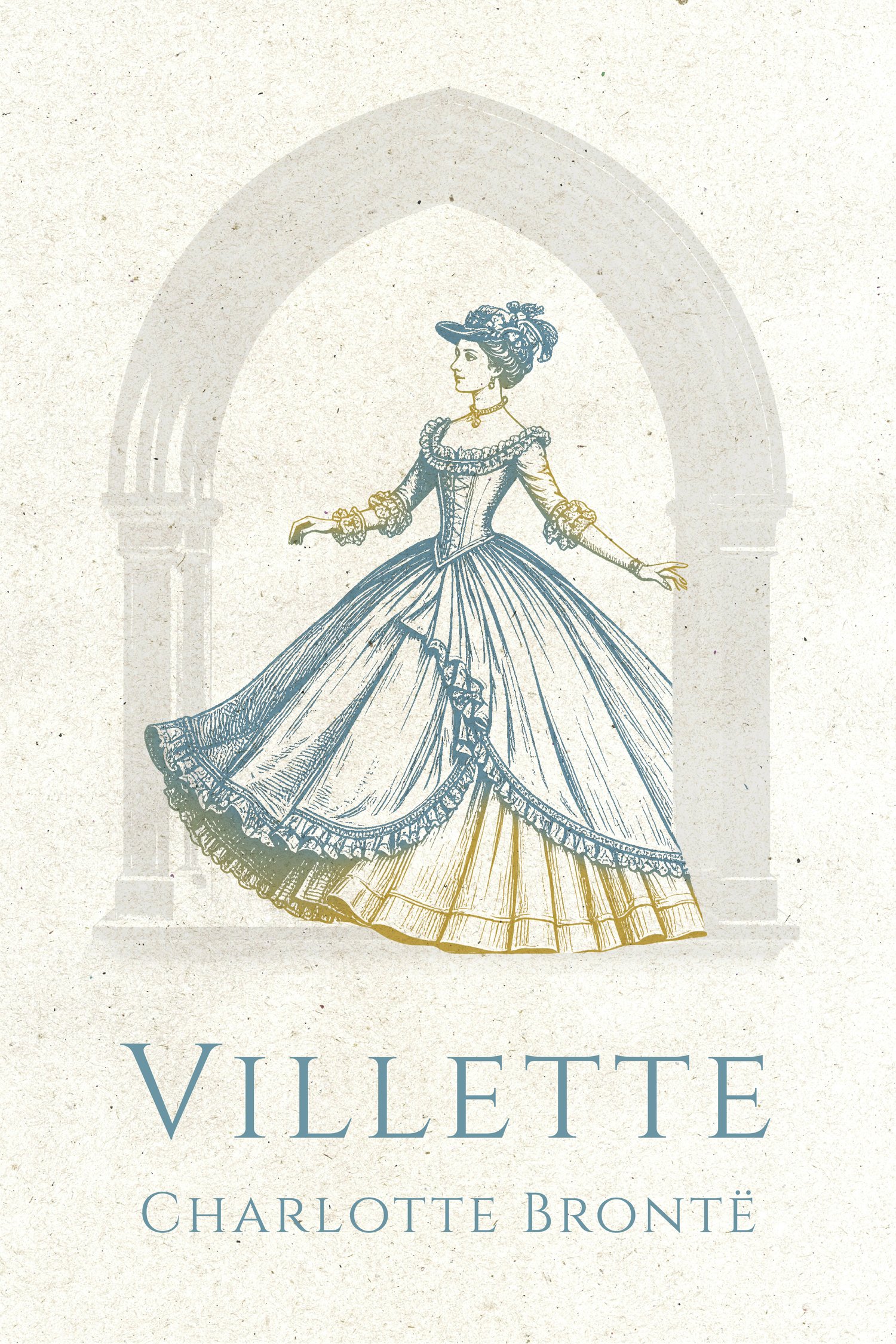
Villette
Charlotte Brontë’s Villette is a hauntingly intimate novel of exile, desire, and resilience. At its center stands Lucy Snowe, a reserved Englishwoman who travels alone to the continental city of Villette to take up a position as a teacher. Isolated by language and culture, Lucy’s quiet strength and sharp intelligence become her only companions as she navigates a society that offers her little in the way of security or affection. Brontë draws the reader into Lucy’s inner world with extraordinary intensity, exposing the precarious balance between independence and loneliness.
More than a love story, Villette is a psychological study of repression and yearning. Lucy’s encounters with the enigmatic schoolmaster Paul Emanuel, the flighty yet kindhearted Ginevra Fanshawe, and the ethereal Dr. John Graham Bretton pull her into a tangle of relationships where emotions are rarely spoken plainly and appearances deceive. Brontë’s prose vibrates with ambiguity—every gesture, every glance, charged with unspoken meaning—making the novel as much about what is withheld as what is confessed.
Written in the shadow of Brontë’s own experiences in Brussels, Villette is at once a deeply personal narrative and a broader meditation on gender, solitude, and the search for identity. Often considered her most mature and daring work, it strips away the romantic illusions of Jane Eyre to reveal something rawer, more unsettling, and perhaps more truthful. To read Villette is to confront the mysteries of the human heart—its hunger for connection, its fear of loss, and its quiet capacity for endurance.
About the author
Charlotte Brontë (1816–1855) was an English novelist and poet, best known for her psychologically rich and emotionally intense works, including Jane Eyre, Villette, and Shirley. Her novels explore themes of love, independence, and social constraint, often drawing on her own experiences in Yorkshire and abroad. Brontë remains one of the most celebrated voices of Victorian literature.