
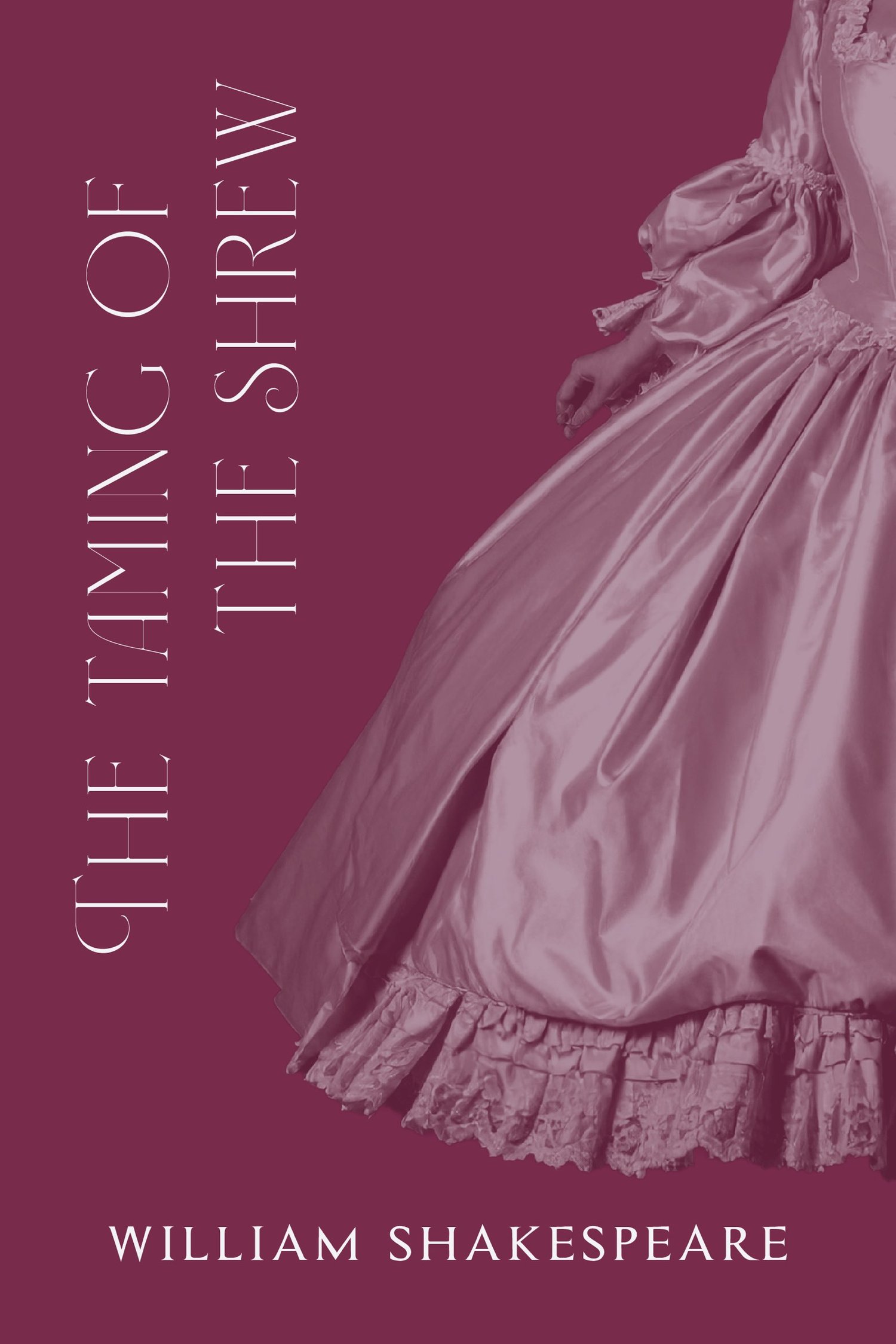
The Taming of the Shrew
William Shakespeare’s The Taming of the Shrew introduces us to Kate Minola, Padua’s most notorious woman. She’s sharp-tongued, quick to violence, and has driven away every potential suitor—much to her father’s despair. Meanwhile, her younger sister Bianca is sweet, obedient, and has suitors lining up. But Baptista Minola has made a rule: Bianca can’t marry until someone takes Kate off his hands first. The suitors scheme to find Kate a husband so they can compete for Bianca. Enter Petruchio, a swaggering fortune-hunter from Verona who hears about Kate’s substantial dowry and declares he can marry her, tame her, and profit handsomely. Kate’s reputation doesn’t intimidate him—he claims he’s weathered storms worse than any woman’s tongue.
The courtship is warfare. Petruchio meets Kate’s insults with worse ones, twists her words, contradicts her constantly, and declares they’ll marry immediately despite her fury. He shows up to the wedding late, drunk, and dressed like a fool, then drags her away from her own reception. At his country house, he launches a calculated campaign of deprivation disguised as care: the food isn’t good enough for her, the bed isn’t made properly, the new clothes aren’t worthy of her beauty. He deprives her of sleep, contradicts her perception of reality, and forces her to agree that the sun is the moon and an old man is a young maiden if he says so. It’s psychological manipulation masquerading as love, and watching it unfold is deeply uncomfortable—which is exactly what makes it fascinating.
By the final scene, Kate has transformed. While Bianca and a widow sass their new husbands, Kate arrives obediently when called and delivers a lengthy speech about wives’ duty to submit to their husbands’ authority. The other women are shocked. The men are triumphant. And audiences have been arguing ever since: Is Kate genuinely broken? Is she performing obedience while secretly laughing? Has she figured out that playing the game gives her more power than fighting it? Is this partnership or subjugation? Shakespeare gives us no clear answer, and that ambiguity is what keeps The Taming of the Shrew alive and provocative. It’s a play that makes modern audiences squirm while they laugh, forcing us to confront questions about power, gender, performance, and what we’re willing to do for love—or money, or security, or peace. Whether you read it as a troubling endorsement of patriarchy, a subversive comedy about role-playing, or something in between, you won’t walk away neutral. It’s Shakespeare at his most challenging and controversial.
About the author
William Shakespeare (1564-1616) is widely regarded as the greatest writer in the English language and the world’s preeminent dramatist. Born in Stratford-upon-Avon, he wrote approximately 39 plays and 154 sonnets that have shaped literature, theater, and the English language itself for over four centuries. His works, from tragedies like Hamlet and King Lear to comedies like A Midsummer Night’s Dream and histories like Henry V, explore the full range of human experience with unmatched psychological insight, poetic brilliance, and emotional power. Shakespeare’s influence extends far beyond the stage; his phrases and characters have become woven into the fabric of modern culture, and his exploration of timeless themes—love, power, ambition, jealousy, mortality—continues to resonate with audiences worldwide. Despite the passage of centuries, his work remains startlingly contemporary, speaking to each new generation with fresh relevance and inexhaustible depth.