
Typee
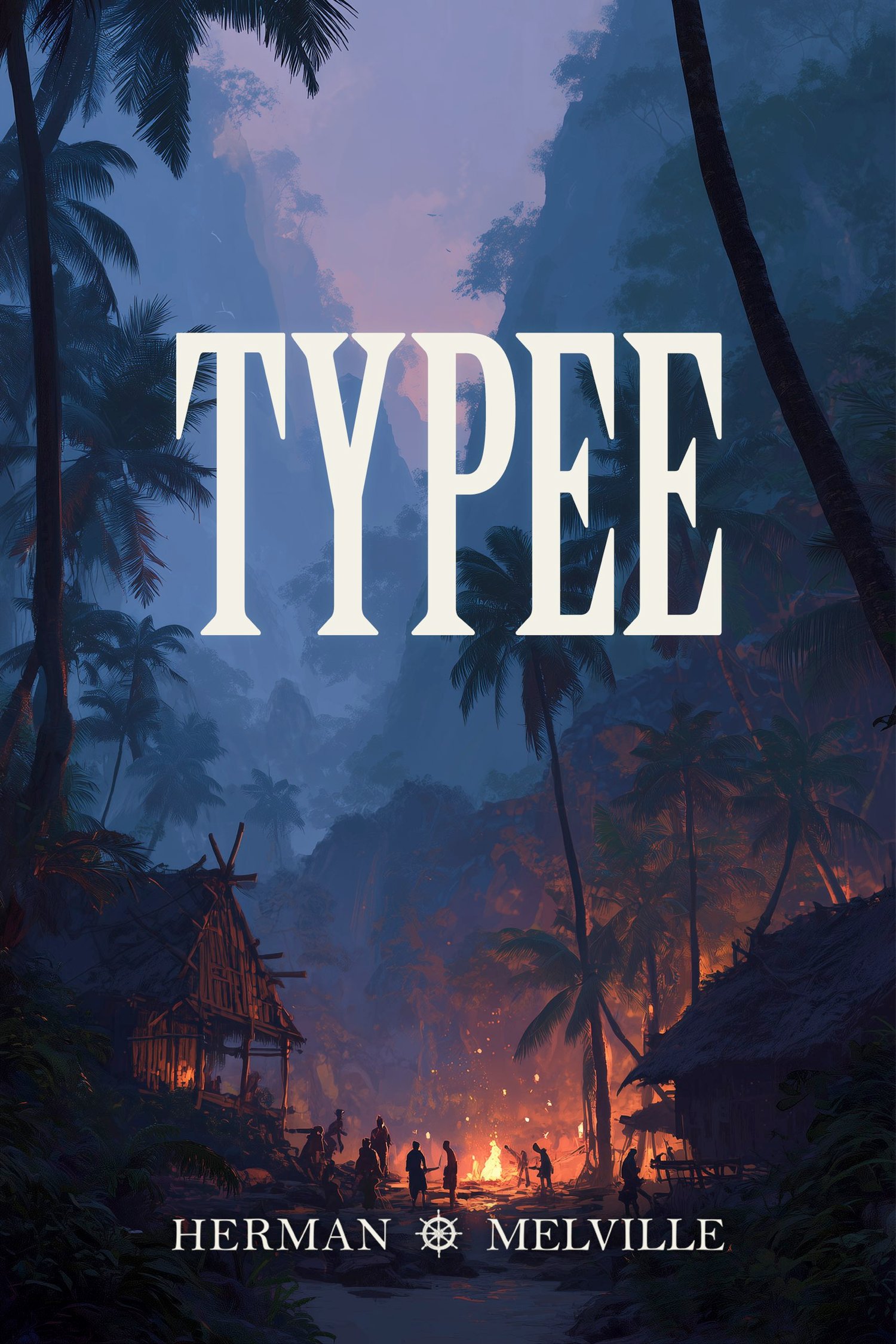
Herman Melville’s Typee is a lush and daring debut that whisks the reader into the heart of the South Pacific, where paradise and peril share the same shimmering horizon. Based on Melville’s own youthful adventures among the Marquesas Islands, the novel tells the story of Tommo, a restless sailor who deserts his whaling ship and finds refuge among the supposedly savage Typee tribe. What begins as an escape into an idyllic world of abundance, sensuality, and freedom soon curdles into an uneasy captivity, as Tommo discovers that beauty and terror often coexist in the same gaze.
With prose that brims with wonder and unease, Melville conjures a tropical Eden both seductive and strange, alive with dazzling landscapes, rituals, and the rhythms of a people untouched by Western civilization, at least on the surface. Yet beneath the exotic adventure lies a sharper inquiry into the nature of cultural encounter, moral hypocrisy, and the uneasy legacy of colonial exploration. Melville’s keen eye captures not only the physical splendor of the islands but also the psychological tension between desire and fear, belonging and estrangement.
Published in 1846, Typee was an immediate sensation, cementing Melville’s reputation as a bold new voice in American letters. Today, it endures as both a gripping travel narrative and a probing work of proto-anthropology, a meditation on the clash between innocence and corruption, and the elusive boundaries between civilization and savagery. Few first novels have combined adventure and philosophy so seamlessly, or questioned so early the moral certainties of the age that produced them.
About the author
Herman Melville (1819–1891) was one of America’s most iconic novelists and thinkers, celebrated for his profound explorations of humanity’s relationship with nature and the mysteries of existence. Best known for his magnum opus, Moby-Dick, and his evocative tales such as Bartleby, the Scrivener and Billy Budd, Melville’s works captivate readers with their intricate symbolism, philosophical depth, and vivid depictions of life at sea. His literary legacy endures as a cornerstone of American literature, offering timeless reflections on the human spirit and its place in an ever-changing world.