
Healing the No-Closure wound
Finding Peace When Someone Who Hurt You Refuses to Take Responsibility
Some of the most painful wounds aren’t just about what happened — they’re about the fact that the person who caused the harm never acknowledged it.
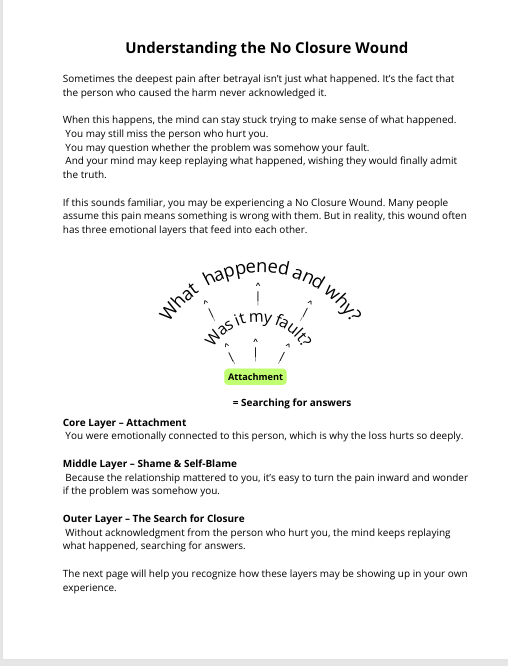
When closure never comes, the mind can stay stuck replaying the same unanswered moment. You may still miss the person who hurt you, question whether the problem was somehow your fault, or keep imagining conversations where they finally admit the truth.
This guided reflection tool helps you understand and process what many survivors experience as a No-Closure Wound.
Inside this printable guide you’ll explore:
• Why the mind keeps searching for closure
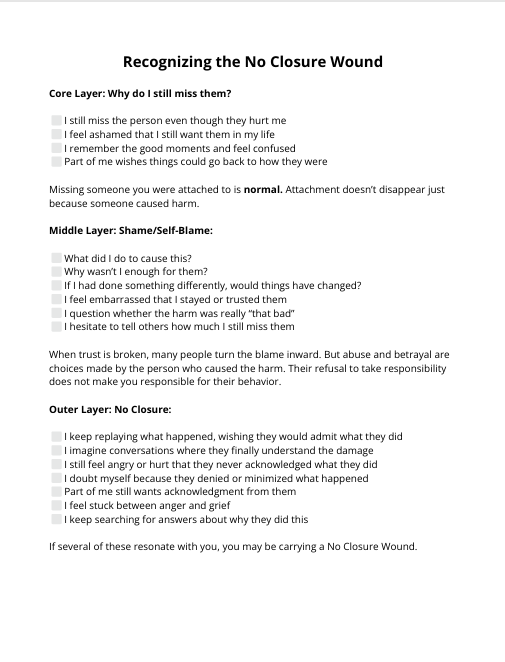
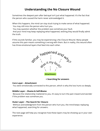
• The three emotional layers of the No-Closure Wound (attachment, self-blame, and the search for answers)
• How unresolved endings can fuel rumination and emotional confusion
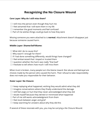
• Structured prompts to help you name the injury and release misplaced responsibility
• Exercises for acknowledging attachment without letting it control your peace
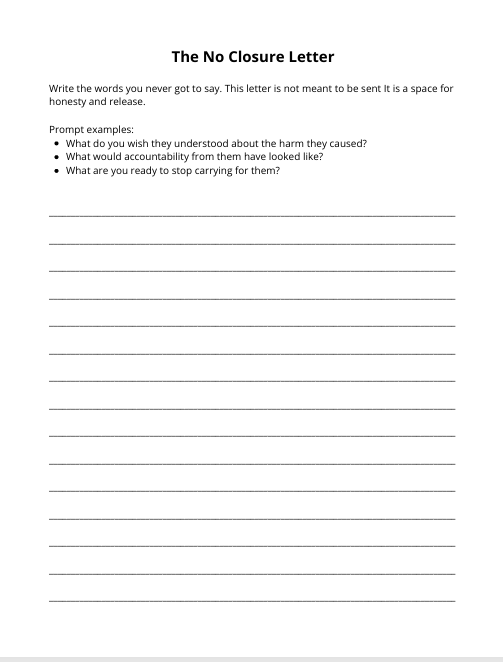
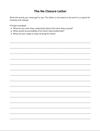
• A guided “No-Closure Letter” exercise to help you express what was never said
• Reframing statements to help you reclaim your power and stop waiting for someone else’s accountability
Healing from a No-Closure Wound doesn’t mean pretending the relationship never mattered. It means recognizing the truth of what happened, releasing self-blame, and creating your own closure so the memory no longer controls your peace.
This tool is designed for personal reflection and can be revisited whenever old questions or emotions resurface.
Includes:
• 11-page printable reflection guide
• structured prompts and exercises
• self-guided healing format