

Top 10 Poisonous Plants of the Southeastern United States
Top 10 Poisonous Plants of the Southeastern United States
Trail Safety Guide, Nature Walk Activity & Science Extension
Help students explore nature safely and confidently with this kid-friendly Poisonous Plants Trail Guide for the Southeastern United States. Designed for nature walks, school field trips, outdoor classrooms, science camps, and homeschool learning, this printable resource teaches children how to identify common poisonous plants, understand why they are dangerous, and practice outdoor safety skills—without fear.
This resource blends science, safety, and observation skills with engaging visuals and interactive activities, making it perfect for grades K–6.
What’s Included
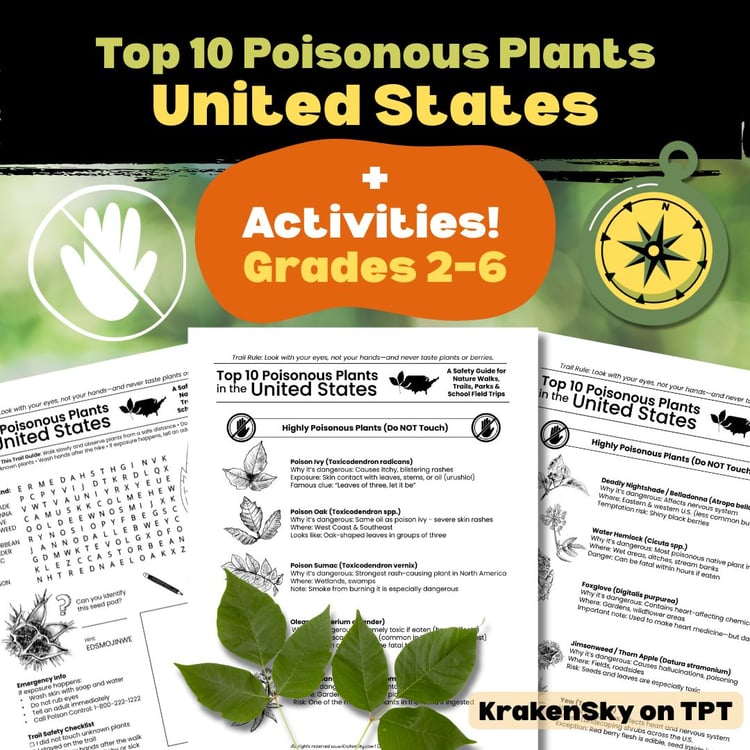
✔️ Top 10 Poisonous Plants of the Southeastern U.S.
• Poison Ivy
• Poison Oak
• Poison Sumac
• Pokeweed
• Nightshade
• Oleander
• Rosary Pea (Jequirity Bean)
• Castor Bean Plant
• Virginia Creeper
• Angel’s Trumpet
Clear plant categories
• Plants that cause skin rashes (Do NOT touch)
• Poisonous berries (Never eat)
• Highly poisonous plants (Do NOT touch)
✔️ Student-friendly descriptions
✔️ Trail Safety Rules & Checklist
✔️ Emergency info + Poison Control number
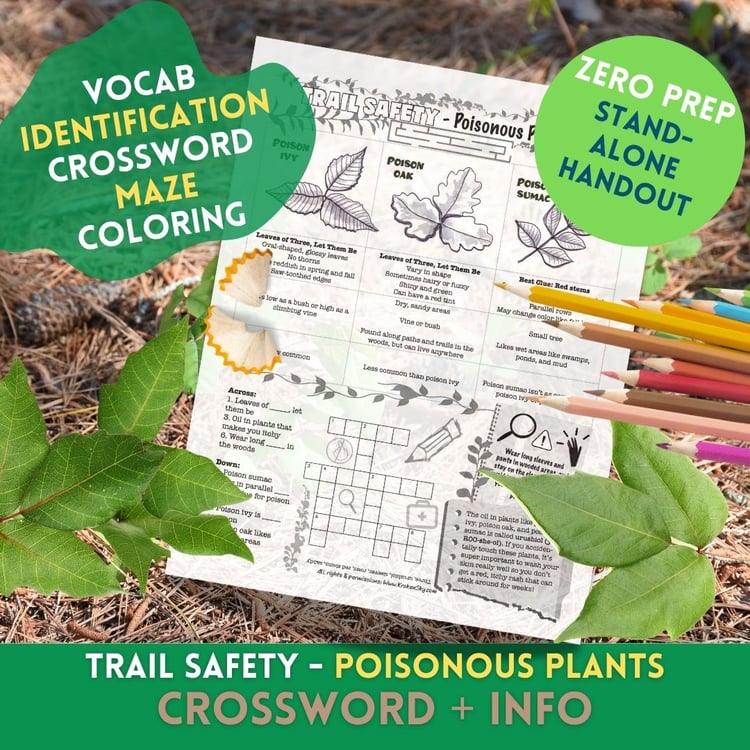
✔️ Word Scramble Activity
✔️ Matching Activity
✔️ Notes & Sketch Space for nature journaling
Skills & Learning Focus
• Plant identification
• Environmental awareness
• Outdoor & trail safety
• Observation & comparison skills
• Health & wellness connections
• Nature journaling
Perfect For
✔️ Elementary classrooms (K–6)
✔️ Science & STEM lessons
✔️ Outdoor education programs
✔️ Nature centers & parks
✔️ Summer camps & scouts
✔️ Homeschool families
✔️ Field trips & school gardens
Curriculum Alignment
Next Generation Science Standards (NGSS):
- K-LS1-1 – Use observations to describe patterns of what plants need to survive
- 1-LS1-1 – Identify structures of plants and their functions
- 2-LS2-2 – Develop a model that illustrates how plants depend on their environment
- 3-LS4-3 – Construct arguments about plant adaptations
- 4-LS1-1 – Structures and processes of plants
Health & Safety Education:
- Personal safety and injury prevention
- Identifying hazardous environmental conditions
Common Core Connections:
- Informational text comprehension
- Vocabulary development
- Following multi-step directions
Frequently Asked Questions
Is this resource specific to the Southeastern United States?
Yes! All plants included are commonly found throughout the Southeastern U.S., including Florida, Georgia, Alabama, Mississippi, Louisiana, the Carolinas, and nearby states.
Is this appropriate for young learners?
Absolutely. The language and visuals are designed to be age-appropriate, calm, and non-frightening, making it suitable for kindergarten through sixth grade.
Can this be used on a field trip or nature walk?
Yes! This trail guide was specifically created for outdoor learning, including parks, trails, schoolyards, camps, and nature centers.
Does this include emergency safety information?
Yes. The guide includes clear steps to follow if exposure occurs and lists the U.S. Poison Control number for adult reference.
Is this printable and no-prep?
Yes! Just print and go—perfect for busy teachers, camp counselors, and homeschool parents.
Why Teachers Love This Resource
✔️ Builds real-world safety skills
✔️ Supports outdoor and experiential learning
✔️ Pairs perfectly with nature journals & STEM units
✔️ High student engagement
✔️ Aligns with science and health standards