

Top 10 Poisonous Plants in the United States | Kids Nature Safety Trail Guide
Top 10 Poisonous Plants in the United States
Nature Safety Trail Guide, Field Trip Activity & Science Worksheets
Grade Levels
Grades 2–6
(Works well for mixed-age groups and camps)
Teach students how to stay safe outdoors while learning to identify some of the most dangerous plants in the United States.
This engaging, kid-friendly Poisonous Plants Trail Guide is perfect for nature walks, science camps, outdoor classrooms, homeschool lessons, and school field trips.
Designed with clear visuals, simple explanations, and strong safety messaging, this resource helps students observe, not touch, and builds real-world awareness of common poisonous plants found across the U.S.
What Students Will Learn
✔ How to recognize 10 highly poisonous plants
✔ Why these plants are dangerous
✔ Where they are commonly found
✔ Safe behavior rules for nature walks
✔ What to do in case of plant exposure
What’s Included
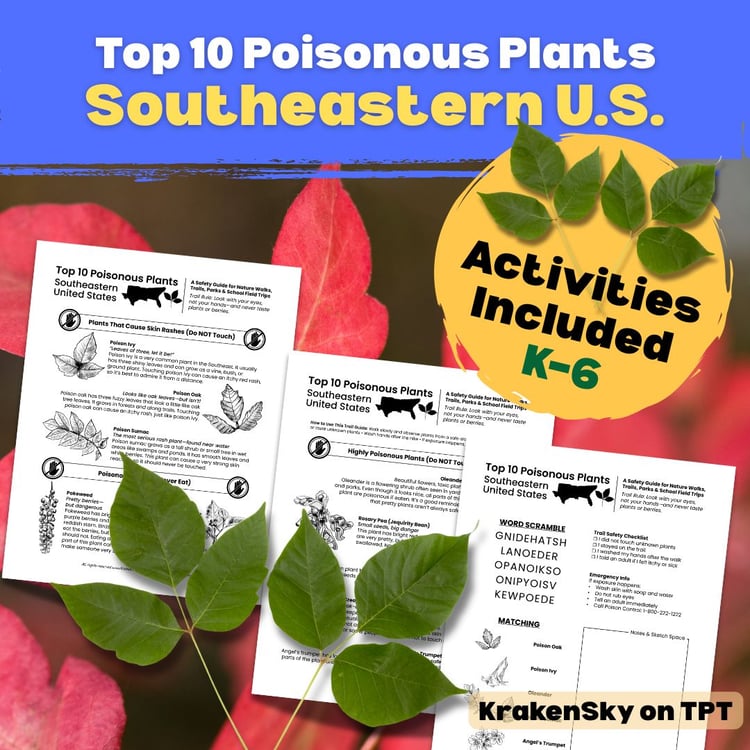
✔ Top 10 Poisonous Plants Reference Pages
✔ Kid-friendly plant descriptions with scientific names
✔ Clear safety warnings and real-world context
✔ Poisonous Plants Word Search
✔ Seed Pod Identification Challenge
✔ Trail Safety Checklist
✔ Emergency response information
✔ Notes & sketch space for nature journaling
Plants featured include:
- Poison Ivy
- Poison Oak
- Poison Sumac
- Oleander
- Castor Bean
- Deadly Nightshade (Belladonna)
- Water Hemlock
- Foxglove
- Jimsonweed
- Yew
Perfect For
- Science & STEM lessons
- Outdoor education programs
- Nature centers & parks
- Summer camps
- Homeschool families
- Field trips & trail walks
- Sub plans or enrichment activities
Curriculum Alignment
NGSS (Next Generation Science Standards):
- 2-LS4-1 – Diversity of life in different habitats
- 3-LS4-3 – Survival and environmental awareness
- 4-LS1-1 – Structure and function
- 5-LS2-1 – Ecosystems and interactions
Supports:
- Science safety practices
- Environmental literacy
- Observation & classification skills
What are the most poisonous plants in the United States?
This resource covers 10 of the most dangerous plants found across the U.S., including poison ivy, water hemlock, oleander, and deadly nightshade.
Is this safe for elementary students?
Yes! All content is written in kid-friendly, safety-focused language and emphasizes observation only—never touching or tasting plants.
Can this be used for outdoor education or field trips?
Absolutely. This guide was designed specifically for nature walks, trails, parks, camps, and outdoor classrooms.