
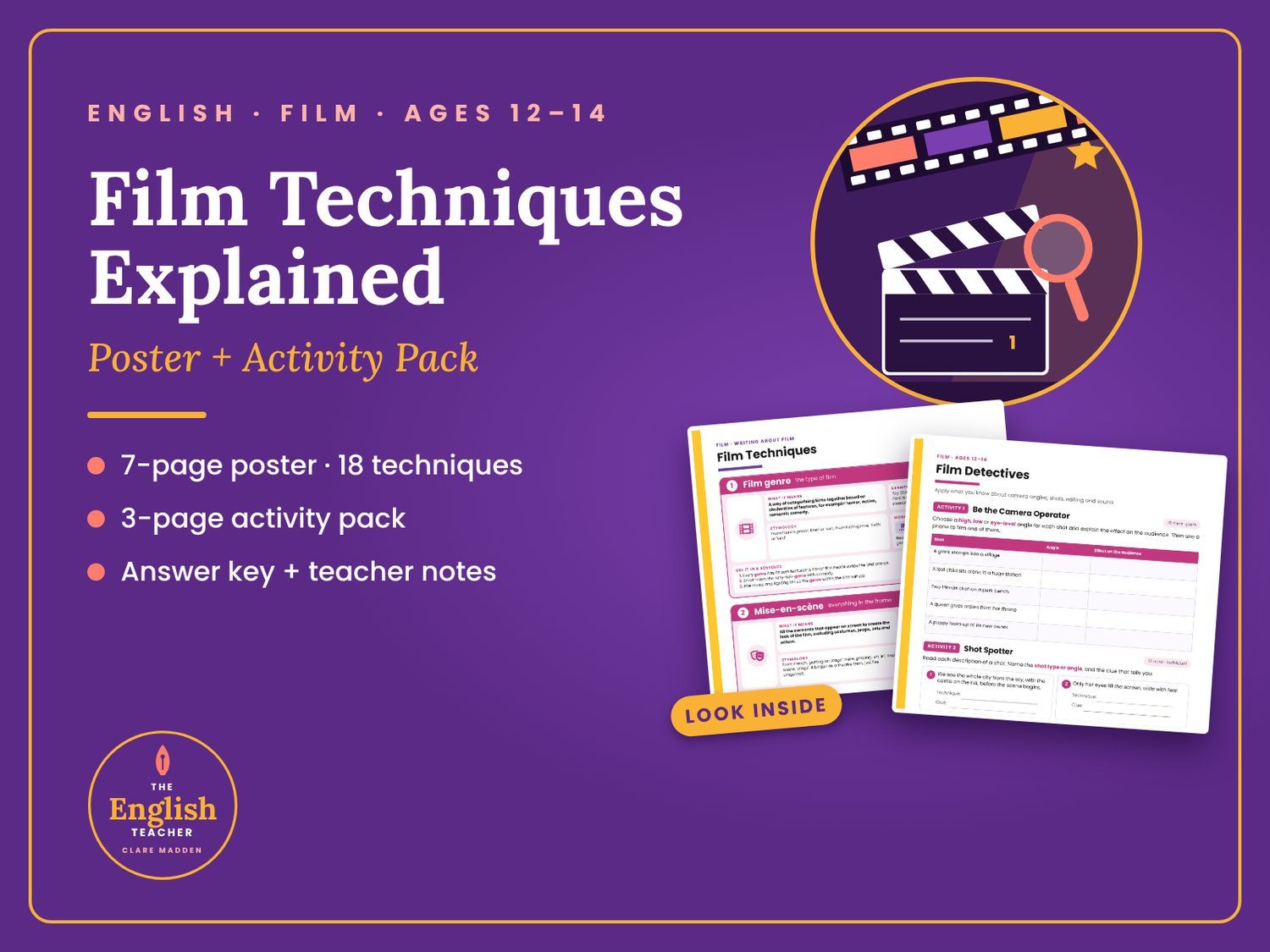
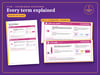
Film Techniques Explained | Poster + Film Detectives Activity Pack
Teach students to read a film the way they read a book. This pack pairs a seven-page poster explaining 18 key film techniques with a three-page activity pack where students spot shots, choose camera angles, storyboard a scene and make editing decisions.
Written by Clare Madden, secondary English teacher and author of the Touchstones Junior Cycle English series.
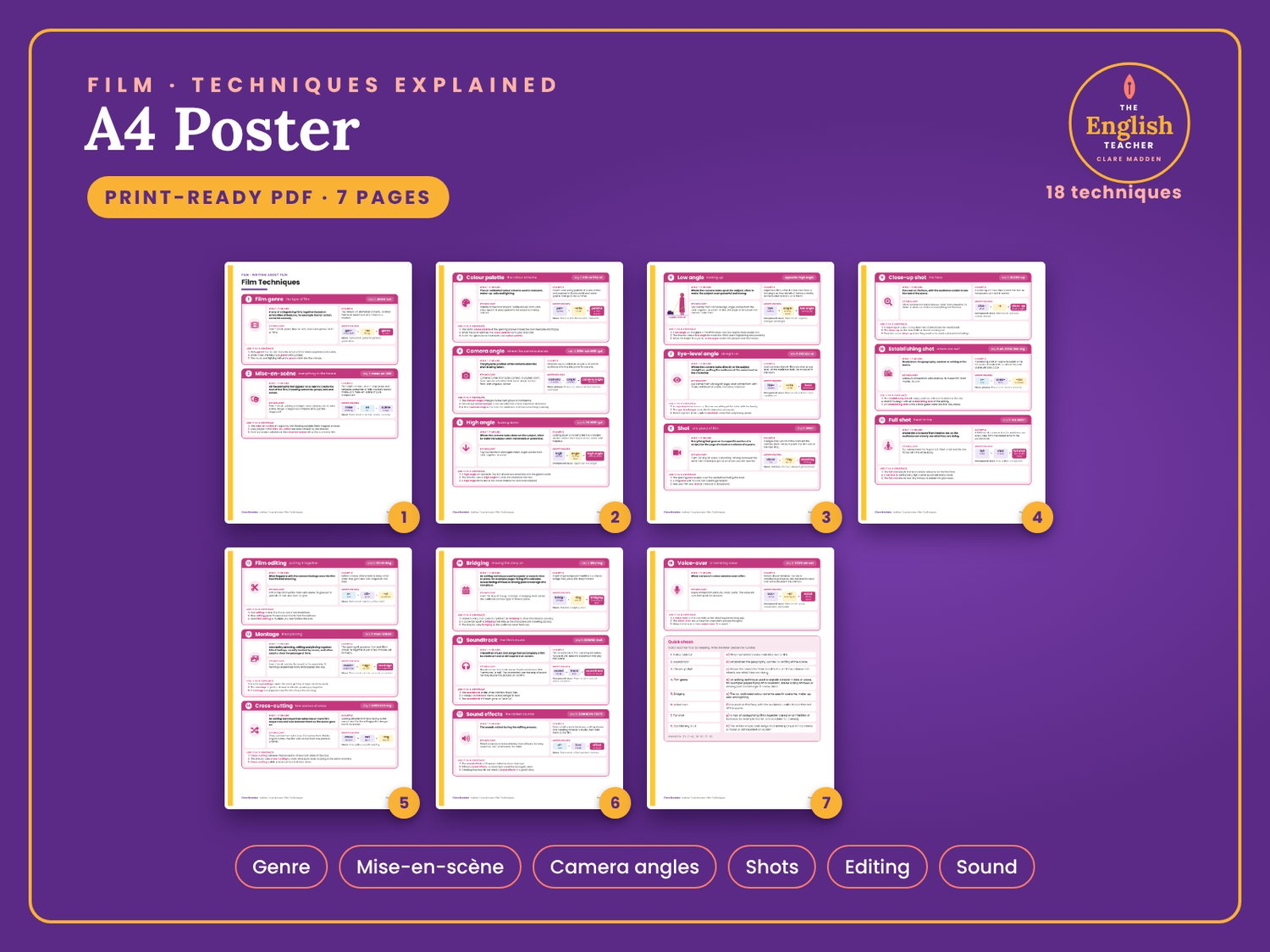
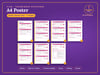
**Film Techniques poster: 7 pages, 18 techniques**
- **Genre and mise-en-scène:** film genre, mise-en-scène, colour palette
- **Camera angles:** camera angle, high angle, low angle, eye-level angle
- **Shots:** shot, close-up, establishing shot, full shot
- **Editing:** film editing, montage, cross-cutting, bridging
- **Sound:** soundtrack, sound effects, voice-over
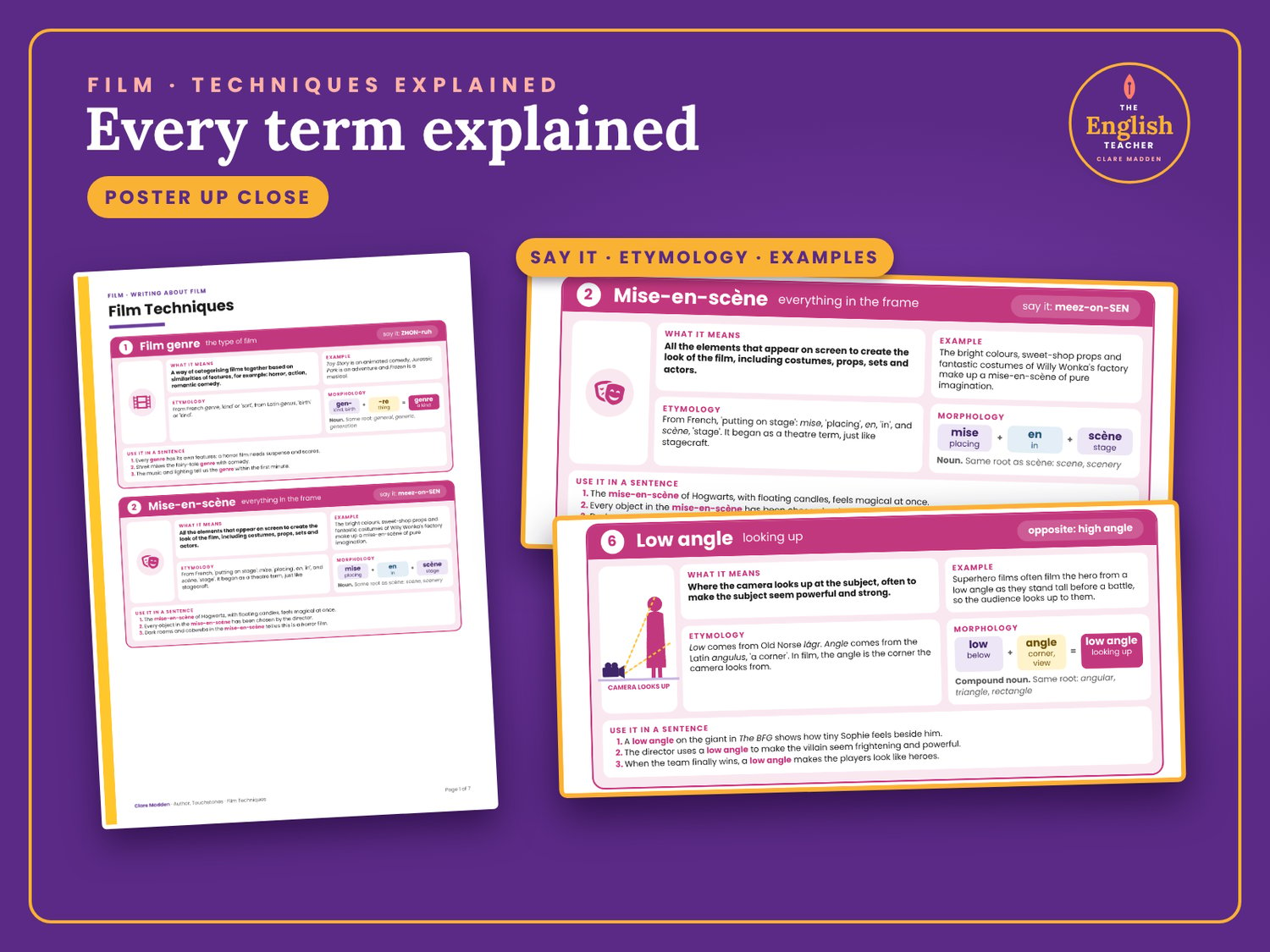
Every technique has:
- Pronunciation ("say it: meez-on-SEN")
- A clear definition and an example from a film students know
- Etymology and morphology, showing where the word comes from
- Three "use it in a sentence" models
The poster ends with a **Quick check** matching quiz, with answers. Display it on the wall, or give it out as a reference sheet when studying any film.
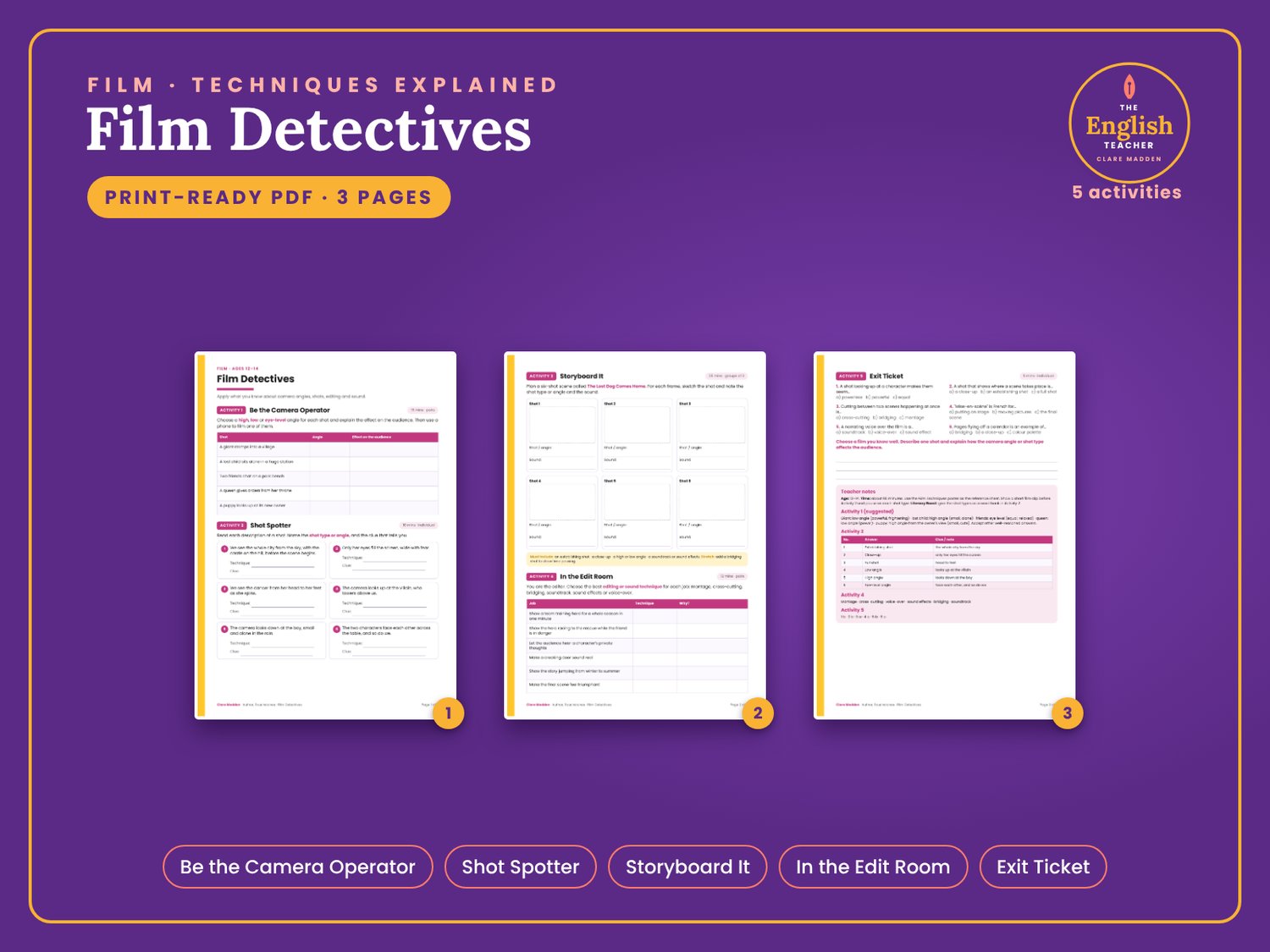
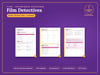
**Film Detectives activity pack (3 pages, 5 activities)**
1. **Be the Camera Operator** (15 mins, pairs): choose a high, low or eye-level angle for each shot, explain the effect on the audience, then film one on a phone
2. **Shot Spotter** (10 mins, individual): name the shot type or angle from six descriptions and find the clue
3. **Storyboard It** (25 mins, groups of 3): plan and sketch a six-shot scene called *The Lost Dog Comes Home*
4. **In the Edit Room** (10 mins, pairs): pick the right editing or sound technique for each job
5. **Exit Ticket** (5 mins): a quick multiple-choice check
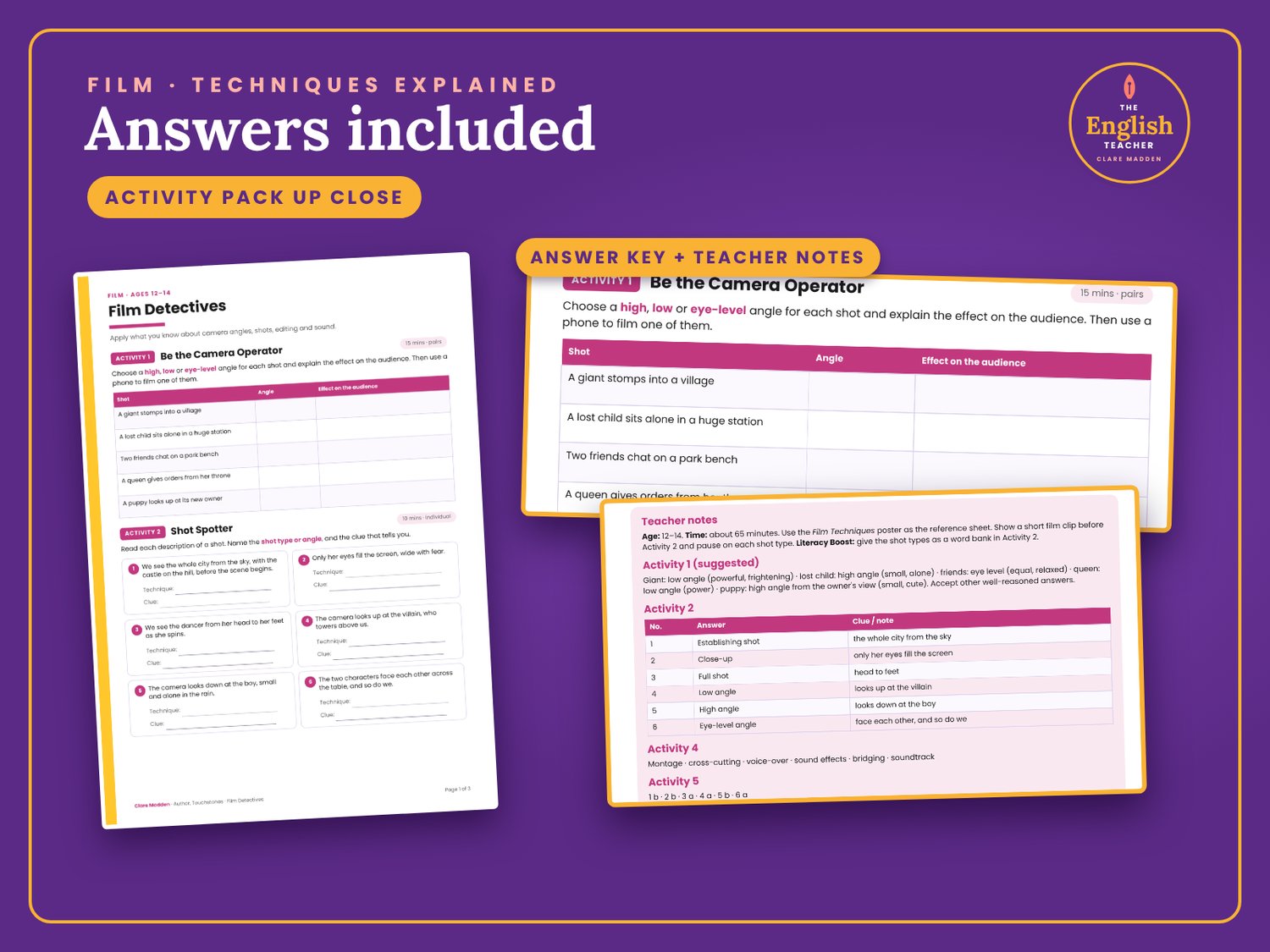
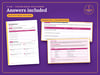
**Teacher notes and answers:** suggested timing (about 65 minutes), tips for using a short film clip, a Literacy Boost support suggestion, and answers for Activities 1, 2, 4 and 5.
**Who it's for**
- English classes aged 12–14 (Junior Cycle, KS3 or similar) studying a film or comparing film and text
- An introduction before starting a film unit
- Older students who need a refresher on film terminology for written answers
**Format:** two print-ready A4 PDFs (poster, 7 pages; activity pack, 3 pages), in full colour.